
MUSIC HISTORY
The Tragic Story of the Small Faces
One of the greatest British pop-rock bands of the ’60s never received the recognition and rewards they deserved
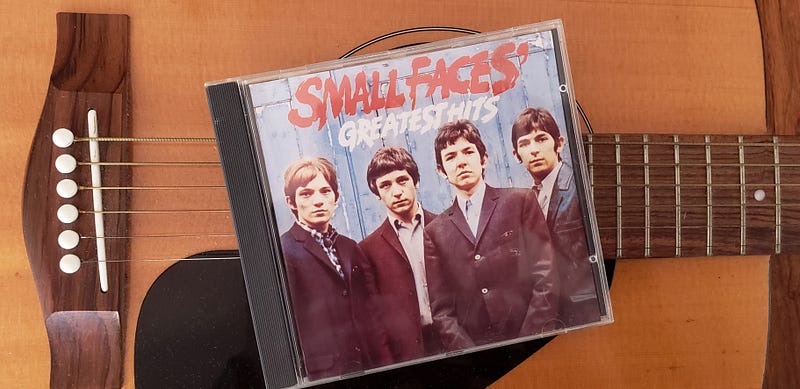
In 1960s Britain, The Small Faces were serious rivals to The Rolling Stones, The Who, and The Kinks (The Beatles were in their own league). They had fourteen hit singles and five hit albums in the UK plus commercial success across mainland Europe, Australia, and New Zealand.
They were, however, the only major British band to have little success in the USA during the ‘British Invasion’ of the ‘60s.
We are the Mods
The Small Faces were Ronnie Lane, Kenney Jones, Ian McLagen and former child actor, Steve Marriott. Along with the Who and the Kinks, the Small Faces represented the British Mod subculture of the era.
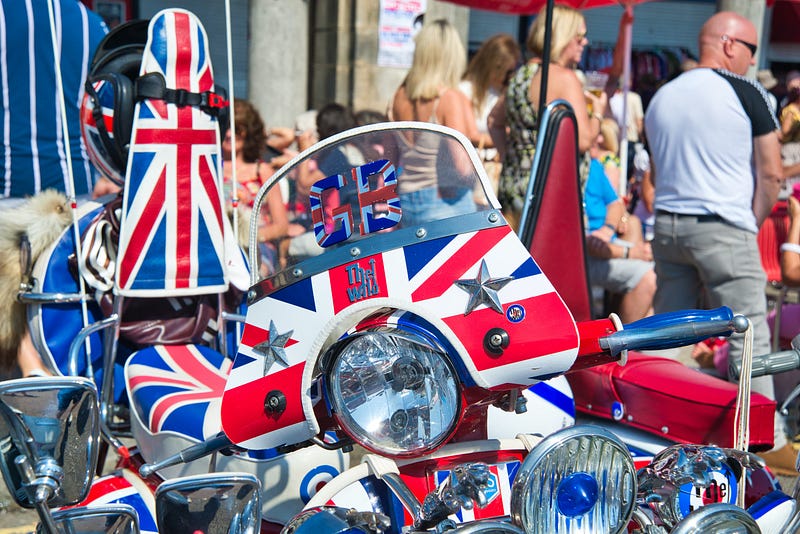
The Mods wore sharp Italian suits, short hair with long sideboards, and rode Italian motorscooters. The scooters were ornately decorated with lights, pennants, and British symbols. Music formed an important element of the Mod culture.
The term ‘Face’, means a well-dressed good-looking Mod. The group added Small to their name since the four members were all under five foot five inches tall.
Continuous conflict
Management conflicts
The Small Faces signed a management contract with Don Arden in 1965; Arden was Sharon Osbourne’s father. Despite their enormous commercial success, it’s reported that Arden paid the band just £20 a week (around $50 at that time) plus a clothing allowance.
Attempts to find out their true royalty earnings were repulsed by Arden and the band finally broke from him in 1968. They only received their due royalties following a series of lengthy court battles, by which time two of the band were dead.
Musical conflicts
There were continuous tensions over their musical direction, songwriting credits and what the other members called Marriott’s Lead Singer Syndrome: acting as if he were the most important person in the band.
The Small Faces often released catchy pop singles but their preferred music taste was for a harder US-style R&B.
Problems came to a head when their record company released a song without their agreement. They’d written and recorded Lazy Sunday Afternoon as a joke during a light-hearted studio session.
Marriot had sung Lazy Sunday in a strong Cockney accent using London slang throughout the song. It was a major UK hit but the jokey style damaged their attempts to be taken seriously.
Marriott quit the band during a live gig in 1968, announcing to the audience he’d had enough before walking off. He went on to form Humble Pie with Peter Frampton, experiencing similar royalty problems.
The remaining Small Faces were later joined by Rod Stewart and Ronnie Wood and they dropped the ‘Small’; Stewart and Wood were tall. They were to break up yet again in 1975 when Rod Stewart also succumbed to Lead Singer Syndrome, leaving to go solo, and Ronnie Wood joined the Rolling Stones.
The band reformed in 1978, without Lane, and released two albums without commercial success. They split up for the final time.
American failure
The Small Faces never broke the US. Ian McLagen had a minor drug conviction in England and couldn’t get a visa for the US.
It’s unlikely that their inability to tour the US was the only reason behind their failure there. Despite their many classic rock-pop songs, the Small Faces were idiosyncratic, quintessential Cockney working-class boys. They sometimes sang amusing English music hall-style songs in Cockney accents, such as Rene The Dockers’ Delight, Happy Days Toytown and Donkey Rides a Penny a Glass (?).
They even released a concept album called Ogden’s Nut Gone Flake which was narrated in between tracks by a popular British comedian called Stanley Unwin using a deliberately corrupted form of English that was, nonetheless, strangely intelligible.
The Small Faces sometimes overtly British musical style and humour were probably not a good fit for the US market.
Itchycoo Park was their only US hit, a catchy pop tune that reached number 16 in 1967.
Deaths
Steve Marriott
Steve Marriott’s vocal and musical influences were mainly US R&B singers such as Otis Redding, Booker T, and Ray Charles. His own vocal style influenced many later British singers, such as Robert Plant and Paul Weller. He’s considered one of the UK’s greatest blues-style singers.
He was also a good guitarist who had a trial with the Rolling Stones after the departure of Mick Taylor. Apparently, Mick Jagger rejected him after Marriott also wanted to sing.
Marriott eventually became disillusioned with the music industry and retired to playing small clubs and bars in his local area around Essex and East London. He died in 1991 in a fire at his home after falling asleep with a cigarette in his hand. An autopsy found alcohol, valium and cocaine in his blood.
Ronnie Lane
Ronnie Lane left the Faces before they split up and formed Slim Chance, a touring folk-rock-country band. The band had several UK hits, such as How Come and The Poacher, but they suffered from financial difficulties due to the complicated circus format of the tours. He also recorded albums with Pete Townsend and Eric Clapton.
Lane was diagnosed with multiple sclerosis in 1977. With little money due to the Small Faces royalty issues and the Slim Chance failures, his medical care was funded by his musical friends, Rod Stewart, Ronnie Wood, and Jimmy Page. His health deteriorated and he died in 1997.
Ian McLagen
Ian McLagen was a highly renowned and respected keyboard player who, following the demise of the Faces, continued to record and work as a session musician until his death from a stroke in 2014 aged 69.
McLagen worked with the Rolling Stones, Chuck Berry, Bob Dylan, Lucinda Williams, Jackson Browne and many others.
He moved to Austin Texas with his wife Kim Kerrigan who had left Who drummer Keith Moon for him. Kerrigan was killed in a road accident in Austin in 2006.
Kenney Jones
The only surviving member of the Small Faces at the time of writing. Jones joined The Who as their drummer in 1978 and played with them for ten years. He has also played on many recordings for other artists such as The Rolling Stones, Rod Stewart, Chuck Berry, Joan Armatrading and Paul McCartney.
The Small Faces Legacy
The Small Faces backlist consists of some of the greatest pop music of the 1960s. They continue to influence rock and pop music in the UK, including the mid-’90s Brit Pop phenomenon with bands such as Blur, Oasis and Pulp.
Paul Weller, Led Zeppelin, and Ocean Colour Scene have all cited the Small Faces as a major influence.
Now see what the Small Faces could do with one of their greatest songs, Tin Soldier (with PP Arnold on backup vocals.
For more music articles from Alex Markham, take a look here:
And here: