avatarKingsley Asuamah

Free AI web copilot to create summaries, insights and extended knowledge, download it at here

1694

Abstract

sexuality</b>: Asking a same-sex couple, “Who’s the man/woman in the relationship?” assumes heteronormativity.</li><li><b>Invisibility</b>: Ignoring or erasing LGBTQ+ identities by assuming everyone is straight.</li><li><b>Stereotyping</b>: Associating specific behaviours or interests with sexual orientation (e.g., assuming all gay men are fashionable).</li></ul><p id="1690"><b>4. Ableism Microaggressions</b>:</p><ul><li><b>Pity or Inspiration</b>: Saying things like “You’re so brave” to someone with a disability or assuming they need pity or inspiration.</li><li><b>Ignoring Accommodations</b>: Not considering accessibility needs or assuming everyone can participate in the same way.</li><li><b>Using Ableist Language</b>: Using derogatory terms related to disabilities without awareness.</li></ul><p id="0971"><b>5. Age-Related Micro-aggressions</b>:</p><ul><li><b>Assuming Incompetence</b>: Treating older adults as if they are less capable or knowledgeable.</li><li><b>Ageist Language</b>: Referring to older people as “sweetie,” “dear,” or “senile.”</li><li><b>Exclusion</b>: Excluding older adults from conversations or activities.</li></ul><p id="45f3">Addressing micro-aggressions involves active listening, education, and empathy. As allies, we can learn to recognise and challenge these harmful behaviours to create a more inclusive and respectful environment for everyone.</p><div id="58e9" class="link-block"> <a href="https://readmedium.com/how-to-measure-the-success-of-diversity-inclusion-initiatives-in-your-workplace-5c36d1c22004"> <div> <div> <h2>How To Measure the Success of Diversity & Inclusion Initiatives in

Options

Your Workplace</h2> <div><h3>A Guide for HR Professionals and People Managers</h3></div> <div><p>medium.com</p></div> </div> <div> <div style="background-image: url(https://miro.readmedium.com/v2/resize:fit:320/1*9Cv9QQ-F4zVMAdsrtPk4IA.jpeg)"></div> </div> </div> </a> </div><div id="6651" class="link-block"> <a href="https://readmedium.com/the-realities-of-our-digital-lives-c853b4066544"> <div> <div> <h2>The Realities of Our Digital Lives</h2> <div><h3>Current changes and a poetic look at the future</h3></div> <div><p>medium.com</p></div> </div> <div> <div style="background-image: url(https://miro.readmedium.com/v2/resize:fit:320/1*tgF_90IBJ0vYhs8GnwQfVw.jpeg)"></div> </div> </div> </a> </div><div id="cba8" class="link-block"> <a href="https://readmedium.com/before-you-diagnose-yourself-with-depression-or-low-self-esteem-fec4db7663a8"> <div> <div> <h2>Before You Diagnose Yourself with Depression or Low Self-Esteem…</h2> <div><h3>First make sure that you are not, in fact, just surrounded by assholes!</h3></div> <div><p>medium.com</p></div> </div> <div> <div style="background-image: url(https://miro.readmedium.com/v2/resize:fit:320/1*A9tg77EQhLMptN1ouYWqJA.jpeg)"></div> </div> </div> </a> </div></article></body>

Some Micro-Aggressions You Have Been Exhibiting Unknowingly.

And how you can correct them
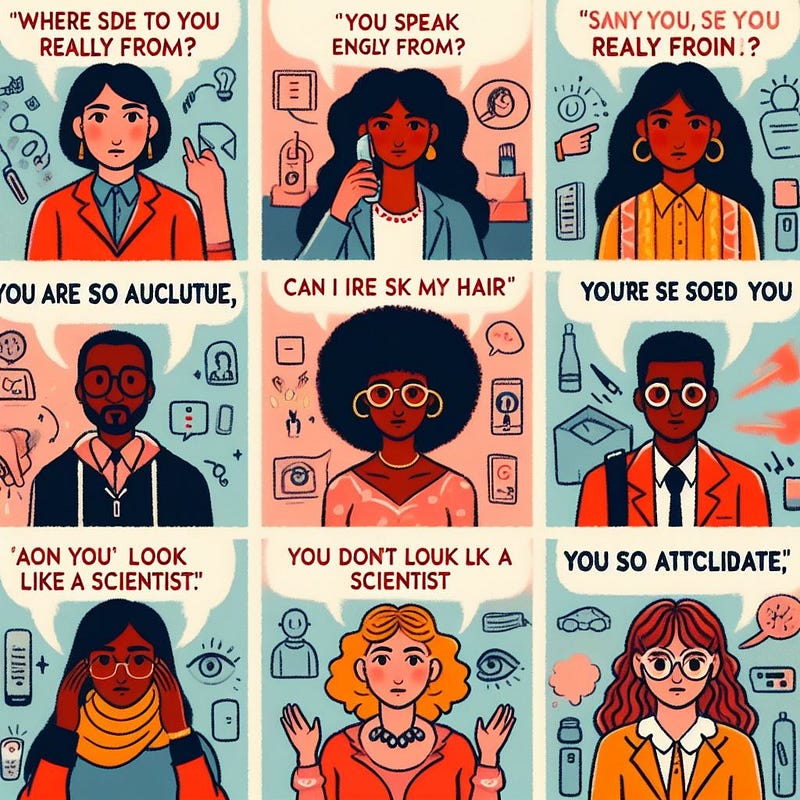
Image generated by the author using Image Creator by Designer

Micro-aggressions are subtle, often unintentional actions or comments that negatively target marginalised groups or individuals. They can be verbal, behavioural, or environmental. Let’s look at some common examples:

  1. Racial Microaggressions:
  • Colourblind Statements: Saying things like “I don’t see colour” or “We’re all the same” may seem well-intentioned, but they dismiss the unique experiences and challenges faced by people of different racial backgrounds.
  • Assuming Homogeneity: Assuming that all members of a particular racial or ethnic group share the same culture, language, or experiences.
  • Backhanded Compliments: Comments like “You’re so articulate for a Black person” or “You’re pretty for an Asian girl” perpetuate stereotypes and undermine individual achievements.

2. Gender Microaggressions:

  • Gender Stereotypes: Expecting women to be nurturing or men to be assertive based on their gender.
  • Interrupting or Mansplaining: Dismissing or explaining things to women in a condescending manner.
  • Gendered Language: Using terms like “bossy” for women or “emotional” for men.

3. Sexual Orientation Microaggressions:

  • Assuming Heterosexuality: Asking a same-sex couple, “Who’s the man/woman in the relationship?” assumes heteronormativity.
  • Invisibility: Ignoring or erasing LGBTQ+ identities by assuming everyone is straight.
  • Stereotyping: Associating specific behaviours or interests with sexual orientation (e.g., assuming all gay men are fashionable).

4. Ableism Microaggressions:

  • Pity or Inspiration: Saying things like “You’re so brave” to someone with a disability or assuming they need pity or inspiration.
  • Ignoring Accommodations: Not considering accessibility needs or assuming everyone can participate in the same way.
  • Using Ableist Language: Using derogatory terms related to disabilities without awareness.

5. Age-Related Micro-aggressions:

  • Assuming Incompetence: Treating older adults as if they are less capable or knowledgeable.
  • Ageist Language: Referring to older people as “sweetie,” “dear,” or “senile.”
  • Exclusion: Excluding older adults from conversations or activities.

Addressing micro-aggressions involves active listening, education, and empathy. As allies, we can learn to recognise and challenge these harmful behaviours to create a more inclusive and respectful environment for everyone.

Racism
Life
Society
Culture
Self Improvement
Recommended from ReadMedium