
Social Media Is In Fact A Fiction
“Fiction is the lie through which we tell the truth.” ― Albert Camus

Who cares about non-virtual faces? That’s the question I asked months ago, and obviously, it remains a very relevant question and a very challenging subject for those who are insecure about their bodies and faces.
Many people haven’t yet realized how powerful social media is, and how it can be used to twist important messages that we try to convey.
Only by posting the simplest pictures ever, we can create many stories: what we thought we shared, what we would never share, what we believe people think of us, what we love, what we hate, how we want to be seen… Well, a photo is many lives in one capture. Isn’t that fiction? What else can describe life better than a set of pictures? What is life in our mind if not uncountable images?
Each picture shared is proof of our past and present life. The picture itself has a separate life and will have more experiences than the moment it has been dedicated to.
The platforms on which we share our pictures are other dimensions of that universe (or to some extent the universe itself). Those are spaces that make pictures even more polysemic than they normally are.
When you look at a picture, the platform adds some meaning to it, the screen quality and size influence your attention, the commentaries that you read make you change your mind, and your own eyes lie to you.
Within some seconds of looking at a post, several reasonings pop up in your mind.
Imagine you also tried to understand the intention of the person who had published the picture. It would have taken much more time.
As a matter of fact, when someone sees a publication, they project their fears, their passions, their weaknesses, and their strengths onto this post. The idea that comes into their mind is not just about the picture, it’s mainly about themselves (what they can see, what they can express, what they have experienced, etc.)
Our Alter Egos
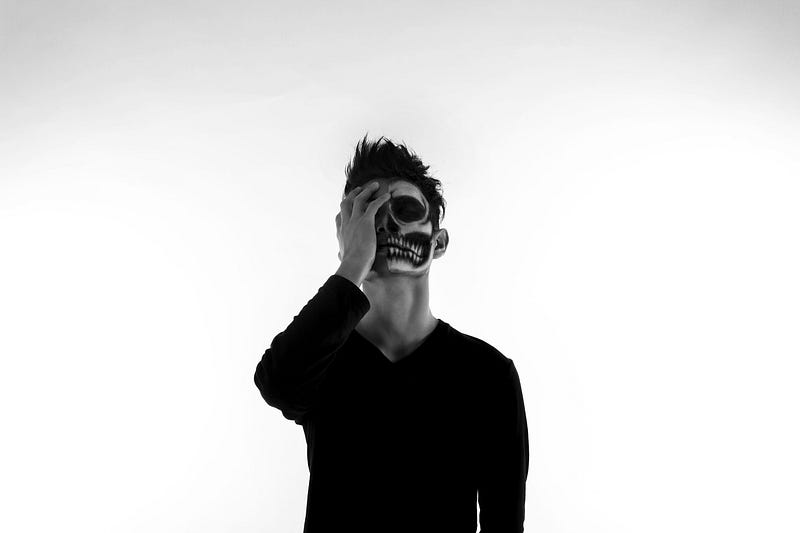
“Artists use lies to tell the truth. Yes, I created a lie. But because you believed it, you found something true about yourself.” ― Alan Moore, V for Vendetta
Thanks to social media and all the photo editor apps that have emerged these last decades, anyone can make a highly creative and genuine version of themselves.
However, the pictures and videos that we publish on social media are not just lying about our identities, they are imagined selves, creations, and artistic elevations.
Most people are used to asking themselves and/or their best friends if photos or videos that they share on social media are beautiful. Sometimes we spend hours thinking if people love what we post.
We wish that our alter egos could be as imagined in our followers’ and friends’ minds.
However, most of the time they see the posts differently.
And it’s ok for them to project their own beliefs and thoughts onto your actual creation.
Photography is an artistic expression, and social media is perhaps the most complex gallery that has ever existed.
Trying to publish something that people love is part of the whole artistic journey. However, the most important thing is making people react and letting them forge their own thought.
Even when it was not aimed to be a social representation, your publication is a mirror that reflects different faces. Some faces appear and some others disappear depending on the person who looks at the picture, the moment when they watch it, and from which angle they see it.
As time has passed by and people’s perceptions of themselves have changed, your publication has also become a different work even if it is the same person who is observing it.
We are never totally subject nor totally object of art on social media. We are both object and subject, all together at varying levels.
Social media has democratized fiction so that anyone can share their most personal art. We are all free to have our artistic taste and then express it.
Although each one of our posts is still an outside version of our life and thoughts, which is most likely untrue; they are still palimpsests for people to write their own. That’s why social media is perhaps the utmost way to create collaborative fiction and art.
Subscribe | Instagram | Twitter | TikTok | Tumblr | LinkedIn | YouTube


