
So You Think You Want Backyard Chickens?
Before you go and impulse by a handful of irresistibly cute future nuggets, read the following.
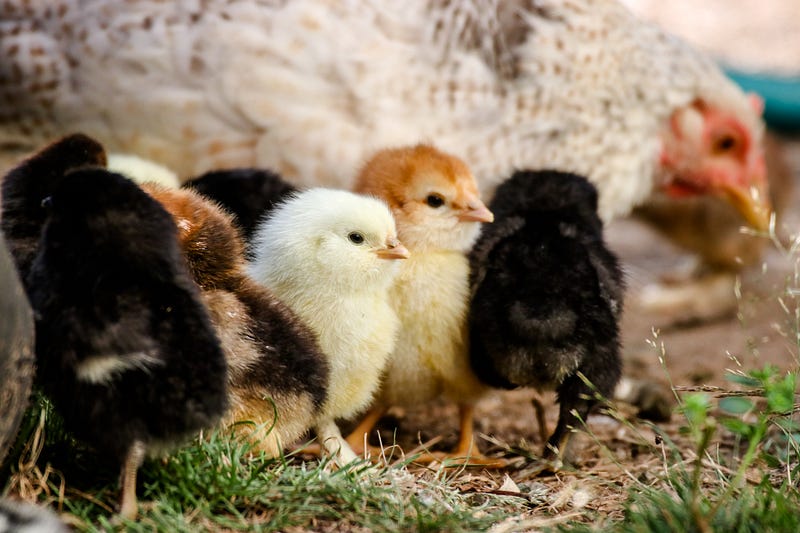
Are you picturing yourself reaching your hand under the warm feathered breast of a happy hen and grabbing a warm brown egg, that you will put into your basket lined with a red gingham napkin?
Are you imagining sprinkling a handful of grain on the ground and having your adoring free-range flock waddle-sprinting towards you with clucks of appreciation?
Maybe you are looking ahead to bringing in muffins or a frittata to work and casually mentioning, “I made this with eggs from my own chickens.”
I need you to take a pause for a moment and learn a little bit about chickens before you end up bringing home a dozen adorable baby clucksters. A lot of people out there think that having chickens is all cuteness and big yellow-yolked eggs.
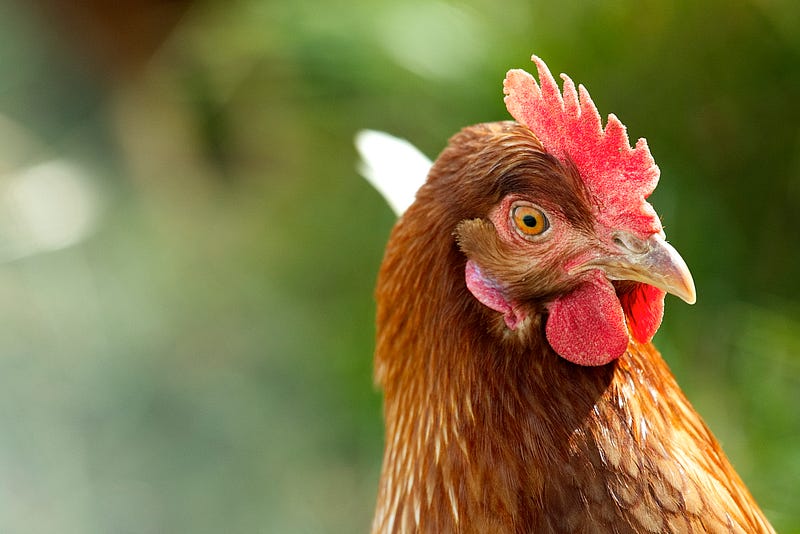
There’s a lot more to it, and it starts with understanding the basic biology of chickens. If you didn’t grow up on a farm(like I did) or major in Animal Science in college(like I did) or become a high school biology teacher(also like I did), there’s a good chance you don’t really know much about what’s under all of those shiny feathers.
Just last week, my neighbor, who is very interested in getting chickens asked me, “So are there boy and girl chickens…or…what?”
You might already know the answer, but for simplicity, I’ll use this as my baseline.
Yes, there are girl and boy chickens. Girls are hens, boys are roosters, also known as cockerels or cocks.
You might be surprised to learn that cocks don’t actually have penises. Nope. All chickens — boys or girls — have a single hole called a cloaca. Poop, pee, eggs, sex. It all happens through this one efficient little opening.

Unlike mammals who swing their junk around on the outside, roosters have internal testicles. When they have sex, they squeeze out some foamy, sperm laden semen and rub their cloaca against the cloaca of a hen. Romantically, this is sometimes referred to as the cloacal kiss.
When it comes to anatomy though, the lady chickens have a much more interesting road map. Like mammals — including humans, hens produce egg cells, which need to be fertilized by sperm cells in order to make a baby.
In chickens though, only one ovary develops and releases eggs. When the ovary releases an egg, it is big and yellow and about the size of a really big grape. We call it the egg yolk, which kind of sterilizes it and separates it from what it really is: a big sac of nutritious food for the baby chick that may or may not form inside the soon to be finished egg.
Close your eyes and picture a pregnant chicken for a second. Oh wait — do chickens get pregnant? Nope! Maybe you’ve never thought about it, but it makes sense. Most birds evolved to fly, at least a little. When I was pregnant, I could barely get off the couch, let alone fly. So instead of carrying around a growing fetus inside their abdomen, chickens (and all birds) offload all that weight into their nest.

Once the hen has released a naked egg yolk from her ovary, it is picked up by a big fleshy funnel called the infundibulum. This is the equivalent of a human fallopian tube. For an egg, traveling down the fallopian tube is like walking down the hallway at the post office. Not very interesting or memorable. But traveling down the infundibulum? It’s like a biological Willy Wonka’s Chocolate Factory!
As the yolk moves along the infundibulum, it is coated and wrapped in all sorts of membranes, proteins and liquids. Over the course of about 24 hours, the egg slides along, finishing up at the shell gland where calcium deposits from the chickens diet and bloodstream are packed carefully around the yolk, the egg white and the other membranes.
Finally, with a cluck and a squeeze, the hen pops the fully hardened egg out of her cloaca.
The fate of the egg depends on the hen’s recent sex life. Nature has an efficiency that puts Amazon to shame and this is one of my favorite examples of it.
If the egg was fertilized by a sperm way back in the very beginning when it first entered the infundibulum, then cell by cell, a new baby chicken will start to grow.
If it was not fertilized, then it’s just a practice egg — and depending on your perspective, a great nutritional loss or gain. When you’re a hen, making egg after egg takes a lot of energy — calcium, fats, proteins. But if you are a person who raises chickens for eggs, you’ve just scored yourself a lot of energy — fats proteins (not so much calcium unless you have pica and eat the shells). Lucky you!
Here’s the amazing thing: A hen has a tiny little pouch just inside the cloaca. It’s where she stores her extra sperm so she can have a bunch of babies without having to go out and have sex all the time. Why wouldn’t she want to have sex all the time? Well, for a prey species like the wild ancestors of our barnyard chickens, having sex makes you vulnerable to getting eaten. You’re distracted, you’re making noise, you’re not alert to your surroundings.
One minute you’re having sex, then BOOM, you’re eaten by a mongoose!

After sex, the hen locks the sperm away in her safe little sac. But, when that big fat egg comes sliding down the tube, it passes by the sperm sac and squeezes out a little bit. Those sperm swim up to fertilize the next yolk coming down the line and next thing you know, Ladyfeathers has laid fifteen eggs in fifteen days, all fertilized by sperm from just one quick romp in the hay with Sir Cockleston.
Like it or not, that’s where all chickens come from. All in all, it’s an amazing system. But it’s not a simple one. So before you go crazy and buy a bunch of chickens on Craigslist, make sure you do your homework.
Chickens aren’t just Pez dispensers for eggs. They are complex living systems that will smear you with poop, blood, broken eggs and stray feathers.
If you’re ok with this, have at it. But if you’re not — maybe you should get a fish.
If you liked this kind animal-truth-bomb story, here’s another one you might enjoy: