avatarAllison Wiltz

Free AI web copilot to create summaries, insights and extended knowledge, download it at here

3541

Abstract

haracters represented because they have become accustomed to Hollywood and the film industry centering them, their experiences, and their likeness. Many White people feel uncomfortable seeing a Black woman as a mermaid because diversity, equity, and inclusion challenge the system that puts whiteness on a pedestal. The new, Black little mermaid still has red hair, but that’s not good enough for some because Ariel is no longer a White woman. Some White people, like the woman who commented, use the term "woke" as a <a href="https://www.writersandeditorsofcolor.com/woke-is-now-a-racial-slur-thanks-to-white-people-1cc71d59ea1c">racial slur</a>, attacking those who want to create a more equitable society, so they portray diversity as a sign society is heading in the wrong direction, as opposed to acknowledging any benefits of diversity. As I wrote in Afrosapiophile last fall, "racism can <a href="https://readmedium.com/racism-cripples-imagination-thats-why-you-re-boycotting-a-black-mermaid-3e293111234c">cripple the imagination</a>," which is why we see so much hair-pulling over Black people getting opportunities to play mythological characters. Since the film's release, <i>The Little Mermaid</i> got "<a href="https://people.com/the-little-mermaid-gets-review-bombed-on-imdb-prompting-website-to-change-its-rating-system-7507026">review-bombed</a> on IMDb, prompting" the "website to apply" an "alternate rating system" to counteract the ambush of negative, racist reviews.</p><h2 id="c189">Mermaids are not confined to Eurocentric mythology.</h2><p id="188d">When we peel back the layers of the critique, we find that much of the blowback stems from an unwillingness to acknowledge that mermaid myths are not exclusive to Eurocentric mythology. Black mermaids existed long before Danish author Hans Christian Andersen wrote <i>The Little Mermaid</i>. Those who claim they don't want to see a Black mermaid on the silver screen because it violates the code of traditionalism are clearly unaware of the original version, which was much darker than the Disneyfied version. For instance, when the sea witch Ursula cast a spell that allowed Ariel to walk, the original story depicted each step as painful, as if "she's walking on knives," and she would have to kill Eric, the prince, to return to her life at sea. While Disney's version of <i>The Little Mermaid</i> is a love story, the original is closer to those written by the Grimm Brothers, "whose fairy tales were <a href="https://screenrant.com/the-little-mermaid-fairy-tale-hans-christian-andersen-story/">much darker</a>." Already, we're dealing with a modified story that differs significantly from the original. So, the outrage isn't about traditionalism as much as it is about the race of the characters.</p><p id="91cb">According to <a href="https://www.tor.com/author/natasha-bowen/">Natasha Bowen</a>, who writes about folklore, "mermaid-like beings in Africa can be traced back through ancient history." For illustration, Bowen suggested the Dogon tribe passed down an oral story about <a href="https://www.tor.com/2021/11/09/black-mermaids-the-waters-beyond-eurocentric-mythology/">Nommo</a>, "amphibious beings who came from the sky and created the first waters on earth," and Yemoja, a Yorubian diety describes a <a href="https://www.tor.com/2021/11/09/black-mermaids-the-waters-beyond-eurocentric-mythology/">half-fish, half woman</a> a "patron<a href="https://www.crystalvaults.com/goddess-yemoja/"> diety</a> of pregnant women," to name a few. Unfortunately, in

Options

public schools, African history is not taught with the same reverence as European history, and as a result, many Americans need to be made aware of their folklore. Nevertheless, the mythology of mermaids is not confined to Eurocentric culture, and as a result, it should not surprise or anger people to see a Black mermaid represented in film. On the contrary, audiences should welcome seeing <a href="https://www.google.com/search?sxsrf=APwXEdcXfk-jZcbZOqB9dPU3hQCtfq_SsQ:1685737852383&amp;q=Halle+Bailey&amp;stick=H4sIAAAAAAAAAONgFuLUz9U3SM4xtMxQ4gIxyypzU8rLtUyyk6300zKTSzLz8xJz4kvzMstSi4pTkYSSMxKLEpNLUousCnISK1NTFJIqF7HyeCTm5KQqOCVm5qRWAgDbZUv_XgAAAA&amp;sa=X&amp;ved=2ahUKEwjMq4DvtqX_AhVvkmoFHQTFCqYQ9OUBegQIKBAD">Halle Bailey</a> playing a mermaid; seeing a Black woman included rather than shunned is a breath of fresh air. Sadly some see the film’s release as an opportunity to spread racist ideas and beliefs, and their reactions are so predictable we can use it to set a clock.</p><div id="2cc6" class="link-block"> <a href="https://momentum.medium.com/why-some-never-want-us-to-imagine-a-black-queen-fca4e1cdfbd8"> <div> <div> <h2>Why Some Never Want Us to Imagine a Black Queen</h2> <div><h3>They prefer seeing Black women in positions of servitude rather than in power.</h3></div> <div><p>momentum.medium.com</p></div> </div> <div> <div style="background-image: url(https://miro.readmedium.com/v2/resize:fit:320/1*VJIMM9wDzsYLnvoS8kV1Jw.jpeg)"></div> </div> </div> </a> </div><div id="72b9" class="link-block"> <a href="https://level.medium.com/the-black-wonder-years-is-making-white-folks-mad-75124328bf8b"> <div> <div> <h2>The Black Wonder Years is Making White Folks Mad</h2> <div><h3>Seeing a Black version of a White classic series has some folks flustered. Let's unpack this.</h3></div> <div><p>level.medium.com</p></div> </div> <div> <div style="background-image: url(https://miro.readmedium.com/v2/resize:fit:320/1*C9NLGgmREnAbhSte7n7MTQ.jpeg)"></div> </div> </div> </a> </div><div id="3b8a" class="link-block"> <a href="https://readmedium.com/racism-cripples-imagination-thats-why-you-re-boycotting-a-black-mermaid-3e293111234c"> <div> <div> <h2>Racism Cripples Imagination. That's Why You're Boycotting a Black Mermaid</h2> <div><h3>Why a Black mermaid, a mythical creature, makes White people angry</h3></div> <div><p>medium.com</p></div> </div> <div> <div style="background-image: url(https://miro.readmedium.com/v2/resize:fit:320/1*_FMAEy7I6EqUDpJz6wroUQ.jpeg)"></div> </div> </div> </a> </div><blockquote id="1164"><p>Author’s Note: I make no apologies to the people this article will offend because their offense is ridiculous. Black people have every right to play the role of mermaids, which as a reminder are mythological creatures that do not exist.</p></blockquote><p id="00a9">🌹Learn more about the author <a href="http://allisonthedailywriter.com/">here</a>. 🖊<a href="https://allyfromnola.medium.com/membership">Sign up</a> to read all my stories and thousands more.</p></article></body>

AN UNAPOLOGETIC BLACK OP-ED

So Why Does It Bother People That The Little Mermaid is Black?

Backlash over a mythological creature is utterly ridiculous
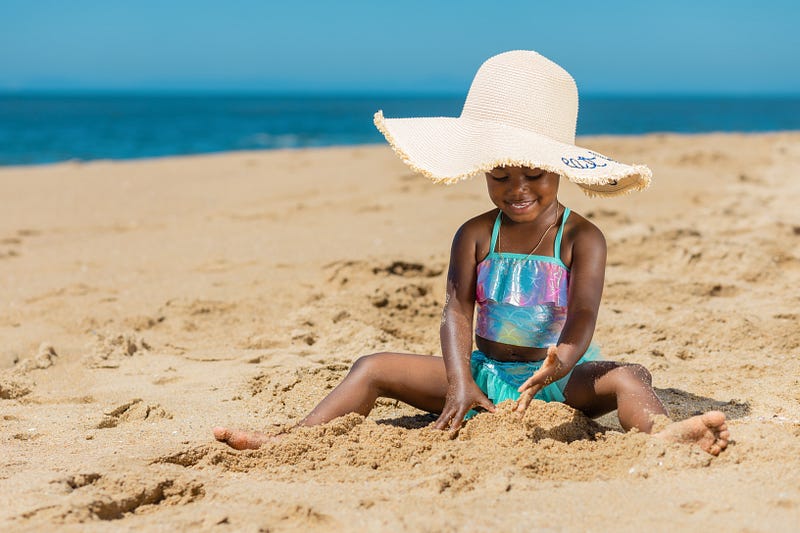
Cute Black girl playing on the beach | Photo by Kindel Media via Pexels

Last year, when Disney announced they cast Halle Bailey, a Black singer and actress, to play Ariel, a mermaid-turned-princess in their live-action musical rendition of The Little Mermaid, the Black community started bracing for impact. The backlash over the Wonder Years remake featuring a Black family, Black cast members in Lord of the Rings, a Black actress playing the leading role in Queen Charlotte, and a mixed-race Black woman cast to play the Egyptian Queen, Cleopatra in a documentary about her life sent the message loud and clear, that any effort to include Black actors and actresses will be met with frenzied anger. The Black community read the tea leaves and knew that racist trolls would, once again, climb out of their caves and roar in disillusionment at the sight of a Black mermaid once the movie hit theatres.

Diverse characters challenge the status quo and anger racists.

You see, as more studios started to embrace calls for diversity, the reactions have been largely mixed. For instance, while Black girls, in particular, expressed joy at their newfound representation after watching a movie trailer showing Bailey playing the role of Ariel, many White people attacked the casting decision of hiring a Black woman as nontraditional, unnecessary, and an unwelcome change. Never mind the fact that mermaids are mythological creatures, many White people turned beet red at the thought of a Black woman cast in a role typically filled by a White, red-haired woman. For example, one White woman commented that she was "sad they changed" her "childhood favorite princess because of the new woke religion. In the grand scheme of things what Disney is doing, that is morally wrong," she added.

Her comment reminded me of a quote by Franklin Leonard, "When you're accustomed to privilege, equality feels like oppression." In other words, many White people feel uncomfortable seeing diverse characters represented because they have become accustomed to Hollywood and the film industry centering them, their experiences, and their likeness. Many White people feel uncomfortable seeing a Black woman as a mermaid because diversity, equity, and inclusion challenge the system that puts whiteness on a pedestal. The new, Black little mermaid still has red hair, but that’s not good enough for some because Ariel is no longer a White woman. Some White people, like the woman who commented, use the term "woke" as a racial slur, attacking those who want to create a more equitable society, so they portray diversity as a sign society is heading in the wrong direction, as opposed to acknowledging any benefits of diversity. As I wrote in Afrosapiophile last fall, "racism can cripple the imagination," which is why we see so much hair-pulling over Black people getting opportunities to play mythological characters. Since the film's release, The Little Mermaid got "review-bombed on IMDb, prompting" the "website to apply" an "alternate rating system" to counteract the ambush of negative, racist reviews.

Mermaids are not confined to Eurocentric mythology.

When we peel back the layers of the critique, we find that much of the blowback stems from an unwillingness to acknowledge that mermaid myths are not exclusive to Eurocentric mythology. Black mermaids existed long before Danish author Hans Christian Andersen wrote The Little Mermaid. Those who claim they don't want to see a Black mermaid on the silver screen because it violates the code of traditionalism are clearly unaware of the original version, which was much darker than the Disneyfied version. For instance, when the sea witch Ursula cast a spell that allowed Ariel to walk, the original story depicted each step as painful, as if "she's walking on knives," and she would have to kill Eric, the prince, to return to her life at sea. While Disney's version of The Little Mermaid is a love story, the original is closer to those written by the Grimm Brothers, "whose fairy tales were much darker." Already, we're dealing with a modified story that differs significantly from the original. So, the outrage isn't about traditionalism as much as it is about the race of the characters.

According to Natasha Bowen, who writes about folklore, "mermaid-like beings in Africa can be traced back through ancient history." For illustration, Bowen suggested the Dogon tribe passed down an oral story about Nommo, "amphibious beings who came from the sky and created the first waters on earth," and Yemoja, a Yorubian diety describes a half-fish, half woman a "patron diety of pregnant women," to name a few. Unfortunately, in public schools, African history is not taught with the same reverence as European history, and as a result, many Americans need to be made aware of their folklore. Nevertheless, the mythology of mermaids is not confined to Eurocentric culture, and as a result, it should not surprise or anger people to see a Black mermaid represented in film. On the contrary, audiences should welcome seeing Halle Bailey playing a mermaid; seeing a Black woman included rather than shunned is a breath of fresh air. Sadly some see the film’s release as an opportunity to spread racist ideas and beliefs, and their reactions are so predictable we can use it to set a clock.

Author’s Note: I make no apologies to the people this article will offend because their offense is ridiculous. Black people have every right to play the role of mermaids, which as a reminder are mythological creatures that do not exist.

🌹Learn more about the author here. 🖊Sign up to read all my stories and thousands more.

Racism
BlackLivesMatter
Movies
Fiction
Culture
Recommended from ReadMedium