avatarAllison Wiltz

Free AI web copilot to create summaries, insights and extended knowledge, download it at here

2609

Abstract

but in fantasy, things do not have to be real; they need verisimilitude, "<a href="https://www.masterclass.com/articles/what-is-verisimilitude">the semblance of truth</a>." Some openly suggested after Disney announced their casting decision that only a White woman with red hair should <a href="https://twitter.com/societymodern_/status/1403867749504499720?s=20&amp;t=wkT49MxwZSYZ93V8zudE_Q">play Ariel</a>. And while there's nothing new about White Americans complaining about diversity, it is shocking to see them get so bent out of shape behind Black mythical creatures. <i>The Little Mermaid</i> isn't the only project catching heat for diverse casting decisions. For instance, some White fans responded poorly to <a href="https://www.msnbc.com/opinion/msnbc-opinion/some-rings-power-house-dragon-fans-are-letting-their-racism-n1298720"><i>The Lord of the Rings: The Rings of Power</i></a>, a series that included Black elves, like Sophia Nomvete and Ismael Cruz Cordova. Suddenly, a Black elf isn't realistic, as if elves of any race are real.</p><p id="8c47">We've seen this type of backlash before, like when <a href="https://level.medium.com/the-black-wonder-years-is-making-white-folks-mad-75124328bf8b"><i>The Wonder Years</i></a> reboot came out, and some White fans struggled to accept a Black boy playing the main character. In America, nostalgia has become a mask for racism. "Oh, I'm not racist, I just like the way things were" is the same as the "make America great again" propaganda we've heard over the years. Far too many White people are anxious about the impending demographic shift, also known as the "<a href="https://www.essence.com/news/preparing-for-the-browning-of-america/">browning of America</a>." So, when those White people see a Black mermaid, they see her as a direct challenge to their white-centered culture.</p><p id="c872">Disney has grown more diverse over the years. We can see the progression from early White princesses like Cinderella, Snow White, and Princess Belle to diverse princesses like Jasmine, Pocahontas, Mulan, and Princess Tiana. From the critique, it seems White people want the White princesses to stay white, even though none of these people ever existed. Some fans have suggested <a href="https://twitter.com/EricYou99811305/status/1568602426948653057?s=20&amp;t=nHPxQ4avg4Sb1PGEttmTrQ">boycotting</a> Disney, while others shared pictures of a White woman <a href="https://twitter.com/AndyFKNAnderson/status/1568662805401976833?s=20&amp;t=nHPxQ4avg4Sb1PGEttmTrQ">playing Ariel</a>, meaning she would be fired now that a Black mermaid is playing in

Options

the movie. One person claimed that Disney knew fans would hate it and "did it anyways," using the hashtag <a href="https://twitter.com/hashtag/notmyariel?src=hashtag_click">#NotMyAriel</a>. Hate to break it to the racists, but <a href="https://collider.com/the-little-mermaid-trailer-104-million-views-halle-bailey-disney/">over a hundred million</a> people saw the Little Mermaid trailer. Based on the buzz it's received so far, the movie is likely to be successful, despite the racists who plan to boycott the film.</p><p id="f252">As typical in American life, there's always resistance whenever an organization takes a meaningful step towards diversity. Last year, Disney implemented a <a href="https://readcultured.com/disneys-white-privilege-checklist-asks-people-to-check-their-privilege-at-the-front-door-2bee3358e1bc">White Privilege Checklist</a> for employees to decrease the racism experienced by employees and clientele. However, Disney doesn't seem to be backing down any time soon as an organization. Disney makes no apologies when it comes to adding diversity to their pantheon of princesses. In 2019, their executives saw some adverse, racist reactions to Halle Bailey cast as Princess Ariel, yet they persisted.</p><p id="9b01">The takeaway here is that racism can cripple someone’s imagination. The fact that White people are struggling to accept a Black mermaid when my generation grew up accepting a White one is clear, cut racism. Furthermore, slamming your fist on the counter and insisting that a Black woman cannot be a mermaid, a mythical creature, shows just how petty and illogical racism is. But, like a dog with a bone, they won’t leave mythical Black characters alone.</p><div id="2b14" class="link-block"> <a href="https://level.medium.com/the-black-wonder-years-is-making-white-folks-mad-75124328bf8b"> <div> <div> <h2>The Black Wonder Years is Making White Folks Mad</h2> <div><h3>Seeing a Black version of a White classic series has some folks flustered. Let's unpack this.</h3></div> <div><p>level.medium.com</p></div> </div> <div> <div style="background-image: url(https://miro.readmedium.com/v2/resize:fit:320/1*C9NLGgmREnAbhSte7n7MTQ.jpeg)"></div> </div> </div> </a> </div><p id="7d91">🌹Learn more about the author <a href="http://allisonthedailywriter.com/">here</a>. 🖊<a href="https://allyfromnola.medium.com/membership">Sign up</a> to read all my stories and thousands more.</p></article></body>

RACISM

Racism Cripples Imagination. That’s Why You’re Boycotting a Black Mermaid

Why a Black mermaid, a mythical creature, makes White people angry
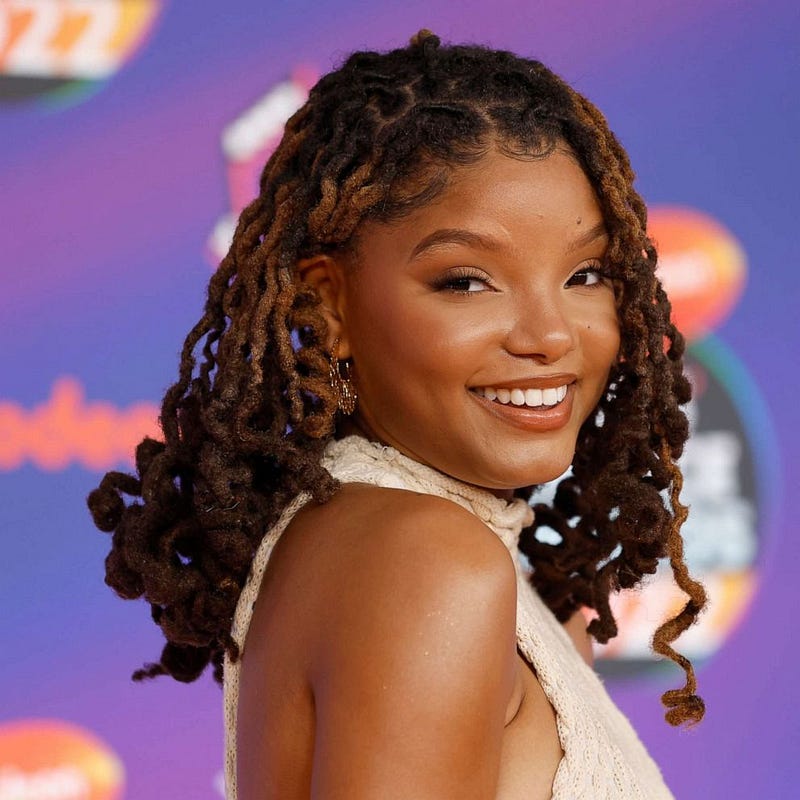
Halle Bailey at 2022 Nickelodeon Kid's Choice Awards, April 2022 | Photo Credit | Frazer Harrison, Getty Images

When Disney announced Halle Bailey would play the leading role in The Little Mermaid in 2019, the white backlash was quick to follow. Now that millions of people have seen the movie trailer, that fire has reignited. It's as if some White people couldn't fathom the idea of a Black mermaid swimming, singing, making friends, and pursuing love. So when #NotMyAriel started trending, it became clear that it's not anger, sadness, or disappointment some White fans feel in learning Ariel would become a Black princess— it's racism.

The irony shouldn't be lost on us that claiming a Black mermaid is unrealistic ignores the fact that a mermaid is a mythological creature. Some suggest that since mermaids come from a Danish myth, it wouldn't be appropriate to substitute a Black actress for a White one. However, White people are not the only ones with stories about mythological humanoid sea creatures. For instance, "the West African legend Mami Wata has existed for six centuries." Mami Wata was a mermaid or water spirit and said to have "flowing hair." It's astounding that even in the world of fiction, where imagination takes center stage, some White fans are openly against adding Black characters into the mix. Why are White myths deemed superior, as opposed to adjacent to Black ones?

Racism can cripple someone’s imagination.

A mermaid can breathe, speak, and eat underwater but still breathe air — is that realistic? No, but in fantasy, things do not have to be real; they need verisimilitude, "the semblance of truth." Some openly suggested after Disney announced their casting decision that only a White woman with red hair should play Ariel. And while there's nothing new about White Americans complaining about diversity, it is shocking to see them get so bent out of shape behind Black mythical creatures. The Little Mermaid isn't the only project catching heat for diverse casting decisions. For instance, some White fans responded poorly to The Lord of the Rings: The Rings of Power, a series that included Black elves, like Sophia Nomvete and Ismael Cruz Cordova. Suddenly, a Black elf isn't realistic, as if elves of any race are real.

We've seen this type of backlash before, like when The Wonder Years reboot came out, and some White fans struggled to accept a Black boy playing the main character. In America, nostalgia has become a mask for racism. "Oh, I'm not racist, I just like the way things were" is the same as the "make America great again" propaganda we've heard over the years. Far too many White people are anxious about the impending demographic shift, also known as the "browning of America." So, when those White people see a Black mermaid, they see her as a direct challenge to their white-centered culture.

Disney has grown more diverse over the years. We can see the progression from early White princesses like Cinderella, Snow White, and Princess Belle to diverse princesses like Jasmine, Pocahontas, Mulan, and Princess Tiana. From the critique, it seems White people want the White princesses to stay white, even though none of these people ever existed. Some fans have suggested boycotting Disney, while others shared pictures of a White woman playing Ariel, meaning she would be fired now that a Black mermaid is playing in the movie. One person claimed that Disney knew fans would hate it and "did it anyways," using the hashtag #NotMyAriel. Hate to break it to the racists, but over a hundred million people saw the Little Mermaid trailer. Based on the buzz it's received so far, the movie is likely to be successful, despite the racists who plan to boycott the film.

As typical in American life, there's always resistance whenever an organization takes a meaningful step towards diversity. Last year, Disney implemented a White Privilege Checklist for employees to decrease the racism experienced by employees and clientele. However, Disney doesn't seem to be backing down any time soon as an organization. Disney makes no apologies when it comes to adding diversity to their pantheon of princesses. In 2019, their executives saw some adverse, racist reactions to Halle Bailey cast as Princess Ariel, yet they persisted.

The takeaway here is that racism can cripple someone’s imagination. The fact that White people are struggling to accept a Black mermaid when my generation grew up accepting a White one is clear, cut racism. Furthermore, slamming your fist on the counter and insisting that a Black woman cannot be a mermaid, a mythical creature, shows just how petty and illogical racism is. But, like a dog with a bone, they won’t leave mythical Black characters alone.

🌹Learn more about the author here. 🖊Sign up to read all my stories and thousands more.

Racism
BlackLivesMatter
Movies
Culture
Psychology
Recommended from ReadMedium