
Snowtober: a hell of a Halloween blizzard
“Alfred the Great” storms the Northeast, October 29, 2011
Prompt 2
Have you ever been through a natural disaster? What was the experience like for you, and how do you view these disasters now, having gotten through to the other side?
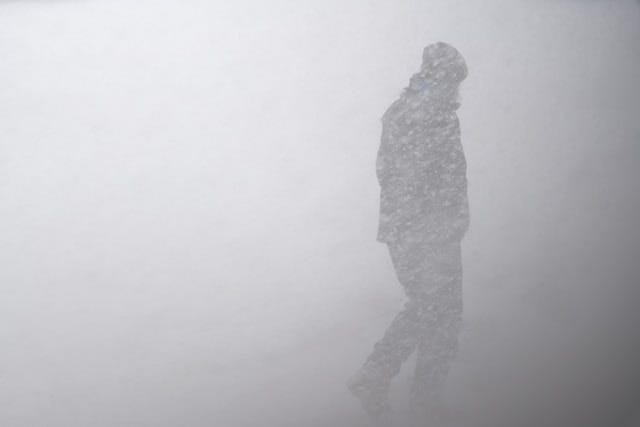
“The National Weather Service has just issued a blizzard warning for the areas…”
I was tired of hearing this announcement, so I flipped the channel before deciding I wanted to snap some photos of the roses in the backyard. As I headed out, it was still rather warm for late October even with a few snowflakes. I was in a good mood and even enthusiastic about the idea of snow since my furnace had just been repaired the previous day. There was nothing to fear. After all, the previous October snow I had experienced in both the Midwest and Northeast had never been serious affairs.
Returning to the house with a small bouquet of the last autumn roses, I felt happy with myself. It was going to be a cozy evening with the cats and I was ready to enjoy the first hot chocolate of the season.
It was at that moment that the wind began to pick up. It didn’t sound like anything too out of the ordinary but I thought to myself maybe I ought to check my online class to see if any students posted. Just in case we lose power.
The wind showed no signs of dying down. Instead, the gusts grew stronger. I was beginning to realize this was no ordinary storm over the next half hour as large branches fell from the oak tree with loud thuds. There was lightning as well.
Then the lights went out.
By now, I was terrified. There were already reports that three-quarters of the state had already lost power in this strange thunderblizzard.
Meanwhile, more branches dropped from the trees — and the house alarm began to shriek as the winds howled all around the house. Fortunately, the phone was still working as I called ADT even though I had just lost my broadband connection.
The only relief the next morning was knowing that the thunderblizzard had moved off. But I was horrified by the mess of branches in my backyard. How was I going to clear them? How much would it cost?
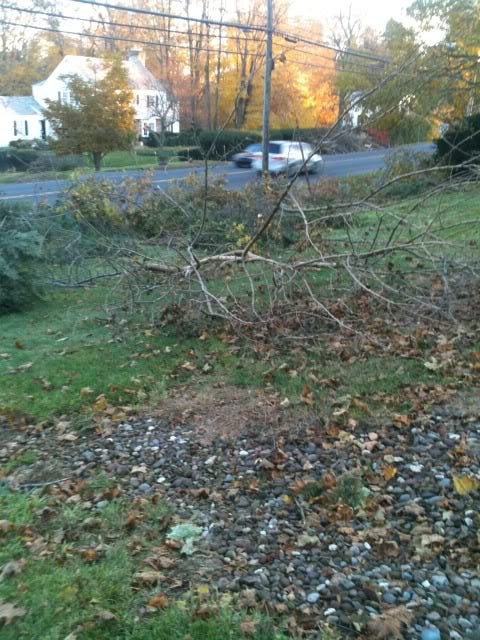
More disquieting was the fact that the power was still out — and there was no clue as to when it would return. None of my neighbors had seen the trucks from our electric provider. How was I going to teach? Even though I told myself I was lucky not to have to commute 3 hours to teach, especially since the roads were a mess with downed trees and power lines, I was still uneasy. It was clear I would have to walk through the unshoveled sidewalks to the library and adjoining senior center every day to use their computers and charge my phone. And that I would have to read by candlelight at night since the library was only open until 6 pm.
Hearing the stories of the damage caused by the storms and lives lost helped me gain some perspective. Thank God a tree did not crash through my roof. Thank God there was no fire — with no trees blocking the entrance given my house. And thank God I was not foolish enough to try to barbecue in my house. In the last two instances, the families were burned alive.
I also felt sorry for some of the elderly persons at the senior center. One begged the manager of to allow him to stay overnight since it was heated but was curtly reminded to use the shelter at the other end of town. Surely facilities should have been set up at both ends of our town?
A week later, there was still no power–and no news as to when it would be restored. That infuriated me more than anything else — particularly with more accounts of accidents and deaths. Needless to say, I was not the only one frustrated. One woman in her 70s suggested that we all pay a visit to the CEO of the company and punch the living daylights out of him. Fair return for having no lights, yes?
Many of us fumed, wondering why it is that these power companies are so eager to cut off people’s electricity when a bill is unpaid–while they themselves have such little sense of responsibility in a matter as crucial as restoring electricity to an entire state. Some laughed at the bitter irony of receiving shut-off notices during this (mael)storm. Mother Nature has already shut it off–whatcha gonna do? The replies of the company were even more ludicrous as they assured us that we would not be charged for power during the black-out. YOU DON’T SAY?!
But arguably worse was the government. (I thought Democrats were supposed to be friends of the people, no?) While the state attorney general wanted an investigation into the company–he was pretty ticked off, having no power–the governor waived it off. Of course–his power was still on, thanks to the numerous generators at the Governor’s Mansion. Nor did the governor try to press the CEO of the company or threaten him with immediate firing. As we later discovered, there were a number of advisors who sought to deter the state from taking further action on the company. I guess that might be bad for campaign contributions? But I suppose that like the governor, the CEO had no real impetus since he too had a number of generators keeping the lights on in his 8000 sq. ft house in the plush town of Farmington.
Finally, after ten days, our power was restored. Hurray! Just when the temps were quite mild, warming up to an unseasonable 70 degrees the day we were able to heat up our houses. (Yes, ironic.)
At the end of the day, the CEO resigned–even though many of us would have preferred a firing for his irresponsibility and gross incompetence. You see, we know that if any of us “little people” had done such a major fuck-up, we’d be fired on the spot–while the CEO retires with a fat multimillion dollar pension, resting peacefully in his 8000 sq ft house with his family, and his friend, the governor, tells us to “look forward, not backwards”: just as in the case of the 2009 bailout for the Wall Street banks that crashed the nation.
So if there is one thing I learned, it is this: Mother Nature can be fierce, but incompetent CEOs and a do-nothing, neoliberal government that protects corporations and profits rather than the people make the effects of a storm far, far worse. In fact, the effects of Hurricane Sandy a year later would be even worse with areas of New York and New Jersey without power for weeks — especially in impoverished locales. This is why climate change, as I’ve mentioned here, is such an important issue — especially for the poor. This is why we need legislators who will actually combat climate change on a real, not half-assed basis.
The solution is simple. Stop voting for corporate-friendly politicians, whether Democrat or Republican who mealy-mouth their way through issues of climate change. No Republicans. No neoliberals like Dianne Feinstein or Nancy Pelosi. Their interests are NOT ours.