avatarDr Mehmet Yildiz

Free AI web copilot to create summaries, insights and extended knowledge, download it at here

7576

Abstract

previous story. GABA has dual effects on SCN neurons: it is excitatory during the day and inhibitory at night, with its nighttime excitatory effect not fully understood yet.</p><p id="986a">As documented <a href="https://academic.oup.com/sleep/article/43/1/zsz194/5699236">in this paper,</a> the Nobel Prize in Physiology or Medicine was recently awarded to three pioneers in circadian biology for their ground-breaking work unraveling the molecular mechanisms of the circadian clock. The Nobel Prize Committee recognized not only the value of uncovering the mechanisms that drive circadian rhythms but also their important health implications.</p><h2 id="68a6">How does SCN regulate sleep in simple terms?</h2><p id="f662">The SCN sends signals to other brain regions involved in sleep regulation, such as the pineal gland and the brainstem. These signals help coordinate the timing of sleep and wakefulness based on the information received from light exposure.</p><p id="2ae9">The SCN regulates <a href="https://readmedium.com/the-critical-role-of-cortisol-in-sleep-disturbances-39f2db3307c8">melatonin</a> production, a hormone that helps regulate sleep-wake cycles. In response to darkness, the SCN signals the pineal gland to release melatonin, promoting sleepiness.</p><p id="38fb">The relationship between the SCN and adenosine lies in their coordinated efforts to regulate the sleep-wake cycle. While the SCN primarily governs the timing of sleep and wakefulness based on light input, adenosine levels rise during wakefulness and gradually decline during sleep, contributing to the regulation of sleep pressure and the timing of sleep onset.</p><p id="ad2d">Therefore, while the SCN sets the overall timing of the sleep-wake cycle, adenosine levels help modulate the drive for sleep within this cycle. The interaction between the SCN and <a href="https://readmedium.com/the-best-way-to-solve-sleep-issues-is-to-understand-the-roles-of-cortisol-melatonin-and-adenosine-725e4a95465e'">adenosine/melatonin/cortisol</a> illustrates the complex interplay of biological mechanisms in regulating sleep and wakefulness.</p><p id="b5e7">The SCN contains a network of “clock genes” that help regulate its own rhythmic activity. These genes produce proteins like <a href="https://www.science.org/doi/10.1126/science.7855598">PER</a>, <a href="https://genomebiology.biomedcentral.com/articles/10.1186/gb-2005-6-5-220">Cryptochrome</a>, and <a href="https://www.science.org/doi/10.1126/science.280.5369.1564">CLOCK proteins</a> that oscillate cyclically, forming the molecular basis of our internal clock.</p><p id="ab5b">Disruptions to the normal functioning of the SCN, such as changes in light exposure due to shift work, jet lag, or certain medical conditions, can lead to disturbances in our sleep-wake cycle. This can result in sleep disorders, fatigue, and impaired cognitive function.</p><h2 id="ce15">What are the medical conditions caused by SCN and sleep-wake cycle disruptions?</h2><p id="db57">Medical conditions related to SCN and circadian rhythms include Delayed Sleep Phase Syndrome, Advanced Sleep Phase Syndrome, Non-24-Hour Sleep-Wake Disorder, Irregular Sleep-Wake Rhythm Disorder, Shift Work Sleep Disorder, and Jet Lag.</p><p id="84d2">These conditions involve disruptions to the normal functioning of the circadian rhythms regulated by the SCN, leading to disturbances in the sleep-wake cycle.</p><p id="222a">Neurological conditions like Alzheimer’s and Parkinson’s diseases can disrupt circadian rhythms, which can subsequently lead to sleep disturbances. These disruptions in circadian rhythms may manifest as difficulties falling asleep, staying asleep, or experiencing restorative sleep patterns.</p><p id="63c3">You can learn more about the details of these conditions <a href="https://academic.oup.com/sleep/article/43/1/zsz194/5699236">in this 2020 scientific paper</a> titled, <b>Health Consequences of Circadian Disruption.</b></p><h2 id="f918">Can SCN rhythms be measured?</h2><p id="7b41">As documented <a href="https://www.jci.org/articles/view/148286">in this paper</a> in the Journal of Clinical Investigation, although the suprachiasmatic nucleus (SCN) rhythm cannot be directly measured in humans, the timing of melatonin onset and its strength measured in plasma or saliva, as well as the melatonin metabolite 6-sulfatoxymelatonin in urine, serve as key indicators of circadian rhythms.</p><p id="6d82">Although less direct, other commonly used measures include rest/activity cycles derived from actigraphy and other hormonal, metabolic, and cardiovascular rhythms.</p><p id="00f1">Collecting 24-hour urine samples is particularly valuable for assessing melatonin’s circadian strength, especially in specific populations like pediatric patients where obtaining blood or saliva samples may pose challenges. This method has shown promise as a responsive biomarker for circadian disruption in neurologic conditions like Alzheimer’s disease and pediatric epilepsy.</p><h2 id="b75d">Difference between SCN and LGN in Light Management</h2><p id="1474">When teaching about the impact of light on the brain, some students found it challenging to differentiate between the SCN and LGN due to their seemingly similar roles in managing light within the brain.</p><p id="706d"><a href="https://www.ncbi.nlm.nih.gov/books/NBK546664/">The suprachiasmatic nucleus</a> (SCN) and <a href="https://www.ncbi.nlm.nih.gov/books/NBK541137/">the lateral geniculate nucleus</a> (LGN) both process light-related information, yet they operate in distinct brain regions and serve different functions.</p><p id="5bef">The SCN in the hypothalamus regulates our internal clock and circadian rhythms by responding to light input from the retina. On the other hand, the LGN, located in the thalamus, acts as a relay center for visual information, transmitting signals from the retina to the visual cortex for processing and interpretation, enabling visual perception.</p><p id="9f04">To remember it easily, the SCN receives input from light-sensitive cells in the retina to regulate our body’s internal clock and circadian rhythms. The LGN receives visual information from the retina and relays it to the visual cortex for processing, allowing us to see and interpret our surroundings.</p><h2 id="44e8">How to Optimize the Suprachiasmatic Nucleus</h2><p id="0a88">Optimizing the function of <a href="https://www.ncbi.nlm.nih.gov/books/NBK546664/">the suprachiasmatic nucleus</a> (SCN) involves promoting healthy circadian rhythms and ensuring that our internal clock remains synchronized with the external environment.</p><p id="b8a3">The most important factor is morning light exposure. So we must spend time outdoors, especially within the first hour of waking up. Natural sunlight helps signal to our SCN that it is the start of the day, helping to regulate our internal clock. Those who cannot get adequate sun exposure due to geographic constraints, like in Scandinavian countries, might consider SAD lights (<a href="https://karger.com/pps/article-abstract/89/1/17/289795/The-Efficacy-of-Light-Therapy-in-the-Treatment-of?redirectedFrom=fulltext">light therapy</a>).</p><p id="3157">The next key point is a consistent sleep schedule. We must go to bed and wake up at the same time every day, including on weekends. Consistency helps reinforce our circadian rhythms and supports the function of the SCN.</p><p id="1ec4">Another critical point is creating a sleep-friendly environment. Darkness in our bedroom at night matters. In the hours leading up to bedtime, we

Options

must keep our bedroom dark and free from bright lights (especially blue light emitted by electronic devices). This approach naturally signals to the SCN that it is time to prepare for sleep.</p><p id="4a0e">Limiting exposure to artificial light at night is an essential factor. Before bedtime, we must reduce screen time to lower exposure to electronic screens, like TVs, smartphones, tablets, or computers. The blue light emitted by these devices can suppress melatonin production, making it harder to fall asleep.</p><p id="d69c">Fundamental health style factors like regular exercise and diet also play a role. We must move the body and engage in regular workouts during the day. However, we must avoid vigorous exercise close to bedtime, as it can stimulate and disrupt sleep.</p><p id="23f6">Regarding diet, we need to consume essential nutrients from whole foods. We also need to avoid heavy meals, caffeine, and alcohol close to bedtime, as they can interfere with our sleep-wake cycle.</p><p id="3f7f">The brain also needs <a href="https://readmedium.com/the-brain-needs-3-types-of-rest-b63b30c19424">relaxation and downtime</a>. To help unwind and prepare the body for sleep, we may practice relaxation techniques like deep breathing, meditation, or gentle stretching before bedtime.</p><p id="4225">Travelers and shift workers need to be extra careful. When traveling across time zones, we need to adjust our sleep schedule gradually a few days before departure to minimize the effects of jet lag.</p><p id="c655">If you work irregular or night shifts, you must maintain a consistent sleep-wake schedule as much as possible and optimize your sleep environment to promote restorative sleep during the day. As I did shift work for many years, I struggled with it, causing <a href="https://readmedium.com/three-tips-to-optimize-cortisol-to-melt-belly-fat-and-keep-lean-muscles-9fba2e12868e"><b>elevated cortisol</b></a><b> </b>and affecting my physical and mental health.</p><p id="910c">These practical tips can help optimize the function of our suprachiasmatic nucleus (SCN) and promote healthy circadian rhythms, which are essential for overall health and well-being.</p><p id="60cf">If these approaches do not work and you still experience persistent sleep difficulties or disruptions to your circadian rhythms despite implementing these strategies, you need to obtain timely support from qualified healthcare professionals like a sleep specialist for further evaluation and guidance.</p><p id="11fe">As an ambitious shift worker in my younger years who attempted working full time and studying part time, I had significant sleep issues. I only understood the importance of sleep when I faced serious health issues like <a href="https://readmedium.com/defeat-metabolic-syndrome-and-slim-down-waistline-with-three-tips-2abaa6c7a2ef">metabolic syndrome</a>, <a href="https://readmedium.com/understanding-the-nuances-of-4-types-of-obesity-72ec6d2b926b">abdominal obesity</a>, <a href="https://readmedium.com/as-a-scientist-former-prediabetic-i-optimistically-believe-type-ii-diabetes-is-preventable-and-8ad237051819">prediabetes</a>, and <a href="https://readmedium.com/heres-how-i-defeated-brain-fog-with-six-lifestyle-habits-decades-ago-f72609bcd6a9">brain fog</a>. However, I solved my sleep disturbances with healthy lifestyle choices and timely professional support.</p><p id="c4fd">I documented my experience in a story titled <a href="https://readmedium.com/heres-how-i-corrected-my-sleep-issues-in-7-steps-and-reaped-many-health-benefits-c9978a215a54">Here’s How I Corrected My Sleep Issues in 7 Steps and Reaped Many Health Benefits.</a> I also wrote numerous other articles about the importance of sleep in our health and wellbeing, which you can find in the attached list.</p><div id="b462" class="link-block"> <a href="https://dr-mehmet-yildiz.medium.com/list/5312245c4bce"> <div> <div> <h2>Importance of Sleep for Health</h2> <div><h3>Edit description</h3></div> <div><p>dr-mehmet-yildiz.medium.com</p></div> </div> <div> <div style="background-image: url(https://miro.readmedium.com/v2/resize:fit:320/0*8b373bd783b4a7688ce748d8b28b590c55149cd2.jpeg)"></div> </div> </div> </a> </div><p id="85bb">Thank you for reading my perspectives. I wish you a healthy and happy life.</p><p id="ac88">To inform my new readers, I wrote numerous articles that might inform and inspire you. Some of my topics include <a href="https://dr-mehmet-yildiz.medium.com/list/c8a80b8c613f">brain, mental health, cognitive function</a>, <a href="https://dr-mehmet-yildiz.medium.com/list/aacf56086ae9">significant health conditions</a>, <a href="https://dr-mehmet-yildiz.medium.com/list/372572eaad7d">longevity</a>, <a href="https://dr-mehmet-yildiz.medium.com/list/400b711bb77c">nutrition/food</a>, <a href="https://medium.com/@dr-mehmet-yildiz/list/valuable-nutrients-and-supplements-024e180d87c3">valuable nutrients</a>, <a href="https://medium.com/@dr-mehmet-yildiz/list/ketosis-and-ketogenic-lifestyle-47c6de08a6d0">ketogenic lifestyle</a>, <a href="https://medium.com/@dr-mehmet-yildiz/list/fasting-ketosis-autophagy-mitophagy-0b05abbbc54a">self-healing</a>, <a href="https://medium.com/@dr-mehmet-yildiz/list/weight-loss-muscle-gain-ebd4707b5d08">weight management</a>, <a href="https://medium.com/@dr-mehmet-yildiz/list/writing-content-development-marketing-strategy-guides-fc011f20d2db">writing/reading</a>, and <a href="https://medium.com/@dr-mehmet-yildiz/list/my-hilarious-stories-to-tickle-your-funny-bones-9eeaab8900ae">humor</a>, including <a href="https://readmedium.com/100-insightful-life-lessons-from-my-circles-for-the-last-50-years-92c4e12840b0">100+ Insightful Life Lessons from My Circles for the Last 50+ Years</a>.</p><p id="4e08">I publish my health and wellness stories on <a href="https://medium.com/sensible-biohacking-transhumanism"><b>EUPHORIA</b></a>.<b><i> </i></b>My posts do not include professional or health advice. I only document my reviews, observations, experiences, and perspectives to provide information and create awareness.</p><p id="bc25">If you are a writer, you are welcome to join <a href="https://readmedium.com/master-copy-onboarding-new-writers-d20e5ad97a86">my publications</a> by sending a request <a href="https://digitalmehmet.com/contact">via this link.</a> I support 27K+ writers who contribute to <a href="https://readmedium.com/1d7c52c1f8b6">my publications</a> on this platform. I also have <a href="https://medium.com/@technnology-hits">another profile</a> to <a href="https://readmedium.com/d92894276f92">write and curate tech stories</a>.</p><div id="744a" class="link-block"> <a href="https://dr-mehmet-yildiz.medium.com/subscribe"> <div> <div> <h2>Get an email whenever Dr Mehmet Yildiz publishes. He is a top writer and editor on Medium.</h2> <div><h3>undefined</h3></div> <div><p>undefined</p></div> </div> <div> <div style="background-image: url(https://miro.readmedium.com/v2/resize:fit:320/0*-rT4lxsdP_1ScAO0)"></div> </div> </div> </a> </div><p id="bb6f"><a href="https://readmedium.com/importance-and-value-of-medium-friendship-for-writers-and-readers-bb576ae0bd0a"><b>Importance and Value of Medium Friendship for Writers and Readers</b></a></p></article></body>

Sleep Regulation: Neurobiology of the Suprachiasmatic Nucleus

I explain how the brain regulates circadian rhythms and whether a literal “clock” exists within it in simple terms based on experience and research.

Non-members can read this important story for free via my friend link.
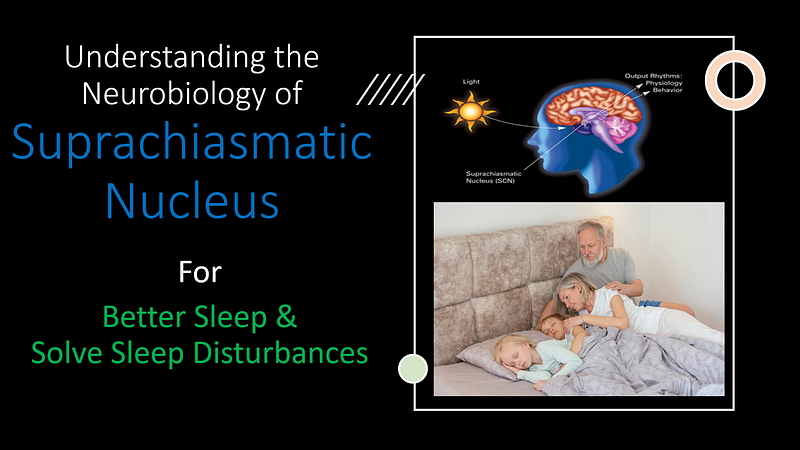
Image designed by the author using photos from Pexels and Wiki Commons

Sleep is the cornerstone of human and organismal well-being, highlighted in my previous health and cognitive function stories. Without sleep, rest, and downtime, the brain’s vitality wanes. Nonetheless, in our contemporary era, there is a trend where some people shun sleep, resorting to alertness aids in pursuit of heightened productivity. I have compassion for millions of people experience sleep deprivation as I also struggled with it causing severe health issues to me in my younger years.

Recently, I discussed vital biochemicals influencing sleep regulation and patterns, including cortisol, melatonin, and adenosine, while emphasizing the significance of biological rhythms like circadian rhythms. Following this discussion, subscribers intrigued by the hormonal aspects sought clarification on how the brain regulates these rhythms and whether a literal “clock” exists within it.

Given these inquiries, which arose when teaching neurobiology and neurochemistry lectures on sleep architecture in cognitive science classes, it is beneficial to simply introduce this particular brain area, focusing on optimizing it to enhance our sleep quality and overall well-being.

To make this a valuable piece for a broad audience, without going into scientific and technical details, I will provide a high-level perspective of the suprachiasmatic nucleus (SCN), its vital function, its relationships and interaction with other brain regions, and the process behind regulating circadian rhythms (sleep-wake cycles) with practical tips for those struggling with sleep issues.

Simplified Neurobiology of the Suprachiasmatic Nucleus at a High Level

The suprachiasmatic nucleus (SCN) is a specific brain region that helps regulate our circadian rhythms (sleep-wake cycles). Disruptions to SCN function can have adverse implications for sleep quality, health, and well-being. In modern society, circadian misalignment is common and is associated with poor health.

Through its interactions with light input, neurotransmitters, hormonal signals, and clock genes, the SCN coordinates the timing of sleep and wakefulness, maintaining that our internal clock remains synchronized with the external environment.

The SCN is a tiny yet sophisticated region in the hypothalamus, a part of the brain situated above the optic nerves. It plays a crucial role in regulating our sleep-wake cycle, also known as our circadian rhythm.

As documented in this NIH book chapter, the SCN comprises two nuclei (cores), each housing around 10,000 neurons, positioned on either side of the third ventricle directly above the optic chiasm. Within the SCN, there are “core” and “shell” subregions distinguished by the presence of specific neuropeptides.

The retinol-recipient core contains vasoactive intestinal peptide and gastrin-releasing peptide, while arginine vasopressin-expressing cells are in the shell. These neuropeptides' consistent expression and location across various mammalian species emphasize their significance in maintaining circadian rhythms.

The SCN acts as our body’s internal clock, helping to regulate physiological processes over a roughly 24-hour cycle, but not exactly. These processes include sleep patterns, hormone release, body temperature, and metabolism.

The SCN receives direct input from special light-sensitive cells in the eye's retina. These cells detect changes in light and send signals to the SCN, helping to synchronize our internal clock with the natural light-dark cycle.

The SCN consists of specialized neurons that exhibit rhythmic activity patterns over 24 hours. Both external cues, like light, and internal biological processes, like metabolism, influence this activity.

Various neurotransmitters, such as glutamate and GABA, and neuropeptides, like vasopressin and vasoactive intestinal peptide, play essential roles in SCN function. These neurotransmitters help regulate the timing and coordination of SCN activity.

The retinohypothalamic tract (RHT) receives direct inputs from light-sensitive ganglion cells in the retina. It secretes glutamate into the core VIP regions of the SCN, regulating circadian rhythmicity.

Another neurotransmitter, pituitary adenylate cyclase-activating polypeptide (PACAP), found in retinal ganglion cells, helps relay light information and enhances glutamate’s action on the SCN.

The geniculohypothalamic tract (GHT) provides a secondary, indirect photic input mediated by various stimuli. In the SCN, GHT and RHT overlap in their innervation. GHT neurotransmitters include neuropeptide Y (NPY), GABA, and enkephalin (ENK).

NPY acts directly on SCN pacemaker neurons and inhibits GABA transmission, as I explained in a previous story. GABA has dual effects on SCN neurons: it is excitatory during the day and inhibitory at night, with its nighttime excitatory effect not fully understood yet.

As documented in this paper, the Nobel Prize in Physiology or Medicine was recently awarded to three pioneers in circadian biology for their ground-breaking work unraveling the molecular mechanisms of the circadian clock. The Nobel Prize Committee recognized not only the value of uncovering the mechanisms that drive circadian rhythms but also their important health implications.

How does SCN regulate sleep in simple terms?

The SCN sends signals to other brain regions involved in sleep regulation, such as the pineal gland and the brainstem. These signals help coordinate the timing of sleep and wakefulness based on the information received from light exposure.

The SCN regulates melatonin production, a hormone that helps regulate sleep-wake cycles. In response to darkness, the SCN signals the pineal gland to release melatonin, promoting sleepiness.

The relationship between the SCN and adenosine lies in their coordinated efforts to regulate the sleep-wake cycle. While the SCN primarily governs the timing of sleep and wakefulness based on light input, adenosine levels rise during wakefulness and gradually decline during sleep, contributing to the regulation of sleep pressure and the timing of sleep onset.

Therefore, while the SCN sets the overall timing of the sleep-wake cycle, adenosine levels help modulate the drive for sleep within this cycle. The interaction between the SCN and adenosine/melatonin/cortisol illustrates the complex interplay of biological mechanisms in regulating sleep and wakefulness.

The SCN contains a network of “clock genes” that help regulate its own rhythmic activity. These genes produce proteins like PER, Cryptochrome, and CLOCK proteins that oscillate cyclically, forming the molecular basis of our internal clock.

Disruptions to the normal functioning of the SCN, such as changes in light exposure due to shift work, jet lag, or certain medical conditions, can lead to disturbances in our sleep-wake cycle. This can result in sleep disorders, fatigue, and impaired cognitive function.

What are the medical conditions caused by SCN and sleep-wake cycle disruptions?

Medical conditions related to SCN and circadian rhythms include Delayed Sleep Phase Syndrome, Advanced Sleep Phase Syndrome, Non-24-Hour Sleep-Wake Disorder, Irregular Sleep-Wake Rhythm Disorder, Shift Work Sleep Disorder, and Jet Lag.

These conditions involve disruptions to the normal functioning of the circadian rhythms regulated by the SCN, leading to disturbances in the sleep-wake cycle.

Neurological conditions like Alzheimer’s and Parkinson’s diseases can disrupt circadian rhythms, which can subsequently lead to sleep disturbances. These disruptions in circadian rhythms may manifest as difficulties falling asleep, staying asleep, or experiencing restorative sleep patterns.

You can learn more about the details of these conditions in this 2020 scientific paper titled, Health Consequences of Circadian Disruption.

Can SCN rhythms be measured?

As documented in this paper in the Journal of Clinical Investigation, although the suprachiasmatic nucleus (SCN) rhythm cannot be directly measured in humans, the timing of melatonin onset and its strength measured in plasma or saliva, as well as the melatonin metabolite 6-sulfatoxymelatonin in urine, serve as key indicators of circadian rhythms.

Although less direct, other commonly used measures include rest/activity cycles derived from actigraphy and other hormonal, metabolic, and cardiovascular rhythms.

Collecting 24-hour urine samples is particularly valuable for assessing melatonin’s circadian strength, especially in specific populations like pediatric patients where obtaining blood or saliva samples may pose challenges. This method has shown promise as a responsive biomarker for circadian disruption in neurologic conditions like Alzheimer’s disease and pediatric epilepsy.

Difference between SCN and LGN in Light Management

When teaching about the impact of light on the brain, some students found it challenging to differentiate between the SCN and LGN due to their seemingly similar roles in managing light within the brain.

The suprachiasmatic nucleus (SCN) and the lateral geniculate nucleus (LGN) both process light-related information, yet they operate in distinct brain regions and serve different functions.

The SCN in the hypothalamus regulates our internal clock and circadian rhythms by responding to light input from the retina. On the other hand, the LGN, located in the thalamus, acts as a relay center for visual information, transmitting signals from the retina to the visual cortex for processing and interpretation, enabling visual perception.

To remember it easily, the SCN receives input from light-sensitive cells in the retina to regulate our body’s internal clock and circadian rhythms. The LGN receives visual information from the retina and relays it to the visual cortex for processing, allowing us to see and interpret our surroundings.

How to Optimize the Suprachiasmatic Nucleus

Optimizing the function of the suprachiasmatic nucleus (SCN) involves promoting healthy circadian rhythms and ensuring that our internal clock remains synchronized with the external environment.

The most important factor is morning light exposure. So we must spend time outdoors, especially within the first hour of waking up. Natural sunlight helps signal to our SCN that it is the start of the day, helping to regulate our internal clock. Those who cannot get adequate sun exposure due to geographic constraints, like in Scandinavian countries, might consider SAD lights (light therapy).

The next key point is a consistent sleep schedule. We must go to bed and wake up at the same time every day, including on weekends. Consistency helps reinforce our circadian rhythms and supports the function of the SCN.

Another critical point is creating a sleep-friendly environment. Darkness in our bedroom at night matters. In the hours leading up to bedtime, we must keep our bedroom dark and free from bright lights (especially blue light emitted by electronic devices). This approach naturally signals to the SCN that it is time to prepare for sleep.

Limiting exposure to artificial light at night is an essential factor. Before bedtime, we must reduce screen time to lower exposure to electronic screens, like TVs, smartphones, tablets, or computers. The blue light emitted by these devices can suppress melatonin production, making it harder to fall asleep.

Fundamental health style factors like regular exercise and diet also play a role. We must move the body and engage in regular workouts during the day. However, we must avoid vigorous exercise close to bedtime, as it can stimulate and disrupt sleep.

Regarding diet, we need to consume essential nutrients from whole foods. We also need to avoid heavy meals, caffeine, and alcohol close to bedtime, as they can interfere with our sleep-wake cycle.

The brain also needs relaxation and downtime. To help unwind and prepare the body for sleep, we may practice relaxation techniques like deep breathing, meditation, or gentle stretching before bedtime.

Travelers and shift workers need to be extra careful. When traveling across time zones, we need to adjust our sleep schedule gradually a few days before departure to minimize the effects of jet lag.

If you work irregular or night shifts, you must maintain a consistent sleep-wake schedule as much as possible and optimize your sleep environment to promote restorative sleep during the day. As I did shift work for many years, I struggled with it, causing elevated cortisol and affecting my physical and mental health.

These practical tips can help optimize the function of our suprachiasmatic nucleus (SCN) and promote healthy circadian rhythms, which are essential for overall health and well-being.

If these approaches do not work and you still experience persistent sleep difficulties or disruptions to your circadian rhythms despite implementing these strategies, you need to obtain timely support from qualified healthcare professionals like a sleep specialist for further evaluation and guidance.

As an ambitious shift worker in my younger years who attempted working full time and studying part time, I had significant sleep issues. I only understood the importance of sleep when I faced serious health issues like metabolic syndrome, abdominal obesity, prediabetes, and brain fog. However, I solved my sleep disturbances with healthy lifestyle choices and timely professional support.

I documented my experience in a story titled Here’s How I Corrected My Sleep Issues in 7 Steps and Reaped Many Health Benefits. I also wrote numerous other articles about the importance of sleep in our health and wellbeing, which you can find in the attached list.

Thank you for reading my perspectives. I wish you a healthy and happy life.

To inform my new readers, I wrote numerous articles that might inform and inspire you. Some of my topics include brain, mental health, cognitive function, significant health conditions, longevity, nutrition/food, valuable nutrients, ketogenic lifestyle, self-healing, weight management, writing/reading, and humor, including 100+ Insightful Life Lessons from My Circles for the Last 50+ Years.

I publish my health and wellness stories on EUPHORIA. My posts do not include professional or health advice. I only document my reviews, observations, experiences, and perspectives to provide information and create awareness.

If you are a writer, you are welcome to join my publications by sending a request via this link. I support 27K+ writers who contribute to my publications on this platform. I also have another profile to write and curate tech stories.

Importance and Value of Medium Friendship for Writers and Readers

Sleep
Health
Neuroscience
Mental Health
Self Improvement
Recommended from ReadMedium