
Since 1965: Winning the Identity Wars, Losing the Class War
“With everything going on, where do you think we are now? Are you still thinking 1950s? I’m thinking 1880s.” —Isabel Wilkerson, Caste: The Origins of Our Discontents
“I was at a conference a number of years ago at Harvard Law School when Derrick Bell was still on the faculty there. Bell was on a panel at this conference, and he insisted that nothing really had changed for black Americans since 1865. And I’m looking at this — here he was, a full professor at Harvard Law School, making the assertion that nothing had changed. Well, obviously something had changed, because he was in Harvard Law School without a broom in his hand.” —Adolph Reed
Identitarians love claiming things are no better than they were in 1965 or 1880 or 1865, but anyone with a sense of history knows the identity wars are being won. For example:
- In 1958, only 67% of Americans would vote for a Catholic President. Today, 95% would.
- In 1958, only 4% of Americans approved of marriage between blacks and whites. Today, 94% of Americans do.
- In 1967, only 53% of Americans would vote for a black President. Today, 96% of Americans would.
- In 1967, only 57% of Americans would vote for a female President. Today, 93% of Americans would.
- In 1978, only 26% of Americans would vote for a gay or lesbian President. Today, 78% of Americans would.
If you share the oddly common belief that people lie to pollsters so they won’t sound prejudiced, note that many Democrats were afraid anti-Catholic and anti-black voters were lying when the polls said Kennedy and Obama would win, yet both men were elected with the support that the polls predicted. As for Hillary Clinton’s loss, RealClearPolitics expected her to win the popular vote by 2% and she did—she was a victim of the Electoral College, not the polls.
If you insist on ignoring polls, consider these facts: since 1960, the US has elected two Catholic Presidents and one President who could not have drunk from a whites-only water fountain during Jim Crow, adults may now marry other adults of any gender, and more women than men are graduating from high school and college. Yet despite dramatic progress in the last sixty years for every identity group, there has been little economic change for them.
Why? We’re winning the identity wars and losing the class war. “Income inequality in the U.S has increased since 1980 and is greater than in peer countries.”
In 2009, Walter Benn Michaels noted in “What Matters”:
“In 1969, the top quintile of American wage-earners made 43 per cent of all the money earned in the US; the bottom quintile made 4.1 per cent. In 2007, the top quintile made 49.7 per cent; the bottom quintile 3.4. And while this inequality is both raced and gendered, it’s less so than you might think. White people, for example, make up about 70 per cent of the US population, and 62 per cent of those in the bottom quintile. Progress in fighting racism hasn’t done them any good; it hasn’t even been designed to do them any good. More generally, even if we succeeded completely in eliminating the effects of racism and sexism, we would not thereby have made any progress towards economic equality. A society in which white people were proportionately represented in the bottom quintile (and black people proportionately represented in the top quintile) would not be more equal; it would be exactly as unequal. It would not be more just; it would be proportionately unjust.”
In 2020, Matt Bruenig shared the basic truth about race and class in the USA in “The Racial Wealth Gap Is About the Upper Classes”:
“…nearly all white wealth is owned by the top 10 percent of white households just as nearly all black wealth is owned by the top 10 percent of black households. The lower and middle deciles of each racial group own virtually none of their racial group’s wealth.”
He also offered the simplest solution:
“…The way through this bind is of course to acknowledge that racial capitalism has concentrated almost all of the national wealth in the hands of a small number of white families and that the proper course of action is to redistribute that wealth to the multiracial lower and working classes, tackling both racial and class inequality simultaneously.”
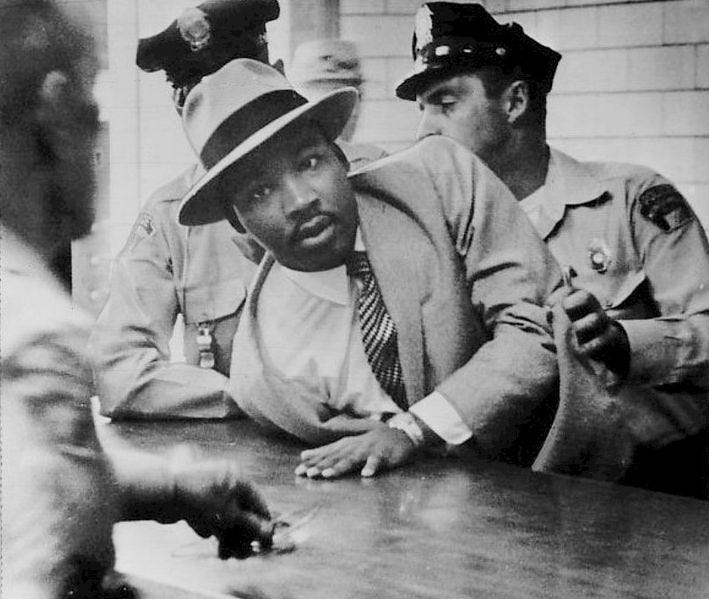
Of course, the rich will never consent to that. Martin Luther King observed, “Freedom is never voluntarily given by the oppressor; it must be demanded by the oppressed.” His final demand was Basic Income.
Identity and class are often seen as related things, which is why the identity wars have so often been led by socialists—Charles Fourier gave feminism its name, Karl Marx noted that the white working class cannot be free while the black working class is bound, Frederick Engels wrote about the exploitation of women developing simultaneously with the earliest class system, Oscar Wilde’s homosexuality made his praise of freedom under socialism all the more poignant, Debs and Du Bois and King and Malcolm X all criticized capitalism for providing the power for racism….
But while identity and class are often related, they are fundamentally different. Identity is about who you are; class is about what you have—or to put it more precisely, identity is about who you are allowed to be, and class is about what you are allowed to have. When the rich have absolute power, they enforce their prejudices absolutely. When the rich must compromise, they prefer to compromise their prejudices instead of their profits. And so, for half a century now, they steadily retreat in the identity wars while they seize more ground in the class war.
Isabel Wilkerson is right, though not in the way she thinks. Identity today looks nothing like it did in 1880. But the wealth gap looks remarkably like it did in the Gilded Age.