
Since 1619…
Margaret Walker’s Legendary Poem Was Before Its Time
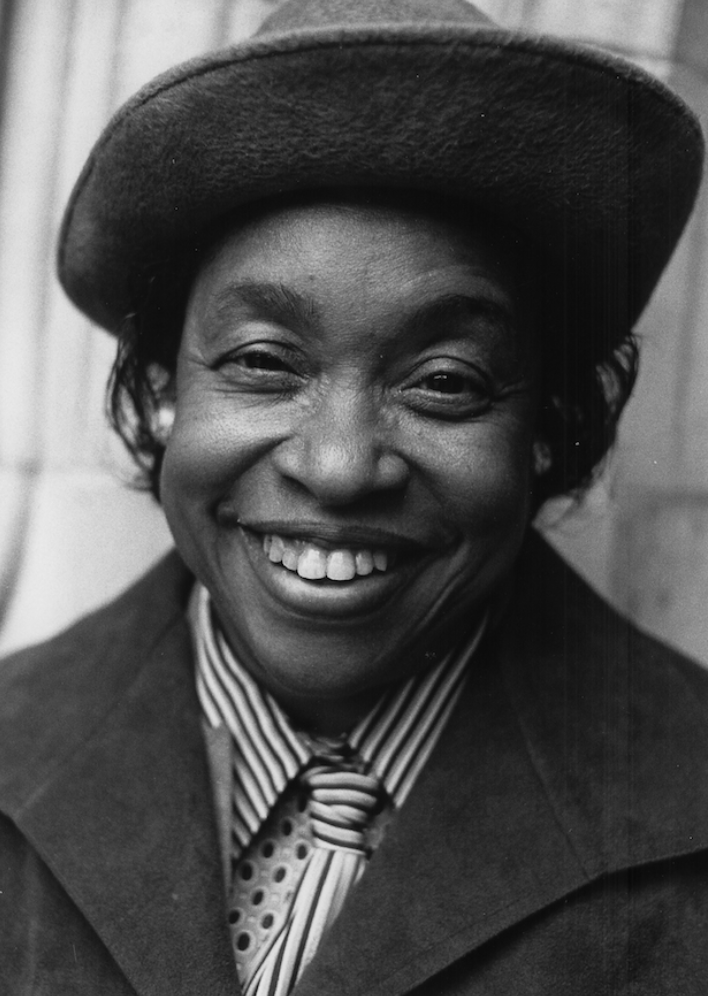
“How many years since 1619 have I been singing Spirituals?,” writes the great Black American writer, Margaret Walker in her famous poem, “Since 1619.”
Yes, “Since 1619” is a real poem. It is not a fake poem. Margaret Walker is a writer who lived on this earth and in this country called the United States of America. She wrote the poem and it was published nearly 80 years ago in 1942.
In Jackson, Mississippi, where she lived and wrote for many years there is now, the Margaret Walker Center, at Jackson State University. They study her life and work there. She is a force in the universe still today.
Margaret Walker was born July 7, 1915, in Birmingham, Alabama. She was the child of an educated family — “her grandfather, father, and mother all received college degrees.”
Walker “finished elementary school by the age of eleven and graduated from high school by fourteen to attend the University of New Orleans.” She is a graduate of Northwestern University and the University of Iowa where she received a master’s degree and a PhD.
Walker was the first African-American to win the Yale Series of Younger Poets competition for her collection of poetry, For My People.
It was 1942. Both the poem, “Since 1619" and the more well known poem, “For My People,” appear in that collection.
“For my people everywhere singing their slave songs repeatedly: their dirges and their ditties and their blues and jubilees, praying their prayers nightly to an unknown god, bending their knees humbly to an unseen power…” (from ‘For My People’)
I never met Margaret Walker but I became a writer when she was alive and still writing. I felt good about that even though most of her most celebrated work had already been published by then.
She wrote a biography of Richard Wright that still sits on my shelf today. And her novel, Jubilee, is a classic in any international literary canon. It tells the history of a people, through the life of one African slave, a woman, her struggle, and survival through chattel slavery, intolerable oppression, and freedom.
Her most famous piece of writing is still likely her poem, “For My People” but “Since 1619” is not far behind. It is a poem about historical context, a poem that tells the story from the perspective of the Africans, and not those who captured and oppressed the Africans and then wrote a dishonest and convoluted tale of inhumanity and subservience. Margaret Walker is a liberator. She liberated the African American narrative in 1942 with “Since 1619.”
The poem makes one think of the recent New York Times “1619 Project” that seeks to, in the words of that project, “reframe the country’s history by placing the consequences of slavery and the contributions of black Americans at the very center of our national narrative.”
After its opening question — “How many years since 1619 have I been singing Spirituals? — Walker’s poem takes off and continues its unapologetic search for the truth by asking a series of biting questions that probe the past:
“How long have I been praising God and shouting hallelujahs? How long have I been hated and hating? How long have I been living in hell for heaven?
When will I see my brother’s face wearing another color? When will I be ready to die in an honest fight? When will I be conscious of the struggle — now to do or die? When will these scales fall away from my eyes?”
All of the history of the struggle against chattel slavery in America and white supremacy is right there before you in the poem. These are the issues that once haunted African Americans much more than they do today.
Today, as a result of day by day struggle against racial oppression, we know the answers to these questions on some level. African Americans will continue to push forward into the struggle. They will fight each day to tell their stories to their children. They know what has happened now and now there is no turning back.
The poem ends in much the same way as it began and proceeded. It is the words of a true fighter. Walker, a writer of deep consciousness, and humanity, did not mince words. She used her educational skills and opportunities well:
What will I say when days of wrath descend: When the money-gods take all my life away: When the death knell sounds And peace is a flag of far-flung blood and filth?
When will I understand the cheated and the cheaters; Their paltry pittance and cold concessions to my pride? When will I burst from my kennel an angry mongrel, Lean and hungry and tired of my dry bones and years?
I was suprised to see that “Since 1619" by Margaret Walker is not part of Nikole Hannah Jones’ book The 1619 Project. It would seem almost appropriate that a poem that marks the date of the African American struggle and the history of a people in the Americas would be a central part of that important project. Yet, it does not diminish that project in any manner.
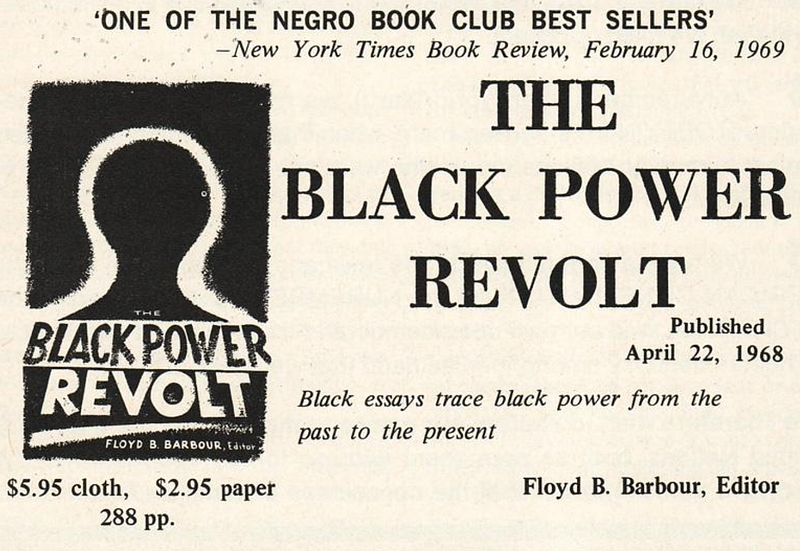
In an anthology called Black Power Revolt edited by Floyd Barbour, and published in 1968, Margaret Walker’s famous poem, “Since 1619” does appear. It opens the book and Walker is one of the few women writers in an anthology of 36 writers.
It was quite a different time politically. Leroi Jones (Amiri Baraka) is included in the book as is David Walker, Marcus Garvey, Frederick Douglass, Nat Turner, and so many others. The book is revolutionary in nature.
Floyd Barbour, the editor of the book, once told New York Public Radio (NYPR) that it took 450 years for him to compile the book. He could not be more correct. He is being metaphoric and historical in his remarks.
Margaret Walker did her part long ago with a poem that asks all the burning questions of African American history. Our story begins a long time ago. Let the story be told by this poem.
Sources and Credits
Margaret Walker, “For My People,” (from This is My Century: New and Collected Poems, University of Georgia Press, 1989)
- entry written by Lisa Sloan
Black Power Revolt, edited by Floyd Barbour, Porter Sargent Publisher, 1968
Related Stories
WEOC Editors Derrick Weston Brown Momentum Blog Team LEVEL Editors Cultured Editors The Good Men Project