
THE CASE FOR THE 1619 PROJECT: CASE STUDY
Plymouth Rock Landed On Us
Slavery and the Mayflower Voyage
Colonization
There is currently a strong critical debate over the 1619 Project, the brainchild of New York Times journalist Nikole Hannah-Jones. The project, as stated, “aims to reframe the country’s history by placing the consequences of slavery and the contributions of black Americans at the very center of our national narrative (New York Times 1619 Project).”
As the battle over history and our true narrative is passed down to the next generations and the world, it is important to tell America's whole story, the good, the bad, and the brutal.
The story of slavery in Massachusetts and the Mayflower voyage in 1620 is part of that more accurate narrative.
Years ago, when researching sources for the drafting of the U.S. Constitution and the formation of America, I came across the story of the Mayflower and a legal document known as “The Mayflower Compact.”
This document tells the story of the Mayflower’s voyage from England to North America in 1620. The Mayflower was a voyage of mostly Calvinist Puritans who had decided to break away from the Church of England in search of freedom and democracy (Reilly & Cushion).
They arrived at the land we know today as North America on November 9, 1620 (Philbrick) off the coast of Massachusetts near Cape Cod after a long and difficult journey originally searching for the colony of Jamestown in Virginia (Taylor). The Puritans were way off course and at sea since September 1620 (Taylor).
When they arrived, they stopped offshore to transcribe how they would govern themselves and set it all down in “The Mayflower Compact.” The document is considered by many as the beginnings of American freedom and democracy because it was an agreement by men on how to govern themselves (Taylor).
U.K. writer-researchers Danny Reilly and Steve Cushion contend that this is the true origin of the United States of America. The story of this group of Puritans in search of freedom is usually described in noble terms.
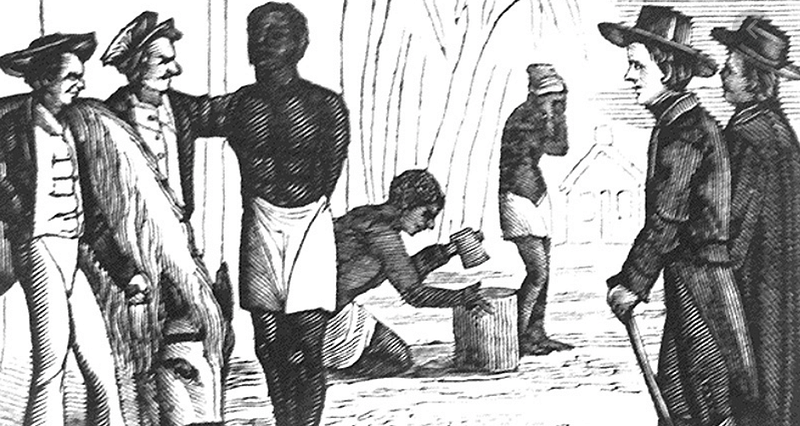
Yet, according to Reilly and Cushion, “The Mayflower” was a colonizing expedition. 50 million indigenous people were already living on the continent when the Puritans arrived. The Puritans were religiously intolerant and would demonstrate no objection to the eventual enslavement of some of this indigenous population. Then, they claimed all of the lands as their own.
In 1621, the Puritans published a pamphlet asserting that all of the lands belonged to the King of England from the “Cape of Florida to the Bay of Canada” (Reilly and Cushion). The Puritans dismissed the native population as “heathens” and declared that their enslavement was justified by the teachings of their Bible (Reilly and Cushion).
Reilly and Cushion note that the expedition’s colonizing story has been barely mentioned in historical accounts over the centuries in the U.S. and the U.K. The Puritans landed, settled, and laid claim to a land already occupied and being utilized for sustenance by other nations and peoples.
By the time of the ship’s arrival, it is estimated that 90 percent of the indigenous population had already been vanquished by various European colonizers to the region. Thus, the much smaller indigenous population in the Plymouth area of Massachusetts was effectively doomed. Slavery, wars, expulsion, and outright genocidal acts ultimately conquered them, and the colonizing voyagers from England seized the lands for themselves (Reilly & Cushion).
Slaves
American Studies scholar Heike Paul also rejects the Mayflower voyage as a noble expedition. Paul additionally describes the Mayflower Compact as “a collective speech act of a white, male elite and a pragmatic attempt to define those Pilgrims who are striving for their Promised Land in North America as a social entity unto themselves” (Paul).
It was actually the creation of elite white men who wanted “to keep power and authority” in their “hands” and to “exclude other settlers” and the native population, according to Paul.
When the 400th anniversary of the Mayflower was commemorated last year, much of the truth about the history of the Massachusetts colony re-entered the historical lexicon. And finally, some of the brutal histories were told.
According to the Mayflower 400 Project, “the cruel abduction of the Indigenous population to sell as slaves” was already underway in the colony (Mayflower 400 Project) when the Mayflower arrived in 1620. Europeans had invaded the region and “had abducted members of the Indigenous population of Native Americans in the years previous, with the intention of selling them as slaves.” (Mayflower 400 Project)
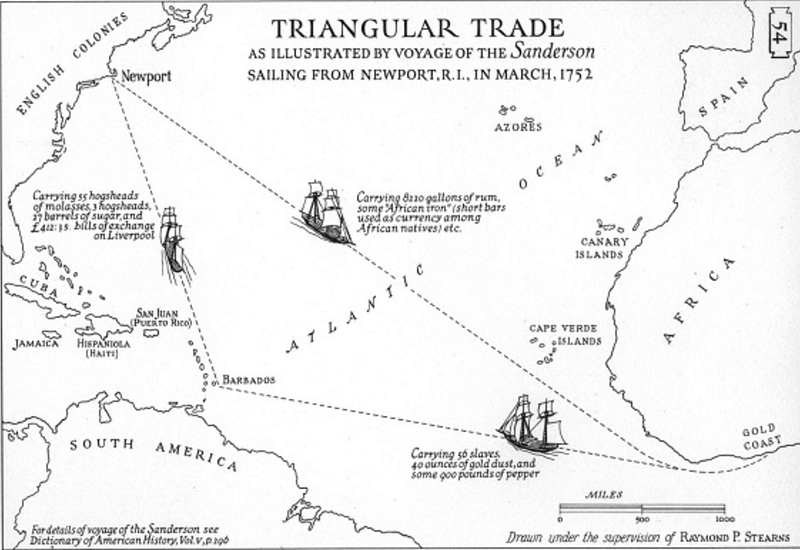
In 1638, just 18 years after the Mayflower, slavery in the colony shifted to Africans though there is some evidence slavery existed in the colony prior to 1638 (Nagl). Almost appropriately, enslaved Africans from the West Indies were traded into bondage to Massachusetts in exchange for Natives captured in battle (Nagl).
In 1641, slavery was officially declared legal in Massachusetts. (Massachusetts government website). Thus, Massachusetts was the first colony to declare the practice legal. In the city of Boston, native persons and Africans replaced white indentured servants by the 18th century (Nagl), and more and more African slaves arrived in the colony and in New England as time progressed (Nagl).
By 1754, 4500 slaves were residing in the colony, and the region itself (New England) recorded 27,000 to the various colonies during the entirety of the trade. (Calzoalaio) It wasn’t until between 1781–1783 that a series of court cases finally led to the abolition of slavery in Massachusetts (MacEachern).
The Mayflower voyage might not have brought African slaves to the colony. Still, its flowery ideals of equality and goodwill did not extend those values to women, native peoples, or Africans when brought to the colony.
In 2019, writer Ed Simon described the historical meaning of the Mayflower and slavery in Massachusetts as such:
“True that Massachusetts, in part because of its Puritan origins, would ultimately become the cradle of American abolitionism. But in its first century-and-a-half, slavery initially found home in Plymouth, Boston and Salem as surely as in Jamestown, Charleston and Wilmington.
In the early American colonies, both Massachusetts and Virginia relied on the exploitation of enslaved people, as well as the brutal suppression and ethnic cleansing of the indigenous population. Both colonies would countenance slavery, even as it was eventually abolished in Massachusetts for economic reasons as much as moral ones” (Simon).
Professor Christiana Best describes the overall role of slavery as “the economic engine of the United States from 1619 to 1865 and beyond, making many white Americans very rich on the backs of blacks, through industries such as agriculture (i.e., cotton, tobacco, rice, and sugar cane) and construction (i.e., the building of homes, universities, hospitals and other institutions they themselves couldn’t use)” (Best).
The abolition of slavery in Massachusetts eventually did come, but it didn’t happen because the white population suddenly realized the evil rot of the practice, either. Protest and dissent led by Africans and then joined by whites brought it to an end.
Two stories of African slaves elaborate on the history of the African struggle for freedom, justice, and restitution within the system in the state of Massachusetts.
Felix
In 1773, an African slave named “Felix Holbrook” petitioned the “General Court of Province” in Boston for an end to slavery in Massachusetts. (Sesay) The court agreed to take up his petition in response to Felix’s petition and appeals to “the body” (Sesay).
It was the first time in history (and prior to independence in 1776) that a petition by an African had been accepted for debate (Sesay). Felix’s petition led to a wave of petitions by Blacks and whites arguing for the end of slavery (Sesay). As Felix’s petition had noted, slavery made citizenship for Blacks impossible (Sesay).
The oppressive system created by the European colonizers prevented them from owning property and legally marrying with families. They could claim no city or country as legal residents or citizens (Sesay). American slavery rendered them non-persons. Felix’s dissent can be said to be the political trigger that eventually leads to the end of the institution in Massachusetts after approximately 140 years.
But the petition was the by-product of decades of challenges to the African slave system in Massachusetts. Over and over, individual Africans sued to unravel the system of second-class citizenship and dehumanization that enslaved them and their children in perpetuity (Sesay).
Belinda
Using a variety of sources to reconstruct not only her legal petition but also her life, historian Roy E. Finkenbine provides details of the legal struggle of Belinda Sutton, an African woman who sought economic reparations from her former owner (Finkenbine).
Belinda, born in present-day Ghana in 1713, was brutally torn from her quite pleasant spiritual, social, and familial world by white slave catchers at the age of 12, taken to North America, and sold into chattel slavery for life (Finkenbine). Her life in Ghana, prior to her enslavement, had been loving, stable, sustaining, and enriching in every respect, according to Finkenbine.
Nevertheless, in 1725, Belinda suddenly found herself in a “floating world” with hundreds of other Africans, all of whom were subject to what she described as “excruciating torment” (Belinda’s petition, found in full, at The Royal House Historical site).
This was the Middle Passage, that catastrophic event dismissed and historically diminished by America as unworthy of deeper historical review primarily because of how it exposes the brutal nature of America’s real history regarding slavery and its treatment of Black people.
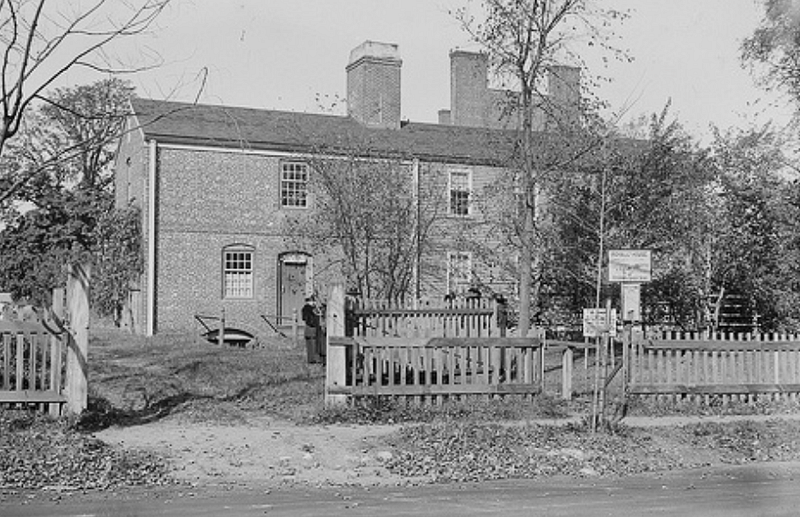
Belinda would soon find herself in culture shock in Massachusetts, an English slave colony, where she would remain in bondage for 50 years. Her freedom came when the colony of Massachusetts seized the Royall estate after Isaac Royall fled the colony as the Revolutionary War erupted (The Royal House Historical website).
Her owner, Isaac Royall, left behind his entire estate, including his human property (The Royall Historical Site website). Belinda eventually petitioned for compensation for being forced to labor for no compensation for 50 years. Royall, who died in England in 1781, left instructions in his will for Belinda to receive a pension for her free labor (Finkenbine).
Belinda’s petition for reparations stated her case plainly:
“Fifty years her faithful hands have been compelled to ignoble servitude for the benefit of an Isaac Royall, untill, as if Nations must be agitated, and the world convulsed for the preservation of that freedom which the Almighty Father intended for all the human Race, the present war was Commenced — The terror of men armed in the Cause of freedom, compelled her master to fly — and to breathe away his Life in a Land, where, Lawless domination sits enthroned — pouring bloody outrage and cruelty on all who dare to be free” (Royal House).
Belinda stated the obvious. She had been wrongly enslaved. She had been forced to work for someone else who received all the benefits of her labor, and she received none.
Yet, now that a war had been commenced in the colonies for the “freedom” of all members of the “human race,” she wanted that freedom as well, and she was more than deserving of compensation from the man who enslaved her, for the 50 years of free labor.
Both extraordinary legal struggles by Africans enslaved in America— Felix and Belinda — occurred in Massachusetts prior to the founding of the United States. They are specifically linked to historical actions dating back to the early 17th century in Massachusetts.
While pre-American slavery began with indentured servitude, the enslavement of indigenous peoples soon followed. And finally, Black people soon found themselves in the crosshairs of this free labor, dehumanizing system of lifelong human bondage that passed down to their children.
The system lasted for over 140 years in Massachusetts, changing the lives of thousands of Black people. Just as the arrival of African slaves to Virginia in 1619 is a key American story for understanding the nation’s true history, so is the voyage of the Mayflower and the history of slavery in Massachusetts.
References
Alan Taylor, Colonial America: A Very Short Introduction, Oxford Press 2013, 52–53
Danny Reilly & Steve Cushion, Telling the Mayflower Story, Socialist History Society, 2018
Dominik Nagl, The Governmentality of Slavery in Colonial Boston, 1690–1760, American Studies, 2013, Vol. 58, №1 (2013), pp. 5–26
Ed Simon, “Why the legacy of slavery endures after more than 400 years,” The Washington Post, August 20, 2019, online version, found at https://www.washingtonpost.com/outlook/2019/08/20/why-legacy-american-slavery-endures-after-more-than-years/.
Elaine MacEachern, “Emancipation of Slavery in Massachusetts: A Reexamination 1770–1790,” The Journal of Negro History, Oct., 1970, Vol. 55, №4 (Oct. 1970), pp. 289- 306
George Ernest Bowman, The Mayflower Compact and Its Signers, Massachusetts Society of Mayflower Descendants, 1920, 7–8
Heike Paul, Pilgrims and Puritans and the Myth of the Promised Land, Transcript Verlag, 2014
Malcolm X, “Malcolm X’s Audubon address,” © Dr. Betty Shabazz, under license authorized by Curtis Management Group, Indianapolis, IA
Mark L. Sargent, “The Conservative Covenant: The Rise of the Mayflower Compact in American Myth,” The New England Quarterly, Vol. 61, №2 (Jun 1988), 233
Massachusetts Government Official website found at https://www.mass.gov/guides/massachusetts-constitution-and-the-abolition-of-slavery#-slavery-in-colonial-and-revolutionary-massachusetts-.
Nathaniel Philbrick, Mayflower: A Story of Courage, Community, and War, Viking 2006, 34
Scott Calzoalaio, “Slavery in New England” Milford Daily News, March 4, 2018, found at https://www.metrowestdailynews.com/news/20180304/look-into-massachusetts-participation-in-slave-trade.
The Mayflower 400 Project — https://www.mayflower400uk.org/education/how-the-mayflower-arrived-in-a-world-already-scarred-by-slavery/
The New York Times 1619 Project, https://en.wikipedia.org/wiki/The_1619_Project
The Royal House and Slave Quarters Historical site — found at https://royallhouse.org/belinda-suttons-1783-petition-full-text/


