
Simple Tips for Treating Strawberry Legs
Inflammation or bumps on the skin, how to go from bumpy to smooth
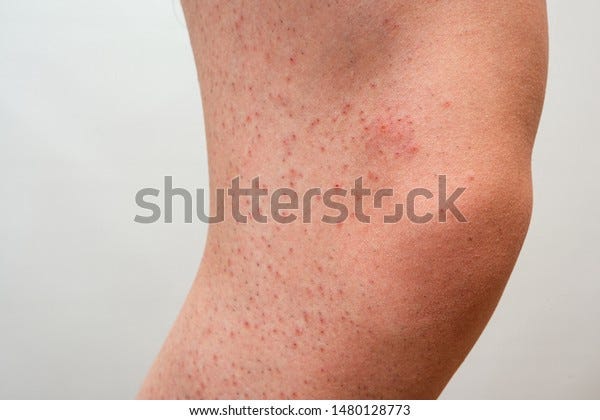
Strawberry legs is not a cute situation but blemishes on the skin. Strawberry legs aka folliculitis or dark pores. It is dots you get on your legs after shaving that resemble the seeds of the fruit, aka strawberry legs. Strawberries have such a bumpy surface.
How to remove them and what is the remedy? What causes strawberry legs? There is always a solution, one just has to seek and search. Knowledge is the key. Strawberry legs normally are a byproduct of three factors: Keratosis pilaris, inflamed hair follicles or ingrown hairs. They resemble small bumps on the skin. First the a process of elimination, is to determine the cause to determine the culprit in order to troubleshoot the issue.
Regarding keratosis pilaris, keratin, a protein that exists in the skin, hair and nails gets trapped and cause a plug to form over your follicular openings resulting in a bumpy surface like a strawberry. This clogging was caused by keratin build up.
When your pores get clogged with oil, bacteria, dead skin cells and other debris from the atmospheric elements, this is called folliculitis. Clogged pores turn into inflamed hair follicles that result into tiny reddish bumps or small white-heads that resemble acne.
Ingrown hair is a part of this equation of strawberry legs. It is caused by a hair that curls into itself and starts to grow backward underneath the skin surface instead of above. Ingrown hairs are common in a lot of people. They occur in areas where shaving is done, i.e. legs, armpits, face, pubic area and even back of the neck hairline.
The best way to treat strawberry legs or skin bumps, use a chemical exfoliant or a topical treatments that contains lactic or glycolic acid. These will assist in removing dead cells from the skin, to prevent build up and eliminate clogging of pores.
Very similar to acne, salicylic acid, benzoyl peroxide and retinol products are effective against strawberry legs by killing bacteria, drying excess oil and encourages shedding of dead cells.
After exfoliating, then moisturize your skin. Moisturizing the skin will hydrate the skin , thereby making it less likely to get inflamed with ingrown hairs. Lotions are beneficial along with oils. Applying oil and lotion to the body traps in the moisture on the skin. It also hydrates the skin. Glycerin in lotions helps to bind to water molecules.
Just like strawberry legs don’t happen overnight, it will not be removed overnight. It may take time but not forever. Too long, seek a dermatologist.
The key to any dis-ease of the body or on the body is prevention. Since we now know that folliculitis or strawberry legs come from sweat, oil or bacteria, cleanse often with a handy wipe or something of a similar fashion. Also, use a body wash that contains salicylic acid which will reduce inflammation and keep your pores clean from clogging. Also, using a sharp razor is another method to preventing bumps on the skin. A key in shaving is too shave with the grain of the hair and not against it or in the opposite direction for which the hair grows. Shaving in too many directions makes the skin susceptible to razor burn or ingrown hairs.
In conclusion, strawberry legs can be treated with moisturizing, exfoliating and shaving in the proper direction of hair growth with a reasonably sharp blade. Strawberry legs are not a death sentence but an alert that the body requires some attention and once gotten, the situation will rectify and improve. Persistence of what may look like strawberry legs, seek a dermatologist. Knowing what to do, can save dollars and time at the doctors’ office.
For additional reads:


