avatarAnthony Li

Summary

The web content discusses the unintentional creation of a vulgar phrase, "傻西" (silly c*nt), which occurred when an individual mistakenly deleted the wrong character while attempting to type "傻西瓜" (silly watermelon) as a term of endearment to his girlfriend, leading to misunderstanding and outrage.

Abstract

The article recounts a humorous yet cautionary tale of digital communication mishaps. It begins with an anecdote where a person intends to comfort his girlfriend by calling her "傻西瓜" (silly watermelon), a playful term in Hong Kong English/Cantonese. However, due to a typo in the autocorrect feature, he accidentally sends "傻西" (silly c*nt), a vulgar insult, causing his girlfriend to become upset. The author explains the context behind the offensive term, referencing a previous post about euphemisms for sensitive words in Cantonese. The article highlights the importance of understanding the nuances of language, especially in a bilingual context where technology can complicate communication, and it underscores the humorous side of the situation as people now use "傻西瓜" to playfully call someone silly without the vulgar connotation.

Opinions

  • The author finds humor in the unfortunate autocorrect mishap, emphasizing the unintended consequences of a simple typing error.
  • There is an acknowledgment of the complexity of digital communication, particularly when dealing with multiple languages and dialects.
  • The author points out the cultural significance of language nuances and the potential for miscommunication in a digital age.
  • The article suggests that such incidents can lead to the evolution of language, as evidenced by the playful adoption of "傻西瓜" to avoid future misunderstandings.
  • There is an implied advice to be cautious with the use of technology in communication, especially when conveying affection or humor that can be easily misinterpreted.

Hong Kong English/Cantonese (XXIV)

Oh, Silly Water. Oh, I Mean “Silly Melon”

What’s wrong with watermelon?

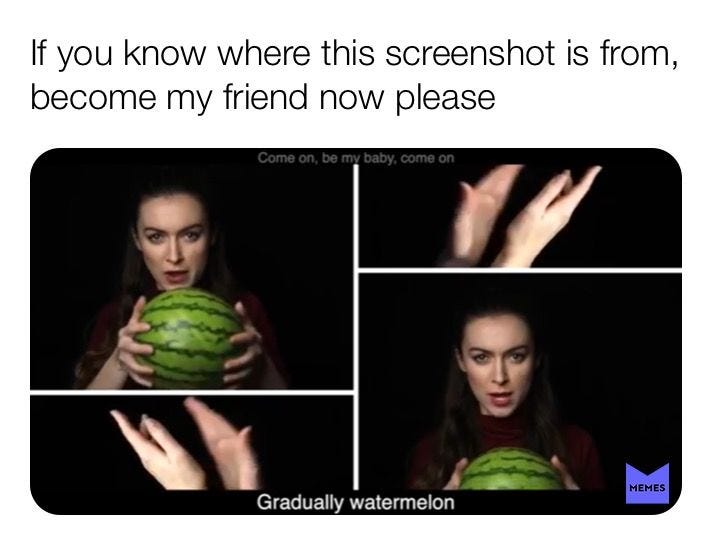
Actually, the picture above isn’t really related to what I’m going to write. The only thing in common is “watermelon”.

“Silly watermelon (傻西瓜)” is what I’m going to introduce you.

This term comes from an internet post? A joke? Whatever. Here is what I’ve heard of:

Help! My girlfriend is mad at me!

My girlfriend messaged me something and seems sad. I just wanted to comfort her and wanted to type “Silly (傻瓜)” to her, but I forgot how to type the second word. So I had to find a way to get the word by word suggestions and delete the unrelated words in between.

I remember 瓜 can be typed through word suggestions after getting 西 (i.e. 西瓜, watermelon). Therefore, I typed 傻西瓜 and then delete the unrelated word and send the message.

I didn’t realise I’d just deleted the wrong word until she was mad. What can I do? She’s outraged. *cry

Why deleting a wrong word in 傻西瓜 (Jyutping: so4 sai1 gwaa1) would get people mad, especially a girl?

Remember long ago I wrote that the Cantonese c-word equivalent can be written “hi” or “west”as euphemism? If you don’t, here’s the post.

When deleted the wrong word in this ridiculous phrase of “傻西瓜”, the original outcome, 傻瓜 (Silly), would become 傻西 (Silly c*nt). It is definitely not a pleasant way to dearly call people silly.

People find it so funny that some just use 傻西瓜 altogether to denote “silly” in a playful way.

By the way, here’s where the picture at the top is from:

Hong Kong
Hong Kong Cantonese
Recommended from ReadMedium