Hong Kong English/Cantonese (XII)
Say “Hi” to Freedom
Caution: Disturbing contents
I think it’s time for me to record a local phrase that rose into fame during the protests on 12 June in Hong Kong. However, mind you, here is a swear word.
Free AI web copilot to create summaries, insights and extended knowledge, download it at here
2141
Abstract
(Come the fuck out! Freedom cunts!)</p><p id="873b">Yes, police swore at the people when they were on duty, but it is no surprise to us as the police is nicknamed “gangsters with a licence” (有牌爛仔, Jyutping: <i>jau5 paai4 laan6 zai2</i>) for long. Also, we have seen them being brutal and violent at the protesters in the past few years as if the police had been in the game arcades.</p><p id="52a9">However, this new coining of the phrase was too creative to not go viral.</p><p id="f3ed">The phrase 自由閪 is a combination of the word “freedom” (自由, Jyutping: <i>zi6 jau4</i>) and the word “cunt(s)” (閪, Jyutping: <i>hai1</i>).</p><p id="9abd">Seriously, like this c-word in English, the Cantonese counterpart is also regarded as the strongest swear word for most people in Hong Kong. However, it is more commonly used in Canton City. As a result, we found it fairly ridiculous of a police officer to use this word to tell people off.</p><p id="a6bf">People thought either he is from Canton City or he was too angry.</p><p id="ef6a">In Cantonese, we can use swear words to describe a special type of people using an affixation of “adjective/noun + 撚 (dick, Jyutping: <i>lan2</i>) / 閪 (cunt, Jyutping: <i>hai1</i>)”. The adjective/noun being used is the characteristic of the person.</p><p id="3f21">The best-known ones, for example, are 毒撚 (Jyutping: <i>duk6 lan2</i>, literally “poisonous dick”, meaning “single boy” but usually related to those who lack confidence. Also, 毒, meaning “poisonous”, and 獨, meaning “single”, sound the same.) and 傻閪 (Jyutping: <i>so4 hai1</i>, literally “silly cunt”, meaning “stupid cunt” and is usually used to discredit a girl).</p><p id="c162">Therefore, it is obvious that “freedom” is a characteristic in the people the police was calling. Of course, the people in Hong Kong are fighting for freedom and against the possible terror of being caught and extradited to China where there is no rule of law (That’s why China always insist they have “rule BY law”).</p><p id="9868">That “silly-cunt” police might have forgotten that freedom is of utmost importance in this world. It really was quite silly of him
Options
to discredit them using “freedom” as the main word.</p><p id="336d">However, with help of other languages and our own euphemism, we created some more phrases related to the “freedom cunts”.</p><p id="ee83">First, it is Japanese which helped.</p><p id="f753">The Japanese word for “yes” is “はい (hai)” which sounds oddly similar to (some may even say the same as) 閪. As a result, some local people started saying that they “say ‘yes’ to freedom”. That is “自由?はい!” (“Freedom?Yes!”).</p><p id="9076">However, this one does not seem to have become a common phrase. Instead, a very local euphemism is more common in remaking the phrase.</p><p id="1dc6">We, Hongkongers, have two ways of euphemising the word 閪. We can either replace it with 西 (Jyutping: sai1, meaning “west”) or with “hi”, a form of greeting in English, because both sound similar to the original word.</p><p id="551e">Using “hi” as a replacement seems to be a popular and meaningful one this time.</p><figure id="da01"><img src="https://cdn-images-1.readmedium.com/v2/resize:fit:800/0*zKj1EItyf31RvNag"><figcaption>Picture from <a href="https://www.facebook.com/photo.php?fbid=10210793148464431&set=a.1043645431021&type=3&theater">Naldo Wong</a>.</figcaption></figure><p id="0444">It just sounds like we are saying “hi” to freedom. Freedom is what we want, so why don’t we “freedom cunts” say “yes” and “hi” to it?</p><h1 id="6525">Freedom cunts: Freedom, yes. Freedom, hi!</h1><h1 id="94dc">God bless Hong Kong.</h1><div id="ebd5" class="link-block"> <a href="https://readmedium.com/hong-kong-english-cantonese-collection-f41ce1e0565"> <div> <div> <h2>Hong Kong English/Cantonese: Collection</h2> <div><h3>This is a contents page for all my articles regarding Cantonese slangs, which were written in English.</h3></div> <div><p>medium.com</p></div> </div> <div> <div style="background-image: url(https://miro.readmedium.com/v2/resize:fit:320/)"></div> </div> </div> </a> </div></article></body>
I think it’s time for me to record a local phrase that rose into fame during the protests on 12 June in Hong Kong. However, mind you, here is a swear word.
In the video, we can see the Special Tactical Squad from the Hong Kong Police Force (Have they got their numbers shown or hidden?) were standing outside Pacific Place, a usually crowded shopping arcade near the government office, irritating the so-called riot protesters.
To be honest, what a rare scene on Earth that a shopping centre let riot protesters get in but barred the police from doing so. What was rarer was that the riot caused hardly any physical damages to anything around.At the start of the video, we can hear that a maddened police shouted at the people inside to irritate them to get out (so that he could have further actions, perhaps). He said:
出嚟呀,屌你老母!自由閪!
(Come the fuck out! Freedom cunts!)
Yes, police swore at the people when they were on duty, but it is no surprise to us as the police is nicknamed “gangsters with a licence” (有牌爛仔, Jyutping: jau5 paai4 laan6 zai2) for long. Also, we have seen them being brutal and violent at the protesters in the past few years as if the police had been in the game arcades.
However, this new coining of the phrase was too creative to not go viral.
The phrase 自由閪 is a combination of the word “freedom” (自由, Jyutping: zi6 jau4) and the word “cunt(s)” (閪, Jyutping: hai1).
Seriously, like this c-word in English, the Cantonese counterpart is also regarded as the strongest swear word for most people in Hong Kong. However, it is more commonly used in Canton City. As a result, we found it fairly ridiculous of a police officer to use this word to tell people off.
People thought either he is from Canton City or he was too angry.
In Cantonese, we can use swear words to describe a special type of people using an affixation of “adjective/noun + 撚 (dick, Jyutping: lan2) / 閪 (cunt, Jyutping: hai1)”. The adjective/noun being used is the characteristic of the person.
The best-known ones, for example, are 毒撚 (Jyutping: duk6 lan2, literally “poisonous dick”, meaning “single boy” but usually related to those who lack confidence. Also, 毒, meaning “poisonous”, and 獨, meaning “single”, sound the same.) and 傻閪 (Jyutping: so4 hai1, literally “silly cunt”, meaning “stupid cunt” and is usually used to discredit a girl).
Therefore, it is obvious that “freedom” is a characteristic in the people the police was calling. Of course, the people in Hong Kong are fighting for freedom and against the possible terror of being caught and extradited to China where there is no rule of law (That’s why China always insist they have “rule BY law”).
That “silly-cunt” police might have forgotten that freedom is of utmost importance in this world. It really was quite silly of him to discredit them using “freedom” as the main word.
However, with help of other languages and our own euphemism, we created some more phrases related to the “freedom cunts”.
First, it is Japanese which helped.
The Japanese word for “yes” is “はい (hai)” which sounds oddly similar to (some may even say the same as) 閪. As a result, some local people started saying that they “say ‘yes’ to freedom”. That is “自由?はい!” (“Freedom?Yes!”).
However, this one does not seem to have become a common phrase. Instead, a very local euphemism is more common in remaking the phrase.
We, Hongkongers, have two ways of euphemising the word 閪. We can either replace it with 西 (Jyutping: sai1, meaning “west”) or with “hi”, a form of greeting in English, because both sound similar to the original word.
Using “hi” as a replacement seems to be a popular and meaningful one this time.
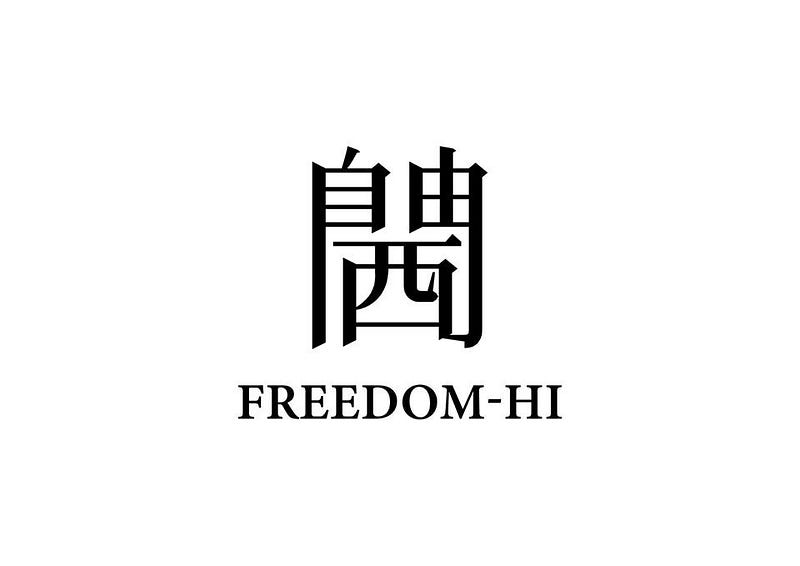
It just sounds like we are saying “hi” to freedom. Freedom is what we want, so why don’t we “freedom cunts” say “yes” and “hi” to it?