
Should You Worry About Snoring?
How to tell if all that noise is a serious health problem or just annoying
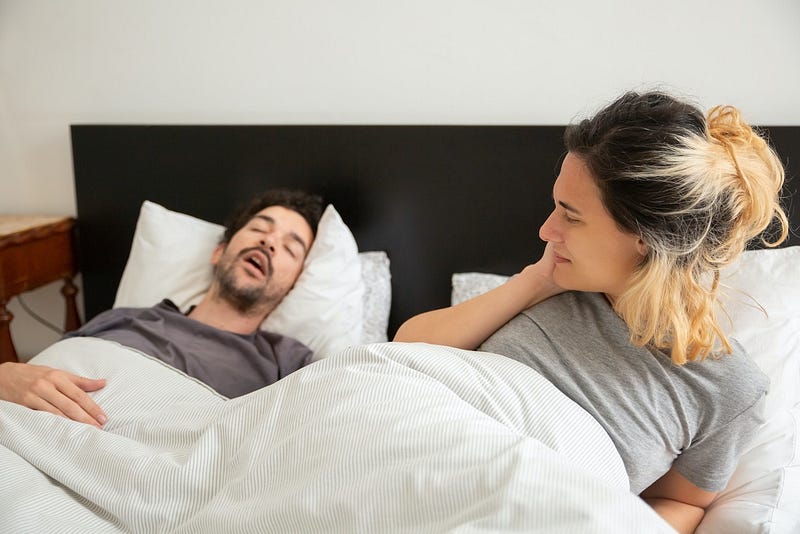
You snore, I snore, even our dog snores. Almost everyone snores, at least now and then, experts say, and the behavior can be totally innocuous — at least to the person actually getting some noisy z’s. But when snoring sounds like a freight train rumbling through the bedroom, or startling thunderclaps interspersed with long periods of breathless silence, sleep is definitely suffering, putting health at risk, too.
Snoring and other troubles falling asleep and staying asleep can presage disease down the road, and a shorter road at that, new research confirms.
Scientists analyzed data on 300,000 middle-aged U.K. adults to compare sleep problems with heart health. People who’d been diagnosed with sleep-related breathing disorders like sleep apnea, a serious health condition, had seven fewer years of life free from cardiovascular disease. But even less serious sleep problems — simply snoring, going to bed late, or experiencing daytime sleepiness — robbed folks of two years of cardiovascular disease-free life.
The implications, the researchers concluded earlier this month in the journal BMC Medicine: “Snoring and trouble falling asleep or staying asleep can be a warning sign of potential health issues in the future.”
Mild to moderate snoring
If you or a partner snores modestly, there’s no reason to rush to the doctor in search of a cure.
“We don’t think it’s a health problem,” said Andrew Wellman, MD, director of the Sleep Disordered Breathing Lab in the Division of Sleep and Circadian Disorders at Brigham and Women’s Hospital in Boston. “It’s a social problem.”
Heavy snoring, however, can signal loudly that a person is not getting the deep, quality sleep needed to restore the brain and body each night, the rejuvenation that makes one alert and capable throughout the next day. And it can point to underlying health conditions that are liable to worsen due to the poor sleep or fuel other chronic ailments, setting up a cycle that spirals slowly downward over time.
People who snore a lot spend 36 additional minutes each day being sedentary compared to people who say they never snore, a study last year in the journal Sleep concluded. (Whether any of those people actually “never” snore is debatable—perhaps they snore only sometimes, and so lightly that nobody notices. But with self-reporting on something like this, there’s no way to know.) Among people diagnosed with sleep apnea, the excess sedentary time was 44 minutes. Which behavior affects the other isn’t clear, but it probably goes both ways, the scientists suggest.
Serious snoring problems
Routine snoring is nothing like sleep apnea, a condition that causes a sleeping person to stop breathing, for up to 30 seconds or so, after which they gasp or snort so loud nobody gets any sleep. The cycle can recur five or more times every hour, disrupting sleep quality and overall health. The condition, most often the result of soft tissue at the back of the throat blocking the airway, can start anytime in life but is most common after age 50. It afflicts men more frequently than women.
Somewhere between 80 million and 150 million Americans are thought to have some degree of sleep apnea, a striking range that hints at the lack of firm data. As I write in my book, Make Sleep Your Superpower:
Exact numbers are not known, in part because the condition can be mild enough that people don’t seek a diagnosis, or if they don’t have a partner to complain about the noise, they might not be aware of their sleepytime snorts and gasps at all.
So how do you know if you have it? Severe sleep apnea is notable for the next-day sleepiness that results (the condition is often a bed partner of diagnosable insomnia). But the undetectable effects, bad stuff that happens at the cellular level over time, can be much worse. In addition to thwarting high-quality, deep sleep, the extended pauses in breathing lower the flow of oxygen to the brain. The disorder is linked to higher risk of cancer, blood clots that can cause heart attacks or strokes, and mental decline and dementia later in life, according to a trio of 2022 studies.
Incidence of sleep apnea is rising. Experts say that while heredity, alcohol consumption and other factors contribute to the disorder, growing obesity is behind the uptick.
“Obesity is probably the strongest risk factor for sleep apnea,” Susheel Patil, MD, director of the Sleep Medicine Program at University Hospitals in Ohio and clinical associate professor at Case Western Reserve University School of Medicine, told me.
Symptoms to watch for and what you can do
The best way to self-diagnose whether snoring is disrupting your sleep significantly is to look for next-day signs of lousy sleep: grogginess, forgetfulness, difficulty concentrating.
Sleep apnea will produce those problems and often one or more of these distinguishing symptoms:
- Morning headaches
- Sore throat when you wake up
- Chest pain at night
- Sexual dysfunction
- Night sweats
Home remedies for mild sleep apnea or other snoring problems include all the usual suspects — cut back on alcohol, exercise more, eat well, get lots of natural daylight — all of which I’ve explained in detail here. And since snoring tends to be worse when a person sleeps on their back, wrestling oneself into a side-sleeping position can be helpful, too (that’s not easy, however, but I’ve got suggestions here).
Beyond those common elements of good sleep hygiene, Patil says losing weight is known to lessen sleep apnea symptoms. “Lifestyle modification becomes incredibly important,” he said.
If you can’t solve the problem on your own, seek medical help and a full diagnosis, which might reveal an underlying health condition that needs fixing. Surgery is sometimes recommended for severe cases of sleep apnea, but success rates are modest and it should not be the first option, Patil said.
Oh, and if you’re not the one making all that noise? Earplugs can save a relationship.
More resources:
- All About Sleep Apnea
- Your Sleep Quality Probably Sucks. How to Know and What to Do.
- The Myth That Older People Can’t Sleep Well
- The Dangerous Truth About Sleeping Pills
- How Much Sleep Do You Really Need?
Your support makes my health and wellness writing possible. You can sign up for emails when I publish on Medium, or join Medium to directly support me and gain full access to all Medium stories, get my health news briefs on Mastodon, or check out my book: Make Sleep Your Superpower: A Guide to Greater Health, Happiness & Productivity (paperback or Kindle version). — Rob


