
Is Sleep Apnea Silently Destroying Your Mind?
It’s really loud, and it could also be quietly reducing your cognitive abilities and raising the risk of dementia down the road
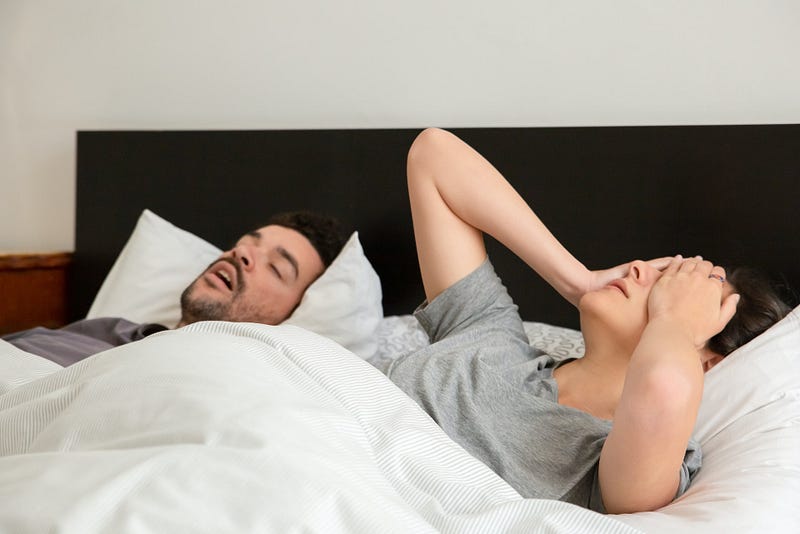
Sleep apnea is among the most common sleep disorders, affecting perhaps half the U.S. population or more — nobody knows for sure because many people don’t realize they have it and never seek a diagnosis. Little is known about the long-term health effects, but the latest research suggests a dim prognosis.
Obstructive sleep apnea (OSA) — the most common type — is a potentially serious and unmistakably noisy condition in which people go well beyond normal snoring and stop breathing during sleep, then snort or gasp loudly to resume. The episodes, caused by soft tissue relaxing in the back of the throat and recurring up to several times an hour, reduce oxygen flow to the brain and can ruin the most important stages of restorative, deep sleep.
OSA is a cozy bedfellow of insomnia and is frequently accompanied by other maladies, called comorbidities, that are associated with cognitive decline: obesity, diabetes, and high blood pressure or other cardiovascular diseases.
In a trio of studies last year, OSA was linked to higher risk of cancer, blood clots that can cause heart attacks or strokes, and mental decline and dementia later in life. People diagnosed with both sleep apnea and insomnia were significantly more likely to die during an 11-year period compared with people dealing with only one condition or the other, or neither, according to another 2022 study, detailed in the journal Sleep Epidemiology.
But why?
For starters, disrupted sleep is known to reduce sleep quality, which is vital to overall physical and mental health. Now, a pair of new studies offer some deeper clarity.
Brain lesions found
Older people with sleep apnea get fewer minutes of deep sleep, according to new findings published in the journal Neurology. They are also more likely to have tiny lesions on the brain and weakened brain-cell connections, both of which have been linked to risk of stroke, cognitive decline and dementia.
Deep sleep is a critical stage during which the brain slows way down and is physically cleaned out of toxins and misfolded proteins that accumulate during the day, while simultaneously the entire body is restored. It’s the most important phase for overall sleep quality, typically adding up to about one-fourth of a good night’s slumber or less. This deep sleep, also called slow-wave sleep, is especially hard to come by with disruptions like OSA.
The Neurology study compared sleep patterns and brain scans in 140 people with varying degrees of sleep-apnea severity. For each 10-point decrease in a person’s percentage of time spent in deep sleep—corresponding to more severe apnea—the lesions were more prevalent, “similar to the effect of being 2.3 years older,” the scientists concluded.
“Finding that severe sleep apnea and a reduction in slow-wave sleep are associated with these biomarkers is important since there is no treatment for these changes in the brain, so we need to find ways to prevent them from happening or getting worse,” said study team member Diego Carvalho, MD, of the Mayo Clinic in Rochester, Minnesota. Carvalho added, however: “More research is needed to determine whether sleep issues affect these brain biomarkers or vice-versa.”
OSA may cause direct harm
A separate, small new study of middle-aged men suggests OSA can stealthily contribute to cognitive decline directly, even in people who don’t exhibit any of the common comorbidities.
Put simply: A person with OSA might be experiencing declines in memory, decision-making, social skills and other brain functions even if they deem their snorts and snoring as nothing more than a nighttime annoyance — or even if nobody has told them about their noisy ways.
“This is important, as the most prevalent school of thought currently is that OSA-related comorbidities might be driving the cognitive deficits in this age group,” said the study’s lead author, Ivana Rosenzweig, PhD, a neuropsychiatrist who heads the Sleep and Brain Plasticity Center at King’s College London. “Most patients with OSA have already presented comorbidities when we see them for the first time in the clinic — so it has always been almost impossible to differentiate whether it was these diseases, or OSA itself, that made that damage.”
Rosenzweig’s study did not aim to determine causes, but she and her colleagues speculate on culprits: OSA’s tendency to produce fragmented sleep, low oxygen flow to the brain, and inflammation in the brain.
“This complex interplay is still poorly understood, but it’s likely that these lead to widespread neuroanatomical and structural changes in the brain and associated functional cognitive and emotional deficits,” Rosenzweig said.
The study, published in the journal Frontiers in Sleep, was done on 27 men ages 35 to 70 who had just been diagnosed with mild to severe OSA but who had no comorbidities. All were otherwise healthy, none were obese. A control group included seven similarly healthy men who didn’t have sleep apnea. Sleep apnea was confirmed by tests in a sleep lab, and all the participants took various brain-function tests.
Those who had sleep apnea were more likely to struggle with tests of short-term memory, visual-matching of objects, executive functions such as focus and planning, and social cognition — the ability to process and use information about others in social settings.
“Importantly, whilst we can not claim causation due to the cross-sectional nature and small size, our study does suggest that OSA itself may be sufficient to initiate most problematic cognitive changes in the middle age,” Rosenzweig told me. “As most of these patients were (otherwise) healthy men with OSA, most were unaware that they were already sporting cognitive deficits highlighted by the sensitive testing battery.”
Susheel Patil, MD, director of the Sleep Medicine Program at University Hospitals in Ohio and clinical associate professor at Case Western Reserve University School of Medicine, urged caution in interpreting the results, due to the small sample size and smaller control group.
“There have been studies that show that OSA is associated with reduced executive function, psychomotor control, deficits in attention and vigilance,” Patil said. “What may be new is showing an association with reduced social cognition.”
Other factors could explain the findings, too.
“For example, patients with sleep apnea often have reduced sleep time,” said Patil, who was not involved in the study. “Reduced sleep time can cause many of the outcomes the authors examined. It’s then possible that it is reduced sleep time that causally explains the reductions in cognition reported by the authors. Other factors that the authors measured, such as age, BMI [and] smoking, could account for the association despite their adjusting for these factors statistically. There may be other unmeasured confounders that could explain the association, such as nutritional status.”
Should you worry?
Diagnosis of sleep apnea includes not just nighttime behaviors but daytime symptoms, typically including afternoon tiredness. Other symptoms can include morning sore throats or headaches, chest pain at night and night sweats. Obesity is thought to be among the leading causes, but not the only one.
Obstructive sleep apnea is estimated to affect somewhere between 10–30% of men and 10–15% of women. But up to 70% of the adult population might have some level of sleep apnea without any noticeable daytime symptoms, Patil says. And while there’s no need to panic over mild OSA, the condition can be serious enough that one should seek treatment from a physician or sleep specialist.
Treatments range from improving sleep habits to losing weight, as well as CPAP (continuous positive airway pressure) machines. Surgeries are successful only about 50% to 60% of the time, Patil said.
Sometimes daytime wakefulness drugs are prescribed, including solriamfetol, armodafinil–modafinil, and pitolisant. A study published May 8 in the Annals of Internal Medicine found that while these drugs can help, a lot of people stop taking them due to the side effects, including anxiety, headaches and… here’s some irony: insomnia.
“OSA with its components of sleep fragmentation and low oxygen levels during sleep may affect our cognition or thinking,” Patil told me. “Whether this is a reversible or irreversible change remains to be determined. People should maintain a healthy lifestyle, but if they have impairments in cognition and have symptoms of OSA noted by themselves or partners, sleep testing for OSA may be appropriate, if one values optimizing their brain health.”
Related resources:
- The Myth That Older People Can’t Sleep Well
- Your Sleep Quality Probably Sucks. How to Know and What to Do.
- Six Strange & Scary Sleep Sabotagers
Your support makes my writing possible. You can sign up for emails when I publish on Medium, or join Medium via this link to directly support me and gain full access to all Medium stories, or get my book, Make Sleep Your Superpower. I post additional health news briefs on Mastodon. — Rob


