
Should You Make Your Own Facemask?
Is a homemade mask a useful complement to other COVID-19 preventive measures, or an ineffective measure that offers false hope?
Note from the writer: This article was updated April 5 to include an important new analysis of the ineffectiveness of various types of cloth and homemade masks in reducing the spread of disease. The article now presents evidence that masks can be helpful, then a new analysis indicating they may not work anywhere near as well as we hope, and then, finally, how to make one. This article is not intended to offer advice on whether everyone should don a mask, a question over which expert views continue to see-saw as the science develops.
As of this original writing on March 31, only people with COVID-19 symptoms or those caring for them were advised to wear facemasks by the World Health Organization (WHO), the U.S. Centers for Disease Control and Prevention (CDC) and the U.S. Surgeon General. But if facemasks work for the sick and the caring, why shouldn’t everyone wear one to help reduce the spread of coronavirus?
Good question. Since then, the CDC came around to answering it, urging all Americans to wear a mask when outside their homes.
In parts of Asia, health officials had already been encouraging masks for all. The Czech Republic made nose and mouth coverings mandatory for people who are out in public, according to an article by Kelly Servick in Science, a publication of the American Association for the Advancement of Science.
“The big mistake in the U.S. and Europe, in my opinion, is that people aren’t wearing masks,” said George Gao, head of the Chinese Center for Disease Control and Prevention.
“This virus does have the ability to transmit far easier than flu,” CDC director Dr. Robert Redfield told Atlanta radio station WABE prior to the new recommendation. “It’s probably now about three times as infectious as flu.”
Arguments for and against: A brief overiew
Reasons to advise against the widespread use of facemasks include the fact that healthcare professionals need them badly. Some 200 workers at one New York hospital have become sick, and two nurses have died in city hospitals, all amid a lack of protective gear. Hospitals around the U.S. are asking for donations of masks and other protective gear.
Also, people in general may not use masks properly, and it remains unclear how far droplets infected with COVID-19 travel through the air, and so it’s unclear how effective masks would be if people are already keeping 6 feet apart. Some experts also argue that a mask might give people a false sense of security and cause them to become lax on other preventive measures.
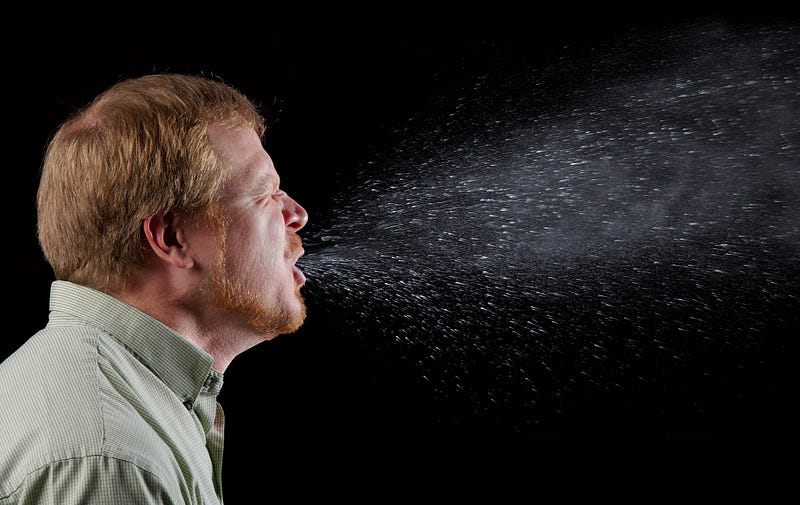
The argument for a mask is simple: A good one, used properly, can help prevent infected respiratory droplets from a person who has COVID-19 from becoming airborne and either landing on someone else or on a shopping-cart handle. This is a vitally important point with this disease, since it’s known that a large number of people are carrying and spreading the disease with few or even no symptoms.
To a lesser extent, a mask can help keep such droplets away from the nose and mouth of an uninfected person, but that’s true only if the mask is of sufficient quality, good fit, and if it’s used properly.
“Of course masks work — maybe not perfectly and not all to the same degree, but they provide some protection,” writes Zeynep Tufekci, a professor of information science, in a New York Times opinion piece. “World Health Organization officials wear masks during their news briefings,” she points out.
Evidence that masks work
Importantly, facemasks should not be relied on by anyone in lieu of other preventive measures, including proper handwashing, home sanitizing, staying away from places where people gather or frequent, and physical distancing when you must go out — health experts agree on all that.
But facemasks can be a useful complement, research has shown, helping slow the spread of a viral respiratory disease like COVID-19 (based, though, on studies of the flu virus).
A study back in 2010 of the H1N1 influenza pandemic, reported in the Journal of Infectious Diseases, suggested hand-washing and facemasks together “may reduce respiratory illnesses in shared living settings.” Another study, from 2012 in the journal BMC Infectious Diseases, suggested “household transmission of influenza can be reduced by the use of NPI [non-pharmaceutical interventions], such as facemasks and intensified hand hygiene, when implemented early and used diligently.”
“It would be reasonable to suggest vulnerable individuals avoid crowded areas and use surgical face masks rationally when exposed to high-risk areas,” researchers wrote March 20 in the Lancet Respiratory Medicine journal. “As evidence suggests COVID-19 could be transmitted before symptom onset, community transmission might be reduced if everyone, including people who have been infected but are asymptomatic and contagious, wear face masks.”
“The value of the mask isn’t necessarily to protect you from getting sick, although it may offer some protection,” former FDA Commissioner Scott Gottlieb told CBS News. “It’s to protect you from other people. So when someone who’s infected is wearing a mask, they’re much less likely to transmit infection.”

Homemade masks can work, too
But there are no facemasks to be had, right? And if there were, healthcare professionals need them more than the rest of us, right? True both.
But you can make your own facemask. It likely will not be as effective as a commercially available mask, but it could be better than nothing.
“Any type of general mask use is likely to decrease viral exposure and infection risk on a population level, in spite of imperfect fit and imperfect adherence,” researchers concluded in a 2008 PLoS One study that compared surgical masks to homemade masks.
Another study compared surgical masks to homemade masks made from cotton T-shirts. “Both masks significantly reduced the number of microorganisms expelled by volunteers, although the surgical mask was 3 times more effective in blocking transmission than the homemade mask,” they wrote in 2013 in the journal Disaster Medicine and Public Health Preparedness. “Our findings suggest that a homemade mask should only be considered as a last resort to prevent droplet transmission from infected individuals, but it would be better than no protection.”
Evidence that masks don’t work well
Good science does not always generate firm conclusions after one or two studies. And nowhere is that more true than when considering the effectiveness of facemasks. A review of available evidence on the effectiveness of masks made of various materials was published April 1 by the Center for Infectious Disease Research and Policy at the University of Minnesota. [It has not yet circulated widely, and its conclusions were added to this article on April 5.]
The review was conducted by two experts on respiratory protection: Lisa Brosseau, ScD, also an expert on infectious diseases and retired professor from the University of Illinois at Chicago; and Margaret Sietsema, PhD, an assistant professor at the University of Illinois at Chicago.
The researchers point to a study done by the National Institute for Occupational Safety and Health, looking at how well various filters blocked tiny airborne particles that emanate from a cough or sneeze. For the range of particle sizes tested, effectiveness ranged from poor to terrible:
- T-shirts: 10%
- Scarves: 10% to 20%
- Cloth masks: 10% to 30%
- Sweatshirts: 20% to 40%
- Towels: 40%
Each material was near zero in efficiency at blocking smaller particles that are known to penetrate deep into the lungs. Another study cited by the researchers reached similar conclusions. Importantly, these studies did not consider fit. But even surgical masks, one study found, lose effectiveness because they tend not to fit perfectly.
I asked Brosseau whether we know for sure if the smaller particles are carrying the coronavirus.
“There are no data, yet, indicating which size particles are generated from COVID-19-infected people when asymptomatic, with mild symptoms or experiencing serious symptoms,” she said. “Most of the data about human-generated aerosols come from people infected with influenza, which show that people generate both small and large particles, with greater viral load in the smaller particles—which we know, for sure, are the ones more likely to penetrate into and deposit in the deep lung (that has been proven).
“In sum, cloth masks exhibit very low filter efficiency,” Brosseau and Sietsema state. “Thus, even masks that fit well against the face will not prevent inhalation of small particles by the wearer or emission of small particles from the wearer.” They conclude: “We do not recommend requiring the general public who do not have symptoms of COVID-19-like illness to routinely wear cloth or surgical masks.”
See the full analysis and commentary by Brosseau and Sietsema.
But is COVID-19 airborne?
One big question remains: Can this coronavirus, SARS-CoV-2, be transmitted by aerosols (tiny respiratory droplets) that can travel far enough to be inhaled by someone else or get in their eyes?
In separate writing, Brosseau offers a helpful analogy:
“Have you ever used hairspray or aerosolized cooking oil? Many of those droplets remain airborne nearby as you inhale particles and smell hairspray and cooking oil for several minutes,” she writes. “The same thing happens when someone coughs or sneezes. Talking, breathing, coughing, and sneezing create an aerosol (a suspension of particles in the air) containing particles in a range of sizes, with viable infectious organisms present in both small and large particles.”
Larger particles can remain airborne for several minutes, Brosseau says, and smaller particles for many minutes or even hours.
“A very recent study found that SARS-CoV-2 aerosols remain viable for up to 3 hours,” she points out. “This is adequate time for exposure, inhalation, and infection to occur both near and far from a source.”
All of which argues for staying home or in uncrowded outdoor spaces as much as possible, along with physical distancing when you must go out, health experts agree.
“What I worry about is something thinking they’re protected or protecting someone else by wearing a cloth mask when they go to the grocery store,” Brosseau says. “Which might make them less careful about social distancing and more likely to go to the store on a more frequent basis. So the message should be a strong “DON’T GO OUT!” and a very small ‘it’s okay to wear a mask but don’t expect it to do much to protect you or people nearby.’”
For a more detailed look at the airborne question, see my article “Can You Catch COVID-19 in the Air?”
How to make (and use) a facemask
Should you decide to proceed, check out this excellent how-to on Elemental—it discusses nuances like getting a good seal and washing hands before you don a mask.
Vanderbilt University Medical Center has instructions here for making facemasks with elastic, along with instructions for donating them (“Your efforts will help make a difference,” the site states.) The Atlantic Health System has their own instructions, here. Both require some sewing.
Here is another way to make a mask without any sewing (props to New York Times columnist Farhad Manjoo for including this in his opinion piece, It’s Time to Make Your Own Face Mask):
Before you make a mask, know that it must fit well and be clean, and as noted above, a cotton T-shirt is not going to be as effective as the material used in surgical masks, and no mask is a substitute for rigorous hand-washing and physical distancing.
UPDATE APRIL 7: New York Times reporter Tara Parker-Pope dug into research on materials. Scientists suggest vacuum cleaner bags, flannel pajamas and pillow cases with a high thread count (600) work better than stacked coffee filters which work better than a bandana, she reports. And now the CDC has added a page to its website with instructions on how to make and use facemasks that are sewn or not sewn. My, how things have changed in just a few days. END UPDATE
The World Health Organization (WHO) offers this advice when wearing a disposable surgical mask, showing just how important the tactics are:
- “Before putting on a mask, clean hands with alcohol-based hand rub or soap and water.
- Cover mouth and nose with mask and make sure there are no gaps between your face and the mask.
- Avoid touching the mask while using it; if you do, clean your hands with alcohol-based hand rub or soap and water.
- Replace the mask with a new one as soon as it is damp and do not re-use single-use masks.
- To remove the mask: remove it from behind (do not touch the front of mask); discard immediately in a closed bin; clean hands with alcohol-based hand rub or soap and water.”
Another important caveat: Reaching inside to scratch an itch largely nullifies a mask’s benefits. And it cannot be stressed enough: Masks are most effective at preventing a sick person from infecting others, not at preventing a person from becoming sick.
Nonetheless, and illustrating the ongoing expert divide on this topic, the researchers who wrote the Lancet Respiratory Medicine article say governments need to get beyond the current recommendations from the WHO and the CDC (which, since this writing, the CDC did).
“It is time for governments and public health agencies to make rational recommendations on appropriate face mask use to complement their recommendations on other preventive measures, such as hand hygiene,” they write. “Perhaps it would also be rational to recommend that people in quarantine wear face masks if they need to leave home for any reason, to prevent potential asymptomatic or presymptomatic transmission. In addition, vulnerable populations, such as older adults and those with underlying medical conditions, should wear face masks if available.”
This article was updated April 6 to include additional comment from Brosseau, and again April 7 to include additional information on what materials work best for homemade masks.