
Sexual Attraction From An Evolutionary Perspective
Why do we date who we date?

What is the meaning of life?
Hard to say. Everyone has his or her own answer, I guess.
What is the goal of our life?
This is also different for each individual.
However, we all have a common goal, if you believe evolutionary psychologists. This goal is to survive and to reproduce and is anchored in our DNA. To pass on our genes so to speak. According to evolutionary psychologists, this goal subconsciously influences pretty much all our actions.
However, evolutionary psychology is quite controversial and seems to piss many people off. After all, it is not too nice and romantic to get such explanations for one’s own actions. I am not an expert in this field and therefore I do not want to make a statement whether everything in this article is 100 percent true. In fact, it probably is not. Therefore I would like to refer to the book The Ape that Understood the Universe by Steve Stewart-Williams. I find it highly interesting and his explanations of sexual attraction make perfect sense to me.
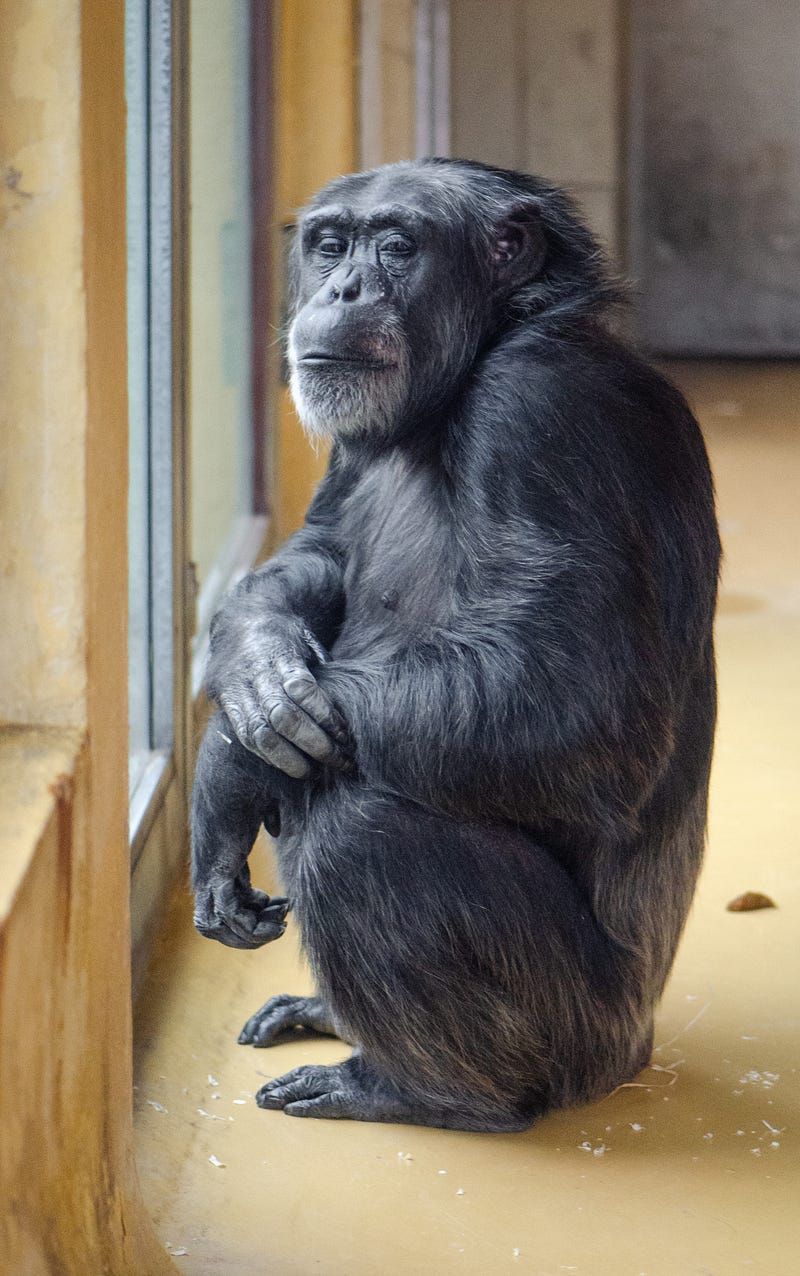
Passing on our genes
Stewart-Williams writes that having children is obviously not everyone’s explicit goal in life. However, it is indeed the implicit biological goal, expressed by the design of our bodies and our basic drives. It is also the goal of our development from an egg into an adult. The goal of this development from childhood through puberty to adulthood is sexual maturity. When we pass the reproductive age our bodies begin to break down, as Steward Williams puts it. Here is a suitable quote from the book:
Humans are not machines designed to last forever; they are machines designed to last long enough to reproduce.[…] We know, of course, that humans are not actually machines- or to be more precise, that we’re machines designed by natural selection, rather than made in a factory.
The choice of a partner
Would an alien who has just landed on Earth recognize which humans are considered particularly attractive? Probably not.
From an evolutionary point of view, we must assume that our ideals of beauty are markers that a person is well suited to have children with. And that is why we are attracted to people who have these characteristics.
Every species has its own tailor-made standards of beauty and attractiveness, and there’s no reason to think that the beauty standards of one big-headed primate -aka us - happen to correspond to objective aesthetic truths. Indeed, there’s no reason to think that there are objective aesthetic truths. — The Ape That Understood The Universe
The well-known psychologist Jordan Peterson also talks a lot about these markers, which mostly symbolize health. After all, health is the most important quality one must possess to be a suitable partner to produce offspring with. Purely from a biological perspective of course… Symmetry is a characteristic that demonstrates health and therefore is very attractive to the opposite sex, in both men and women. Many animals, especially butterflies, are very sensitive to symmetry as well.
Many studies, such as this one, suggest that symmetrical individuals are not only perceived as more attractive, but actually tend to be healthier, more fertile, and live longer. Seems like symmetry actually is a useful marker.
Is it really evolution or is it our culture that establishes beauty ideals?
The assumption that our beauty ideals are strongly influenced by our culture, and our media, is reasonable. After all, we are given a certain image of what we should find attractive every day.
However, Steward- Williams states that there is a considerable biological contribution to our beauty ideals. He proves this with a study in which pictures of women were evaluated by participants from different ethnic groups. All participants rated very similarly despite their different ethnical backgrounds.
Steward- Williams draws the following conclusion:
The fact that people from very different cultural backgrounds converged so powerfully in their ratings suggests there is a biological contribution. In fact, it suggests more; it suggests that the biological contribution dwarfs the effects of culture.
However, one could argue that probably all participants were influenced by the media they consume in terms of their preferences. The author can also invalidate this assumption with the following two arguments:
- The researchers of the mentioned study examined the media exposure of the participants and found out that it had no influence on the rating.
- Even newborn babies, who have probably not yet been influenced by TV commercials and Instagram influencers, prefer to look at people whose faces have previously been rated as attractive, according to study results.
The book gives a perfect summary in this passage:
Beauty is in the eye of the beholder, but the beholder’s eye has been shaped by natural selection and thus doesn’t vary greatly from age to age or from culture to culture.

Male to Female Attraction
In addition to universal beauty ideals such as symmetry or clear skin, there are gender-specific characteristics that are particularly attractive to the opposite sex.
In this respect, opposites attract. Straight men find very feminine faces most attractive. A feminine face is characterized by features such as large eyes, high cheekbones, full lips, and a narrow chin.
The most attractive female body shape is the so-called hourglass figure: large bust, thin waist, relatively large hips.
The female body differs in shape from the male body, especially by the waist-to-hip ratio (WHR). In The Ape that Understood the Universe this is explained as follows:
The evolutionary psychologist Devendra Singh argued that, although there are historical and cross-cultural differences in the preferred weight, the preferred WHR is always roughly the same: around 0.7. Again, this makes good sense. Not only does a low WHR distinguish women from men, it’s a strong indicator of youthfulness fertility. Older women- women whose reproductive days are behind them-have higher, more male-typical WHRs. In addition, among young women of reproductive age, those with higher WHRs tend to be less healthy and less fertile: They have a harder time getting pregnant. […] In short, if men were looking for a reliable cue that a prospective mate is the right sex, the right age, and capable of getting pregnant, they would hardly do better than WHR.
Female to Male Attraction
For men, there are also certain features that are particularly attractive to women. The counterpart to the hourglass figure in men is the so-called V-taper: a narrow hip and broad shoulders. In addition, an athletic physique and a deep voice are very attractive. According to Steve Stewart-Williams, men with these attributes tend to lose their virginity earlier, attract more sexual partners, and have more affairs than other men.
While the research shows that for women it is true that the more feminine, the more attractive, ultramasculine features such as beards are not very attractive to all women.
In The Ape that Understood the Universe provides two explanations for this:
- First, ultramasculine men are not always the best fathers. They may have a greater interest in seeking status or seeking new partners.
- Secondly, very masculine features like deep voices and beards may be more useful for intimidating other men than for attracting women.
Or maybe it all comes from culture and learning?
This hypothesis is reasonable since we humans can learn just about anything. But in my opinion, Steward provides quite convincing arguments that this is not the case.
- It is unlikely that it is a coincidence that our beauty standards map onto evolutionary relevant variables such as health and fertility.
- These standards are found in every culture.
- It looks like principles that apply in the animal kingdom, principles such as an evolved preference for healthy, fertile mates. Why wouldn’t they? it looks exactly as if they do.
I find this explanation very exciting and to me, it makes a lot of sense. Since this topic is controversial even among scientists, probably also because of ethics, I urge everyone to form their own opinion and accept this article for what it is: An attempt of explanation based on a book by an evolutionary psychologist. If you are interested in the subject, I can recommend you to read The Ape that Understood the Universe.
Thanks for reading!
Wait a second. You should get my articles in your inbox. Subscribe here. Maybe you also want to start writing on Medium yourself and make money. I made $2300 in my second month! You only need a membership for $5 a month. If you sign up with my link, you support me with a part of your fee without additional costs.
I think you will also like these articles:
Disclaimer: I have used Amazon affiliate links in this article. If you make a purchase through my link, I will get a commission. There is no additional cost for you.


