avatarAnthony Li

Free AI web copilot to create summaries, insights and extended knowledge, download it at here

6061

Abstract

this is usually only used when describing <b>(sexual assault alert)</b> grabbing somebody’s balls (most cases without consent), which can be called “monkey stealing nuts” (猴子偷桃, Jyutping: <i>hau4 zi2 tau1 tou4</i>) here.</p><div id="95ae"><pre>I prefer referring 桃 <span class="hljs-keyword">as</span> <span class="hljs-string">"nuts"</span> <span class="hljs-keyword">in</span> this <span class="hljs-keyword">case</span>, rather than <span class="hljs-string">"peaches"</span> which <span class="hljs-keyword">the</span> Chinese <span class="hljs-built_in">word</span> usually means because obviously <span class="hljs-keyword">the</span> man should <span class="hljs-built_in">seek</span> help <span class="hljs-built_in">from</span> <span class="hljs-keyword">the</span> urology department <span class="hljs-keyword">if</span> his balls are <span class="hljs-keyword">as</span> big <span class="hljs-keyword">as</span> peaches.</pre></div><figure id="4c74"><img src="https://cdn-images-1.readmedium.com/v2/resize:fit:800/0*N51BsUDbZjP7axXH.JPG"><figcaption>Image from <a href="https://zh.m.wikipedia.org/zh-hk/File:HKCEC_WC_HKTDC_Food_Expo_2009_Seafood_Products_Ready_to_eat.JPG">Wikipedia</a>.</figcaption></figure><p id="40bc">After that, let’s move on to the female part. Since most parts of the female genitalia are inside the body, we usually just describe the parts exposed by how it looks: “abalone” (鮑魚, Jyutping: <i>baau1 jyu4</i>)</p><p id="d157">Oh, clitoris. Owing to its own shape, it can be called “the pea/bean” (豆, Jyutping: <i>dau2</i>) in Cantonese. I heard that people refer to rubbing/scrubbing the clitoris as 磨豆 (Jyutping: <i>mo4 dau2</i>), or is it related to female-female sex?</p><p id="4a5b">Menstruation isn’t anything awkward in a woman’s life. However, it may be taboo in some cultures. Hong Kong is quite conservative in this sense that I haven’t heard a lot of girls telling people that they are having their period. Perhaps it would be more awkward if I heard it everywhere very often.</p><p id="e058">But 嚟M (Jyutping: <i>lai4 em1</i>), M到 (Jyutping: <i>em1 dou3</i>) and 姨媽到 (Jyutping: <i>ji4 maa1 dou3</i>) are common ways for a girl to express that their period is coming / has come.</p><p id="5692">While 嚟 or 到 means coming / come and M can be understood as “menstruation” or “month”, it seems a bit odd to say 姨媽 or even 大姨媽 (Jyutping: <i>daai6 ji4 maa1</i>), which mean “aunt” or more specifically “mum’s (eldest) sister”. As a male, I don’t understand why.</p><figure id="e6a9"><img src="https://cdn-images-1.readmedium.com/v2/resize:fit:800/0*jyatcqpBZK3u9ftg"><figcaption>Photo by <a href="https://unsplash.com/@arlandscape?utm_source=medium&amp;utm_medium=referral">Harald Arlander</a> on <a href="https://unsplash.com?utm_source=medium&amp;utm_medium=referral">Unsplash</a></figcaption></figure><p id="6694">Maybe it’s also important to talk about the anus, you know. You may need it sometimes, I guess.</p><p id="d0a6">So, anyway, we actually borrow a slang from Mandarin to call the anus, because it looks so similar. How creative are they to use “chrysanthemum” (菊花, Jyutping: <i>guk1 faa1</i>) to refer to the bumhole?</p><p id="f5ec">However, arseholes are arseholes. No one ever calls them chrysanthemums. There are some relations between the flower and some good human characters. To tell off people as “arseholes”, we use “arse ghost” (屎忽鬼, Jyutping: <i>si2 fat1 gwai2</i>. 屎忽 means arse and 鬼 means ghost.). I heard that this was euphemised as “bottom spirit” (臀部靈魂, where 臀部 means buttocks and 靈魂 spirit, Jyutping: <i>tyun4 bou6 ling4 wan4</i>) in an old movie.</p><p id="d809">After talking about the private parts, perhaps it’s better talk about the relationships.</p><figure id="e7bf"><img src="https://cdn-images-1.readmedium.com/v2/resize:fit:800/0*bEpaf-vwsv5CGxgo"><figcaption>So this should be “heshe” when described in Hong Kong Cantonese. Photo by <a href="https://unsplash.com/@jakeedc?utm_source=medium&amp;utm_medium=referral">Jake Dela Concepcion</a> on <a href="https://unsplash.com?utm_source=medium&amp;utm_medium=referral">Unsplash</a></figcaption></figure><p id="8cf6">I believe the modern way in Hong Kong to talk about human romantic and sex relationships are very friendly to homosexuals and those who has experiences to relationships of more than two people. Basically, when you know English you can tell people about it easily.</p><p id="ea56">Remember the (subject) pronoun for male and female? We use those two to talk about relationships. No matter how many people the relationship involves, the relationships among people can be described easily by putting the pronouns together.</p><p id="9169">So here are the simple ones: a heterosexual relationship is “heshe”, a gay relationship is “hehe” and a lesbian relationship is “sheshe”. Therefore, when the relationship is more crowded, or too crowded, you can just add more pronouns onto the list.</p><div id="65dc"><pre><span class="hljs-keyword">But </span>“hehe” can also refer to <span class="hljs-keyword">bromances. </span>You know, the <span class="hljs-keyword">boys </span>are pretty <span class="hljs-keyword">close </span>together <span class="hljs-keyword">and </span>perhaps some people may <span class="hljs-keyword">ship </span>them too.</pre></div><p id="5aaf">After talking about all those things, it is the time to talk about S-E-X. Well, I can’t tell you so detailedly, because…</p><figure id="0bfc"><img src="https://cdn-images-1.readmedium.com/v2/resize:fit:800/1*FneUB5neJR46NCfysoKqXA.png"><figcaption>If you have watched the Netflix series, you should know what Otis (played by Asa Butterfield) says here. He says what I want to tell you. Screenshot from <a href="https://www.youtube.com/watch?v=9cIdauxVsHE">Netflix UK & Ireland’s YouTube video</a>.</figcaption></figure><p id="c0fc">Anyway, the easiest way to talk about “having sex” in Cantonese is to “go into bed (with someone)” (上床, Jyutping: <i>soeng5 cong4</i>). Yes, it’s basically the same as “sleeping with someone” in English.</p><p i

Options

d="f2a2">Also, if you feel embarrassed telling people like this, you can have other ways of telling it to people like “hard hitting something” (扑嘢, Jyutping: <i>bok1 je5</i>), “making things” (搞嘢, Jyutping: <i>gaau2 je5</i>), or even use onomatopoeia using 啪啪啪 (Jyutping: <i>paak1 paak1 paak1</i>. Yes, you must have three 啪s, can’t be less.).</p><figure id="5419"><img src="https://cdn-images-1.readmedium.com/v2/resize:fit:800/0*SNbRddY2xRSApA9R"><figcaption>Photo by <a href="https://unsplash.com/@pylzworks?utm_source=medium&amp;utm_medium=referral">Pylz Works</a> on <a href="https://unsplash.com?utm_source=medium&amp;utm_medium=referral">Unsplash</a></figcaption></figure><p id="b983">Sometimes, you would like to go from the back. Remember how the bumhole is called? Going anal means at least one of the arses is to be broken, so in Cantonese it can be called “pop-chry” or literally “chrysanthemum exploding” (爆菊, Jyutping: <i>baau3 guk1</i>). I wonder that this is a Cantonese-coined phrase because even “chrysanthemum” meaning arse is borrowed from Mandarin, calling anal sex 爆菊 can’t become a wordplay of popcorn (爆谷, Jyutping: <i>baau3 guk1</i>, some may pronounce as <i>paau3 guk1</i>) in Mandarin. It sounds more innocent when it can mean other things, I guess.</p><p id="5509">As for scissoring, Cantonese is just so similar, we only add a verb before scissors, i.e. 磨較剪 (meaning “scissor grinding”, Jyutping: <i>mo4 gaau3 zin2</i>).</p><p id="ab3d">Before the end of this part, the last thing to mention should be masturbation. I haven’t heard of how to call masturbation in females, but the one to call masturbation in males is pretty simple. I remember when French exchange students told me they had learnt how we call male masturbation in Cantonese, they said something like that, “Oh, ‘frapper l’avion’, sound funny.” Yes, we call it 打飛機 (Jyutping: <i>daa2 fei1 gei1</i>), which means “hitting airplane”.</p><figure id="1f7c"><img src="https://cdn-images-1.readmedium.com/v2/resize:fit:800/0*LB-3A_K2bk0W4WCG"><figcaption>Photo by <a href="https://unsplash.com/@andresgarcia?utm_source=medium&amp;utm_medium=referral">Andres Garcia</a> on <a href="https://unsplash.com?utm_source=medium&amp;utm_medium=referral">Unsplash</a></figcaption></figure><p id="5381">You know, when we have an erection, which we can say as 扯旗 (meaning “flag hoisted”. Jyutping: <i>ce2 kei4</i>), the balls and the erected penis together looks like a plane when looking sideways. That’s why.</p><p id="1322">But you can remember other ways we call a penis: “J”. J becomes so creative in Cantonese linguistics that it can be a verb, and can become or even coin adjective.</p><p id="30df">J as a noun only means the penis. But when it becomes a verb, the meaning changes slightly as to do what a man can do with his own penis, i.e. to masturbate. In this sense, we can usually see some people comment under a sexually arousing picture saying “J-ed” (some unhyphenated), or “已J” (Jyutping: <i>ji5 “J”</i>) figuratively or literally (<b>pervs</b>) masturbated looking at the picture. “J” can be followed by a noun too, as in “J圖” (Jyutping: <i>“J” tou4</i>) which means “sexually arousing pictures”; or we also say those pictures are “J-able”.</p><div id="e7f5"><pre>Here, I <span class="hljs-keyword">only</span> hear people pronounce “J” <span class="hljs-keyword">as</span> in English, <span class="hljs-keyword">so</span> I can’t <span class="hljs-keyword">put</span> <span class="hljs-keyword">a</span> Jyutping transcription <span class="hljs-keyword">on</span> it. Therefore, I <span class="hljs-keyword">only</span> <span class="hljs-keyword">put</span> <span class="hljs-string">"J"</span> here in the transcription.</pre></div><p id="90f4">Oh, girls happen to use the “masturbate” and “sexually arousing” senses of “J” too.</p><p id="a7ac">Lastly, I want to talk about the most ancient job of the world: prostitution.</p><figure id="a10b"><img src="https://cdn-images-1.readmedium.com/v2/resize:fit:800/0*nQ5Pm7HYEPtuy3-M"><figcaption>Photo by <a href="https://unsplash.com/@relentlessjpg?utm_source=medium&amp;utm_medium=referral">William Moreland</a> on <a href="https://unsplash.com?utm_source=medium&amp;utm_medium=referral">Unsplash</a></figcaption></figure><p id="b617">雞 (literally “chicken”, Jyutping: <i>gai1</i>) is how we call a prostitute. Some people suggest that this comes from 妓 (Jyutping: <i>gei6</i>), the word for prostitute across Chinese languages. The pronunciations of the two words in Mandarin are similar and so some people believe calling prostitutes 雞s is a euphemism from 妓. Some people have doubts on this theory.</p><figure id="68b6"><img src="https://cdn-images-1.readmedium.com/v2/resize:fit:800/0*uGLzLKmT6ASr9LE9"><figcaption>Photo by <a href="https://unsplash.com/@ross_sokolovski?utm_source=medium&amp;utm_medium=referral">Ross Sokolovski</a> on <a href="https://unsplash.com?utm_source=medium&amp;utm_medium=referral">Unsplash</a></figcaption></figure><p id="355b">But anyway, since we call prostitutes as a poultry, we give them a name of another poultry when a man sells himself like a prostitute. That’s why we call a male prostitute 鴨 (literally “duck”, Jyutping: <i>aap2</i>).</p><p id="5a71">A pimp is called 扯皮條 (Jyutping: <i>ce2 pei4 tiu2</i>) which I don’t understand.</p><p id="9966">Huh. I am feeling as awkward as Otis Milburn after saying all these stuff.</p><div id="c465" class="link-block"> <a href="https://readmedium.com/hong-kong-english-cantonese-collection-f41ce1e0565"> <div> <div> <h2>Hong Kong English/Cantonese: Collection</h2> <div><h3>This is a contents page for all my articles regarding Cantonese slangs, which were written in English.</h3></div> <div><p>medium.com</p></div> </div> <div> <div style="background-image: url(https://miro.readmedium.com/v2/resize:fit:320/)"></div> </div> </div> </a> </div></article></body>

Hong Kong English/Cantonese (XVIII)

Sex Education (but not related to the Netflix series)

Maybe I should watch this TV series. Image from The Buzz Paper. (Update 4 days after putting this picture in my draft: I am watching it.)

If you read some of my Cantonese posts, you would know that I am a smoker. Out of curiosity, I recently opened a private account on Instagram to post some of my photos of me smoking, and followed some smokers’ accounts. It opened my eyes when I got a few tens of male followers.

I know that Instagram can sometimes be dangerous as I heard some people just like to send nudes to others. Luckily I haven’t received any. I also heard that there are people who have some kinds of fetishes and kinks trying to find others with similar interests.

But in that account, I have got some people who liked each and every one of my posts. Some asked how old I am and how many cigarettes I smoke every day. I assume that these questions are normal. However, some behaviours from some people freaked me out.

Some of them commented on all the posts and my stories that I am hot and sexy (but I’m not convinced). Some asked if I am gay. (Answer: No.) Some even asked if I have a lot of hair on my body and asked for a picture of my armpit. (I must be drunk. I gave him.) Some asked for a video call smoking session. (I told him that chances are there, but not now.)

I told this to a gay friend who accidentally came across that account one day. His replies were “You deserve it” kind of thing, but he analysed it. He was like, “Hey, look at your profile picture, it’s you smoking, topless in the bathroom. It seems that the message you wanted to deliver isn’t what they received.”

I am a stupid straight guy who likes killing myself slowly but surely. It was a real mind-blown moment that I decided to take away my profile picture within one or two hours. (And I finally uploaded a picture of a lit cigarette that I was holding and a glass of beer on a table taken in Hamburg, Germany last year, without my face.) But after his analysis and a few messages back and forth, we got to the messages below.
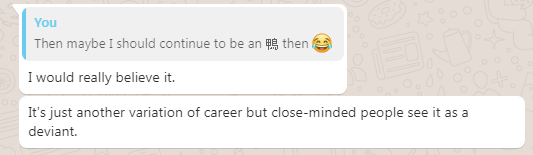
Yes, I thought I became an 鴨 (Meaning “rent boy”. Literally “duck”. Jyutping: aap2) after replying the messages in that account.

That’s why I want to talk about S-E-X in this article.

Perhaps my subconscious is giving me a message that I decide to ignore, but I tell people that my theme song is Katy Perry's Ur So Gay.

I do remember that I mentioned that Cantonese swear words contains words about how human genitals work, but they are not in the scope of this article as I think I will have a separate article about them.

Therefore, I think it’s best start from how we can call human genitals in Cantonese. First up, it’s the male one.

Male external genitalia consists of penis (陰莖, Jyutping: jam1 ging3) and scrotum (陰囊, Jyutping: jam1 nong4) which rests the testes (睪丸, Jyutping: gou1 jyun2). However, we usually talk about the penises and testes in Hong Kong Cantonese when talking about the nicknames.

This is a literal J圖. Read on to know what a J圖 really is. Image from Wikimedia Commons.

So, the first Cantonese nickname for penises is 啫啫 (anglicised as “jerjer”, Jyutping: zoe4 zoe1). This way of calling it is often heard in children’s speeches. But when the kids grow up, they would think the repetition of this sound may sound embarrassing, and so they may say it as 啫 (i.e. “jer”) only.

Also, because of the anglicisation, some people would use those to write for convenience. Some even have it shortened by initials, i.e. “J” or “JJ”.

And definitely, you can call it 棍 (meaning “a stick”, Jyutping: gwan3) or 蕉 (meaning “banana”, Jyutping: ziu1) because of its shape.

Not to be confused with 啫啫 pronounced as zoe1 zoe1, which is a cooking style in some Chinese restaurants.
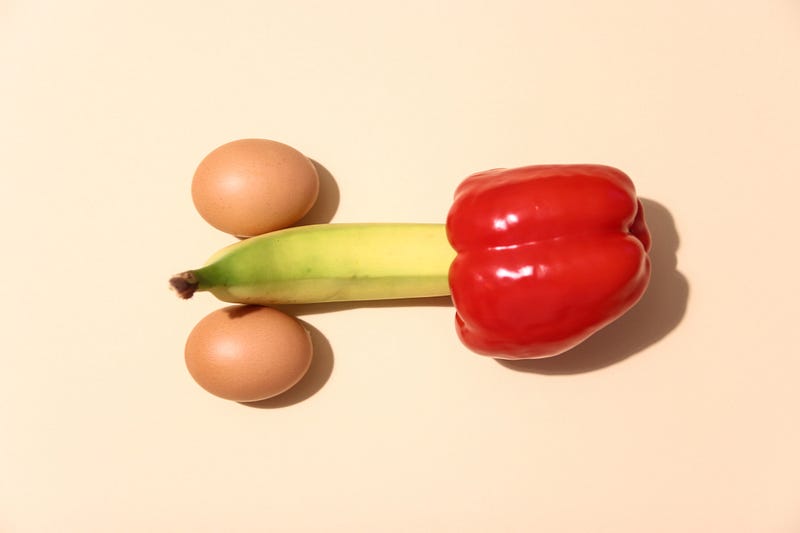
Photo by Dainis Graveris on Unsplash

Then it’s time for the balls. However, we don’t call the testes “balls” in Cantonese. If you have read my articles about “Double Mays”, you would know that “balls” mean breasts / tits in Cantonese. Instead, we call testes “eggs” (蛋, Jyutping: daan2).

But in some cases, our “eggs” can also be called “nuts” (桃, Jyutping: tou4), simplified from walnuts. However, this is usually only used when describing (*sexual assault alert*) grabbing somebody’s balls (most cases without consent), which can be called “monkey stealing nuts” (猴子偷桃, Jyutping: hau4 zi2 tau1 tou4) here.

I prefer referring 桃 as "nuts" in this case, rather than "peaches" which the Chinese word usually means because obviously the man should seek help from the urology department if his balls are as big as peaches.
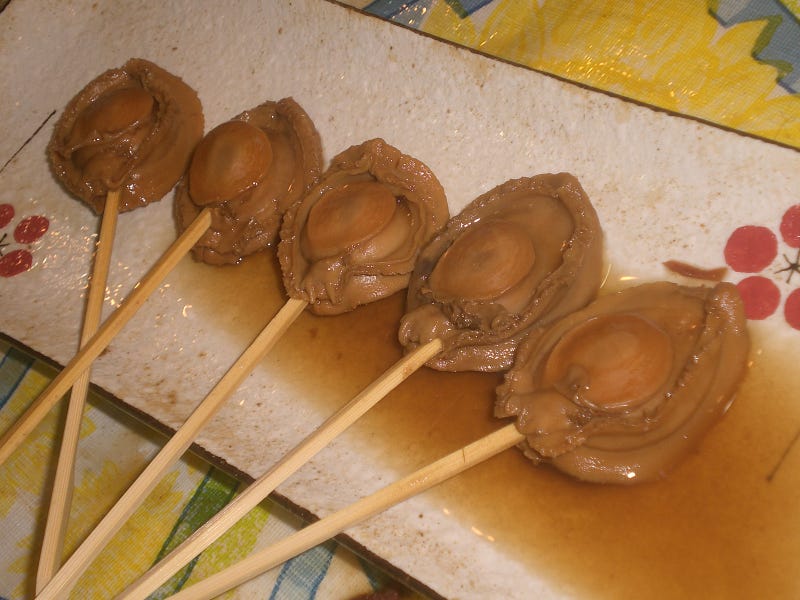
Image from Wikipedia.

After that, let’s move on to the female part. Since most parts of the female genitalia are inside the body, we usually just describe the parts exposed by how it looks: “abalone” (鮑魚, Jyutping: baau1 jyu4)

Oh, clitoris. Owing to its own shape, it can be called “the pea/bean” (豆, Jyutping: dau2) in Cantonese. I heard that people refer to rubbing/scrubbing the clitoris as 磨豆 (Jyutping: mo4 dau2), or is it related to female-female sex?

Menstruation isn’t anything awkward in a woman’s life. However, it may be taboo in some cultures. Hong Kong is quite conservative in this sense that I haven’t heard a lot of girls telling people that they are having their period. Perhaps it would be more awkward if I heard it everywhere very often.

But 嚟M (Jyutping: lai4 em1), M到 (Jyutping: em1 dou3) and 姨媽到 (Jyutping: ji4 maa1 dou3) are common ways for a girl to express that their period is coming / has come.

While 嚟 or 到 means coming / come and M can be understood as “menstruation” or “month”, it seems a bit odd to say 姨媽 or even 大姨媽 (Jyutping: daai6 ji4 maa1), which mean “aunt” or more specifically “mum’s (eldest) sister”. As a male, I don’t understand why.
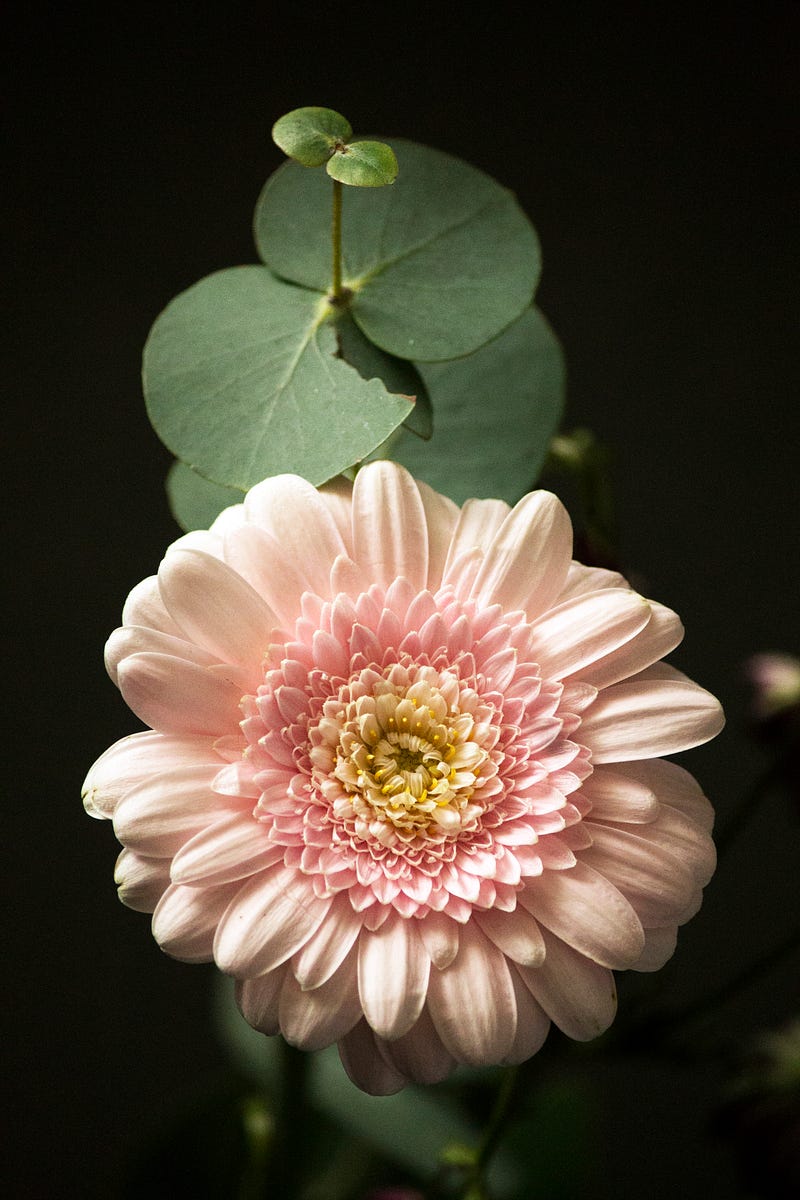
Photo by Harald Arlander on Unsplash

Maybe it’s also important to talk about the anus, you know. You may need it sometimes, I guess.

So, anyway, we actually borrow a slang from Mandarin to call the anus, because it looks so similar. How creative are they to use “chrysanthemum” (菊花, Jyutping: guk1 faa1) to refer to the bumhole?

However, arseholes are arseholes. No one ever calls them chrysanthemums. There are some relations between the flower and some good human characters. To tell off people as “arseholes”, we use “arse ghost” (屎忽鬼, Jyutping: si2 fat1 gwai2. 屎忽 means arse and 鬼 means ghost.). I heard that this was euphemised as “bottom spirit” (臀部靈魂, where 臀部 means buttocks and 靈魂 spirit, Jyutping: tyun4 bou6 ling4 wan4) in an old movie.

After talking about the private parts, perhaps it’s better talk about the relationships.

So this should be “heshe” when described in Hong Kong Cantonese. Photo by Jake Dela Concepcion on Unsplash

I believe the modern way in Hong Kong to talk about human romantic and sex relationships are very friendly to homosexuals and those who has experiences to relationships of more than two people. Basically, when you know English you can tell people about it easily.

Remember the (subject) pronoun for male and female? We use those two to talk about relationships. No matter how many people the relationship involves, the relationships among people can be described easily by putting the pronouns together.

So here are the simple ones: a heterosexual relationship is “heshe”, a gay relationship is “hehe” and a lesbian relationship is “sheshe”. Therefore, when the relationship is more crowded, or too crowded, you can just add more pronouns onto the list.

But “hehe” can also refer to bromances. You know, the boys are pretty close together and perhaps some people may ship them too.

After talking about all those things, it is the time to talk about S-E-X. Well, I can’t tell you so detailedly, because…

If you have watched the Netflix series, you should know what Otis (played by Asa Butterfield) says here. He says what I want to tell you. Screenshot from Netflix UK & Ireland’s YouTube video.

Anyway, the easiest way to talk about “having sex” in Cantonese is to “go into bed (with someone)” (上床, Jyutping: soeng5 cong4). Yes, it’s basically the same as “sleeping with someone” in English.

Also, if you feel embarrassed telling people like this, you can have other ways of telling it to people like “hard hitting something” (扑嘢, Jyutping: bok1 je5), “making things” (搞嘢, Jyutping: gaau2 je5), or even use onomatopoeia using 啪啪啪 (Jyutping: paak1 paak1 paak1. Yes, you must have three 啪s, can’t be less.).
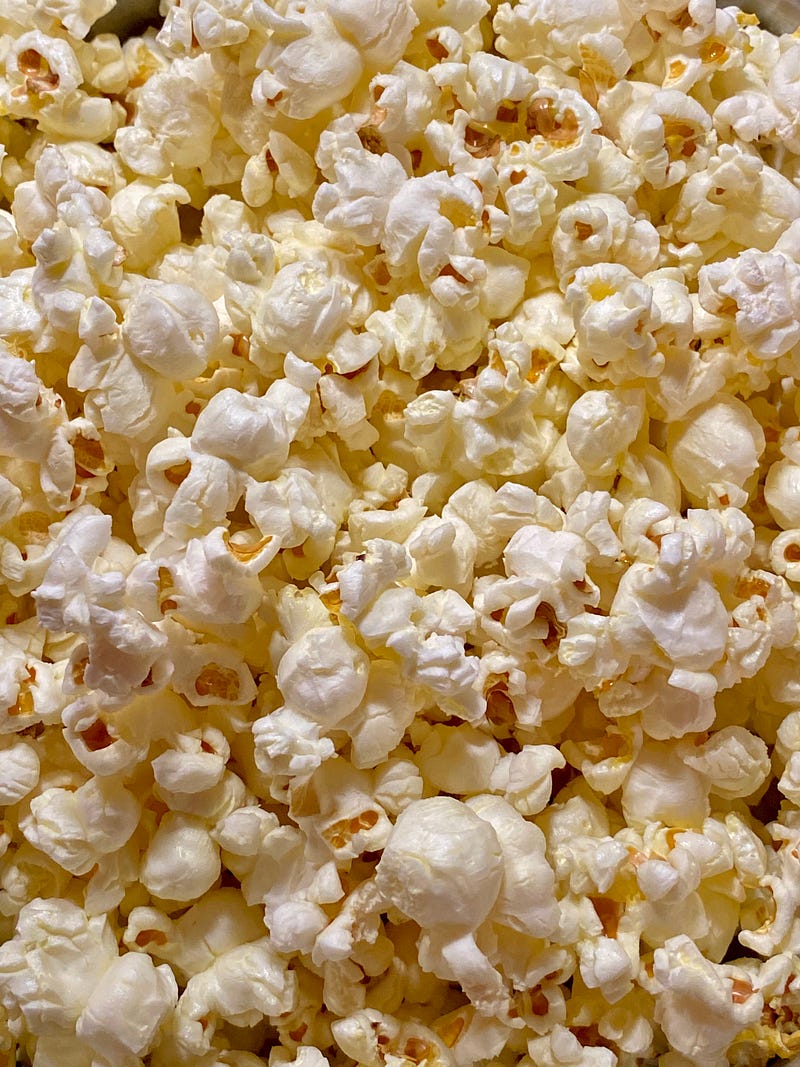
Photo by Pylz Works on Unsplash

Sometimes, you would like to go from the back. Remember how the bumhole is called? Going anal means at least one of the arses is to be broken, so in Cantonese it can be called “pop-chry” or literally “chrysanthemum exploding” (爆菊, Jyutping: baau3 guk1). I wonder that this is a Cantonese-coined phrase because even “chrysanthemum” meaning arse is borrowed from Mandarin, calling anal sex 爆菊 can’t become a wordplay of popcorn (爆谷, Jyutping: baau3 guk1, some may pronounce as paau3 guk1) in Mandarin. It sounds more innocent when it can mean other things, I guess.

As for scissoring, Cantonese is just so similar, we only add a verb before scissors, i.e. 磨較剪 (meaning “scissor grinding”, Jyutping: mo4 gaau3 zin2).

Before the end of this part, the last thing to mention should be masturbation. I haven’t heard of how to call masturbation in females, but the one to call masturbation in males is pretty simple. I remember when French exchange students told me they had learnt how we call male masturbation in Cantonese, they said something like that, “Oh, ‘frapper l’avion’, sound funny.” Yes, we call it 打飛機 (Jyutping: daa2 fei1 gei1), which means “hitting airplane”.

Photo by Andres Garcia on Unsplash

You know, when we have an erection, which we can say as 扯旗 (meaning “flag hoisted”. Jyutping: ce2 kei4), the balls and the erected penis together looks like a plane when looking sideways. That’s why.

But you can remember other ways we call a penis: “J”. J becomes so creative in Cantonese linguistics that it can be a verb, and can become or even coin adjective.

J as a noun only means the penis. But when it becomes a verb, the meaning changes slightly as to do what a man can do with his own penis, i.e. to masturbate. In this sense, we can usually see some people comment under a sexually arousing picture saying “J-ed” (some unhyphenated), or “已J” (Jyutping: ji5 “J”) figuratively or literally (*pervs*) masturbated looking at the picture. “J” can be followed by a noun too, as in “J圖” (Jyutping: “J” tou4) which means “sexually arousing pictures”; or we also say those pictures are “J-able”.

Here, I only hear people pronounce “J” as in English, so I can’t put a Jyutping transcription on it. Therefore, I only put "J" here in the transcription.

Oh, girls happen to use the “masturbate” and “sexually arousing” senses of “J” too.

Lastly, I want to talk about the most ancient job of the world: prostitution.
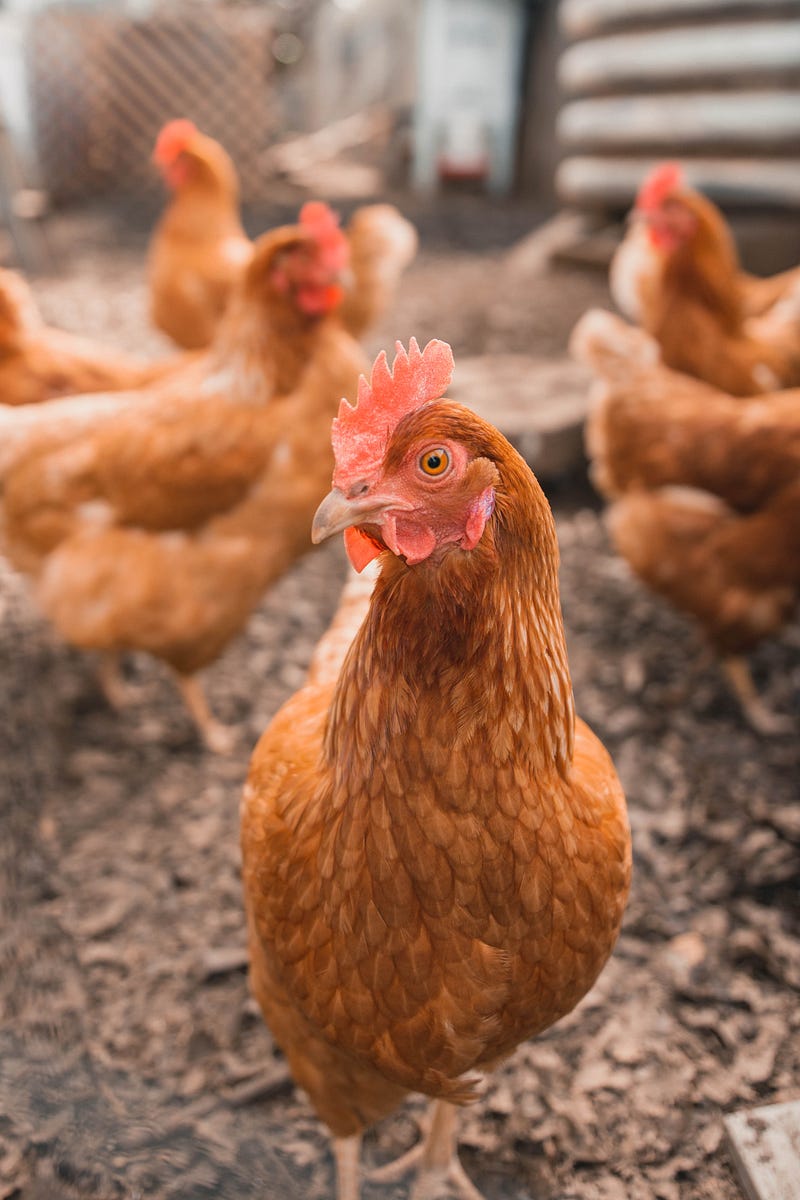
Photo by William Moreland on Unsplash

雞 (literally “chicken”, Jyutping: gai1) is how we call a prostitute. Some people suggest that this comes from 妓 (Jyutping: gei6), the word for prostitute across Chinese languages. The pronunciations of the two words in Mandarin are similar and so some people believe calling prostitutes 雞s is a euphemism from 妓. Some people have doubts on this theory.
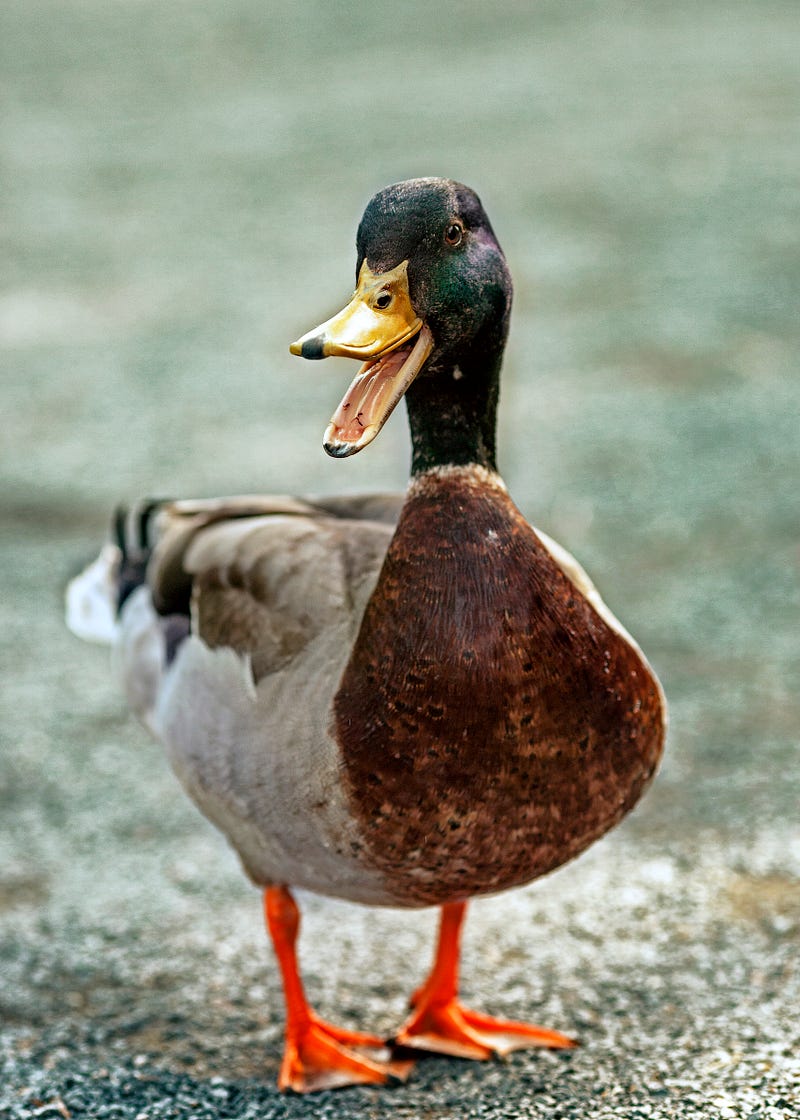
Photo by Ross Sokolovski on Unsplash

But anyway, since we call prostitutes as a poultry, we give them a name of another poultry when a man sells himself like a prostitute. That’s why we call a male prostitute 鴨 (literally “duck”, Jyutping: aap2).

A pimp is called 扯皮條 (Jyutping: ce2 pei4 tiu2) which I don’t understand.

Huh. I am feeling as awkward as Otis Milburn after saying all these stuff.

Hong Kong
Hong Kong Cantonese
Recommended from ReadMedium