Seven Times Steven Spielberg Changed Cinema
The lasting influence of Hollywood’s greatest director.
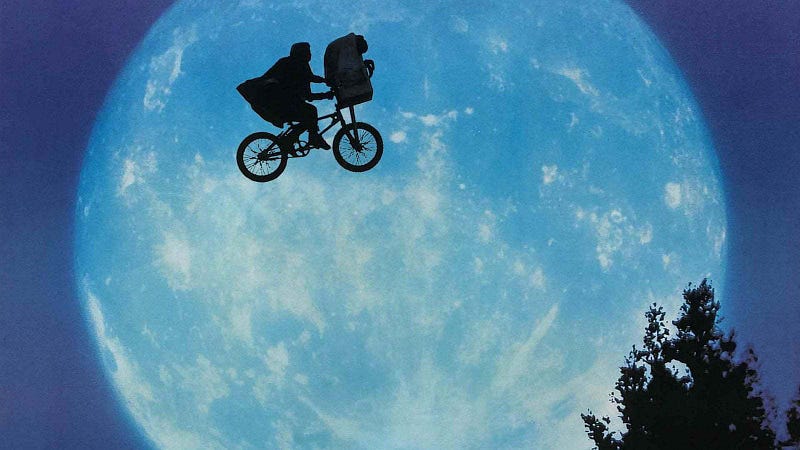
Throughout Steven Spielberg’s extraordinary career, he has made films loved by both audiences and critics. Many of them proved hugely influential, provoking both crude imitators cashing in, as well as creative innovators putting their spin on Spielberg’s groundwork. In some cases, his films have changed the industry forever. Here are seven examples.
Jaws (1975)
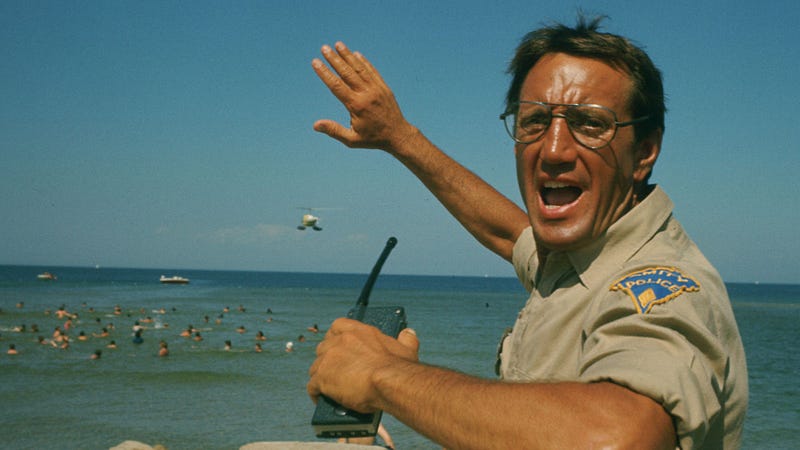
The 1970s were a second golden era in Hollywood. Freed from the confines of the Hays Code and riding the waves of the counter-culture movements of the 1960s, many innovative films stretched the envelope of cinema. MASH (1970), The French Connection (1971), The Godfather (1972), Cabaret (1972), Mean Streets (1973), A Clockwork Orange (1971), Chinatown (1974), and The Exorcist (1973) are just a few examples. Jaws is also a part of that golden era, as is Star Wars (1977), but those two films are celebrated (and sometimes derided) for essentially creating Hollywood’s obsession with blockbusters. In that respect, with Jaws, Spielberg was responsible for the first modern blockbuster.
Adapted from Peter Benchley’s bestselling novel about a killer shark terrorising an island community, Jaws instantly caught the public’s imagination and remains a perennial favorite. Spielberg’s superb direction is chief among the reasons why. He builds suspense by keeping the shark offscreen as long as possible, framing many shots at water level, which adds to the claustrophobic terror. Three superb performances from Roy Scheider, Richard Dreyfuss, and Robert Shaw ground the drama in a believable, brine-under-the-fingernails grittiness. Spielberg’s courageous insistence on shooting at sea meant a nightmare shoot, but the results look brilliant onscreen, and John Williams’s score is the iconic icing on a very tasty cinematic cake.
The film inspired not only three increasingly dreadful sequels (with which Spielberg had no involvement) but also countless imitators of variable quality: The Deep (1977), Tentacles (1977), Orca (1978), Piranha (1978), Deep Blue Sea (1999), The Shallows (2016), The Meg (2018), and far too many others to list.
Close Encounters of the Third Kind (1977)
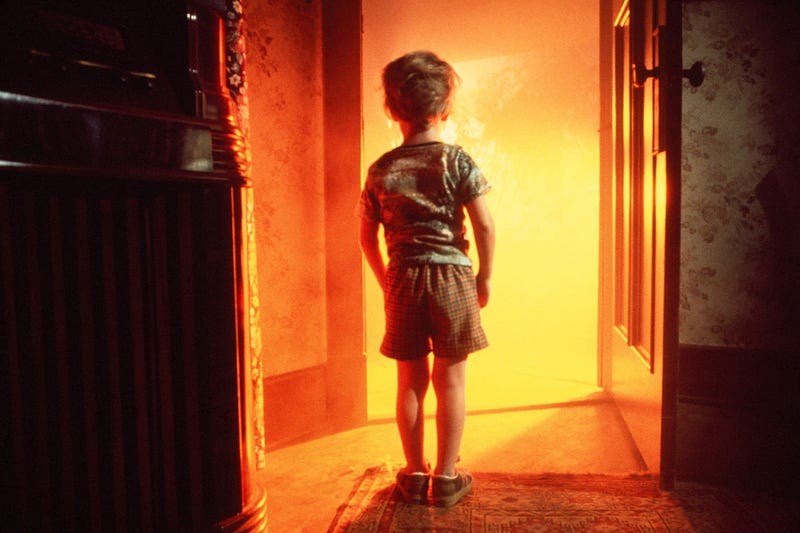
We are not alone is the intriguing tagline for Spielberg’s UFO extravaganza; a film that for the first time treats the subject of extra-terrestrials with a seriousness largely absent from sci-fi films up to that point. The film has an epic scope in everything from its shivers-down-the-spine mysterious opening (“He says the sun came out last night. He says it sang to him.”) to the spectacular conclusion with the landing of the mothership. Another great performance from Richard Dreyfuss anchors the enigmatic narrative, and he is well supported by Melinda Dillon, Teri Garr, Francois Truffaut, Bob Balaban, and Cary Guffey. Close Encounters also contains another magnificent John Williams score, which thematically connects with how the humans contact the extra-terrestrials.
The movie was a smash hit. Its themes and innovative visual effects inspired several subsequent films, in everything from Cocoon (1985) to Flight of the Navigator (1986) and even The Abyss (1989). More recently, the film has been referenced in the likes of Arrival (2016) and Super 8 (2011). The latter, in particular, contains shots that could have been cut and spliced from Close Encounters. More importantly, the film is a forerunner of sorts to another Spielberg film on this list that also changed the course of cinema in its own way: E.T. The Extra-Terrestrial.
Raiders of the Lost Ark (1981)
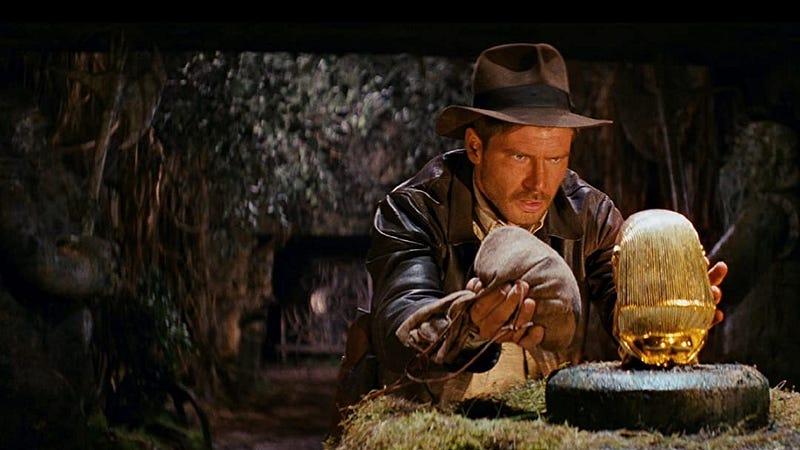
Currently celebrating its fortieth anniversary, Spielberg’s collaboration with George Lucas had an instant, unopposed claim to the title of greatest adventure film ever made. The thrilling tale of daredevil archaeologist Indiana Jones (Harrison Ford) searching for the Ark of the Covenant proved as popular with audiences as Star Wars. Ford is more than matched by Karen Allen’s love interest character Marion, and Paul Freeman’s French, Nazi-collaborating rival archaeologist, provides a splendid villain. With iconic action set-pieces coming thick and fast (the giant boulder, the Arab swordsman, the snake pit, the truck chase), the film barely pauses for breath, leaving the audience giddy with excitement. And, of course, John Williams yet again contributes an unforgettably heroic score.
Three Spielberg-directed sequels followed. On top of that, the film spawned countless imitators of varying quality and continues to have a huge influence on the genre. Again, the evidence speaks for itself: Romancing the Stone (1984), High Road to China (1983), The Goonies (1985), Young Sherlock Holmes (1986), The Rocketeer (1991), The Mask of Zorro (1998), National Treasure (2004), Lara Croft: Tomb Raider (2001), Prince of Persia: The Sands of Time (2010), The Mummy (1999), plus their various sequels and reboots, are all touched by the shadow of Raiders of the Lost Ark.
E.T. The Extra-Terrestrial (1982)
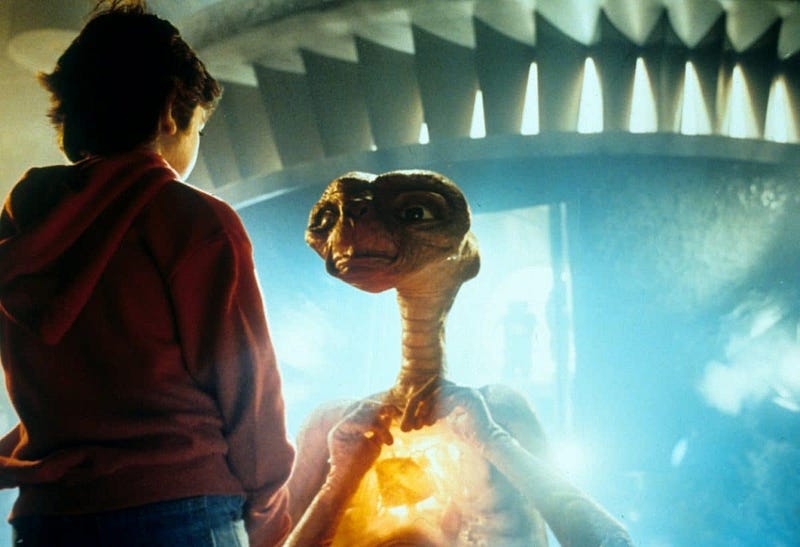
Spielberg didn’t expect his very personal tale of a little lost alien who befriends a lonely boy to perform brilliantly at the box office. Yet it went on to become the most successful film of all time; a title it would hold for over ten years until Spielberg later knocked himself off the top spot with Jurassic Park (1993). There isn’t such a thing as a perfect film, but if there were, it would look like E.T.
Describing Spielberg’s direction as brilliant is redundant given the embarrassment-of-riches levels of innovation displayed here. His decision to shoot everything at child eye-line infuses every shot with wonder and occasionally terror. Think of the opening chase in the forest or the scene in which NASA scientists invade Elliot’s home, transforming a safe, familiar environment into an antiseptic nightmare of hazmat suits and medical paraphernalia.
Everyone else involved — from screenwriter Melissa Mathison to cast members Henry Thomas, Drew Barrymore, Thomas MacNaughton, Dee Wallace, and Peter Coyote — operate at the very top of their game. John Williams delivers arguably his greatest-ever score, adding a soaring, magical component that elevates the bike-flying escape finale into what is, for my money, the single most emotionally exhilarating sequence in cinema history.
Although a spiritual successor to Close Encounters of the Third Kind, E.T. The Extra-Terrestrial belongs more to a Peter Pan-style fairy tale tradition than to science fiction. It also represents an innovative variant on the tried and tested boy-and-his-dog narrative. Many imitators followed, some of which were decent enough on their own terms: Starman (1984), DARYL (1985), and Short Circuit (1987), for instance. Others were lamentable: The less said about Mac and Me (1988) and Nukie (1988), the better. The ripple effect of E.T. is also felt in everything from Brad Bird’s much underrated The Iron Giant (1999) to Earth to Echo (2014).
Jurassic Park (1993)
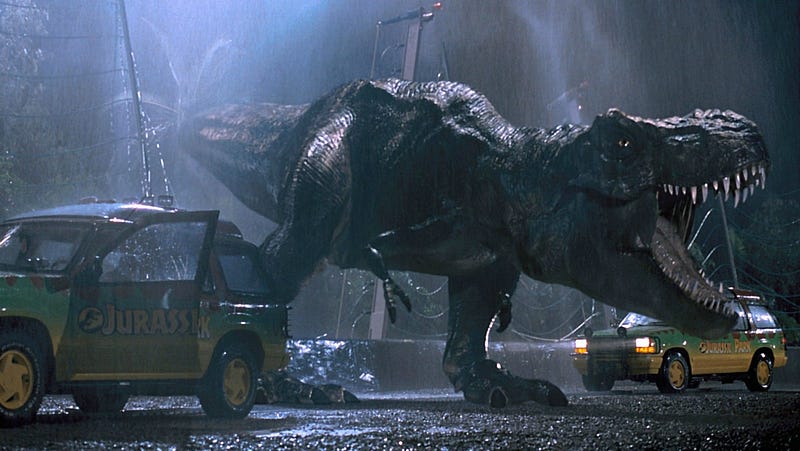
Michael Crichton’s tale of genetically engineered dinosaurs running amok in a prospective theme park was an obvious choice of material for Spielberg. Jurassic Park wasn’t the first film involving Spielberg that featured pioneering visual effects work, nor was it the first film to include computer-generated images. Young Sherlock Holmes (1985), The Abyss (1989), and Terminator 2: Judgment Day (1991) were key forerunners. However, if earlier films knocked at the CGI gate, Jurassic Park smashed it down, flooding the visual effects industry with seismic change.
The cinema-going summer of 1993 was filled with the sound of roaring dinosaurs and thrilled audiences, returning again and again to this action-packed monster mega-hit. The cast, including Sam Neill, Laura Dern, Jeff Goldblum, and Richard Attenborough, all delivered decent performances, but let’s face it: The real stars are the T-Rex, the brachiosaurus, and the velociraptors, courtesy of Stan Winston’s animatronics (used for close shots) and Lucasfilm’s CGI (used for wide shots). I’d add that the sound design, by Gary Rydstrom, is also particularly worthy of praise. And as ever, we mustn’t forget the contribution of John Williams, whose instantly recognisable music can be added to his ridiculously large pile of iconic scores.
Spielberg directed one sequel, Jurassic Park: The Lost World (1997), and other non-Spielberg-directed sequels followed. The imitators were many, but it seems foolish to detail them here, as they represent only a part of Jurassic Park’s CGI revolution. Without the film, there would be no Forrest Gump (1994), Toy Story (1995), Independence Day (1996), Starship Troopers (1997), Titanic (1997), Star Wars prequels (and later sequels), The Lord of the Rings, Harry Potter, Marvel Universe… the list goes on and on.
Schindler’s List (1993)
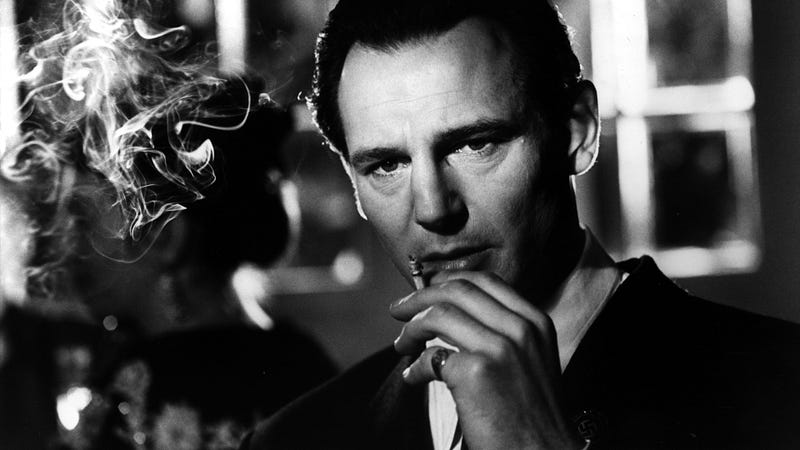
Spielberg’s decision to adapt Thomas Keneally’s Booker Prize-winning Schindler’s Ark surprised many. However, in retrospect, this masterpiece represents a coming-of-age for Spielberg. In telling the true story of Oscar Schindler — a Nazi party member, womaniser, and war profiteer who underwent a crisis of conscience, ultimately bankrupting himself to save over a thousand Jews in his factories during the Holocaust — Spielberg changed forever as a filmmaker. Eschewing many of his visual trademarks, Spielberg opts for hand-held immediacy, bringing an unsentimental ferocity to the horrors of the Holocaust. The film features outstanding performances from Liam Neeson, Ben Kingsley, and Ralph Fiennes, as well as stark, vivid cinematography from Janusz Kaminski, who would go on to shoot almost all of Spielberg’s subsequent films. The result is an utterly compelling, stunningly powerful three hours-plus monochrome work of art. As far as I’m concerned, it’s the greatest film of the 1990s.
In the wake of seven Oscars, including Best Film and Best Director (and of course, Best Original Music Score for John Williams), the influence of Schindler’s List is often felt in the documentary-style adopted by serious dramatic works set in wartime. But, more importantly, Spielberg gave his salary for making the film and all profits he would have received to help launch the USC Shoah Foundation, which documents Holocaust survivor testimonies. Therefore, in this specific case, the film’s greatest legacy lies outside of cinema.
It is worth adding that the occasionally irritating trend of showing the real people concerned at the end of dramas based on their lives originates here. Schindler’s List did it first and did it best. The finale, as the real Schindler Jews place stones on Schindler’s grave in Israel, alongside the actors who portrayed them, is almost unbearably moving.
Saving Private Ryan (1998)
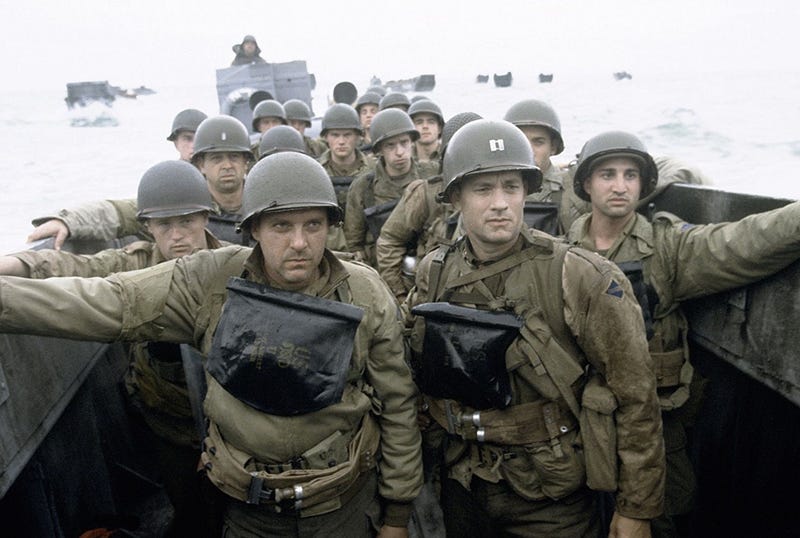
Had someone else made Saving Private Ryan, we might have got an interesting, diverting World War II adventure story, dealing in the public relations motivated rescue of a private trapped behind enemy lines, whose brothers have all been killed. However, I seriously doubt we’d have seen battle scenes with such commitment to fierce realism, nor would the film have essentially reinvented the template for depicting war in cinema.
The opening half-hour depicts the botched bloodbath of the Omaha Beach D-Day landing. Led by Captain Miller (Tom Hanks), US troops are cut down by hails of German machine guns, drowned, burned, and blown limb from limb. Blood and entrails splatter across the screen. Young men weep for their mothers as their intestines spill out. And all the while, Spielberg’s handheld camera, shooting in grimly desaturated colors at high frame rates, inches ever forward, experiencing the carnage from the point of view of the soldiers.
Saving Private Ryan is a fine film, with some great performances, but nothing matches the power of that opening. John Williams knew better than to add music to it, and indeed, his (very fine) score for this film is comparatively spare. At any rate, war films were never the same again. Everything from Black Hawk Down (2001) to The Hurt Locker (2009) and Hacksaw Ridge (2016) follows the template set by Spielberg.
Since Saving Private Ryan, Spielberg has made several other outstanding films — including Catch Me If You Can (2002), Munich (2006), and Bridge of Spies (2015) — but brilliant though those films are, a case cannot be made that they changed the course of cinema. For that, the above seven films from the 1970s, 80s, and 90s, provide much better evidence.
Author’s note: I hope you enjoyed this article. For more about me and my writing, please click here.