Technology
2 Reasons Why Self-Driving Cars will be the Ultimate Game-changer for Disabled People
The bright bright future

According to the forecasts from futurists, in the close future, all of our transport and most of our routine tasks will be operated by AI. This means that there will be more and more interesting and promising applications of AI that will support the global Tech for Good goal. One of the worldwide societal issues that will be solved by AI is a significant lack of mobility accessibility for people with disabilities.
According to the Center for Disease Control and Prevention, there are 61 million Americans with one or another form of disability. This number means — approximately 25% of the nation.
“Accessible autonomous transportation could facilitate opportunities for people with disabilities to find or maintain employment, obtain better access to healthcare, and integrate more fully into the community,”
has stated the co-director of the Pitt’s University Transportation Center for Accessible Autonomous Vehicles and Transportation — Dr Brad Dicianno.
The trend of fully autonomous cars and the future that they will bring is promising and exciting. Self-driving cars/ Autonomous cars/ Driver-less vehicles/ Robo-cars/ Robotic cars — is a vehicle that moves safely without any or with little human input.
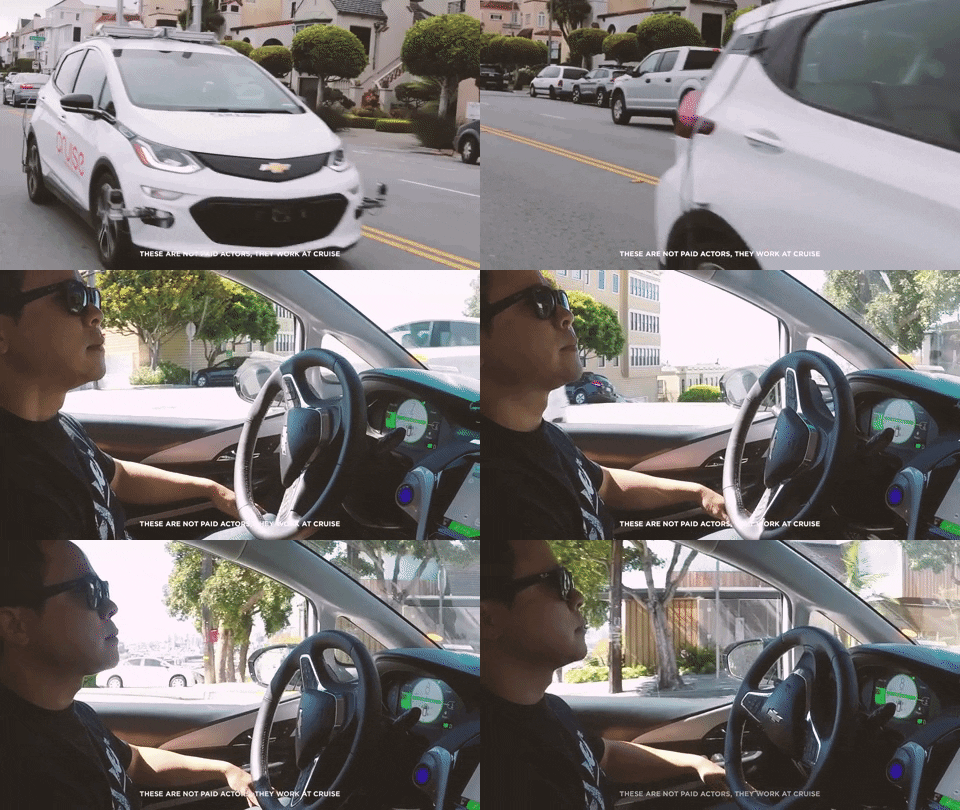
Self-driving cars can sort out many issues, but in this article, I’d like to cover what exactly this innovation would mean for people with disabilities.
No Need for a Driving License
There are many reasons why not everyone can or even want to have a driving license. It can be the cost of the license or the car, a certain disability or simply, fear. No matter the reason, not everyone has a driving license, which has caused a significant gap in mobility accessibility.
Of course, there are public transportation services and transportation on the demand (taxis). While for some people this might be a working option, for others it might be not. Some taxi companies in the USA, Canada and the UK have faced this issue and introduced a special wheelchair-accessible taxi service. Even though, this is a great idea that helps thousands of people, the percentage of these cars and the availability of this service are extremely low.
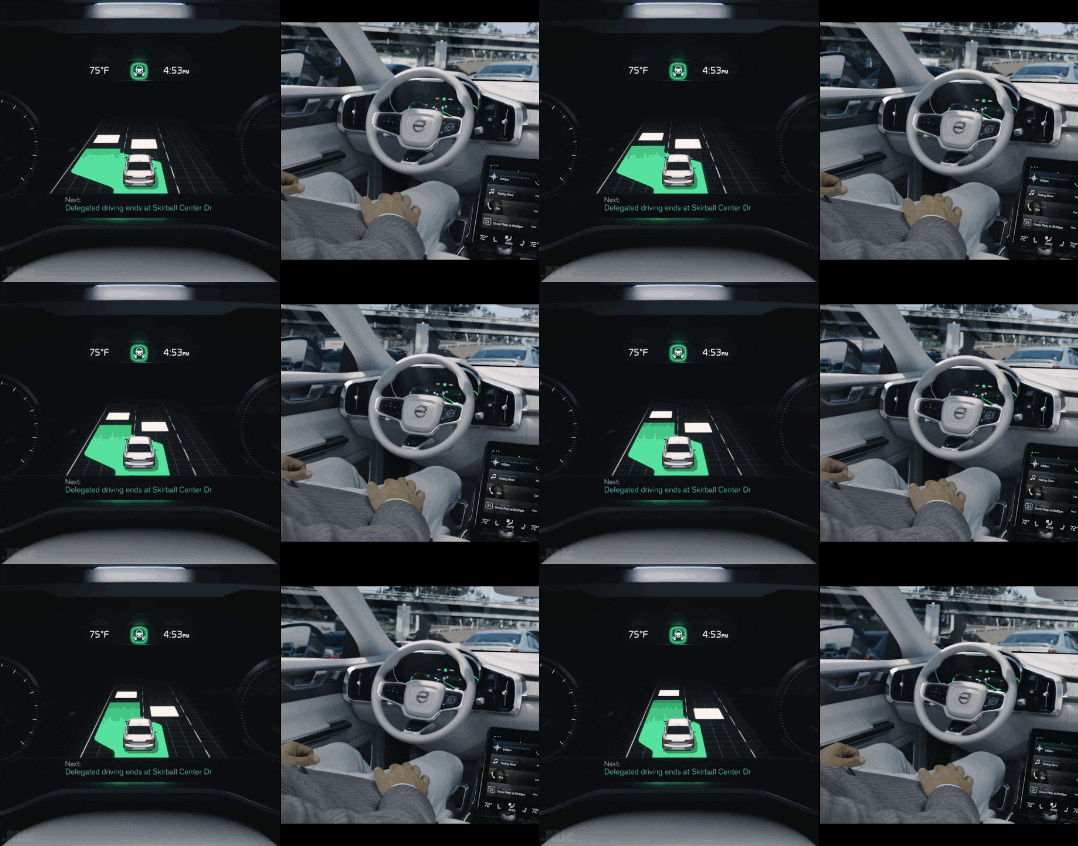
The issue of the limited mobility for some people will be resolved when fully autonomous cars will pass all of the required tests and enter the mass production stage. With the reduced need for the driver, mobility will massively increase for people with disabilities.
More accessible
As it was mentioned above, today, some big cities in the USA, Canada and the UK have introduced a taxi service that is designed specifically for people on a wheelchair. These services accept only drivers with the best rating and wheelchair-accessible vehicles. These particular cars must not only have a place for a wheelchair but also they must be specifically equipped with all of the safety measures to ensure the safe transportation of a passenger. Everything looks good here.
These wheelchair accessible taxi services are real game-changers in the taxi industry that make thousands of lives much easier. It is cheap, safe and it’s a perfect solution to the problem of the target customer. However, these programs are available only in limited cities and only in a couple of countries. This certainly shows that there are demand and an absolute need for more services like that.
Apart from the wheelchair-friendly taxi services, there are, of course, other services like private shuttles or public transportation that are equipped with a slide for wheelchair or trolley. However, according to Dr Dicianno, none of these options fully answers the problem of mobility for disabled people due to the cost, accessibility, reliability and availability.

When the fully-autonomous cars will enter its mass-production stage, the cost would not be much different from the regular cars today. This will make future transport not only available and accessible to everyone but also cheaper than other options.
How would a wheelchair — accessible self-driving car look like?
This Hungarian startup has designed a wheelchair-accessible car, that looks like this:
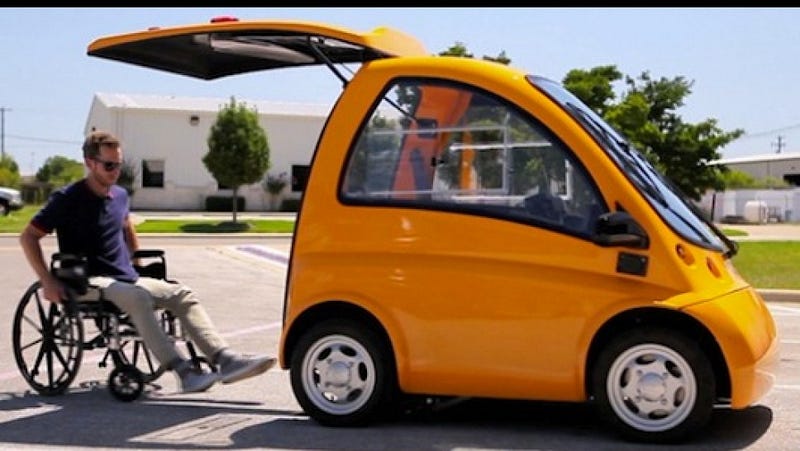
This car has no seats and it’s designed a bit differently from regular cars. In the picture, it is clear how a wheelchair user can get inside. A driver can operate the car by putting his/ her hands on motorcycle-style handlebars.
With electric power and self-drive, it’s very easy to make a car with a flat floor and hollow shell. It’s also easy to put spaces in vans and group transport for chairs to roll into. — Brad Templeton, Forbes (2020)
While this car is not a self-driving one, the design for the wheelchair-accessible fully autonomous car might be similar.
Fully autonomous and semi-autonomous cars are not just another consumer trend, but rather an important innovation that has the potential to improve many aspects of the modern cities and make mobility more accessible.