Self-Actualization and the Myth of Personal Growth
How the counterculture surrendered communal well-being to individual enlightenment

Many Westerners have come to understand the problems inherent in a society obsessed with growth and have struggled to assert a more timeless set of spiritual sensibilities. But, almost invariably, such efforts get mired in our ingrained notions of personal growth, progress, and optimism.
Frank Baum, the author of The Wizard of Oz, embodied this dynamic. He was not only a devoted follower of Russian spiritualist Madame Blavatsky but also the founder of the first magazine on window dressing and retail strategies for department stores. Dorothy’s journey down the Yellow Brick Road combined the esoteric wisdom of his teacher with the can-do optimism of early 20th-century American consumerism. The gifts Dorothy and her companions finally receive from the Wizard merely activate the potentials they had with them all along. All they really needed was a shift in consciousness, but good products and salesmanship didn’t hurt. Similarly, Rev. Norman Vincent Peale’s “positive thinking” derived from occult and transcendentalist roots but caught on only when he framed it as a prosperity gospel. He taught the poor to use the power of prayer and optimism to attain the good life and helped the wealthy justify their good fortune as an outward reward for their inner faith.
Vulnerable to the same ethos of personal prosperity, the counterculture movements of the 1960s and 1970s originally sought to undermine the religion of growth on which American society was based. Hippies were rejecting the consumerist, middle-class values of their parents while scientists were taking LSD and seeing the Tao in physics. A new spirit of holism was emerging in the West, reflected in the lyrics of rock music, the spread of meditation and yoga centers, and the popularity of Buddhism and other Eastern religions. It appeared to herald a new age.
But all of these spiritual systems were being interpreted in the American context of consumerism. Herbs, seminars, and therapies were distributed through multilevel marketing schemes and advertised as turnkey solutions to all of life’s woes. The resulting New Age movement stressed individual enlightenment over communal health. It was the same old personal salvation wine, only in California chardonnay bottles. The social justice agenda of the anti-war and civil rights movements was repackaged as the stridently individualistic self-help movement. They adopted psychologist Abraham Maslow’s “hierarchy of needs” as their rubric, with “self-actualization” as the ultimate goal at the top of the pyramid. Never mind that Buddhists would have challenged the very premise of a self. The LSD trip, with its pronounced sense of journey, peak, and return, became the new allegory for individual salvation.
Wealthy seekers attended retreats at centers such as Esalen Institute, where they were taught by the likes of Maslow, Fritz Perls, Alan Watts, and other advocates of personal transformation. While there was certainly value in taking a break from workaday reality and confronting one’s demons, the emphasis was on transcendence: if traditional religions taught us to worship God, in this new spirituality we would be as gods. It wasn’t really a retrieval of ancient holism, timelessness, and divine reenactment at all so much as an assertion of good old linear, goal-based, ascension — practiced on the former sacred grounds of the Esselen Indians.
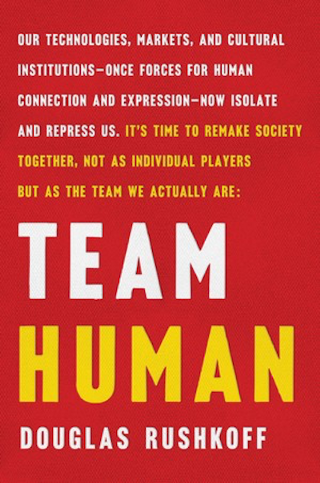
This was section 69 of the new book Team Human by Douglas Rushkoff, which is being serialized weekly on Medium. Read the previous section here and the following section here.