SECRETS of the Animal Farm — What you need to know to make $$$ in a bear market on Binance Smart Chain
The Animal Farm is now up and running, with some amazing features and ways to invest your crypto. It is a yield farm on the Binance Smart Chain. This article will be in-depth and discuss some important features of the platform, as well as yield farming in general.
Fair warning, there is a TON of information in this article, and it’s by far my longest Medium article. However, it is worth it, as you’ll the secrets of the Animal Farm. Follow me on Medium to get the latest information!
Throughout this article, you are welcome to visit the Animal Farm to check it out for yourself. There will be some additional features coming up, so depending on when you read this, there may be some things on the site that are not in this article.
Table of Contents:
Part 1: The Concept of the Animal Farm
Part 2: The Structure of the Animal Farm
Part 3: The Native Tokens of the Animal Farm, The DogPound, and the PigPen
Part 4: Yield Farming 101
Part 5: The Farms of the Animal Farm and Their Payouts
Part 6: The ROI Section — DRIP Garden and Piggy Bank
Part 1: The Concept of the Animal Farm
The Animal Farm is designed to be a sustainable yield farm on the Binance Smart Chain. There are many yield farms on the Binance Smart Chain that have peaked early and have all but disappeared. And, they have mostly suffered from a fatal flaw: an inflationary native token being rewarded for farming incentive. Simply, when investors stake their tokens, they get rewarded in a token that has zero utility outside of the reward itself. Tokens like CAKE (Pancakeswap reward token), BANANA (Apeswap reward token), and countless others start strong, because the creators of the platform create a initially-healthy liquidity pool. Then, as the reward token is farmed endlessly, the liquidity pool becomes more and more diluted, thus the price falls until the reward token becomes nearly worthless.
Check out Apeswap’s BANANA token:
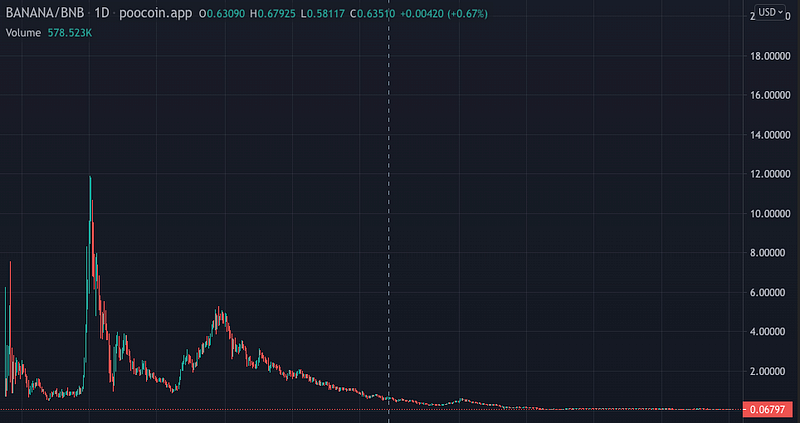
BANANA got as high at $12 in 2021, and now it sits at $0.06. Why has this happened? There’s nothing to do except sell it. There’s no reason to buy it, and it’s minted endlessly on a hourly basis. CAKE is a little better, but not dramatically:
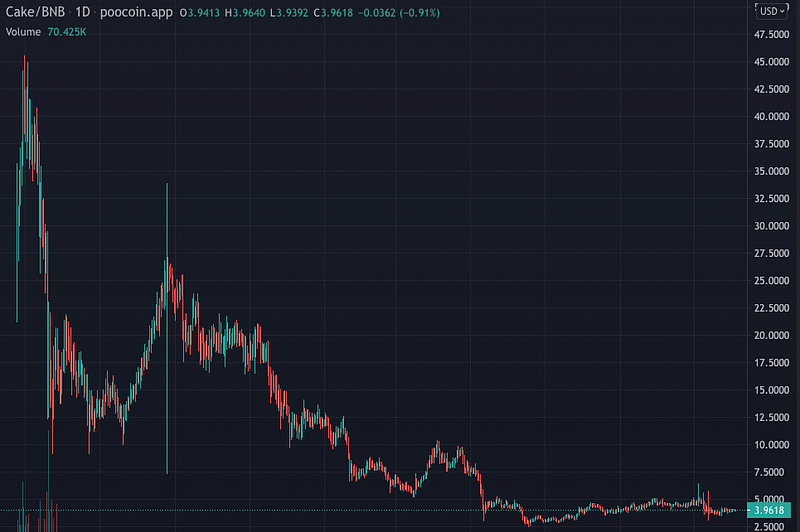
CAKE has a better price point than BANANA, but the overall shape is similar. Again, little reason to buy CAKE as it doesn’t have utility beyond the sale of a reward token.
So, what’s different with The Animal Farm? Aren’t there not one, but TWO farm reward tokens? Yes, there are two reward tokens, DOGS and PIGS. But, and this is the big, big difference, the reward tokens are not designed to be sold. They are minted in the farms and pools, but they have an amazing utility. You can STAKE the farm tokens and earn BNB and BUSD.
In a nutshell, here’s the concept of the Animal Farm:
Earn DOGS and PIGS through yield farming. Use DOGS and PIGS to earn BNB and BUSD.
This concept significantly reduces the sell pressure of the native tokens (DOGS and PIGS), because you can use them to get BNB and BUSD. The BNB and BUSD ecosystem is enormous on the Binance Smart Chain. The selling of BNB from the Animal Farm will have miniscule impact on the BNB price. The overall crypto market will determine that. And BUSD is a stable coin, so the price will always be at or very, very, very near $1. You should be able to see why the Animal Farm is different from the other yield farms. You’re not earning and selling a token which is decreasing in value daily. You’re earning the tokens, but you can stake them to earn BNB and BUSD.
In most DeFi sites, the profits taken by the average user pale in relation to the profits of the developers. In the Animal Farm, nearly all of the “dev profits” are paid out to investors as BNB and BUSD. I’ll talk about how that exactly works in Part 3.
Part 2: The Structure of the Animal Farm
At first glance, the Animal Farm looks very similar to other yield farms. Actually, that’s not quite true. The recent user interface (UI) update has a rather unique look. But, it has many of the same features.
Most yield farm sites have a section to stake Single Assets (i.e. Ethereum, Bitcoin, BUSD, etc) called POOLS, and a section to stake liquidity pool tokens (LP Tokens) which are two tokens paired together (i.e. BNB-ETH, BTC-BUSD, etc) called FARMS. When a user stakes these tokens (either in the pool or the farm), they earn reward tokens. The Animal Farm is no different.
Side note, TOKENS ON THE BINANCE SMART CHAIN. There is the “real” version of Bitcoin (BTC) and Ethereum (ETH), and then there is the Binance Smart Chain version these coins. As designed, these hold the exact same value and simply exist on a different blockchain. So, a Bitcoin (BTC) can be “bridged” to the Binance Smart Chain, where it becomes “BTCB”. For the rest of this article, I will use BTCB and BTC interchangeably, but please understand that they are the same coins on different networks.
If you have BTCB in your wallet (the Binance Smart Chain version of Bitcoin), you can stake it into the Animal Farm and earn a reward token.
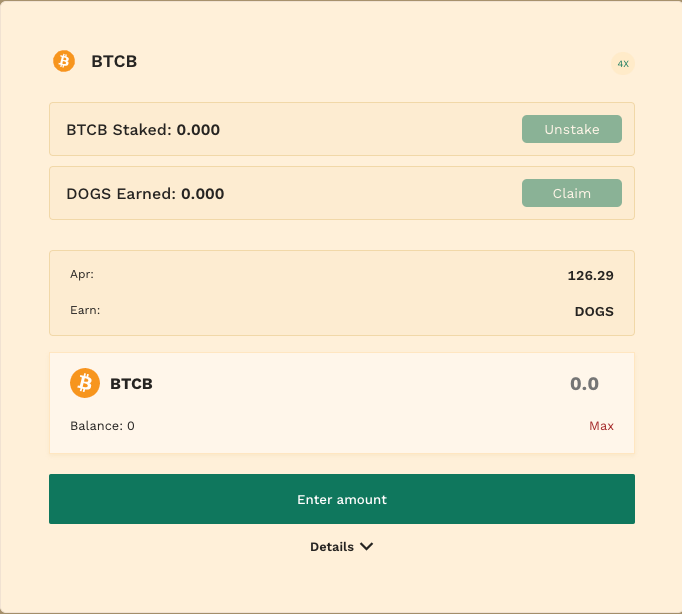
You stake BTCB, you earn DOGS, one of the native assets on the Animal Farm. You can “claim” your DOGS while leaving your BTCB staked, rinse and repeat. If you withdraw your staked BTCB, you automatically claim your DOGS. Single-Asset staking is called a “Pool”. It’s a very common model on yield farms.
You can also stake paired coins called liquidity pool tokens. More on how those really work in Part 4. When these LP Tokens (liquidity pool tokens) are staked, they tend to have a higher percentage rate of return, because these LP tokens have more value and usage (again, Part 4!).
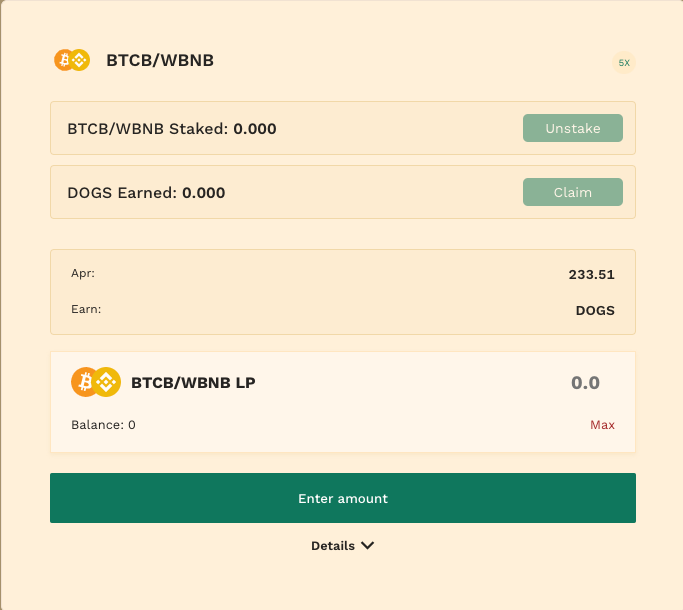
When you stake a paired token (in the above case, BTCB and WBNB…also known as “wrapped BNB”), it is called a “farm”. Again, you can claim your reward tokens, in this case “DOGS”, and leave your BTCB/WBNB tokens staked. Rinse, repeat.
Pools and Farms are the backbone of yield farming. It’s a place to store your crypto coins while earning on your investment. It’s significantly higher APR than storing USD in a bank, but that comes with additional risk. Yield farming sites are not insured, and if something catastrophic were to occur, you could stand to lose your investment. But, crypto investors tend to be prepared and knowledgeable by that risk, and the 100%+ APR provides enough incentive to get involved.
My opinion: Crypto is not risk-free. If you have money that you’re depending on to survive, never invest that into a risky endeavor. Only invest “risk capital” and be prepared to survive if it vanishes. Do your research and seek out reputable services and sites. It is my opinion that the Animal Farm is a reputable site, but please understand that is my opinion!
That’s the pools and farms. There are two major features: The DogPound and the PigPen that I will talk about in Part 3. And, there are two features: The PiggyBank and the Drip Garden that I will talk about in Part 6.

The other parts of the Animal Farm that I discuss here are the Liquidity and the Swap features.
First, the Liquidity.
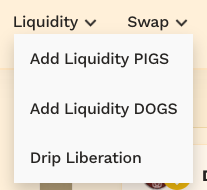
Via the liquidity menu, you can use PIGS and DOGS tokens (the native assets discussed in Part 3) to pair them with either BUSD or BNB, which you can use in the farms.
The Drip Liberation link takes you to a feature that allows you to create DRIP/BUSD liquidity tokens that you can stake in the farms to earn DOGS, or use with the Drip Garden (discussed in Part 6).
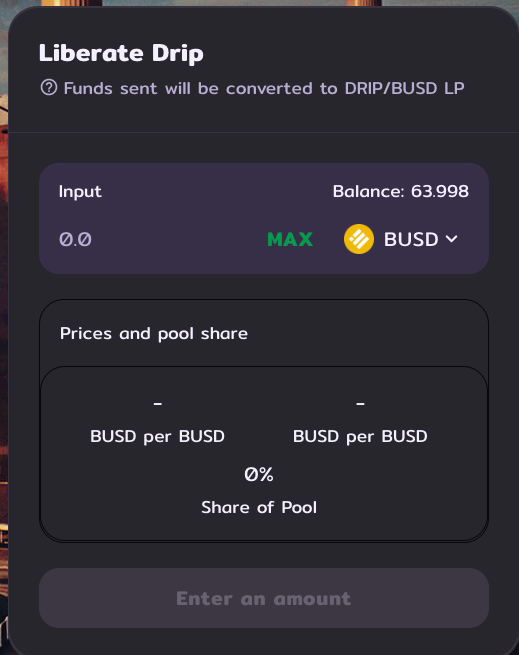
You can create DRIP/BUSD LP tokens on Pancakeswap, but there is a tax on the Drip transaction. The Drip Liberation allows you to avoid paying that tax. A very good idea if you’re seeking to create DRIP/BUSD LP for the farm.
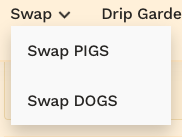
The Swap link allows you to Buy or Sell PIGS for/with BUSD or buy DOGS with BUSD. If you have DOGS and want to sell them for BUSD, you should use the DogPound page (Part 3!).
To summarize (and preview the sections to come):
PigPen: Stake PIGS to earn BUSD (Part 3) PiggyBank: An ROI platform to earn PIGS/BUSD with PIGS/BUSD (Part 6) DogPound: Stake DOGS to earn BNB or another really cool option (Part 3) Farms: Stake Liquidity Pool Tokens to Earn DOGS or PIGS Liquidity: Create Liquidity Pool Tokens using DOGS or PIGS Swap: Buy/Sell PIGS for/with BUSD or buy DOGS with BUSD Drip Garden: An ROI platform to earn DRIP/BUSD with DRIP/BUSD (Part 6)
Part 3: The Native Assets of the Animal Farm, The DogPound, and the PigPen
The native assets are the tokens that are rewarded to investors because they are staking their assets on the Animal Farm. They are DOGS and PIGS.
There’s a bit of a history lesson needed here. The current version of DOGS and PIGS are called “AFD” and “AFP”, which stands for Animal Farm DOGS and Animal Farm PIGS. They are actually version 2.0 of these tokens. The version 1 tokens are obsolete not a part of the Animal Farm. They were a part of the Animal Farm initial launch in early 2022. They have been upgraded and improved. I use DOGS and AFD interchangably, and the same with PIGS and AFP. In some parts of the Animal Farm site, you will see these names used interchangeably, and they refer to the same tokens.
I recommend that you only buy PIGS and DOGS from the Animal Farm Swap menu and don’t try to buy/sell them on Pancakeswap. There are some imposter coins out there, and you can be sure the Animal Farm pages will sell you the correct ones.
Coin 1: DOGS (or AFD)
Dogs are the more common coin on the Animal Farm. They are being minted (produced) by most of the farms, and all of the pools. They are the initial reward token, and are very powerful. However, they are not designed to be sold right away, and perhaps not at all.
Here’s how the DOGS token works. You can buy DOGS or you can earn DOGS from the farms or the pools. If you have crypto that you have sitting around in your wallet or on an exchange, you may wish to transfer it to the Binance Smart Chain. Feel free to reference this article on how to get coins into the Binance Smart Chain. It is intended to show how to buy DRIP, but if you stop after step 3, you’ll have BNB in your Metamask Wallet.
Once you have BNB in your Metamask Wallet, you can swap it for any coin you wish in Pancakeswap, or use Pancakeswap to create a liquidity pool token (more on that in Part 4). Once you have the coin or LP token you want, you can stake it in the pool or farm on the Animal Farm, and then you will start earning DOGS.
You can also buy DOGS from the SWAP page to immediately acquire DOGS without farming.
When you earn (or buy) DOGS, remember, this is not your ordinary yield farm site. You do not want to sell your DOGS right away. This is because DOGS has an initial 90% sales tax.
STOP! This is initially startling. 90% tax? How can this be?
The tax is actually the FUEL behind the DOGS price and the earning of BNB. The DOGS tax starts at 90% and goes down DAILY for investors who stake their DOGS into the DogPound.
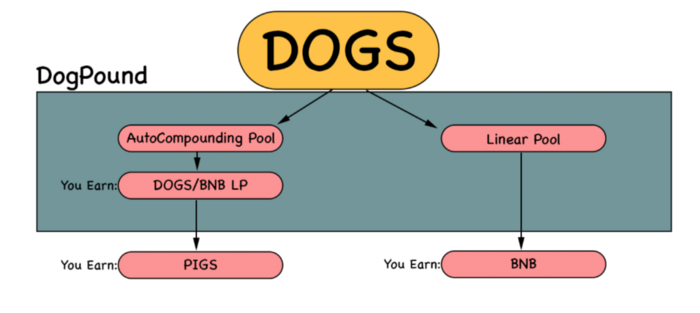
This takes us to the DogPound. In the DogPound, investors can stake their DOGS and earn with them. Let’s talk about the two options available in the DogPound. What you need to know is that BOTH options are rewarded BNB from the tax on DOGS sales. The difference is what happens with that BNB once it is rewarded.

Option 1: Autocompounding. In this part of the DogPound, you will stake your DOGS into the Auto-Compounding option. This is slightly confusing, so bear with me. The Auto-Compounding takes the rewarded BNB and creates DOGS/BNB LP tokens by selling half of the incoming BNB for you and buying MORE DOGS! It then pairs the new DOGS with the other half of the BNB and you get DOGS/BNB liquidity pool tokens. But, we’re not done yet! It then automatically stakes them into a hidden farm that uses DOGS/BNB LP to earn PIGS! (more on PIGS in a little bit). So, in essence, you stake DOGS. You get DOGS/BNB LP tokens, and then it stakes DOGS/BNB for you and rewards you in PIGS. If you choose this option, it will start slow. You won’t get any notable PIGS for a while, but as your DOGS/BNB grows, your PIGS earning power will grow too, and you be earning more and more PIGS.
Option 2: Linear. In this part of the DogPound, you will stake your DOGS in the Linear option. This is quite simple. The BNB earned from the DOGS sale tax will simply be claimable. The more DOGS you have staked, the more BNB you will earn. This is a great option if you are seeking a way to generate BNB for transaction fees on the Binance Smart Chain, called “gas”.
The Autocompounding has a slightly higher BNB reward rate than the Linear option, but I believe it is good to use both of these options. I like having regular BNB coming into my wallet for gas.
So, how does the sales tax get reduced? It is in the form of a loyalty score. Simply, the longer you are staked in the DogPound, the lower your tax will be. You start at 90%, and you can go all the way down to 6%. The loyalty tax is a bit complicated, as there are TWO factors. One, is your “wallet score”, a permament score that you earn by staking 10 DOGS in the DogPound. Every month that you have 10 DOGS in the DogPound, your wallet score is reduced by 2%. This will never revert, even if you sell. The other factor is your Token score, which is attached to the individual tokens you have in the DogPound. The Auto-Compounding DOGS are reduced by 1% a day, and the Linear DOGS are reduced by 0.75% a day. Once you have DOGS staked in the DogPound, you can see this information clearly identified by each different stake you have. But the key here is that you want to leave your DOGS in the DogPound so that your tax is reduced over time.
The amazing benefit of this system is that 1) users who don’t wait for tax reduction will have a larger tax, and that pays the BNB that goes into the DogPound and 2) because there is such an incentive to stay in the DogPound, there are much fewer sales, and the price of DOGS has prove to increase steadily as a result!
The DOGS token is the more common reward token, but it’s not the most important one.
Coin 2: PIGS (or AFP)
PIGS is the more rare and harder to earn token. You can only earn PIGS with DOGS/BNB LP and DOGS/BUSD LP, so there are far fewer PIGS in circulation. The use of PIGS is also much simpler.
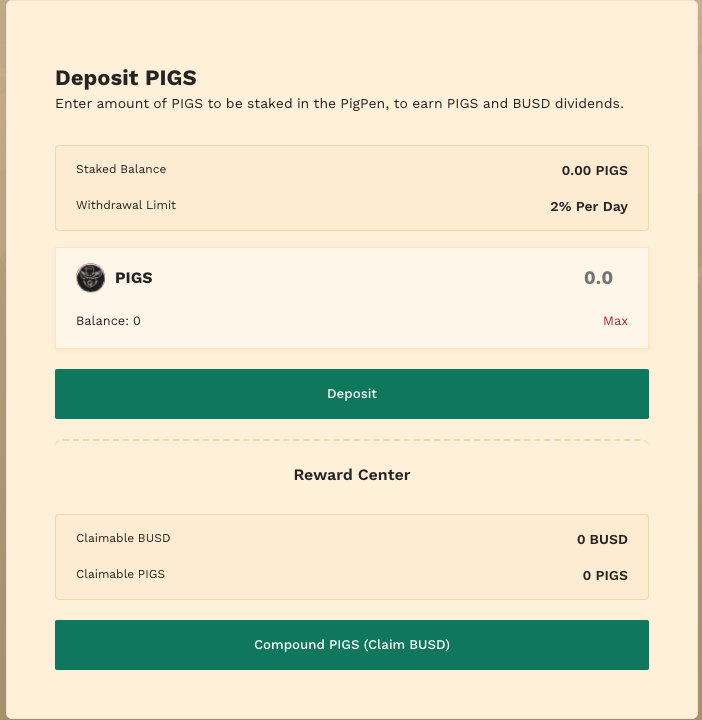
The PIGS are staked in the PigPen. The PigPen is a reward system where PIGS holders are paid in BUSD for staking their PIGS. The BUSD comes from all of the fees paid on the entire farm. It also comes from some of the tax on the DogPound. And, it also comes from collateral rehypothecation. In short, the funds deposited into the farm (and soon the pools) are staked on external sites, earning 30–40% APR. That extra revenue is put directly into the BUSD vault for the PigPen. The more funds in the farm, the more BUSD gets rewarded to investors.
Another feature for the PigPen is the “Governance System”, where PIGS stakers will be able to vote on the decisions made by the Animal Farm. Nowhere else in crypto do investors get to earn the way developers do and have a say in the financial decisions. If you’ve read the George Orwell book ANIMAL FARM, it is clear that it is not just a name, but a model for the entire farm.
When a vote is up, each PigPen staker will get 1 vote per PIGS staked.
To summarize, where most yield farms mint tokens that are meant to be sold, the Animal Farm is minting DOGS, which will reward stakers in BNB (or Auto-compounded into DOGS/BNB LP and then PIGS), and the Animal Farm is minting PIGS, which will reward stakers in BUSD. To paraphrase the lead developer, who goes by Forex_Shark:
The wealthy do not sell assets for profit. They invest in platforms that yield dividends, and they live off the dividend while retaining their assets.
The Animal Farm is taking that model and making it available for all.
Part 4: Yield Farming 101
If you are new to yield farming, or have gotten into yield farming, but don’t know how it all actually works, this section is for you.
Yield Farming is a feature of DeFi (decentralized finance) where investors add to liquidity pools by pairing two coins together. Liquidity pools are underlying foundation of DeFi. To understand the function of liquidity pools, let’s look at how assets are exchanged on traditional crypto exchanges like Binance and Coinbase. On both of those sites, and many others, assets are exchanged through an orderbook. When a user wants to buy a coin by selling another, they place an “order”. It says, I want to spend X amount of crypto one and receive Y amount of crypto 2. That’s the order. Then, the order is posted to the exchange. If a seller finds that order acceptable, the order is filled. Exchanges make this easy by posting the order book, so users can see what the recent filled orders have been. It requires interaction on both sides, the buyers and the sellers.
Decentralized Finance relies on a completely different system to make coin exchanges. It uses liquidity pools. Liquidity pools are pairs of tokens that have been linked together in shared value. For example, the Ethereum/Bitcoin liquidity pool (ETH/BTC) would have equal values of each coin in a shared liquidity pool. So, there would be 1 million dollars worth of Ethereum paired with 1 million dollars worth of Bitcoin. The pool exists for a user to create an exchange. If a user had Ethereum and wanted Bitcoin, they would swap some Ethereum for an equal amount of Bitcoin. Basically, putting the Ethereum into the pool and taking out the Bitcoin. There is no “other side” of that exchange, no order to be filled. This DOES create a small problem, in that the amount of Ethereum in the pool no longer equals the amount of Bitcoin, but that is solved by a process called Arbitrage trading. I won’t go into that here, but it basically keeps the values of coins stable in a pool.
In order for these liquidity pools to function well, they need to be very large. This lessens the impact that individual trades have on the token values. Sites like Uniswap and Pancakeswap need these pools to be large to stay in business. So, they incentivize user participation in liquidity. They offer high rewards in reward tokens to make it appealing for users to put their assets in these liquidity pools.
Putting assets in liquidity pools is as simple as “adding liquidity”. Here is a screenshot of the liquidity feature on Pancakeswap:
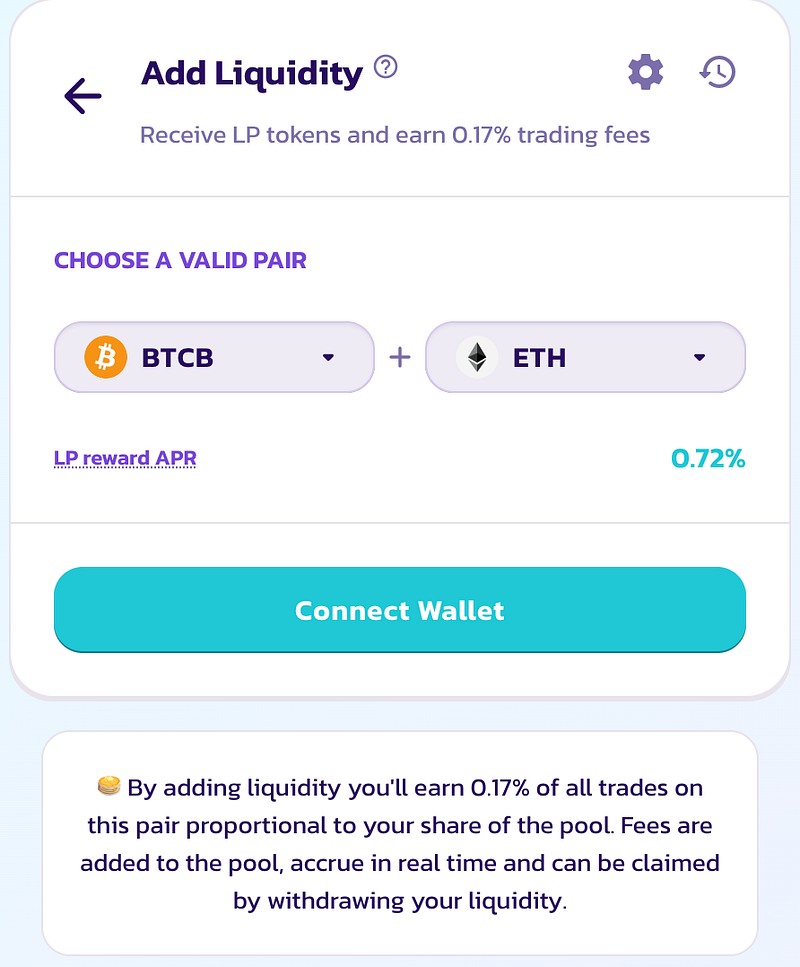
When liquidity is added in this manner, the user deposits equal amounts of each asset and they receive “LP Tokens”. The LP tokens are now part of the pool and function as a piece of the large pool. The LP tokens are now in the user’s wallet.
There are two ways that adding to a liquidity pool can earn money. First, the LP tokens are designed to increase in value over time as holders of the liquidity tokens get portions of all fees paid when a swap occurs using the two coins in the pool. Thus, every time someone swaps ETH for BTC, anyone holding the ETH/BTC LP token receives a small fee. They receive the fee in that value of the LP token increase very slightly. Over time, this can add up. When they split the LP token back into two coins at a later date, they realize the increased value.
The second way that LP token holders can earn money is by lending their LP tokens to yield farms. The yield farm site wants your tokens, and will pay you reward tokens from their site to get you to stake your tokens with them. Pancakeswap has many yield farms with good APRs. For example:
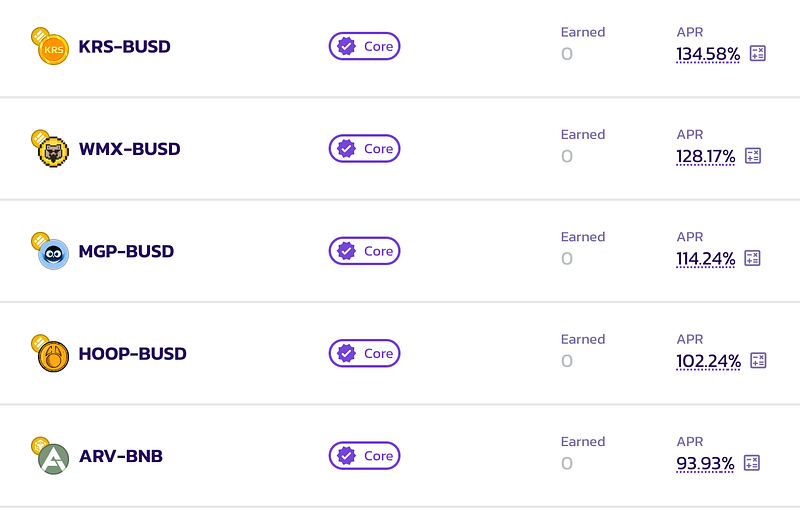
These are the top five APR yield farms on Pancakeswap at the moment. The top earning farms usually have an obscure farm that needs increased liquidity (what the heck is KRS, WMX, MGP, etc?) that is paired with a very common coin (i.e. BUSD, BNB). They want more liquidity in these pools, and will pay increased rewards to get users involved. Compare the APRs with the more common coin pairs:
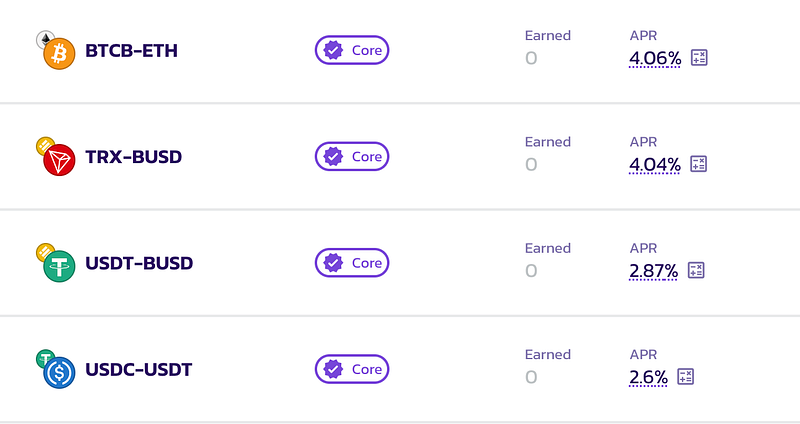
APRs are much lower in these farms. They simply don’t need as many tokens, because they already have high liquidity. But, it’s a safe bet. You still have ownership of the coins, but they are being lent out.
So, why not just buy a bunch of KRS and pair it with BUSD? Let this chart answer that question.
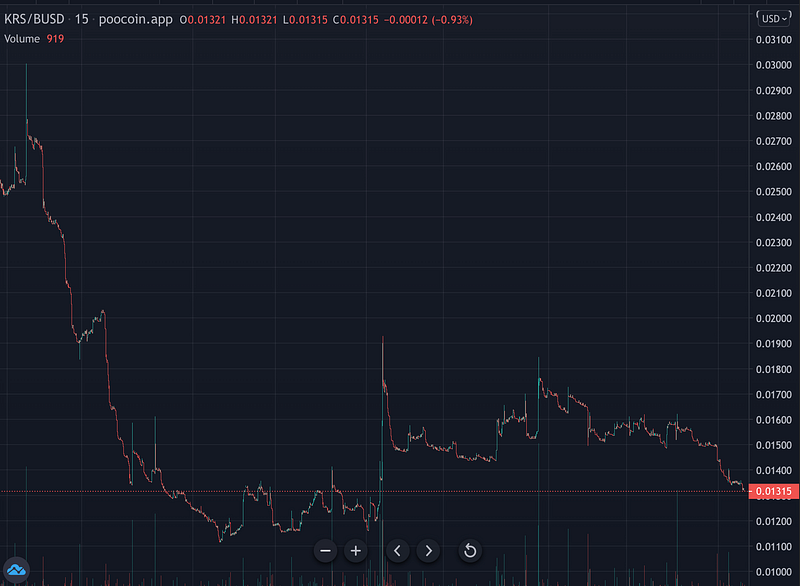
If you held this coin for one month, the value would have decreased by half. The rewards you earned on Pancakeswap would not be anywhere near the loss in token value you would have incurred. This is the danger of yield farming. To learn more about this, read this article on how not to get REKT in yield farming.
To summarize, DeFi needs liquidity pools. Users can take two coins and pair them together to add to these liquidity pools. In return, users get liquidity pool tokens (LP tokens). LP tokens can then be staked in yield farms, where they can earn reward tokens provided by the site.
So, this brings up back to the yield farms on The Animal Farm. LP tokens can be staked to earn DOGS and PIGS. The only difference, the BIG difference, is that you don’t want to sell DOGS and PIGS. Instead, stake your DOGS in the DogPound and your PIGS in the PigPen. This will earn you BNB and BUSD, respectively.
Part 5: The Farms of the Animal Farm and Their Payouts
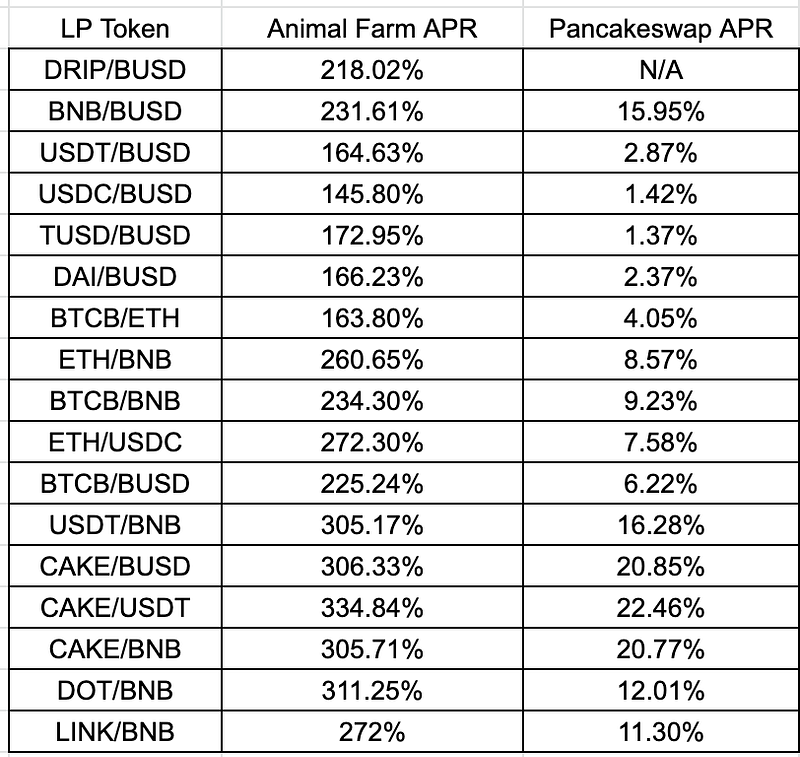
The Animal Farm does not engage in obscure coins. Rather, it only allows users to stake common coins. There are no attempts to exploit users into buying coins which are going to crash in the coming weeks. And, the APRs of the farms and pools are considerably higher than you’ll find on Pancakeswap for the common pairs. Here is a list of the coins available for staking, the LP tokens available for staking, the APRs on the Animal Farm, and the comparitive APRs on Pancakeswap (when available).
First, the PIGS-earning farms.

Next, the DOGS-earning farms.
Last, the DOGS-earning single-asset pools.
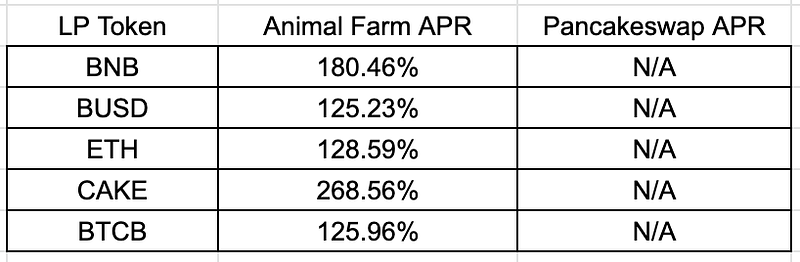
As you can plainly see, the APRs on the Animal are significantly higher than those on Pancakeswap. And, Pancakeswap doesn’t offer any staking of single asset common coins like BTC or ETH.
Part 6: The ROI Section — Drip Garden and Piggy Bank
The final section to be discussed are the ROI platforms. In both of these sections, the Animal Farm is not minting any coins or tokens. Rather, investors deposit LP tokens. Once invested, the coins are not withdrawable. Instead, a small portion of the asset is released for withdrawal. Daily, the user can choose to claim it to their wallet, or re-invest. The trick is, every claim reduces the amount available the next day. Every re-invest, or compound, increases the amount available the next day. Users must choose whether to claim or compound. A patient and smart player can claim every once in a while while continuing to increase their possible claim. If one claims every day, they will see their available daily amount dwindle. If one never claims, their daily possible will increase indefinitely.
The DRIP Garden allows you to deposit DRIP/BUSD.
The Piggy Bank allows you to deposit PIGS/BUSD.
For more information on the DRIP Garden, read this article.
For more information on the Piggy Bank, read this article.
Final Thoughts
The Animal Farm is the first of its kind. It puts profits in the hands of investors, not developers. It uses native assets as a path to BNB and BUSD, not selling the asset itself. The farm is just getting started there are new features on the horizon, so follow me on Medium to get the latest information! Thanks for reading!


