
Screen Time For Children During The Pandemic: How Much Is Too Much?
Limits, benefits, and everything else…

Screen time is a normal aspect of every child’s life.
Children love to watch TV, play video games, use their computers and smartphones.
In this digital age, we dare say most children have a number of electronic gadgets within their reach.
However, with the pandemic in full swing, screen time for children has significantly increased as there are reports that a large percentage of children now have easy access to electronic gadgets and the internet like never before.
Indeed, Covid- 19 has changed a lot of things and millions of children are now engaged in various forms of virtual learning, video calls, and online discussions.
According to Axios, children’s screen time during the pandemic is surging by as much as 50 to 60 percent.
Most parents, on the other hand, have not had it easy managing their homes while attempting to work for home, homeschool, supervise online learning and fend for their families at the same time and within the same space.
More parents have reportedly suspended their rules and given their children more screen time, especially for online entertainment and other leisure purposes. This increased access to screens is believed to be detrimental to children as more kids between the age of 12 and below are spending about 5 hours or more on screens per day.
The effects of uncontrolled screen time
Screen time is helpful, but becomes a problem when it starts to affect the mental, physical and overall development and interactional ability of the child.
The Health Matters website notes that children who are exposed to too much screen time tend to lose the ability to relate with others, particularly if they are below the age of three. Other reports say that excessive screen time could also affect a child’s academic performance. In older children particularly, there is the tendency to lose concentration, experience sleep disruption and lower reasoning ability
We know that screens can be very addictive for adults, how much more, kids.
Now that children are getting more screen time than before, more parents are wondering how much screen time is healthy for their child(ren).
“Everything is now over the screen — school lessons, play dates, interactions with family members, birthday parties — so screen-time rules have to be completely redefined since this is how most children are learning and socializing.” — Dr Jennifer Cross
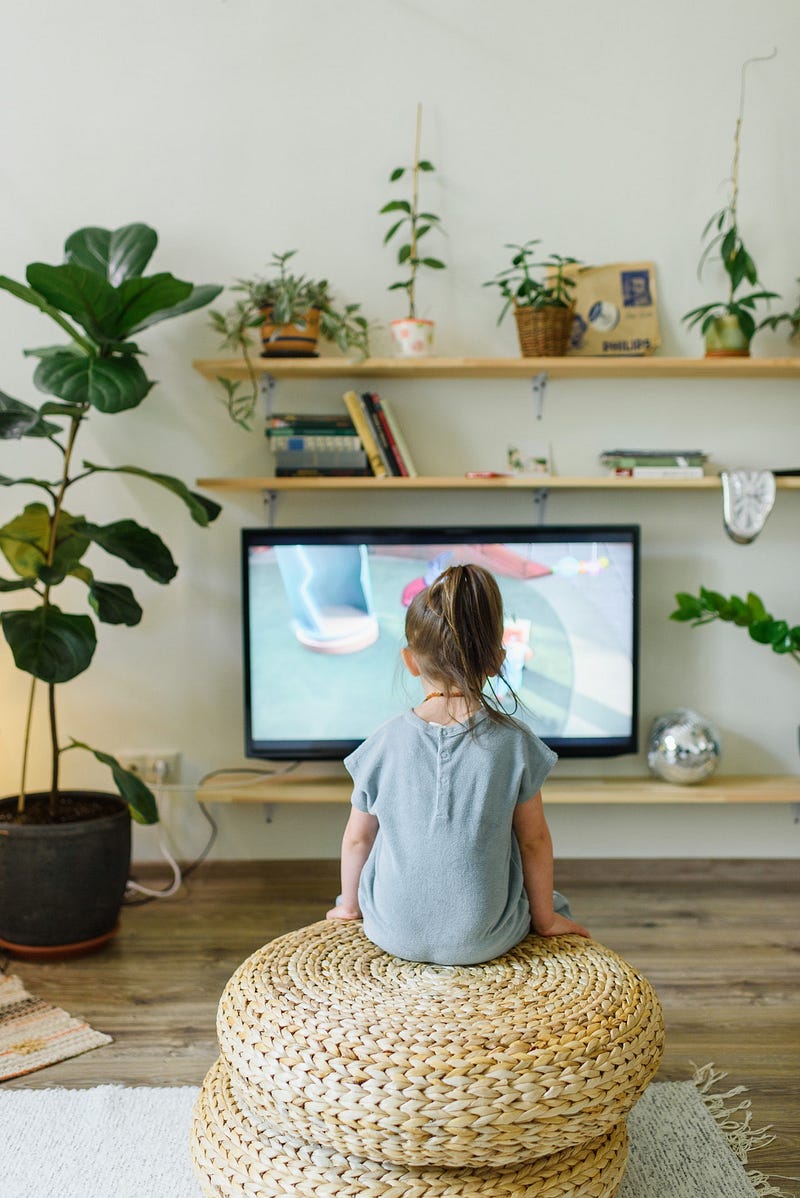
Although appraised for being a viable channel for information access, education and entertainment, too much screen time could be harmful.
Dr Jennifer Cross, a behavioral pediatrics expert reports that children who spent a lot of time on their phones and ipads found it difficult to engage in non-electronic activities such as playing with toys, creative work and interacting with other children.
There are parents who have also complained about the inability to get their kids off a screen without a fight. This has often resulted in some children throwing tantrums, even to the point of aggression.
According to Brenda Wiederhold, worrying that children may be using screens is not without cause because long before the pandemic started, screen use by children was already a growing concern.
How much screen time should children be allowed to have per day?
Before the pandemic, the American Academy of Pediatrics had stated that there should be:
a) No screen time for children below the age of 2;
b) One hour of screen time daily for children of ages 3- 10 and;
c) two hours of screen time per day for children between ages 11 to 13.
However, the coronavirus pandemic happened and things have since changed. The rules certainly can’t work like they formerly did.
It appears the former screen time regulations are no longer realistic because as Sarah Fischer explains, “the concern has now shifted from the number of hours in front of screens to the quality of screen time.”
Quality now makes a difference because exposing kids to high quality educational series which they can watch alongside their parents seems to reduce the harmful effects of prolonged watching without supervision.
However, here are some ideas that parents can adopt to help themselves and their children:
1. Understand your child’s needs and interests
During unprecedented times like this, it’s quite difficult to enforce rules guiding screen times.
However, before making rules, understanding your child and the context of usage is something to consider.
For instance, screen time hours for toddlers would vary when compared to that of children in other age brackets.
The truth is, while some children require more controlled supervision and active intervention from their parents, other older children may be able to self-regulate with the help of loose guidance.
This is particularly necessary where a parent knows that access to screens could bring some educational benefits for the child.
Screen time could also be of some other added advantages. For instance, Andrew Przybylski, an associate professor at the University of Oxford reasons that face timing, playing online chess or watching academic YouTube videos all serve various needs in their manner of application as well as different consequences.
2. Strict regulation and control of screen time
Once you are able to understand what is suitable for your child, monitoring and moderating their activities should be next in line.
While emphasizing the need to communicate and establish boundaries, Jenny Radesky, a pediatrician and expert on children and media , opines that there should be a limit to how children use their devices. In analyzing this, she takes the Three C’s into consideration: child, content and context.
Having a strict schedule helps parents set strict expectations for children on what to be done. Operating with a routine will make it possible to do what needs to be done at the right time.
Let your children know when it’s time to turn off that video game or phone.
Set clear rules.
“Make a plan. Talk with your kids about what your daily structure will be, how you will handle stress, and when you will take breaks from tele-work or school work to relax and connect with each other" — Jenny Radeski
3. Devise other creative ways to engage them.
Other than staring at a screen, there are numerous activities which children can be involved in.
They can engage in other activities such as reading, educational quizzes, games for vocabulary development and other forms of recreation.
There can be more family time spent together outside screen time.
Reduction of screen time could be a helpful alternative towards boosting the overall development of children and their social, physical and mental well-being.
In buttressing further, the American Academy of Pediatrics recommends the use of a Family Media Plan by parents so as to monitor the daily activities of children. The Plan will recommend how many hours of screen time each child should have.
Final Thoughts
As parents, we may be struggling with a lot during this time.
The stay-at-home orders were enforced with the intention of curbing the spread of the coronavirus virus. This situation has inevitably confined children to stay at home.
Access to screen has become unavoidable and a bigger problem brews when it becomes too much.
However, one thing we need to know is that not every content is bad. Hence, the context of viewing matters a lot.
Whatever is happening, it is only till the pandemic ends and things will return to normal.