
Scots-Irish in Appalachia
Follow up on the celebrated resisters
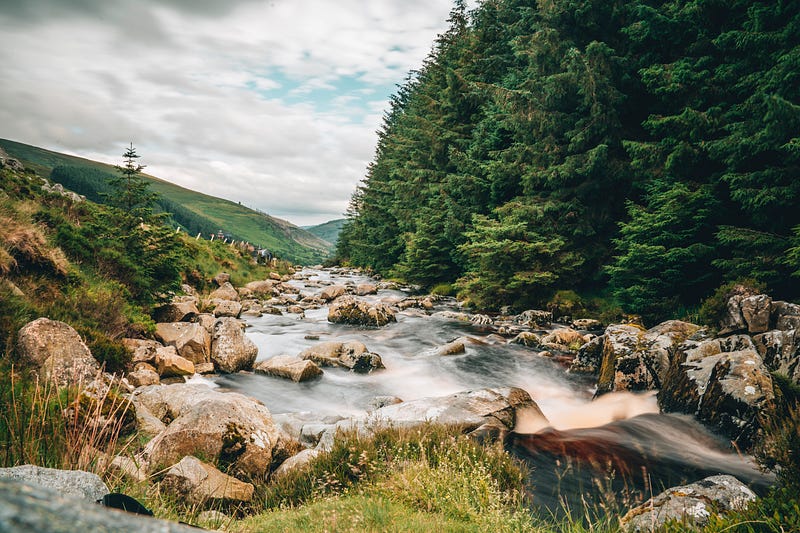
Many of my friends in the family history community latched onto my recent article about the influence of the Anglo Scots in the character and culture of Appalachian Kentucky.
There were so many interesting comments, I felt a follow-up was in order.
Several friends recommended that I read American Nations: A History of the Eleven Rival Regional Cultures of North America by Colin Woodard. Published in 2011, American Nations sees the national landscape as more nuanced than the red-state, blue-state characterizations we hear about in popular media. Instead, Woodard posits that there are actually eleven distinct regions, heavily influenced by the cultures that settled them. Furthermore, Woodard believes these eleven regions have remained relatively static throughout the history of the country in attitudes, voting patterns, and culture.
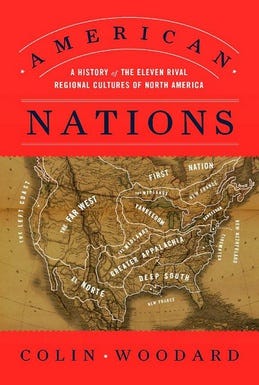
I read American Nations back in 2014. Woodard describes the Greater Appalachian area as “borderlands” observing that Appalachian people come from the border areas of Northern Ireland, northern England, and the lowlands of Scotland.
“The Borderlander’s combative culture has provided a large proportion of the nation’s military, from officers like Andrew Jackson, Davy Crockett, and Douglas MacArthur to the enlisted men fighting in Afghanistan and Iraq. They also gave the continent bluegrass and country music, stock car racing, and Evangelical fundamentalism,” Woodard wrote.
Sounds a lot like Born Fighting — James Webb’s book.
As a Southerner who is a descendant of mostly Union Civil War soldiers, I was fascinated by this observation by Woodard:
“Deep Southerners assumed Appalachia would rally to the Confederacy because of a shared doctrine of white supremacy. Instead, Borderlanders did as they always had: they took up arms against whatever enemy they felt was the greatest threat, and fought ferociously against them. To the planters’ shock, most Appalachian people regarded them as a greater threat to their liberty than the Yankees.”
I have often told people from outside the American South that it is important to distinguish a magnolia blossom from a wildwood flower.
Here’s my take on American Nations: The first half of the book does an excellent job of synthesizing research on the origins of the various regions of the U.S. Woodard’s writing is fast-paced and engaging. It’s fun to read.
The last half, unfortunately, is full of opinion and judgment, unsubstantiated assertions, and doomsday predictions for the future.
Sorry, but I’m old enough to remember books about starvation from population “bombs” and global cooling. I’m unconvinced by Woodard’s gloomy vision of the future.
My readers also recommended Albion’s Seed: Four British Folkways in America by David Hackett Fischer. Fischer divides the American character into four groups, all derived from Great Britain. He recognizes the Appalachian region as distinct. Fischer’s work is more comprehensive, less political, and more academic. I say this as someone who has skimmed the book and read sections. Thanks to my friend Sharon, who was kind enough to loan me her copy, I promise to read the entire book, cover to cover.
Fisher’s ideas were not totally original, however. A decade earlier in 1981, Joel Garreau wrote The Nine Nations of North America. In Garreau’s world view, there are Nine Nations, two fewer than Woodard’s book, and Appalachian is lumped in there with the rest of Dixie.
As a descendant of early settlers into the Cumberland Gap, I plan to continue to read, write and talk about this fascinating subject. It’s occupied most of my life and I never get tired of learning about Appalachia.
For those fascinated by the history of the Cumberland Gap, I recommend this amazing website created by Elizabeth Semancik at the University of Virginia American Studies Program.
http://xroads.virginia.edu/~ug97/albion/albion3.html
For my previous article about Scots-Irish in Appalachia: