avatarJudy Owens

Free AI web copilot to create summaries, insights and extended knowledge, download it at here

1516

Abstract

//creativecommons.org/licenses/by/3.0</a>>, via Wikimedia Commons. Arnwine Cabin located in Norris, Tennessee</figcaption></figure><p id="acf1">A Presbyterian minister, Weller wrote his book partly to try to understand why methods he had used in the past to gain acceptance to a community just didn’t work with the Appalachians. While he was criticized for stereotyping mountaineers at the time of publication, when I revisited his book recently, I found him unexpectedly prescient.</p><p id="ab44">Weller describes a culture that is oriented to the present instead of the mainstream’s focus on the future. The Appalachians are people whose nature is being, rather than doing. Human relationships are deeply personal and kin-based, as opposed to impersonal. Sounds like the people I remember in Middlesboro, Hyden, and Hazard. It’s the main reason I love those places so much.</p><p id="bbf5">Weller connects these qualities with Scots-Irish heritage. Documentary evidence confirms that early settlers of Appalachia were in fact from the Anglo-Scottish border area, according to David Newhall’s Encyclopedia of Appalachia (Knoxville: University of Tennessee Press, 2006) pp 253–55.</p><figure id="84ff"><img src="https://cdn-images-1.readmedium.com/v2/resize:fit:800/1*IKdMr_S7BZy5-zngerJPkw.png"><figcaption>Cover image of “Yesterday’s People” created by the author.</figcaption></figure><p id="40c4">DNA studies also bear this out. For example, my Ancestry DNA test indicates that 84 percent of my genetic materi

Options

al comes from England, Ireland, and Scotland. If you throw in my Palatinate German ancestors, along with the Welsh, that accounts for 93 percent. More than a half-million of those who took Ancestry’s DNA test share a similar genetic heritage to those who settled in Eastern Kentucky and Northeastern Tennessee.</p><p id="4c9b">What about the personality traits associated with the Scots-Irish, including Appalachian Kentucky? In 2005 Jim Webb, a U.S. Senator from Virginia published his New York Times bestseller “Born Fighting.” Webb’s recounting of Scots-Irish history tracks with most of the academic scholarship. But what about his characterization that the Scots-Irish reflected acute individualism, dislike of aristocracy, and a strong military tradition?</p><figure id="3470"><img src="https://cdn-images-1.readmedium.com/v2/resize:fit:800/1*4o_NnAv36nT7WTQe_G96-w.jpeg"><figcaption>Horace Walpole by John Giles Eccardt, Public domain, via Wikimedia Commons</figcaption></figure><p id="b11b">I’ll leave it to Horace Walpole, English man of letters during the Revolutionary period. He told Parliament that “there is no use crying about it. Cousin America has run off with a Presbyterian parson, and that is the end of it.</p><p id="8500">A version of this story appears in the Kentucky Genealogical Society’s newsletter and social media channels. <a href="https://kygs.org/ky-history/scots-irish-appalachia-overview.html">https://kygs.org/ky-history/scots-irish-appalachia-overview.html</a></p></article></body>

Scots-Irish, Appalachia and the imprint of Cousin America

Are Eastern Kentucky’s Mountaineers really Born to Fight?

For part of my undergraduate career in the mid-1970s, I was a work-study at the University of Kentucky’s Margaret I. King Library. One day I was assigned to the reserve desk, and a sociology student asked to check out the library copy of Jack Weller’s Yesterday’s People. I pulled the book, vaguely noticed the cover photograph of a wizened man in bibbed overalls and sunken cheeks, and pushed it across the counter to her. I said, “If you don’t mind, please sign here.”

She noticed my accent and said: “Are you from Appalachia?”

“Well yes, I’m from Bell County.”

She looked at me for a minute and slid the book back toward me.

“Here,” she said. “You need this more than I do.”

Despite the condescension, eventually, I did read Jack Weller’s book. There I learned that my people settled in the Appalachians because they “had been embittered by civilized life in England and Scotland and had come to these shores in rebellion against the very kind of society which they found already entrenched on the eastern shore.” (Weller, page 10).
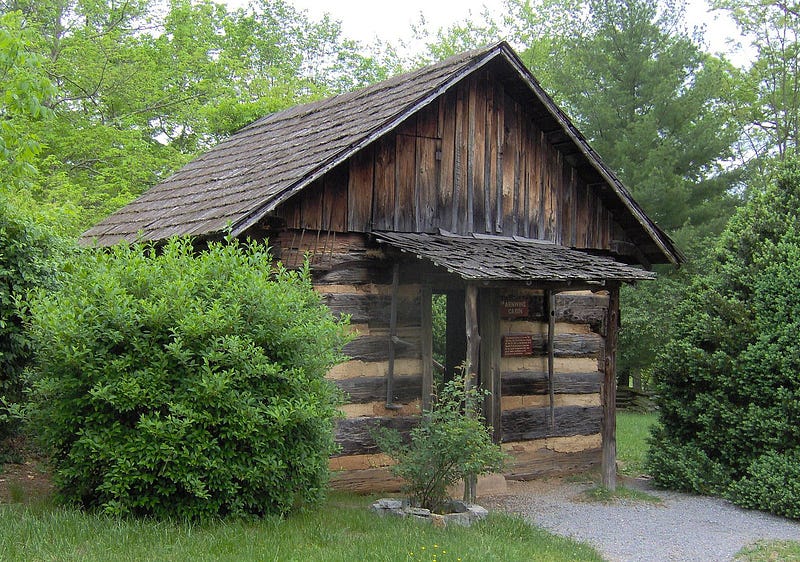
Brian Stansberry, CC BY 3.0 <https://creativecommons.org/licenses/by/3.0>, via Wikimedia Commons. Arnwine Cabin located in Norris, Tennessee

A Presbyterian minister, Weller wrote his book partly to try to understand why methods he had used in the past to gain acceptance to a community just didn’t work with the Appalachians. While he was criticized for stereotyping mountaineers at the time of publication, when I revisited his book recently, I found him unexpectedly prescient.

Weller describes a culture that is oriented to the present instead of the mainstream’s focus on the future. The Appalachians are people whose nature is being, rather than doing. Human relationships are deeply personal and kin-based, as opposed to impersonal. Sounds like the people I remember in Middlesboro, Hyden, and Hazard. It’s the main reason I love those places so much.

Weller connects these qualities with Scots-Irish heritage. Documentary evidence confirms that early settlers of Appalachia were in fact from the Anglo-Scottish border area, according to David Newhall’s Encyclopedia of Appalachia (Knoxville: University of Tennessee Press, 2006) pp 253–55.
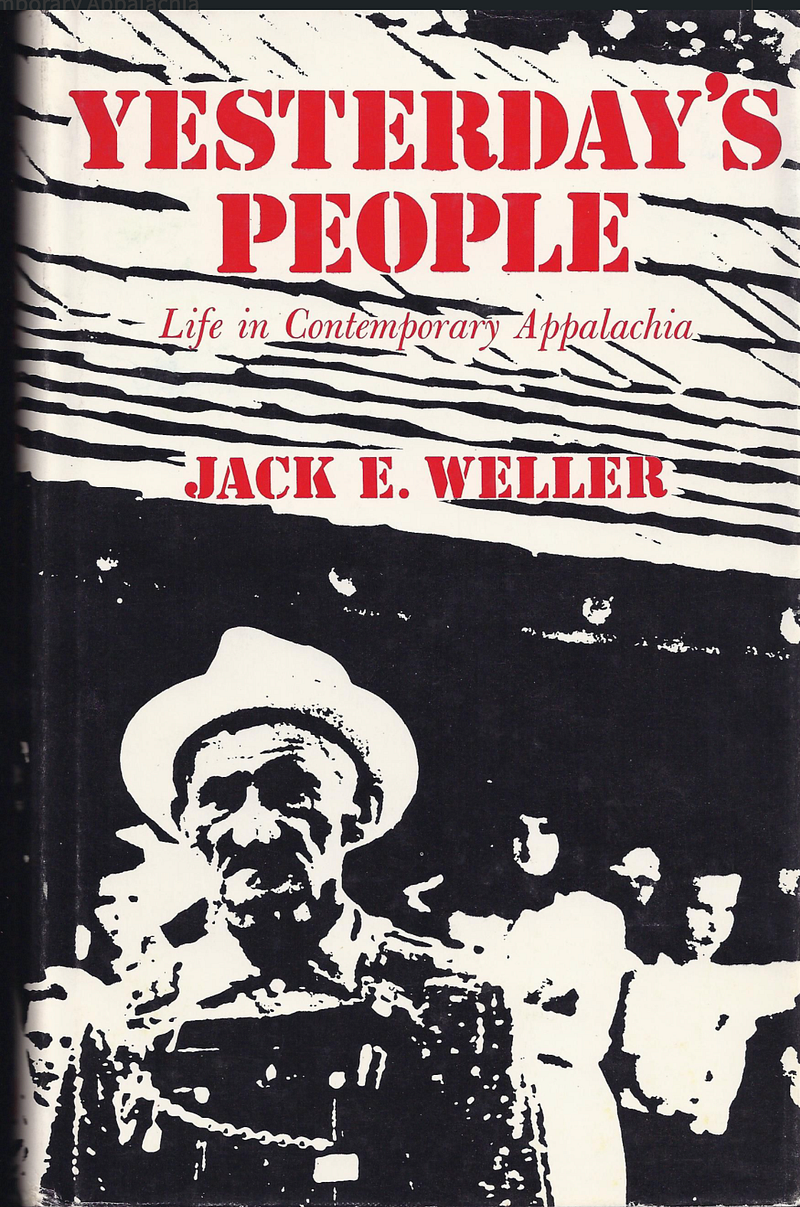
Cover image of “Yesterday’s People” created by the author.

DNA studies also bear this out. For example, my Ancestry DNA test indicates that 84 percent of my genetic material comes from England, Ireland, and Scotland. If you throw in my Palatinate German ancestors, along with the Welsh, that accounts for 93 percent. More than a half-million of those who took Ancestry’s DNA test share a similar genetic heritage to those who settled in Eastern Kentucky and Northeastern Tennessee.

What about the personality traits associated with the Scots-Irish, including Appalachian Kentucky? In 2005 Jim Webb, a U.S. Senator from Virginia published his New York Times bestseller “Born Fighting.” Webb’s recounting of Scots-Irish history tracks with most of the academic scholarship. But what about his characterization that the Scots-Irish reflected acute individualism, dislike of aristocracy, and a strong military tradition?
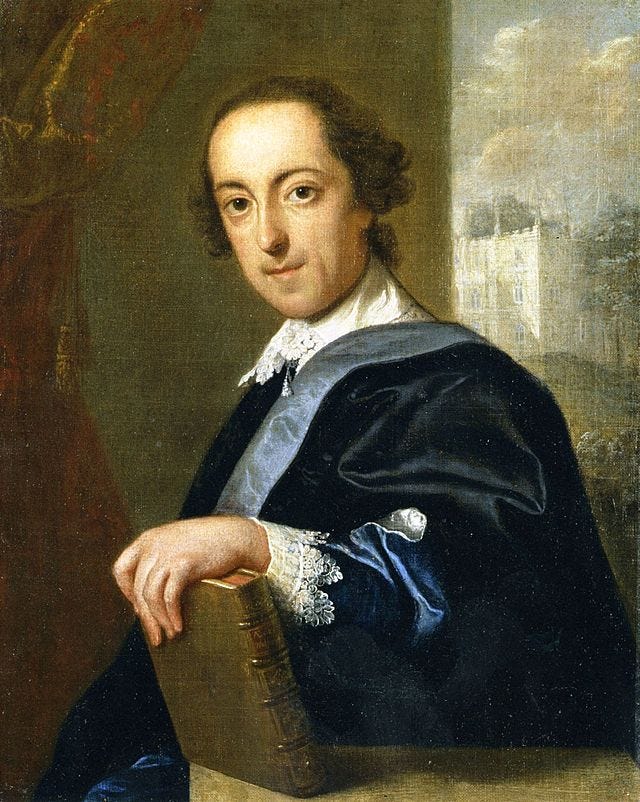
Horace Walpole by John Giles Eccardt, Public domain, via Wikimedia Commons

I’ll leave it to Horace Walpole, English man of letters during the Revolutionary period. He told Parliament that “there is no use crying about it. Cousin America has run off with a Presbyterian parson, and that is the end of it.

A version of this story appears in the Kentucky Genealogical Society’s newsletter and social media channels. https://kygs.org/ky-history/scots-irish-appalachia-overview.html

Life Lessons
Humor
Education
Scotland
Kentucky
Recommended from ReadMedium