
Science Monday: Does Caffeine Help Me Lose Weight?
Learn a new fact for the week: Will some extra coffee help me avoid putting on holiday pounds?

I’ve actually been caffeine free for close to two years.
I used to rely on coffee for… most things. I estimate that I spent more than three grand on coffee over the course of my PhD! Caffeine fueled plenty of late nights of feverish studying or long days of battling against my recalcitrant programming code.
Eventually, however, I reached the point where I’d wake up each morning to a splitting headache — one that only went away after I finished my first cup of coffee. I decided that, if caffeine was the source of my headaches, I’d give it up. I quit cold turkey, which was probably a bad decision — especially since it coincided with the start of a new job!
These days, I still drink mostly decaf, although I’ll indulge occasionally in an afternoon cup of the caffeinated “real stuff.” While I don’t wake up to headaches, I do sometimes miss the burst of instant energy that came shortly after pouring some coffee into my system.
Where’s that burst of energy come from, anyway? Does caffeine contain energy, or does it make us burn more of our own energy?
And if it makes us burn more of our own energy, does that mean that our morning coffee could help us lose weight?
A Distillation of How Caffeine Works
First, let’s answer a biology question: how does caffeine work?
Caffeine is a fairly small molecule, called an alkaloid, which happens to look a lot like a chemical called adenosine. It’s not quite the same, but it’s similar enough to cause a bit of confusion in our bodies.
Inside our brain, we use adenosine as a hormone. Adenosine builds up in the awake brain, and our nerve cells have adenosine receptors on their surfaces to detect the levels of adenosine present. After a long day, there’s a lot of adenosine in the brain. All that adenosine binds to the adenosine receptors, which leads to a couple of effects:
- Our neurons become less active, slowing down and firing (sending signals) less frequently.
- Our blood vessels expand, or dilate, in order to increase blood flow to the brain (so it doesn’t run out of oxygen while we’re sleeping).
But what about caffeine?
Because caffeine looks a lot like adenosine, it can also bind to the adenosine receptors. When it does so, however, it doesn’t trigger the receptor, but instead just sits on it and blocks it.
This means that, when there’s caffeine in your system, you’re less receptive to adenosine, even if a bunch of it is present. Even if the adenosine in your brain should be making you sleepy, the caffeine blocks it from being detected by the neurons, and you remain awake and alert.
Caffeine has a couple of other effects; it also leads to the release of adrenaline, which further boosts your alertness (and also causes other effects, such as a faster heart rate, dilated pupils, higher heart rate, and muscle tightness, which can lead to twitchiness). Caffeine also slows the rate at which dopamine, a feel-good hormone, gets reabsorbed, leading to more of it lingering around.
In a nutshell: Caffeine blocks the receptors of a similarly shaped hormone called adenosine, preventing the brain from realizing that it’s sleepy time. It also leads to increased adrenaline and dopamine, making us feel good and get a boost of alertness, a faster heartbeat, and muscle tightness/twitchiness.
Weight Loss: Eat Less, Drink More (Caffeine)

So, we know how coffee works to prevent sleepiness and boost our “fight or flight” reflex by releasing adrenaline. Does this mean that it can help us lose weight?
The short answer: yes!
The longer answer: yes, but probably not enough to have a measurable effect for most of us.
Caffeine is a common ingredient in many weight-loss pills, due to two useful effects — it boosts metabolism, and it also reduces our appetite. Both of these effects are due to the adrenaline release — you need a lot of energy on hand if you’re about to fight a tiger, and you probably shouldn’t be distracted by thoughts of food when running away from a roaring bear!
However, before you rush to add coffee to every meal, consider that caffeine’s effect on metabolism is fairly minor. One study on caffeine’s effects suggested that it can boost metabolism by up to 13% — but to get those effects, you need to consume the equivalent of seven full cups of coffee.
Caffeine also reduces hunger by suppressing our levels of ghrelin, the hormone that makes us feel hungry. This means that, while under caffeine’s influence, we won’t want to eat — but it doesn’t increase feelings of fullness, so it’s still possible that we’ll wolf down calories once the caffeine wears off.
In a nutshell: Caffeine can potentially help us lose weight — it slightly increases metabolism and suppresses feelings of hunger. However, the magnitude of its effects is small, and most of us don’t consume enough caffeine to see even these meager benefits.
Death By Coffee
Before you start adding caffeine to every meal (did you know that you can buy pure, powdered caffeine?), consider that it can prove dangerous — even fatal.
How could caffeine kill you? Remember that caffeine causes the release of adrenaline. Adrenaline’s effects include speeding up heart rate and tightening blood vessels. At very high levels, this doesn’t just make your heart beat faster — it can lead to a heart attack. The narrowed blood vessels can cause a stroke if they cut off blood flow to the brain.
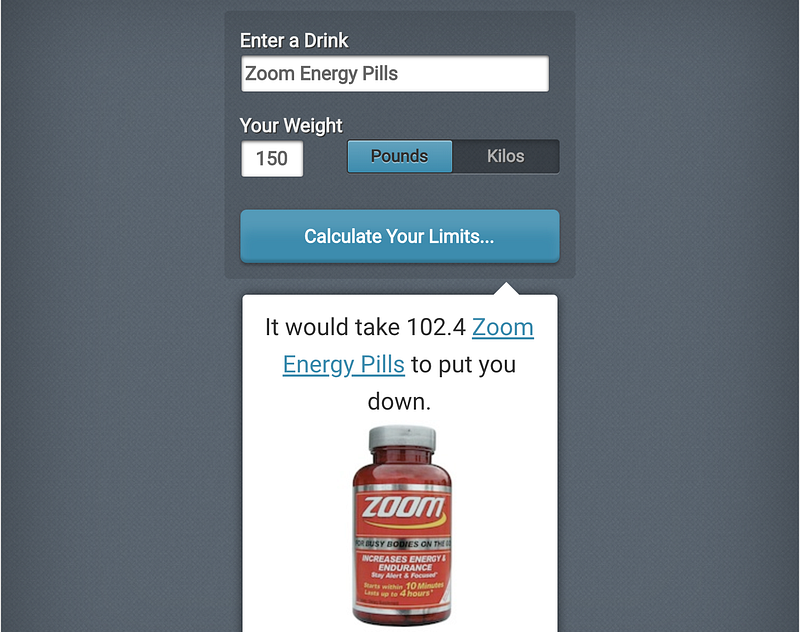
Fortunately, it takes a lot of caffeine to kill a person. There are several fun calculators online, which can calculate how much of various drinks or foods will kill you. (If I drink 128 Red Bulls, for example, I’ll probably die — or at least wish that I was dead.)
What about caffeine over the long term? Scientists aren’t certain; some studies suggest that consuming healthy amounts of caffeine over many years can have a mild protective effect on our DNA, and it may reduce our chances of developing Type II diabetes or Alzheimer’s dementia. However, it’s also linked with higher levels of anxiety, disrupted sleep — and since it’s addictive, skipping a couple days of coffee can lead to withdrawal symptoms.
In a nutshell: Taking too much caffeine in a single dose can kill you — but you’re not likely to overdose unless you consume extreme amounts. Caffeine may have some minor long-term benefits, reducing our odds of Type II diabetes or Alzheimer’s, but the mechanism isn’t fully understood.
To wrap it up: can caffeine help me lose weight?
Caffeine could help with weight loss — but most of us don’t consume it at a high enough level for us to see much of a boost. It may slightly help increase our metabolism or keep us from feeling hungry, but it’s not going to magically make the pounds melt away on its own.
One of the most important considerations, in the end, is probably how you consume your caffeine. Black coffee contains very few calories, which can make it a great choice — but if you prefer a fancy frappuccino from Starbucks, you’re probably consuming more calories in fat and sugar than the caffeine will burn away.
To avoid putting on a few extra pounds this holiday season, I’ll focus less on caffeine, and more on avoiding second helpings of heavy, calorie-dense foods.
Want to know more about how caffeine works? Here’s a great two-minute video:
Sam Westreich holds his PhD in genetics, focusing on methods for studying the gut-associated microbiome. He currently works at a bioinformatics-focused startup in Silicon Valley. Follow on Medium, or on Twitter at @swestreich.
Have a microbiome-related question? Comment to suggest a topic for my next story. Or check out this related story:


