
#30DAYSOFSCIKUCHALLENGE
Sci-Fly Haiku
What are a few Hox genes between you and a fly…
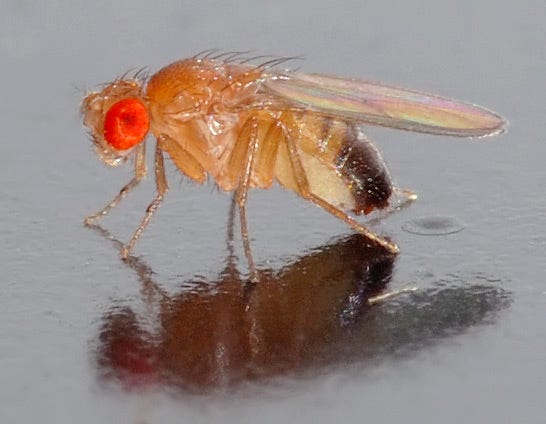
Fly
From fly to human Hox genes segment our bodies And evolve anew
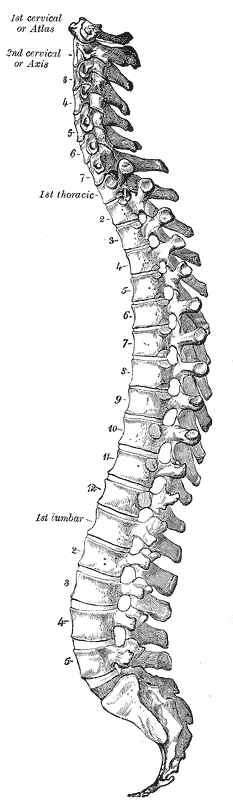
Take a look at a human vertebral column. When stripped away from the confusing and obstructing detritus of the human body, you see a beautiful pattern weaving melodically through space.
This kind of a pattern is called a segmented pattern, because the vertebral column is composed of individual segments that are repeated from our neck (cervical) to lower back (lumbar).
Each segment has a highly specified geometry from seven small cervical vertebrae, to the five large lumbar vertebrae.
The organization of this pattern is critical to life, and alterations of segmentation are often lethal. A developing fetus with defects to this pattern are often stillborn.
The genes that control segmentation are the Hox genes, and were first discovered in flies.
This segmented pattern is shared not only among vertebrates (all animals with a backbone) such as humans, lizards, frogs, fish, and lamprey… but also invertebrates including flies on down to segmented worms.
The segments are obvious in many invertebrates, because their segments are on the outside, not hidden away in vertebrae (which they don’t have).
When you look at a classic segmented worm, the annelid we know as an earthworm, the entire body is segmented. The segments are equally obvious when you look at a lobster’s tail, or the abdomen, the tail end of a fly. But the fly and the lobster, like the segmented worm, is entirely segmented from head to tail. And hox genes control each segment, as it does with us.
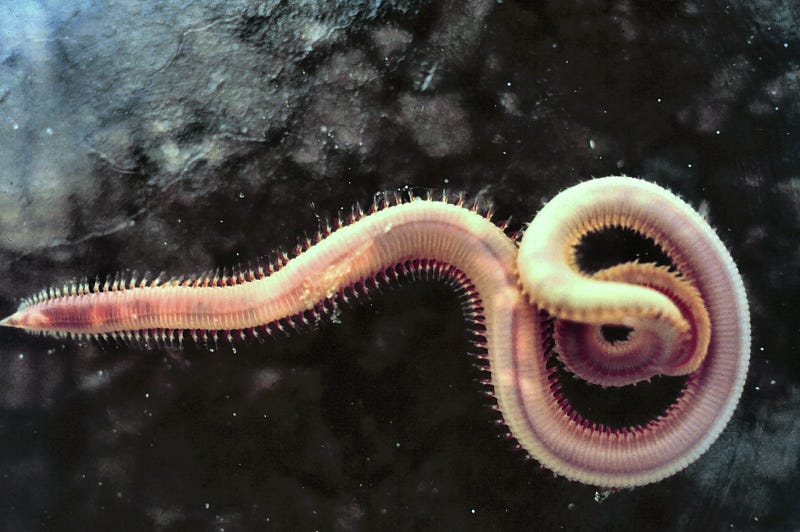
In the hundreds of millions of years separating worms and flies from vertebrates and humans, some things have changed. One thing is that vertebrates inherited four sets of Hox genes, compared to the one set in flies.
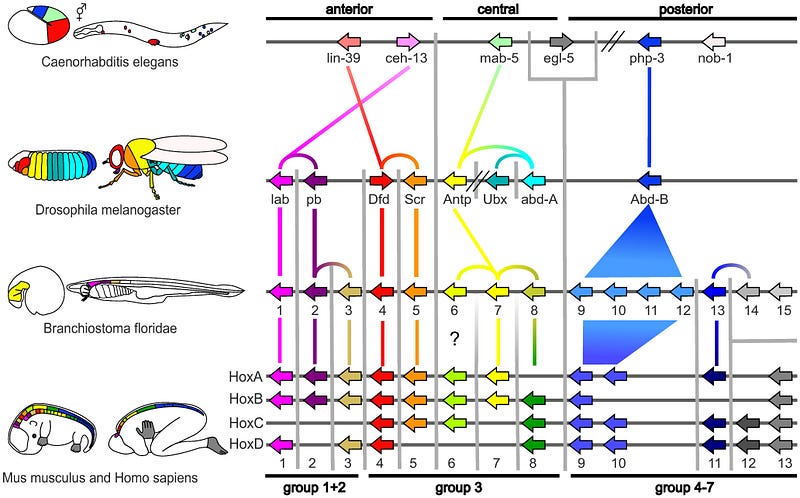
In vertebrates, Hox genes affect not only vertebral segmentation, but have also evolved new roles in areas like brain and limb development. Mutations in these few Hox genes are not as lethal as those involved in the evolutionarily conserved segmentation of the animal. A perfect example is the role of Hox gene mutations in a condition known as polydactyly, or the development of more than five digits as shown below.
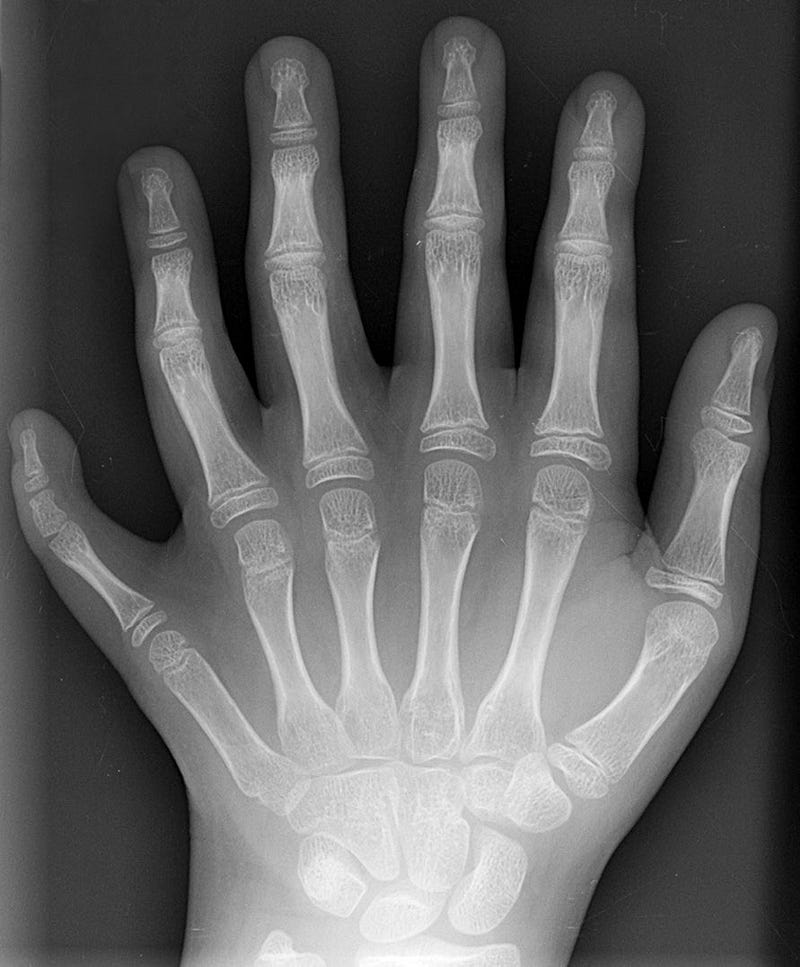
The discovery of hox genes in flies earned Christiane Nusslein-Volhard, Eric Wieschaus and Ed Lewis the 1995 Nobel Prize in Physiology or Medicine.
For more on #30DaysOfScikuChallenge
What to read next? How about “Origins of the Nucleus” by ScienceDuuude


