
SERIAL FICTION
Scary Seconds, Then A Quiet Nothing
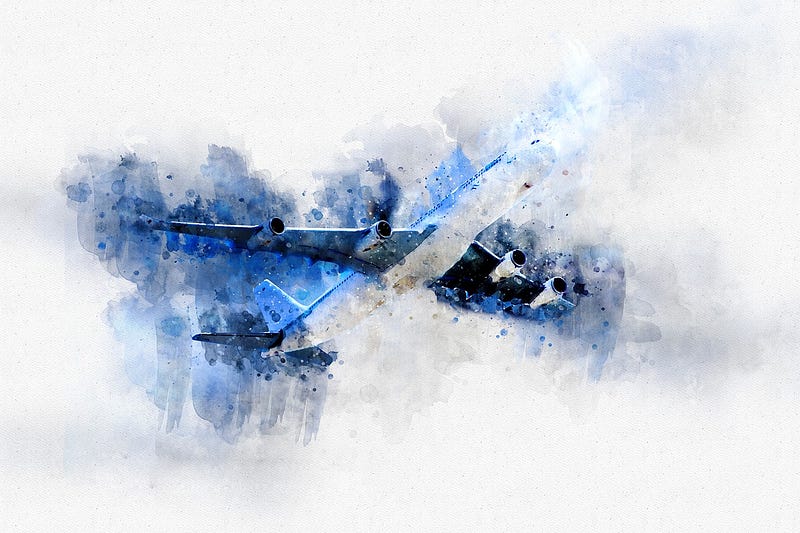
Shadows Of Mayday #1: Prologue: Lives thrown together on a plane, all end in the nothingness of the desert
“No! No! No! No!” the man in seat 12C chanted.
People cried and moaned. Screamed. Some were in a near catatonic state, not making any sound.
Panic stifled the air.
Worse than the panic was the whining screech of the engines.
Only minutes before, the plane quietly flew at cruising speed. People read their books and magazines, slept behind the airline blindfolds, talked or listened to music. Each passenger tried to make the long intercontinental flight as comfortable as possible for themselves.
Some members of the flight staff tended to the needs of passengers while other attendants cleaned away the last remnants of the dinner they had served.
In the cockpit, the pilot and the co-pilot kept their eyes on the instruments while the plane cruised along on auto-pilot. Nothing warned of a pending disaster.
Two loud bangs shook the plane, ending the quiet and peace on board.
Immediately, the nose of the aircraft pointed downwards. The pilot switched to manual control of the plane while both he and the co-pilot scanned the different dials on the instrument panel for a sign of the problem.
Confusion had the upper hand.
According to the instruments, everything was in order, and the plane was still flying level on ten thousand feet. Reality was different. The plane was in a steep dive towards the earth below.
The cabin manager called the cockpit from the back of the plane.
“What’s going on?” the purser asked, trying to keep the panic out of his voice.
“No idea yet,” the co-pilot answered. “Any signs of problems from where you are?”
“Nothing. No fire, no visible damage to the wings or engines.”
“Will get back to you!” the co-pilot said and broke off the connection.
In the meantime, the pilot had sent out an SOS distress signal to the nearest international airport, which was Windhoek, in Namibia. With nothing abnormal showing up on the instruments, the pilot couldn’t tell the traffic control officer in Windhoek which problem they faced.
While the pilot and co-pilot pursued the emergency procedures, flight attendants tried their best to move up and down the aisles, holding onto the seats not to fall. They instructed the passengers to put their heads between their knees and brace for impact.
Oxygen masks didn’t drop from their storage compartments as the cabin pressure was still okay, but also because the instruments in the cockpit registered no emergency.
Children cried as their parents panicked. Parents comforted their children while a mortal fear gripped their hearts. Couples held hands, whispering assurances and loving words to each other and expressing regrets about not having the life together that they had imagined for themselves. People who traveled alone sent thoughts to their loved ones.
Some prayed. Others cried. Some were silent and others screamed.
“No! No! No! No!” the man in seat 12C still chanted while hugging his knees and shaking his head from side to side.
“Please Lord, make it quick,” an older woman in 28E prayed.
“Mommy, what’s happening?” a four-year-old boy asked, but his mother just held him tighter while tears silently ran down her cheeks.
“Now I will never meet him,” a woman in 37A whispered.
“I love you,” one woman said to the woman next to her. Their heads were between their knees, but each had one arm around the other. They had their eyes locked for eternity.
The end came less than ten minutes after the panic started.
Up to the point of impact, the pilot tried to get the aircraft level and to gain altitude again.
All attempts failed.
Yellowish-brown sand of the desert below raced towards them.
The co-pilot held his arms in front of his face, not able to face his own death. The pilot hung back in his chair, pulling on the yoke with his full weight. In the cabin, flight attendants still tried to calm passengers, ignoring their own panic. They had trained for this. The loud whining sound of the engines mixed with the moans, the cries, and the screams.
Impact ended every sound.
Silence.
Silence, except for the crackle of fire.
No cries. No panic. No prayers.
The neat rows in which the passengers sat were now a chaos of metal, bodies, and luggage. Briefcases and bags spilled their contents. Papers lifted and flew away on the gentle ocean breeze.
Sounds of minor explosions replaced the silence in the quiet desert. The front part of the plane had slid up and stopped at the top of a dune, etching the nose and wings against the darkening sky. The waves of the Atlantic Ocean gently brushed against the intact tailpiece of the aircraft.
Twisted steel, damaged suitcases and broken bodies covered the road which ran parallel to the coast and right through the disaster site. In this remote area of Namibia, somewhere between Swakopmund and Walvis Bay, no one had witnessed the crash.
The night came quick in the Namib desert. It was like someone had switched off a light — one moment there was daylight, the next moment it was pitch-dark. Only the small fires burning in the wreckage gave an eerie shimmer of light.
About half an hour after the plane had crashed, the first flashing blue and red lights approached the remote disaster site from both sides.
Flight traffic control had informed the emergency services in both Swakopmund and Walvis Bay of a possible crash in the desert when the plane disappeared from radar in Windhoek. They gave the coordinates where the plane might have crashed, not knowing whether it disappeared into the sea or crashed in the desert.
In Windhoek, a delegation of officials and investigators boarded a small aircraft to take them to the crash site.
Not one passenger or crew member of Flight LU-365 noticed the sounds of sirens filling the air as the emergency vehicles came closer.
Even after the noises had died down, the desert held its breath.
Nature was dark and quiet.
Waiting.
Blue and red lights of police cars couldn’t reveal the horror that the dark of the desert hid away from the people who spilled from the insides of the vehicles.
Emergency procedures started.
The key priority was to look for survivors.
They found none.
Continued: Shadows Of Mayday #2
Find all chapters here.
This story is a work of fiction, and the author’s tribute to all victims of air crashes. Names and characters are the product of the author’s imagination, and any resemblance to actual people, living or dead, is entirely coincidental.
🦋 About Me | 📨 Subscribe | 📚 Stories | 🔄️ Membership | 🦜 Twitter