Saudi Arabia And Venezuela See A Turn Around In Global Oil Supplies

An event that was followed closely by the international media, the heads-of-state (HOA) meeting between China’s Chairman Xi Jinping and Saudi Arabia’s Crown Prince Mohammed bin Salman (MBS) was held at the Chinese-Arab summit on 6 December 2022 in Riyadh, Saudi Arabia.
What this means for oil production on international markets has yet to be clarified, but it could mean that OPEC seeks to keep prices stable on energy markets as China recovers from its Covid-19 pandemic lockdowns, hurting the country’s GDP growth and industrial production in unprecendented ways since China’s rise in the global economy.
On the other hand, the US military and defense analysts are growing more fearful about China-Saudi Arabia ties, as it has been reported in the Pentagon’s annual “China Military Power” that China is increasing military cooperation and engagement with other Middle East countries such as Iraq.
The First Arab-Chinese Summit signals a change in the thinking on Saudi Arabia’s control over oil production, and how they wish to court China as a major oil importers. Increasing military and defense ties would be a big step, though I don’t think that’s the overall concern here.
A bigger concern is how and to what extent China is going to roll out its Belt and Road Initiative (BRI), where the Middle East and North Africa (MENA) is poised to play a pivotal role in linking up supply chains and transport routes throughout the European, African and Asian continents.
This is relevant to global oil supplies in a number of ways. Let me just say that the countries with increased leverage over oil markets are more likely to use this advantage to achieve political ends. A successful roll out of the BRI in MENA would be benefical to OPEC oil supplies and exports. China would need ALOT MORE oil, and the supply chains would improve the prospects of getting more oil moved around North Africa, set to become one of the world’s next industrial and energy hubs.
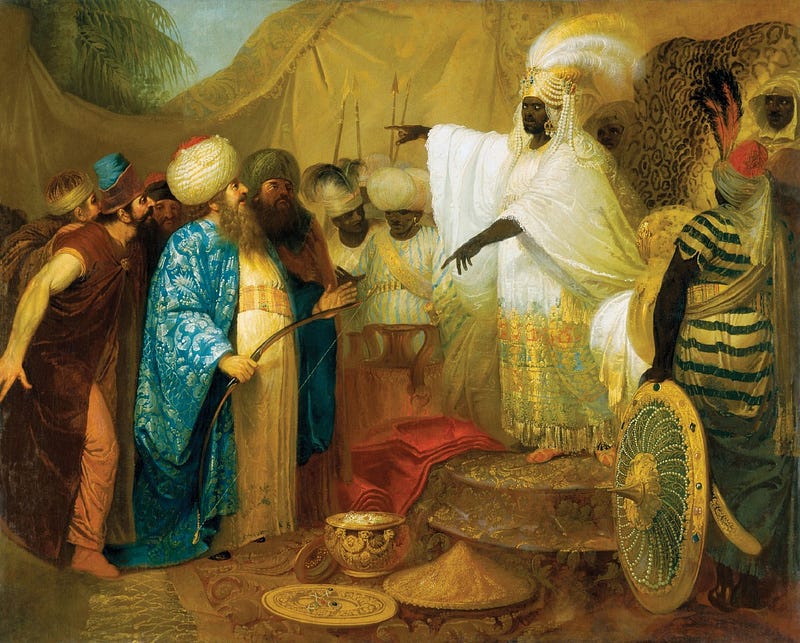
The geopolitical trends are quite significant to oil and coal production on international markets. According to sources speaking to CNN, the upcoming meeting between President Xi and Crown Prince MBS is a “milestone” for China’s engagement with MENA countries.
Indeed, I already pointed out the critical aspects of China’s BRI in MENA, but this meeting also symbolizes how fast the times are changing in respect to geopolitical trends and industrial policies. To know more about what’s happening here, I highly suggest this article from Oil Price.com about regional oil competition between Iraq and Saudi Arabia.
The next big energy trend is on offshore oil production in South America, particularly Guyana and Venezuela.
The US government has been in talks with the Venezuelan government since March 2022 about lifting sanctions against the country’s crude oil exports. Chevron is the big player in Venezuela, while its competitor ExxonMobil is producing crude oil like crazy in Guayana after increased demand from European countries took the place of Russian crude oil exports.
In order to allow Venezuela to export more of its crude oil, the US government is asking Venezuelan President Maduro to resume talks with opposition leaders and to hold free and fair elections in 2024. However, opposition leaders in Venezeula have also called into question any proposed deal agreed between Venezuelan leaders and American goverment officials on the basis of Chevron’s license to operate in Venezuela, which, according to Juan Guaido, could reveal legal obstacles for the preliminary technical service agreement reached between Chevron and Venezuela’s state-owned PDVSA.
It was finally announced on 23 November 2022 that Chevron would be given approval to begin its oil operations and trading in Venezuela after agreeing to resume high-level discussions in Mexico City, Mexico. Following succesful talks in Mexico, Chevron was officially granted a US lisence to expand oil production in Venezeula to export more crude oil to the US markets on 26 November 2022.
One of the most significant details of the agreement was to prevent PDVSA from receiving any proceeds from Chevron’s sales volumes of Venezuelan crude oil. Indeed, it looks like the agreement was not only a big win for US oil producer Chevron, whose competitor is knocking crude oil exports out of the park with another planned FPSO from SBM Offshore in Guyana scheduled to arrive to Exxon’s offshore production facility per the details of the two companies’ memorandum of understanding (MoU).
It was also a big win for Venezuela’s political opposition leaders, who were asking for concessions themselves, and most likely testing the will of the US’ political demands on Maduro’s government, of which the administration has had a tight control over crude oil exports from its state-owned producer PDVSA.
Read the full story: The Long-Game of Oil & Coal Production Could Force the Momentum in Carbon Reduction Strategies.

Please follow the publication Areas & Producers to read more content about the future of core areas and critical producers of the global economy.
Take a look at The Weekend Brief (TWB) newsletter about McDonald’s.
Sign up for TWB newsletter here to read about how publicly-traded companies, like Tesla & Stellantis, are competing in the long game for global markets.


