avatarDark Energy Articles

Free AI web copilot to create summaries, insights and extended knowledge, download it at here

3074

Abstract

cism, mainly because it was an area known for hunting grounds, presumably the reason why the caliph made such a decision. In the Assyrian language, Samarra was named Surramanra in Arabic, which means “fortunate is he who beheld it.”</p><h2 id="37b6">Characteristics of Samarra:</h2><ul><li>A city situated along the Tigris River.</li><li>Expanded longitudinally along the river.</li><li>Lacked a geometrized urban plan.</li><li>Had large avenues for military marches.</li><li>Closed-off zones for Turkish and Arab residents.</li></ul><p id="e951">In Samarra’s layout, particularly exceptional were the large fenced areas, likely hunting grounds that served as recreational parks. Additionally, prominent were the long and wide routes designated for horse racing.</p><p id="fb28">On one hand, Samarra was known for the grandeur of expanding palaces. On the other, there was strict control over space. Turkish and Arab zones were segregated, aiming to prevent unrest, as seen in Baghdad. There existed even special laws; for instance, Turkish soldiers were prohibited from marrying Arab women.</p><p id="e40e">During the same period, Baghdad inhabitants celebrated their “liberation” from harassment by the Turks. Despite intermittently ceasing to be the capital, Baghdad continued to thrive. Samarra never became such a center of trade.</p><figure id="0935"><img src="https://cdn-images-1.readmedium.com/v2/resize:fit:800/1*RYAOutABCizFcWArl0drWA.jpeg"><figcaption>[Photo: Mehr News Agency, <a href="https://creativecommons.org/licenses/by/4.0">CC BY 4.0</a>, via <a href="https://commons.wikimedia.org/wiki/File:Great_Mosque_of_Samarra_-_Dec_27,_2017_09.jpg">Wikimedia Commons</a>]</figcaption></figure><h1 id="ca5b">Development and Decline of Samarra</h1><p id="da4f">From al-Mutasim onwards, subsequent caliphs invested in Samarra’s development. They constructed new mosques, palaces, marketplaces, and racetracks. The reign of Caliph al-Mutawakkil (847–861 AD) was most significant for the city, during which the most important and monumental architectural structures were erected.</p><h2 id="9855">Key buildings in Samarra:</h2><ul><li>Caliph’s Palace, Dar al-Khilafa</li><li>Prince’s Palace, al-Balkuwara</li><li>The Great Mosque</li><li>al-Mutawakkiliya (the outer district beyond the city walls)</li><li>Abu Dulaf Mosque with a spiral minaret</li><li>al-Askari Mosque with golden roofs</li></ul><p id="0eae">The Abbasid architecture at that time significantly differed from the earlier Umayyad era. Initially, Arabs were fascinated by Greco-Roman art and Byzantine patterns. However, the Abbasids diverged from these trends, of which Samarra is the best example.</p><p id="cec3">In Iraq and Iran, there was a return to old Persian art patterns while being inspired by Eastern cultures, particularly Central Asia and the then-Chinese Turkistan. The oriental turn in art was a more syncretic fusion of styles and patterns. This is evident in wall paintings, representing oriental ornaments alongside occasional Western symbolism.</p><p id="f12b">The Caliph’s Palace aim

Options

ed to overshadow all other royal residences. Apart from wall paintings, the palace was adorned with stuccos, colorful windows, vast terraces with pools, and a monumental gate. Later, around 850 AD, al-Mutawakkil built an even larger and never-completed palace for his son with similarly or more luxurious furnishings.</p><p id="7275">In 892 AD, after several decades of Samarra’s development, Caliph al-Mutamid decided to return with his court to Baghdad. Turkish soldiers continued to cause problems during those years. The ruler no longer felt safe there, as the Turks had been involved in the murder of four caliphs.</p><figure id="3a00"><img src="https://cdn-images-1.readmedium.com/v2/resize:fit:800/1*P95R6Bd3Wo6KjXLgMOVAfQ.jpeg"><figcaption>[Photo: Mehr News Agency, <a href="https://creativecommons.org/licenses/by/4.0">CC BY 4.0</a>, via <a href="https://commons.wikimedia.org/wiki/File:Great_Mosque_of_Samarra_-_Dec_27,_2017_20.jpg">Wikimedia Commons</a>]</figcaption></figure><h1 id="4e90">Unexplored Archaeological Site</h1><p id="a33c">Due to the rapid abandonment of the city, it fell victim to the process of desertion. Thanks to this, its ruins have been exceptionally well-preserved. Samarra, therefore, remains a haven for archaeologists but remains inadequately explored.</p><p id="f87b">The most recognizable monument is the spiral minaret of the Abu Dulaf Mosque. Since 2007, Samarra has been listed as a UNESCO World Heritage Site.</p><div id="5241" class="link-block"> <a href="https://readmedium.com/japans-unearthed-treasures-and-the-warrior-s-secret-stash-47b202a7277a"> <div> <div> <h2>Japan’s Unearthed Treasures and the Warrior’s Secret Stash</h2> <div><h3>In Japan, a priceless treasure has been discovered. It was buried years ago by a secretive warrior. Archaeologists in…</h3></div> <div><p>medium.com</p></div> </div> <div> <div style="background-image: url(https://miro.readmedium.com/v2/resize:fit:320/1*1-sYFbFiwtHL4zs2haO2Lg.jpeg)"></div> </div> </div> </a> </div><h1 id="e216">Attention all readers!</h1><p id="bb38"><b><i>As content creators on Medium.com, we face minimal compensation for our hard work. If you find value in my articles, please consider supporting me on my “<a href="https://www.buymeacoffee.com/oconnel">Buy Me a Coffee</a>” page. Your small contributions can make a big difference in fueling my passion for creating quality content. Thank you for your support!</i></b></p><figure id="1057"><img src="https://cdn-images-1.readmedium.com/v2/resize:fit:800/0*Pm9TOr-5svmNuuXB.png"><figcaption><a href="https://www.buymeacoffee.com/oconnel">https://www.buymeacoffee.com/oconnel</a></figcaption></figure><figure id="71ef"><img src="https://cdn-images-1.readmedium.com/v2/resize:fit:800/0*KJc52P2X8j4VSRWK.png"><figcaption><a href="https://www.buymeacoffee.com/oconnel">https://www.buymeacoffee.com/oconnel</a></figcaption></figure></article></body>

Samarra: A Stunning Glimpse into the Flourishing Abbasid Caliphate

The new capital of the Abbasid Empire aimed to overshadow all other metropolises. Samarra became a significant center where the civilizations of the East and West intersected. However, the city was quickly abandoned.
[Photo: Chris Hoare, CC BY-SA 4.0, via Wikimedia Commons]

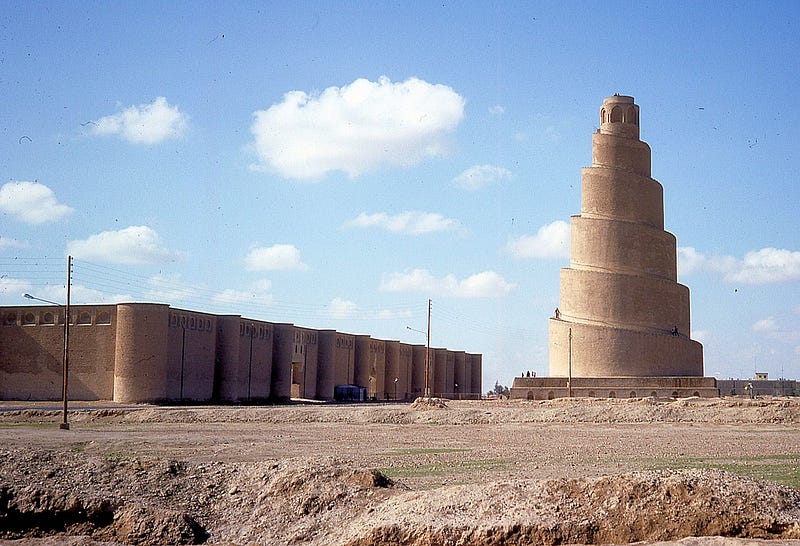
Next to Baghdad, Samarra was the largest and wealthiest city in the Abbasid Empire. As it was swiftly deserted, many priceless monuments and remnants from ancient times remained there.

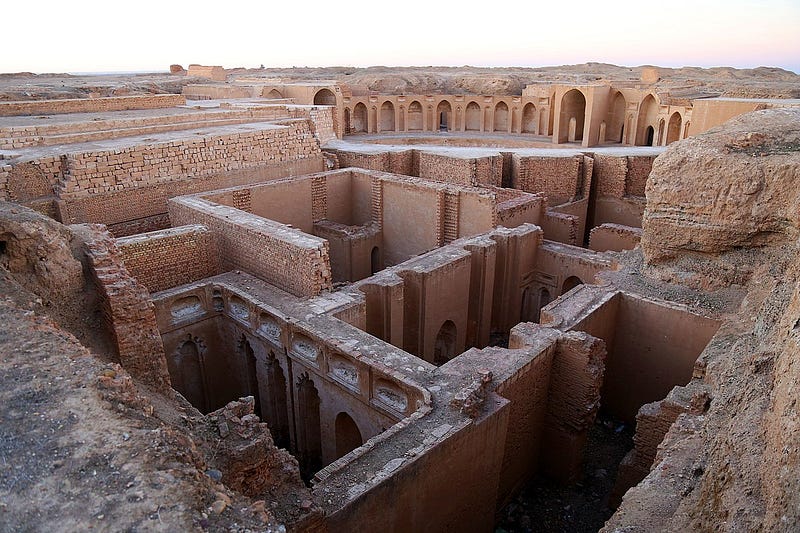
The city’s layout has survived to this day. Alongside its ruins, it represents the sole preserved instance of an early medieval city in the Middle East. Enlisted on the UNESCO list, Samarra continues to be a site for archaeological research.

The New Capital of the Empire

In the 9th century, the Abbasid Caliphate was one of the mightiest states globally. The empire housed various cultures and religions, influencing the urban development in the region of Iraq. Baghdad was the capital of the empire at that time.

During this period, the Abbasids increasingly employed Turkish peoples, forcibly integrating them into the army. This led to conflicts between Persians, Arabs, and Turks. The culmination of these tensions was the permission granted to the Turkish caliph’s guard to settle in Baghdad.

The inhabitants of the capital were deeply resentful. Arab sources likened the Turks to barbarians, accusing them of looting, assaulting, and destroying property. Adding to the heated atmosphere was the fact that they couldn’t be held to the same accountability as civilians.

It’s important to note that the Turks were essentially enslaved soldiers who were forcibly Islamized. The caliphs utilized them out of fear of betrayal by the increasingly autonomous regional governors of the empire.

Ultimately, after failed attempts to restore order, in 837 AD, Caliph al-Mutasim decided to relocate the ruler’s seat along with the army to Samarra, situated 100 km away from Baghdad. For the following decades, it remained a city of opulent palaces and military settlements.
[Photo: Safa.daneshvar, CC BY-SA 4.0, via Wikimedia Commons]

Surramanra — “fortunate is he who beheld it”

The choice of Samarra as the new capital faced criticism, mainly because it was an area known for hunting grounds, presumably the reason why the caliph made such a decision. In the Assyrian language, Samarra was named Surramanra in Arabic, which means “fortunate is he who beheld it.”

Characteristics of Samarra:

  • A city situated along the Tigris River.
  • Expanded longitudinally along the river.
  • Lacked a geometrized urban plan.
  • Had large avenues for military marches.
  • Closed-off zones for Turkish and Arab residents.

In Samarra’s layout, particularly exceptional were the large fenced areas, likely hunting grounds that served as recreational parks. Additionally, prominent were the long and wide routes designated for horse racing.

On one hand, Samarra was known for the grandeur of expanding palaces. On the other, there was strict control over space. Turkish and Arab zones were segregated, aiming to prevent unrest, as seen in Baghdad. There existed even special laws; for instance, Turkish soldiers were prohibited from marrying Arab women.

During the same period, Baghdad inhabitants celebrated their “liberation” from harassment by the Turks. Despite intermittently ceasing to be the capital, Baghdad continued to thrive. Samarra never became such a center of trade.
[Photo: Mehr News Agency, CC BY 4.0, via Wikimedia Commons]

Development and Decline of Samarra

From al-Mutasim onwards, subsequent caliphs invested in Samarra’s development. They constructed new mosques, palaces, marketplaces, and racetracks. The reign of Caliph al-Mutawakkil (847–861 AD) was most significant for the city, during which the most important and monumental architectural structures were erected.

Key buildings in Samarra:

  • Caliph’s Palace, Dar al-Khilafa
  • Prince’s Palace, al-Balkuwara
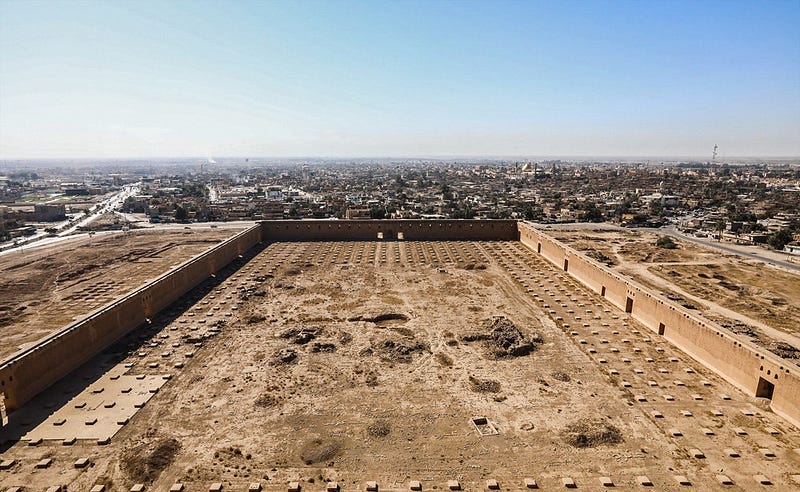
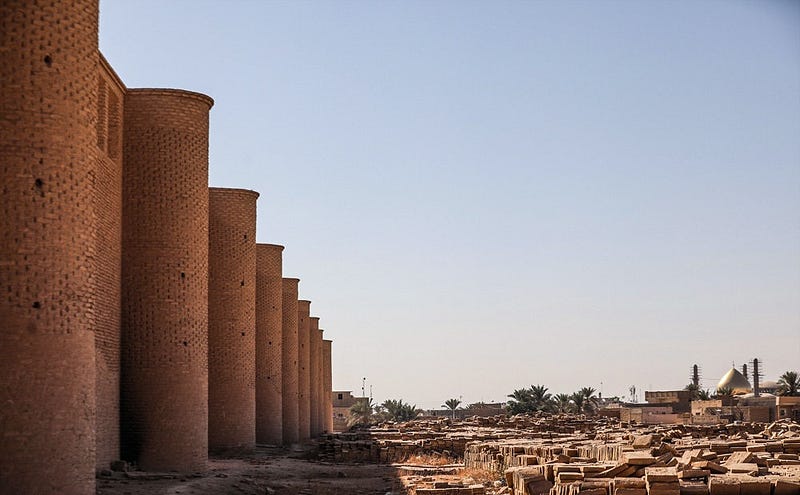
  • The Great Mosque
  • al-Mutawakkiliya (the outer district beyond the city walls)
  • Abu Dulaf Mosque with a spiral minaret
  • al-Askari Mosque with golden roofs

The Abbasid architecture at that time significantly differed from the earlier Umayyad era. Initially, Arabs were fascinated by Greco-Roman art and Byzantine patterns. However, the Abbasids diverged from these trends, of which Samarra is the best example.

In Iraq and Iran, there was a return to old Persian art patterns while being inspired by Eastern cultures, particularly Central Asia and the then-Chinese Turkistan. The oriental turn in art was a more syncretic fusion of styles and patterns. This is evident in wall paintings, representing oriental ornaments alongside occasional Western symbolism.

The Caliph’s Palace aimed to overshadow all other royal residences. Apart from wall paintings, the palace was adorned with stuccos, colorful windows, vast terraces with pools, and a monumental gate. Later, around 850 AD, al-Mutawakkil built an even larger and never-completed palace for his son with similarly or more luxurious furnishings.

In 892 AD, after several decades of Samarra’s development, Caliph al-Mutamid decided to return with his court to Baghdad. Turkish soldiers continued to cause problems during those years. The ruler no longer felt safe there, as the Turks had been involved in the murder of four caliphs.
[Photo: Mehr News Agency, CC BY 4.0, via Wikimedia Commons]

Unexplored Archaeological Site

Due to the rapid abandonment of the city, it fell victim to the process of desertion. Thanks to this, its ruins have been exceptionally well-preserved. Samarra, therefore, remains a haven for archaeologists but remains inadequately explored.

The most recognizable monument is the spiral minaret of the Abu Dulaf Mosque. Since 2007, Samarra has been listed as a UNESCO World Heritage Site.

Attention all readers!

As content creators on Medium.com, we face minimal compensation for our hard work. If you find value in my articles, please consider supporting me on my “Buy Me a Coffee” page. Your small contributions can make a big difference in fueling my passion for creating quality content. Thank you for your support!

https://www.buymeacoffee.com/oconnel
History
Science
Culture
Life
Travel
Recommended from ReadMedium