
Japan’s Unearthed Treasures and the Warrior’s Secret Stash
In Japan, a priceless treasure has been discovered. It was buried years ago by a secretive warrior. Archaeologists in Japan have unearthed over 100,000 coins that were buried several hundred years ago by a certain warrior. The treasure was found near the city of Maebashi, approximately 100 kilometers from Tokyo.
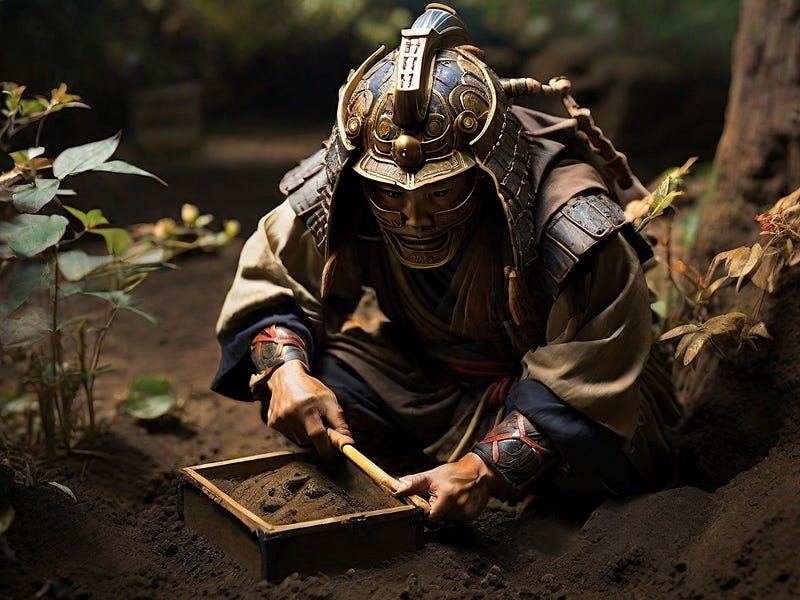
In the city of Maebashi, located in Gunma Prefecture, in the central part of the Honshu island, archaeological excavations have been ongoing for several months. The work is taking place at a site where the construction of a new factory is set to begin soon. Japanese media has just reported that researchers recently made a startling find — a vast treasure consisting of ancient and medieval coins.
Over 100,000 hidden coins were counted. Only a few hundred of them have been identified so far. The oldest coin examined thus far dates back to China and was minted around 175 BCE. On the other hand, the newest coin is over a thousand years older. Whoever buried this treasure must have been aware of its historical value, perhaps even a collector.
The Japanese newspaper ‘The Asahi Shimbun’ reports that the coins were stored in over 1,000 bundles. The oldest Chinese coin bears the inscription ‘Ban Liang.’ This type of coin was first minted around 378 BCE. Emperor Qin Shi Huang around 210 BCE recognized it as the first currency of unified China. These were round coins with a square hole in the center.
“In many regions of Japan, similar hoards with buried coins have been discovered, mainly from the medieval period, from the 13th to the 16th century,” said Ethan Segal, a historian from Michigan State University, who was not involved in the research.
Chinese and Japanese currency
The scholar added that although the Maebashi treasure is significant, archaeologists have found even larger deposits of coins in the past. “It wasn’t until the end of the 7th century that the Japanese began producing their own coins, made from precious metals,” Segal added. “They minted them, drawing inspiration from, among others, the Chinese Ban Liang.”
“The holes in Ban Liang-type coins were used to string large quantities of coins, usually about 100 pieces per string,” explained Segal. “The Japanese minted their own coins until the middle of the 10th century. From then on, they ceased production due to changes in the economy and problems with the supply of copper ore,” the historian added.
That’s why, from the 10th century onward, the Japanese began using Chinese coins more often. This may explain why Ban Liangs were found in a Japanese hoard.
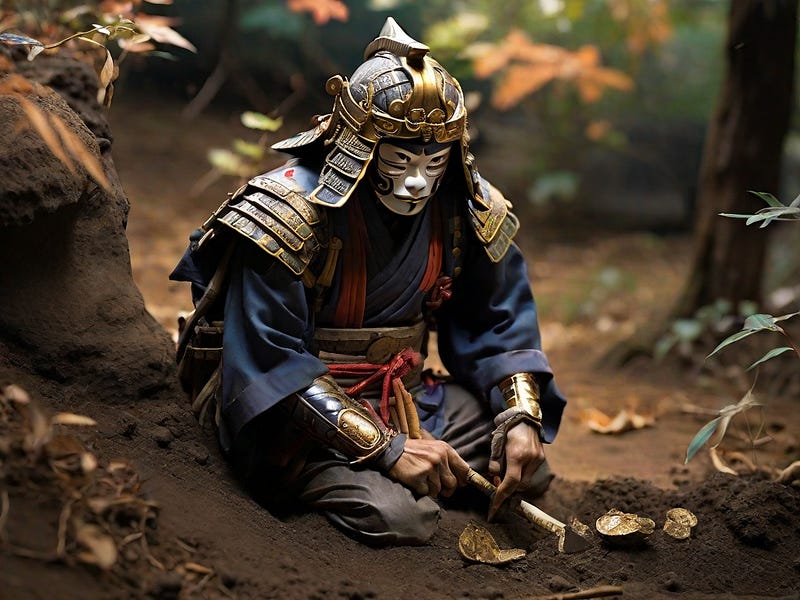
Who buried the treasure?
A significant clue could be the fact that this isn’t the first similar discovery. Historians believe that hiding coins could have served as a form of security, akin to a deposit in a bank. However, some researchers suggest that burying a large sum of money might have had an unusual connection to a religious ritual in Japan.
Experts consulted by Live Science also have another explanation. Such a substantial treasure could have been hidden by a warrior who didn’t want to carry all that money with him. During prolonged and exhausting expeditions, they preferred to keep their wealth safe until their return home. Considering the coins were still in Maebashi to this day, this person likely never returned to this area.
Scientists believe that accurately determining the period from which the treasure originated will only be possible after examining all the coins. For now, it is known that whoever buried them did so after 1265.
Attention all readers!
As content creators on Medium.com, we face minimal compensation for our hard work. If you find value in my articles, please consider supporting me on my “Buy Me a Coffee” page. Your small contributions can make a big difference in fueling my passion for creating quality content. Thank you for your support!


