avatarDark Energy Articles

Free AI web copilot to create summaries, insights and extended knowledge, download it at here

2362

Abstract

a physicist, a refugee from Nazi Germany named Otto Kornei.</p><h1 id="dfc3">What Was on the First Copy in History?</h1><p id="7938">On the day they managed to obtain the first successful copy of a document, Carlson covered a zinc plate with sulfur, and Kornei wrote <b>“10.-22.-38 ASTORIA”</b> in ink on a piece of glass. The numbers represented the date, October 22, 1938, and Astoria was the neighborhood in New York where Carlson’s laboratory was located. They covered the windows and electrified the plate by rubbing it with a cloth. Then, they placed the glass with the inscription on it and exposed it to a strong lamp for a moment. They removed the glass and sprinkled the sulfur with pollen from a common fern — yellow powder that they dyed gray for a better effect. After blowing on the plate, the pollen remained only where the sulfur had covered it before. The physicists fixed it on wax paper by placing it on the plate and heating it. Carlson called this process electrophotography.</p> <figure id="a9af"> <div> <div> <img class="ratio" src="http://placehold.it/16x9"> <iframe class="" src="https://cdn.embedly.com/widgets/media.html?type=text%2Fhtml&amp;key=a19fcc184b9711e1b4764040d3dc5c07&amp;schema=twitter&amp;url=https%3A//twitter.com/cfax1070/status/1716098142498935060%3Fs%3D20&amp;image=https%3A//i.embed.ly/1/image%3Furl%3Dhttps%253A%252F%252Fabs.twimg.com%252Ferrors%252Flogo46x38.png%26key%3Da19fcc184b9711e1b4764040d3dc5c07" allowfullscreen="" frameborder="0" height="281" width="500"> </div> </div> </figure></iframe></div></div></figure><h1 id="0819">A Short History of the Xerox Industry</h1><p id="6315">It took him another 10 years to build a prototype of a Xerox copier and find a company willing to manufacture it. More than 20 companies, including giants like IBM, Kodak, and General Electric, rejected him. The breakthrough came when he received support from the non-profit organization Battelle Development, which assists innovative projects.</p><p id="80ff">In 1947, the Haloid company in Rochester decided to invest in Carlson’s invention. After renaming itself to Haloid Xerox, they publicly presented his invention. The copying process was named xerography, advised by a Greek professor, from Greek words meaning “dry wri

Options

ting” — dry because the process did not involve the chemical baths necessary in photography. However, the machine was huge and slow, and its operation was too complicated for office use.</p><p id="1124">These drawbacks were absent in the Xerox 914 copier, which was ready in 1959. It was still large, weighing almost 300 kg, but it could produce seven copies per minute, and operation was as simple as pushing a button. Four years later, the Xerox 813 copier, which could fit on a desk, hit the market. The business was thriving and brought Carlson a fortune, most of which he dedicated to charitable causes and supporting science. It’s worth adding that today, the fastest photocopiers in the world can copy up to 150 pages per minute.</p><div id="47fe" class="link-block"> <a href="https://readmedium.com/draft-animals-camels-and-donkeys-but-also-dogs-and-elephants-be704965cd19"> <div> <div> <h2>Draft Animals: Camels and Donkeys, But Also Dogs and Elephants</h2> <div><h3>Draft animals have been assisting humans in transporting goods for many millennia. Their role remains invaluable to…</h3></div> <div><p>medium.com</p></div> </div> <div> <div style="background-image: url(https://miro.readmedium.com/v2/resize:fit:320/1*JlDjAQfB-WiaXoksMzi2xg.jpeg)"></div> </div> </div> </a> </div><h1 id="d84f">Attention all readers!</h1><p id="bb38"><b><i>As content creators on Medium.com, we face minimal compensation for our hard work. If you find value in my articles, please consider supporting me on my “<a href="https://www.buymeacoffee.com/oconnel">Buy Me a Coffee</a>” page. Your small contributions can make a big difference in fueling my passion for creating quality content. Thank you for your support!</i></b></p><figure id="1057"><img src="https://cdn-images-1.readmedium.com/v2/resize:fit:800/0*Pm9TOr-5svmNuuXB.png"><figcaption><a href="https://www.buymeacoffee.com/oconnel">https://www.buymeacoffee.com/oconnel</a></figcaption></figure><figure id="71ef"><img src="https://cdn-images-1.readmedium.com/v2/resize:fit:800/0*KJc52P2X8j4VSRWK.png"><figcaption><a href="https://www.buymeacoffee.com/oconnel">https://www.buymeacoffee.com/oconnel</a></figcaption></figure></article></body>

85 years ago, the Xerox was invented. The first copy displayed significant numbers.

Before October 22, 1938, American physicist Chester Carlson photocopied the first text; copying documents was time-consuming and expensive. The invention streamlined office work and brought the author a fortune.
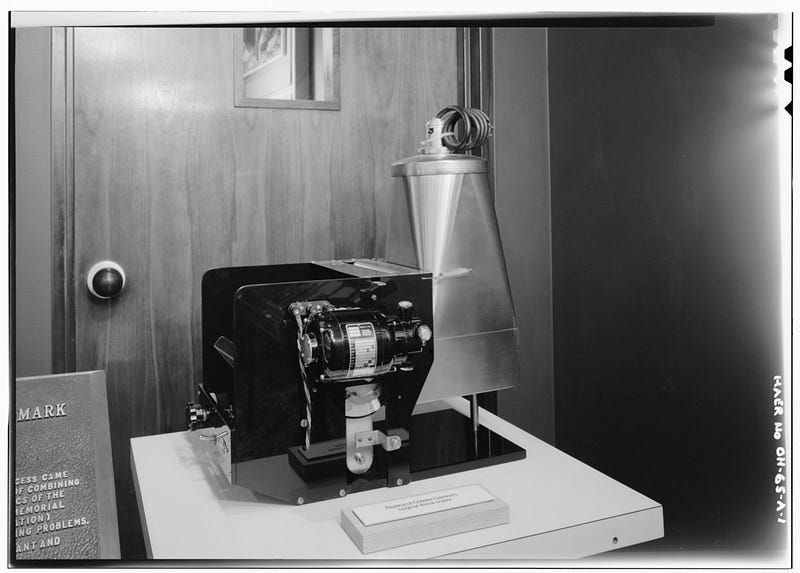
Replica of Chester Carlson’s original Xerox copier — [Photo: See page for author, Public domain, via Wikimedia Commons]

Today, it’s a breeze, but 80 years ago, copying documents was the bane of clerks. One of them, Chester Carlson, after graduating in physics from Caltech, found employment in the patent department of P.R. Mallory and Co. (now Duracell). Photography had been known for exactly a century by then. However, there was still no way to quickly and easily copy documents.

With the development of the global economy, people produced more and more documents. Many of them needed to be duplicated, and making each copy required rewriting the text on a typewriter. But it also involved checking for errors or, in the case of drawings, sending documents to a photographic lab.

How Chester Carlson Invented the Copier

Both methods were time-consuming and troublesome. The second one was additionally costly. Chester Carlson decided to find a way to make document copying fast, easy, and inexpensive. Long hours spent in the library led him down the right path. From books, he learned that the electrical conductivity of some substances, such as sulfur, increased under the influence of light. He decided to try to use this phenomenon in his invention.

He experimented in his kitchen, annoying neighbors with explosions of heated sulfur and filling the entire building with the smell of rotten eggs. Soon, he got married and, to the joy of other tenants, moved to his bride’s family home. It was then that he hired an employee, also a physicist, a refugee from Nazi Germany named Otto Kornei.

What Was on the First Copy in History?

On the day they managed to obtain the first successful copy of a document, Carlson covered a zinc plate with sulfur, and Kornei wrote “10.-22.-38 ASTORIA” in ink on a piece of glass. The numbers represented the date, October 22, 1938, and Astoria was the neighborhood in New York where Carlson’s laboratory was located. They covered the windows and electrified the plate by rubbing it with a cloth. Then, they placed the glass with the inscription on it and exposed it to a strong lamp for a moment. They removed the glass and sprinkled the sulfur with pollen from a common fern — yellow powder that they dyed gray for a better effect. After blowing on the plate, the pollen remained only where the sulfur had covered it before. The physicists fixed it on wax paper by placing it on the plate and heating it. Carlson called this process electrophotography.

A Short History of the Xerox Industry

It took him another 10 years to build a prototype of a Xerox copier and find a company willing to manufacture it. More than 20 companies, including giants like IBM, Kodak, and General Electric, rejected him. The breakthrough came when he received support from the non-profit organization Battelle Development, which assists innovative projects.

In 1947, the Haloid company in Rochester decided to invest in Carlson’s invention. After renaming itself to Haloid Xerox, they publicly presented his invention. The copying process was named xerography, advised by a Greek professor, from Greek words meaning “dry writing” — dry because the process did not involve the chemical baths necessary in photography. However, the machine was huge and slow, and its operation was too complicated for office use.

These drawbacks were absent in the Xerox 914 copier, which was ready in 1959. It was still large, weighing almost 300 kg, but it could produce seven copies per minute, and operation was as simple as pushing a button. Four years later, the Xerox 813 copier, which could fit on a desk, hit the market. The business was thriving and brought Carlson a fortune, most of which he dedicated to charitable causes and supporting science. It’s worth adding that today, the fastest photocopiers in the world can copy up to 150 pages per minute.

Attention all readers!

As content creators on Medium.com, we face minimal compensation for our hard work. If you find value in my articles, please consider supporting me on my “Buy Me a Coffee” page. Your small contributions can make a big difference in fueling my passion for creating quality content. Thank you for your support!

https://www.buymeacoffee.com/oconnel
Tech
Technology
Science
History
Life Lessons
Recommended from ReadMedium