one–impressive at first glance but still severely limited in utility. However, just as mobile phones rapidly evolved from grainy black-and-white screens to the sleek, multifunctional smartphones ubiquitous around the world today, AI systems are poised for a similarly disruptive growth trajectory.</p>
<figure id="6c40">
<div>
<div>
<img class="ratio" src="http://placehold.it/16x9">
<iframe class="" src="https://cdn.embedly.com/widgets/media.html?src=https%3A%2F%2Fwww.youtube.com%2Fembed%2FIme1w1mf9hU%3Ffeature%3Doembed&display_name=YouTube&url=https%3A%2F%2Fwww.youtube.com%2Fwatch%3Fv%3DIme1w1mf9hU&image=https%3A%2F%2Fi.ytimg.com%2Fvi%2FIme1w1mf9hU%2Fhqdefault.jpg&key=a19fcc184b9711e1b4764040d3dc5c07&type=text%2Fhtml&schema=youtube" allowfullscreen="" frameborder="0" height="480" width="854">
</div>
</div>
</figure></iframe></div></div></figure><h1 id="5d23">The Next Frontier — GPT-5</h1><p id="ce3f">And spearheading this seismic shift is none other than the highly anticipated GPT-5. Elaborating on its game-changing upgrades, Altman emphasized that GPT-5 is not just an incremental improvement over previous iterations but a dramatic leap forward. At its core, GPT-5 represents a massive boost in raw intelligence and reasoning capabilities thanks to its trillions of parameters — an order of magnitude more than GPT-3. This expanded foundation of knowledge and context enables GPT-5 to not just parrot information but truly comprehend concepts, make logical inferences, and even harness creativity for tasks like generating music, art, and literature.</p><p id="b23e">Crucially, GPT-5’s intelligence upgrade isn’t restricted to narrow domains; its general proficiency gives it a versatility exceeding that of humans in many cognitive tasks. As Altman succinctly puts it, “<i>It’s going to be smarter.</i>” This emphasis on broadly boosted smarts means GPT-5 will unlock new possibilities and excel in everything from <a href="https://readmedium.com/930914b146f8">education</a> to <a href="https://readmedium.com/dcff93083c14">healthcare<
Options
/a>, <a href="https://readmedium.com/df284b41660e">transportation</a>, <a href="https://readmedium.com/50cdc89cfe8d">finance</a>, and more. The potential to augment and elevate virtually every industry is what makes GPT-5 poised to shape the technological landscape for decades to come, much like seminal innovations such as electricity, computers, and the internet before it.</p><h1 id="ab94">Realizing the Full Potential</h1><p id="21e7">Yet, as Altman highlights, fully unlocking AI’s promise requires careful collaboration between regulators and researchers. Warning against hastily deploying systems without safeguards, Altman called for establishing regulatory “sandboxes” where developers can experiment safely while policymakers assess risks and formulate ethical oversight. Getting this balance right is key; setting boundaries too tight would stifle progress while an unchecked free-for-all court calamity.</p><p id="6cd6">The way forward lies in openness and transparency, tenets Altman firmly believes should govern the future of AI. Calling to put aside commercial interests, <a href="https://readmedium.com/cd10783a9599">OpenAI</a> recently open-sourced some of its models to allow public scrutiny and feedback — a step towards democratizing access to AI. After all, realizing the emancipatory potential of tools like GPT-5 requires acknowledging both their risks and rewards to shape them into a force that serves all humanity.</p><h1 id="a397">The Road Ahead</h1><p id="34ea">Sam Altman’s discourse at the World Government Summit was anything but trivial. It was a sobering reminder of the power and pitfalls of technological innovation, crystallized by the promise and perils of GPT-5 on the horizon. Much like the early mobile phones that have now revolutionized how we communicate, compute, and create, GPT-5 marks a new chapter in AI’s evolution.</p><p id="1409">The challenge before regulators and developers alike is to guide this tool towards uplifting humanity instead of merely accumulating power and profit. By boldly confronting the debates that will define the AI-infused future, the conversation at Dubai is just the beginning.</p></article></body>
Sam Altman Unveils the Transformative Potential of GPT-5
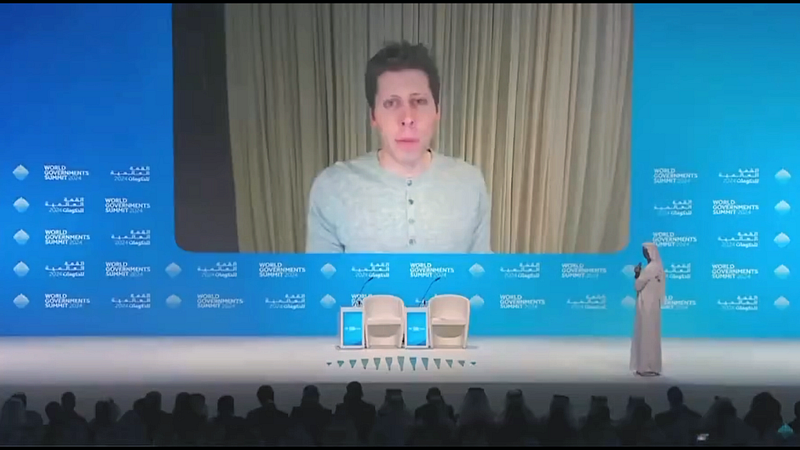
The World Government Summit 2024 in Dubai brought together over 300 world leaders, 8 Nobel laureates, and heads of influential global organizations. Among the visionaries gracing the stage was Sam Altman, the CEO of OpenAI, the company behind the meteoric rise of ChatGPT and other leading AI models. In a thought-provoking keynote address, Altman offered rare insights into the past, present, and tantalizing future of artificial intelligence, crystallized in the forthcoming GPT-5.
Casting his mind back to the early days of mobile phones, Altman drew a parallel between those bulky devices of yore with monochrome displays and today’s AI systems. Much like the Motorola DynaTACs of the 1980s, ChatGPT and its predecessors have basic capabilities that hint at a greater potential. Altman compared these fledgling AI tools to a rudimentary mobile phone–impressive at first glance but still severely limited in utility. However, just as mobile phones rapidly evolved from grainy black-and-white screens to the sleek, multifunctional smartphones ubiquitous around the world today, AI systems are poised for a similarly disruptive growth trajectory.
The Next Frontier — GPT-5
And spearheading this seismic shift is none other than the highly anticipated GPT-5. Elaborating on its game-changing upgrades, Altman emphasized that GPT-5 is not just an incremental improvement over previous iterations but a dramatic leap forward. At its core, GPT-5 represents a massive boost in raw intelligence and reasoning capabilities thanks to its trillions of parameters — an order of magnitude more than GPT-3. This expanded foundation of knowledge and context enables GPT-5 to not just parrot information but truly comprehend concepts, make logical inferences, and even harness creativity for tasks like generating music, art, and literature.
Crucially, GPT-5’s intelligence upgrade isn’t restricted to narrow domains; its general proficiency gives it a versatility exceeding that of humans in many cognitive tasks. As Altman succinctly puts it, “It’s going to be smarter.” This emphasis on broadly boosted smarts means GPT-5 will unlock new possibilities and excel in everything from education to healthcare, transportation, finance, and more. The potential to augment and elevate virtually every industry is what makes GPT-5 poised to shape the technological landscape for decades to come, much like seminal innovations such as electricity, computers, and the internet before it.
Realizing the Full Potential
Yet, as Altman highlights, fully unlocking AI’s promise requires careful collaboration between regulators and researchers. Warning against hastily deploying systems without safeguards, Altman called for establishing regulatory “sandboxes” where developers can experiment safely while policymakers assess risks and formulate ethical oversight. Getting this balance right is key; setting boundaries too tight would stifle progress while an unchecked free-for-all court calamity.
The way forward lies in openness and transparency, tenets Altman firmly believes should govern the future of AI. Calling to put aside commercial interests, OpenAI recently open-sourced some of its models to allow public scrutiny and feedback — a step towards democratizing access to AI. After all, realizing the emancipatory potential of tools like GPT-5 requires acknowledging both their risks and rewards to shape them into a force that serves all humanity.
The Road Ahead
Sam Altman’s discourse at the World Government Summit was anything but trivial. It was a sobering reminder of the power and pitfalls of technological innovation, crystallized by the promise and perils of GPT-5 on the horizon. Much like the early mobile phones that have now revolutionized how we communicate, compute, and create, GPT-5 marks a new chapter in AI’s evolution.
The challenge before regulators and developers alike is to guide this tool towards uplifting humanity instead of merely accumulating power and profit. By boldly confronting the debates that will define the AI-infused future, the conversation at Dubai is just the beginning.