
Saddles and spurs and hard times with a Charles Bronson historian
Paul Talbot unwraps 12-year-old Kurt Russell’s birthday gift, sex kitten Susan Oliver, ‘The Evil That Men Do,’ an uncooperative James Coburn shooting one of the greatest boxing movies, unfulfilled scripts, and Bronson’s haunting descent into Alzheimer’s
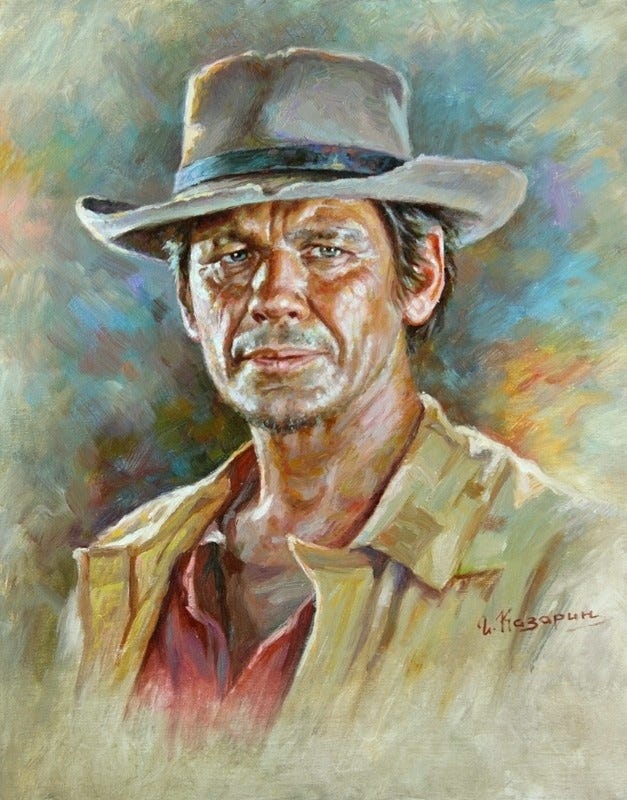
When not supervising Blu-ray commentary tracks for such action flicks as The Valachi Papers and Chino, two-time Charles Bronson biographer Paul Talbot found the time to grapple with the bullshit-eschewing Death Wish architect’s early sagebrush sojourns Empire and The Travels of Jaimie McPheeters. That kindled a page-turning romp through other infrequently examined facets of Bronson’s 50-year career on a Tinseltown marquee. Ride back to the past chapter of the interview [“Scholar Paul Talbot Chronicles Badass Action Hero Charles Bronson”] if you’re just joining the rodeo.
The Paul Talbot Interview, Part Two
What footing did Charles Bronson have in Hollywood when he accepted his third and final recurring TV role in The Travels of Jaimie McPheeters? Man with a Camera, a 1958–1960 ABC action drama depicting a Korean War vet turned photographer-private eye, and Empire, a 1962–1963 NBC modern-day western filmed in color in New Mexico with Bronson capably rendering second lead Paul Moreno, a ranch hand wrongly accused of rape and murder, had aired previously.
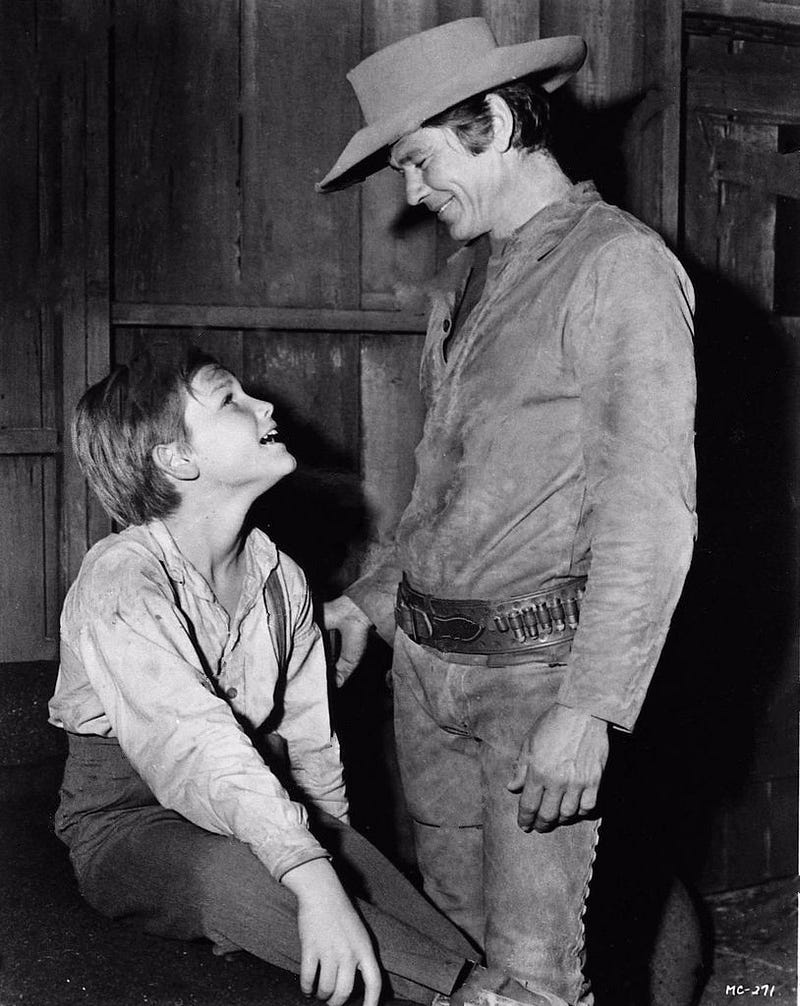
Bronson was at the peak of his career as an in-demand supporting actor in feature films and guest actor in TV shows. He was actually brought onto Jaimie McPheeters as wagon master Linc Murdock halfway through its first and sole season in an attempt to boost the ratings [a total of 26 black and white, 60-minute episodes aired between 1963 and 1964 on ABC; Michael Witney was the prior wagon train leader tasked with pulling 12-year-old Kurt Russell out of various predicaments]. Bronson already was developing a cult following in Europe due to the popularity there of his earlier films Machine Gun Kelly [1958], The Magnificent Seven [1960], and The Great Escape [1963; for the latter two films, Bronson was billed fourth and fifth among the cast, respectively]. Around this time, Bronson turned down the lead in A Fistful of Dollars [1964, as did Henry Fonda, James Coburn, and Clint Eastwood’s steely Rawhide trail boss Eric Fleming]. It would be a few more years before Bronson decided to start making features in Europe [e.g. Farewell, Friend, Once Upon a Time in the West, and Rider on the Rain] which would make him one of the biggest stars on the planet.
Does Guns of Diablo [1964] contain previously captured footage from the final episode of Jaimie McPheeters?
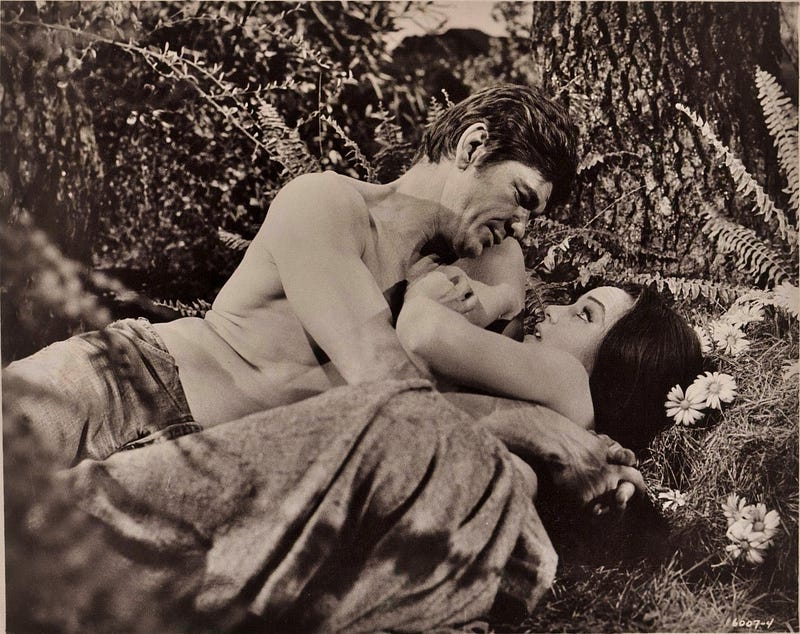
Yes. While “The Day of the Reckoning” episode was in production [all episode titles shared “The Day of…” motif], Metro-Goldwyn-Mayer realized that there was still a big demand in foreign territories and independent TV stations for American feature-length Westerns. It was decided to shoot extra footage so it could also be released as a 90-minute color film named Guns of Diablo. Some footage was used from another episode [the cattle drive at the beginning]. There was also some risqué material shot with Bronson and Susan Oliver [the beguiling blonde left Mayberry’s Sheriff Andy Taylor speechless in “Prisoner of Love”]. Dan O’Herlihy [Oscar-nominated as the titular Robinson Crusoe in 1954] played Kurt Russell’s father and did not consent to having his footage used in a feature. So scenes were shot with Russ Conway playing that role [a frequent ’50s and ’60s supporting actor in such series as The Lone Ranger and Bonanza]. Jaimie McPheeters was not syndicated frequently as Bronson was a cast alum for only 13 episodes. Also, the show was in black and white. That may have decreased its syndication value in some markets.
What’s meritable about Guns of Diablo?
Bronson is in it, so that automatically attaches caliber. His charisma and regular mannerisms are on display a full decade before Death Wish finally cemented him as a bankable leading man in America. Of course, Guns of Diablo is a TV episode that was hastily padded into a serviceable Western programmer. Similar to many TV episodes-movies, it has some long dialogue scenes that drag it down. Like they say, talk is cheap.
Does Bronson have natural chemistry with the future action hero of Escape to New York?
I like his chemistry with Russell. It’s akin to a big brother-little brother relationship. I wish more episodes were available so we could judge their complete interactions.
Is he convincing as a resilient wagon master?
Bronson was always very believable in physical scenes. He knew how to handle horses in real life.
[Author’s Note: Starting as an outlaw gang leader menacing Randolph Scott in 1954’s Riding Shotgun, Bronson stockpiled 19 western movies on his résumé in addition to countless prairie TV guest spots. Before making the permanent leap to film in 1968, Bronson’s final boob tube forays came in two back to back episodes of The Virginian and Dundee and the Culhane, a combo legal-western flop for British actor John Mills. In 1977’s fantastic, unfairly maligned White Buffalo, the mustachioed tough guy donned spurs for the last time as a tormented Wild Bill Hickok. But according to Talbot, an autumnal cowboy part almost materialized. “Cabo Blanco, 10 to Midnight, and The Evil That Men Do producer Lance Hool wanted Bronson to star in the HBO television western Dead or Alive (aka The Tracker, 1988). Bronson did not want to be away from Ireland, who was ill, and the role went to Kris Kristofferson”].
How does Bronson fare in the romantic scenes?
Bronson is in his physical prime — ruggedly handsome at 42 years old — and displays his famous torso. He seems very relaxed and comfortable in the love scenes. Oliver has an interesting, exotic look and is paired well with Bronson.
Did Bronson receive additional recurring TV series offers after Jaimie McPheeters failed?
Not to my knowledge. However, three decades later the CBS movie of the week Donato and Daughter featuring Dana Delany was intended to be a “wheel show” — i.e. a revolving series of TV movies. Bronson and the Tiffany Network instead opted to tackle Family of Cops, which would have continued for a fourth installment if Bronson’s health had not declined.
Is there any possibility of Jaimie McPheeters being officially exhumed?
Guns of Diablo has fallen into quasi-public domain status, and there have been dozens of unauthorized releases on VHS and DVD. Unfortunately, Guns of Diablo is all I’ve seen of Jaimie McPheeters. I believe that the rights are now owned by Warner Bros. I don’t know of any plans to release the series, but I hope that changes.
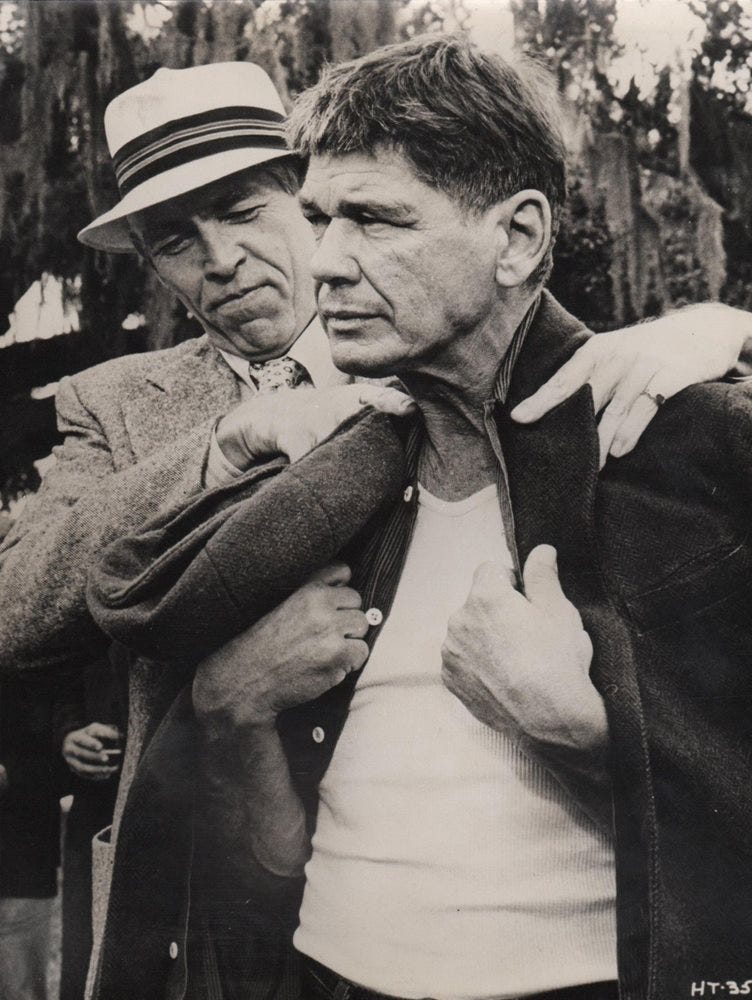
You don’t provide specifics in Bronson’s Loose Again!, but has director Walter Hill divulged why he had issues with James Coburn during the filming of Hard Times [1975]? I was expecting Bronson to have been the uncooperative participant for what turned into one of his greatest performances as Chaney, a Depression-era rail rider who earns a living participating in illegal bare-knuckle boxing with hustling manager “Speed” Weed [Coburn] in tow.
I heard Hill say in a 2007 Directors Guild of America video interview that Coburn may have been unhappy because he and Bronson started rising at the same time [i.e. The Magnificent Seven and The Great Escape] but Bronson ultimately became a much bigger star.
Dismaying Hard Times cast members including Bronson, second wife Jill Ireland, James Coburn, Strother Martin, and Maggie Blye, significant footage was deleted by Hill and Columbia Pictures executive Larry Gordon during the editing process. Might those scenes still exist, and has there been talk of restoration?
Hill said that Hard Times as it exists is his final, preferred cut. I’m sure that extra footage was lost or destroyed as soon as post-production was completed. Studios did not keep discarded scenes back then. When I was working on the Breakout Blu-ray for Indicator in 2018, we had Sony search the vault for deleted scenes including the one with Bronson and Randy Quaid dressed as priests. But no footage was found.
How much of a missed opportunity was the Dollar Ninety-Eight screenplay? “An autobiographical character study set in a coal mining town of the 1930s,” the first draft was penned by Bronson and Ireland in the same timeframe when they collaborated on Hard Times. Bronson was so invested in the project that he also intended to serve as director and producer, feats he had never attempted before. Multimillionaire producer Lew Grade, who united with Bronson on Love and Bullets, Borderline, and The Evil That Men Do, committed the financing via ITC Entertainment. Dollar Ninety-Eight kicked around Hollywood until the late ’80s and was finally abandoned once Bronson’s lucrative contract with the schlocky Cannon Films expired and Ireland’s breast cancer ordeal intensified.
I have read a draft of Dollar Ninety-Eight. I don’t know of any other specific projects that he wanted to produce or direct.
In 1976 Bronson’s longtime agent Paul Kohner and producer-son Pancho had ambitions of bringing an “epic, $16 million television miniseries” dubbed Maximilian and Juarez to fruition. “The historical script dealt with the Austrian monarch Maximilian I and his battles with Mexican president Benito Juarez [during the mid-1860s French intervention in Mexico]. Bronson was to play Juarez, and if the project had gotten made, it would have given the actor his best-ever role.” Why do you believe that?
It was a good script and the character had a lot of range.
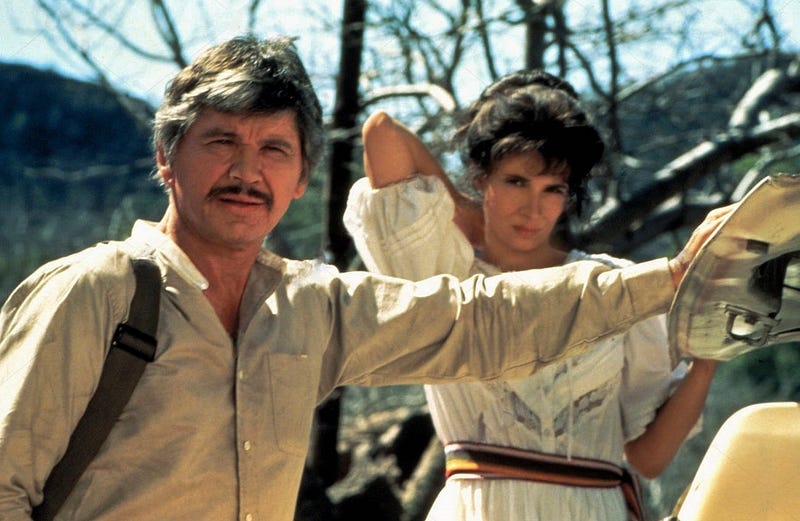
I was genuinely bowled over to learn that the gruesomely violent Evil That Men Do [1984] became Bronson’s third highest grossing movie of the 1980s in North America.
TriStar was a recently-formed, well-financed subsidiary of Columbia Pictures that distributed The Evil That Men Do, which had a big TV campaign. TriStar used TETMD and other early releases as tests for their upcoming release of Robert Redford’s inspiring baseball drama The Natural. TriStar wanted to see what type of advertising audiences responded to [i.e. radio, TV, newspaper ads, etc.] It was the first Bronson picture that was released after 10 to Midnight, which was a huge hit on video and pay-tv. Death Wish II and 10 to Midnight had introduced Bronson to a young audience. TETMD had a high level of violence and sleaze which made it popular to young horror/action/sleaze fans who had recently embraced the exploitation genre.
Little is known about the last five years of Bronson’s life as he faded from public view following the issue of Family of Cops III: Under Suspicion. Emblazoning Bronson’s public defender daughter in the Milwaukee-based trilogy, Barbara Williams reunited with him and third wife Kim Weeks in a Malibu restaurant circa 2000. Glimpsing her newborn son, the former stone-faced killing machine did not speak. As Williams heart-rendingly told you in Bronson’s Loose Again!, “I sat down and took Charlie’s hand while I jostled Liam in my other arm. Charlie just sobbed and sobbed. Kim, who was preoccupied on the phone with some real estate business conversation, said something like, ‘Babies always make Charlie cry.’ But it was more than that. There was some deep pain that he was trapped in. It was very disturbing. That was the last time I ever saw Charlie” [Alzheimer’s and pneumonia contributed to Bronson’s death at age 81 on August 30, 2003]. What else have you uncovered from Bronson’s health-induced retirement?
I have not learned any more about Bronson’s final years. Alzheimer’s is a horrific disease and I’m sure that his final years were, sadly, very difficult. Everyone has to die. But Bronson left an incredible legacy of film and TV work that will live on and continue to grow his fan base.
© Jeremy Roberts, 2021. All rights reserved. To touch base, email [email protected] and mention which story led you my way. I appreciate it sincerely.