
Rustlings: rc1.rs #Issue83 — Smart Pointers in Rust
Rustlings Challenge: rc1.rs Solution Walkthrough
This is the Eighty-third (83rd) issue of the Rustlings series. In this issue, we provide solutions to Rustlings exercises along with detailed explanations. In this issue we will solve the challenge on rc1.rs.
Previous challenge #Issue 82
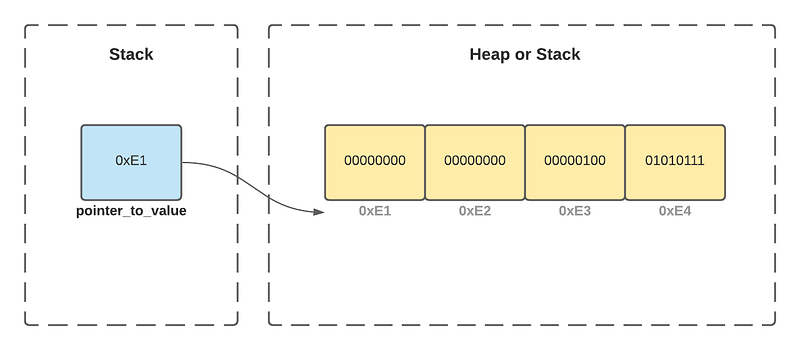
In Rust, smart pointers are variables that contain an address in memory and reference some other data, but they also have additional metadata and capabilities. Smart pointers in Rust often own the data they point to, while references only borrow data.
Rc<T> stands for Reference Counted, and it’s a smart pointer in Rust. It’s used to enable multiple ownership of data by keeping track of how many references there are to a given piece of data and allowing shared ownership without the need for explicit lifetimes or borrowing rules.
Here’s a basic example of using Rc
use std::rc::Rc;

fn main() {
    let data = Rc::new(vec![1, 2, 3]);
    let reference1 = Rc::clone(&data);
    let reference2 = Rc::clone(&data);

    // data, reference1, and reference2 all share the same data.
    println!("{:?}", *data);
    println!("{:?}", *reference1);
    println!("{:?}", *reference2);
}
Rc is a powerful tool for scenarios where shared ownership is needed, and it ensures memory safety while allowing multiple parts of your program to access and work with the same data.
However, you need to be aware that it’s not suitable for situations where you need mutable access to the data or where you want to avoid reference cycles, as Rc does not prevent memory leaks due to circular references. In such cases, you might consider Rc<RefCell<T>> or other similar constructs to achieve interior mutability.
Challenge:
// rc1.rs
//
// In this exercise, we want to express the concept of multiple owners via the
// Rc<T> type. This is a model of our solar system - there is a Sun type and
// multiple Planets. The Planets take ownership of the sun, indicating that they
// revolve around the sun.
//
// Make this code compile by using the proper Rc primitives to express that the
// sun has multiple owners.
//
// Execute `rustlings hint rc1` or use the `hint` watch subcommand for a hint.

// I AM NOT DONE

use std::rc::Rc;

#[derive(Debug)]
struct Sun {}

#[derive(Debug)]
enum Planet {
    Mercury(Rc<Sun>),
    Venus(Rc<Sun>),
    Earth(Rc<Sun>),
    Mars(Rc<Sun>),
    Jupiter(Rc<Sun>),
    Saturn(Rc<Sun>),
    Uranus(Rc<Sun>),
    Neptune(Rc<Sun>),
}

impl Planet {
    fn details(&self) {
        println!("Hi from {:?}!", self)
    }
}

#[test]
fn main() {
    let sun = Rc::new(Sun {});
    println!("reference count = {}", Rc::strong_count(&sun)); // 1 reference

    let mercury = Planet::Mercury(Rc::clone(&sun));
    println!("reference count = {}", Rc::strong_count(&sun)); // 2 references
    mercury.details();

    let venus = Planet::Venus(Rc::clone(&sun));
    println!("reference count = {}", Rc::strong_count(&sun)); // 3 references
    venus.details();

    let earth = Planet::Earth(Rc::clone(&sun));
    println!("reference count = {}", Rc::strong_count(&sun)); // 4 references
    earth.details();

    let mars = Planet::Mars(Rc::clone(&sun));
    println!("reference count = {}", Rc::strong_count(&sun)); // 5 references
    mars.details();

    let jupiter = Planet::Jupiter(Rc::clone(&sun));
    println!("reference count = {}", Rc::strong_count(&sun)); // 6 references
    jupiter.details();

    // TODO
    let saturn = Planet::Saturn(Rc::new(Sun {}));
    println!("reference count = {}", Rc::strong_count(&sun)); // 7 references
    saturn.details();

    // TODO
    let uranus = Planet::Uranus(Rc::new(Sun {}));
    println!("reference count = {}", Rc::strong_count(&sun)); // 8 references
    uranus.details();

    // TODO
    let neptune = Planet::Neptune(Rc::new(Sun {}));
    println!("reference count = {}", Rc::strong_count(&sun)); // 9 references
    neptune.details();

    assert_eq!(Rc::strong_count(&sun), 9);

    drop(neptune);
    println!("reference count = {}", Rc::strong_count(&sun)); // 8 references

    drop(uranus);
    println!("reference count = {}", Rc::strong_count(&sun)); // 7 references

    drop(saturn);
    println!("reference count = {}", Rc::strong_count(&sun)); // 6 references

    drop(jupiter);
    println!("reference count = {}", Rc::strong_count(&sun)); // 5 references

    drop(mars);
    println!("reference count = {}", Rc::strong_count(&sun)); // 4 references

    // TODO
    println!("reference count = {}", Rc::strong_count(&sun)); // 3 references

    // TODO
    println!("reference count = {}", Rc::strong_count(&sun)); // 2 references

    // TODO
    println!("reference count = {}", Rc::strong_count(&sun)); // 1 reference

    assert_eq!(Rc::strong_count(&sun), 1);
}
Solution:
use std::rc::Rc;

#[derive(Debug)]
struct Sun {}

#[derive(Debug)]
enum Planet {
    Mercury(Rc<Sun>),
    Venus(Rc<Sun>),
    Earth(Rc<Sun>),
    Mars(Rc<Sun>),
    Jupiter(Rc<Sun>),
    Saturn(Rc<Sun>),
    Uranus(Rc<Sun>),
    Neptune(Rc<Sun>),
}

impl Planet {
    fn details(&self) {
        println!("Hi from {:?}!", self)
    }
}

#[test]
fn main() {
    let sun = Rc::new(Sun {});
    println!("reference count = {}", Rc::strong_count(&sun)); // 1 reference

    let mercury = Planet::Mercury(Rc::clone(&sun));
    println!("reference count = {}", Rc::strong_count(&sun)); // 2 references
    mercury.details();

    let venus = Planet::Venus(Rc::clone(&sun));
    println!("reference count = {}", Rc::strong_count(&sun)); // 3 references
    venus.details();

    let earth = Planet::Earth(Rc::clone(&sun));
    println!("reference count = {}", Rc::strong_count(&sun)); // 4 references
    earth.details();

    let mars = Planet::Mars(Rc::clone(&sun));
    println!("reference count = {}", Rc::strong_count(&sun)); // 5 references
    mars.details();

    let jupiter = Planet::Jupiter(Rc::clone(&sun));
    println!("reference count = {}", Rc::strong_count(&sun)); // 6 references
    jupiter.details();

    // TODO
    let saturn = Planet::Saturn(Rc::clone(&sun));
    println!("reference count = {}", Rc::strong_count(&sun)); // 7 references
    saturn.details();

    // TODO
    let uranus = Planet::Uranus(Rc::clone(&sun));
    println!("reference count = {}", Rc::strong_count(&sun)); // 8 references
    uranus.details();

    // TODO
    let neptune = Planet::Neptune(Rc::clone(&sun));
    println!("reference count = {}", Rc::strong_count(&sun)); // 9 references
    neptune.details();

    assert_eq!(Rc::strong_count(&sun), 9);

    drop(neptune);
    println!("reference count = {}", Rc::strong_count(&sun)); // 8 references

    drop(uranus);
    println!("reference count = {}", Rc::strong_count(&sun)); // 7 references

    drop(saturn);
    println!("reference count = {}", Rc::strong_count(&sun)); // 6 references

    drop(jupiter);
    println!("reference count = {}", Rc::strong_count(&sun)); // 5 references

    drop(mars);
    println!("reference count = {}", Rc::strong_count(&sun)); // 4 references

    // TODO
    drop(earth);
    println!("reference count = {}", Rc::strong_count(&sun)); // 3 references

    // TODO
    drop(venus);
    println!("reference count = {}", Rc::strong_count(&sun)); // 2 references

    // TODO
    drop(mercury);
    println!("reference count = {}", Rc::strong_count(&sun)); // 1 reference

    assert_eq!(Rc::strong_count(&sun), 1);
}
You can experiment with the code on Rust Playground.
Before you go
Thank you for taking the time to read through this challenge. We invite you to share your knowledge of Rust as well. If you found this article valuable, please don’t hesitate to share it with others. Don’t forget to follow the publication and give the article some claps 👏.
Thank you, and we look forward to seeing you for the next challenges!