
Rustlings: cow1.rs #Issue82— Smart Pointers in Rust
Rustlings Challenge: cow1.rs Solution Walkthrough
This is the Eighty-second (82nd) issue of the Rustlings series. In this issue, we provide solutions to Rustlings exercises along with detailed explanations. In this issue we will solve the challenge on cow1.rs.
Previous challenge #Issue 81
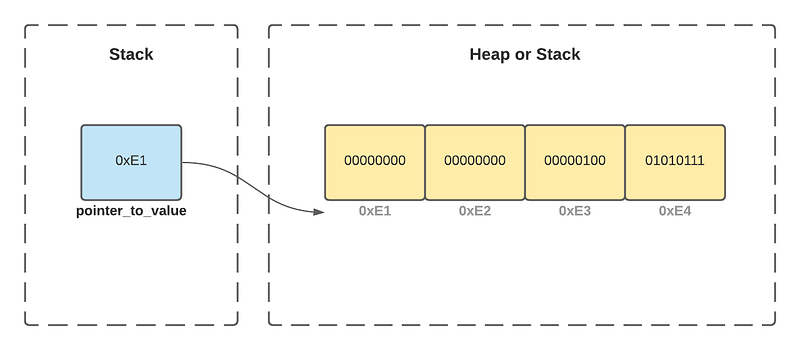
In Rust, smart pointers are variables that contain an address in memory and reference some other data, but they also have additional metadata and capabilities. Smart pointers in Rust often own the data they point to, while references only borrow data.
Challenge:
// cow1.rs
//
// This exercise explores the Cow, or Clone-On-Write type. Cow is a
// clone-on-write smart pointer. It can enclose and provide immutable access to
// borrowed data, and clone the data lazily when mutation or ownership is
// required. The type is designed to work with general borrowed data via the
// Borrow trait.
//
// This exercise is meant to show you what to expect when passing data to Cow.
// Fix the unit tests by checking for Cow::Owned(_) and Cow::Borrowed(_) at the
// TODO markers.
//
// Execute `rustlings hint cow1` or use the `hint` watch subcommand for a hint.

// I AM NOT DONE

use std::borrow::Cow;

fn abs_all<'a, 'b>(input: &'a mut Cow<'b, [i32]>) -> &'a mut Cow<'b, [i32]> {
    for i in 0..input.len() {
        let v = input[i];
        if v < 0 {
            // Clones into a vector if not already owned.
            input.to_mut()[i] = -v;
        }
    }
    input
}

#[cfg(test)]
mod tests {
    use super::*;

    #[test]
    fn reference_mutation() -> Result<(), &'static str> {
        // Clone occurs because `input` needs to be mutated.
        let slice = [-1, 0, 1];
        let mut input = Cow::from(&slice[..]);
        match abs_all(&mut input) {
            Cow::Owned(_) => Ok(()),
            _ => Err("Expected owned value"),
        }
    }

    #[test]
    fn reference_no_mutation() -> Result<(), &'static str> {
        // No clone occurs because `input` doesn't need to be mutated.
        let slice = [0, 1, 2];
        let mut input = Cow::from(&slice[..]);
        match abs_all(&mut input) {
            // TODO
        }
    }

    #[test]
    fn owned_no_mutation() -> Result<(), &'static str> {
        // We can also pass `slice` without `&` so Cow owns it directly. In this
        // case no mutation occurs and thus also no clone, but the result is
        // still owned because it was never borrowed or mutated.
        let slice = vec![0, 1, 2];
        let mut input = Cow::from(slice);
        match abs_all(&mut input) {
            // TODO
        }
    }

    #[test]
    fn owned_mutation() -> Result<(), &'static str> {
        // Of course this is also the case if a mutation does occur. In this
        // case the call to `to_mut()` in the abs_all() function returns a
        // reference to the same data as before.
        let slice = vec![-1, 0, 1];
        let mut input = Cow::from(slice);
        match abs_all(&mut input) {
            // TODO
        }
    }
}
Explanation:
In the cow1.rs challenge, the goal is to understand and work with the Cow (Clone-On-Write) smart pointer. It involves using Cow to manage borrowed data efficiently and minimize unnecessary cloning.
The Cow type allows for both borrowed and owned data while cloning lazily when mutation or ownership is required.
Solution:
use std::borrow::Cow;

fn abs_all<'a, 'b>(input: &'a mut Cow<'b, [i32]>) -> &'a mut Cow<'b, [i32]> {
    for i in 0..input.len() {
        let v = input[i];
        if v < 0 {
            // Clones into a vector if not already owned.
            input.to_mut()[i] = -v;
        }
    }
    input
}

#[cfg(test)]
mod tests {
    use super::*;

    #[test]
    fn reference_mutation() -> Result<(), &'static str> {
        // Clone occurs because `input` needs to be mutated.
        let slice = [-1, 0, 1];
        let mut input = Cow::from(&slice[..]);
        match abs_all(&mut input) {
            Cow::Owned(_) => Ok(()),
            _ => Err("Expected owned value"),
        }
    }

    #[test]
    fn reference_no_mutation() -> Result<(), &'static str> {
        // No clone occurs because `input` doesn't need to be mutated.
        let slice = [0, 1, 2];
        let mut input = Cow::from(&slice[..]);
        match abs_all(&mut input) {
            // TODO
            Cow::Borrowed(vec) => Ok(assert_eq!(*vec, vec![0, 1, 2])),
            _ => Err("Expected borrowed value"),
        }
    }

    #[test]
    fn owned_no_mutation() -> Result<(), &'static str> {
        // We can also pass `slice` without `&` so Cow owns it directly. In this
        // case no mutation occurs and thus also no clone, but the result is
        // still owned because it was never borrowed or mutated.
        let slice = vec![0, 1, 2];
        let mut input = Cow::from(slice);
        match abs_all(&mut input) {
            // TODO
            Cow::Owned(vec) => Ok(assert_eq!(*vec, vec![0, 1, 2])),
            _ => Err("Expected owned value"),
        }
    }

    #[test]
    fn owned_mutation() -> Result<(), &'static str> {
        // Of course this is also the case if a mutation does occur. In this
        // case the call to `to_mut()` in the abs_all() function returns a
        // reference to the same data as before.
        let slice = vec![-1, 0, 1];
        let mut input = Cow::from(slice);
        match abs_all(&mut input) {
            // TODO
            Cow::Owned(vec) => Ok(assert_eq!(*vec, vec![1, 0, 1])),
            _ => Err("Expected owned value"),
        }
    }
}
You can experiment with the code on Rust Playground.
Key Takeaways:
- Cow is a powerful tool for managing borrowed and owned data efficiently.
- Understanding the behavior of Cow::Owned and Cow::Borrowed is crucial when working with borrowed data structures.
- Lazy cloning can significantly improve performance by avoiding unnecessary copying when not required.
Resources
- Smart Pointers
- Using Box to Point to Data on the Heap
- Rc
, the Reference Counted Smart Pointer - Shared-State Concurrency
- Cow Documentation
Before you go
Thank you for taking the time to read through this challenge. We invite you to share your knowledge of Rust as well. If you found this article valuable, please don’t hesitate to share it with others. Don’t forget to follow the publication and give the article some claps 👏.
Thank you, and we look forward to seeing you for the next challenges!


