
Rudd
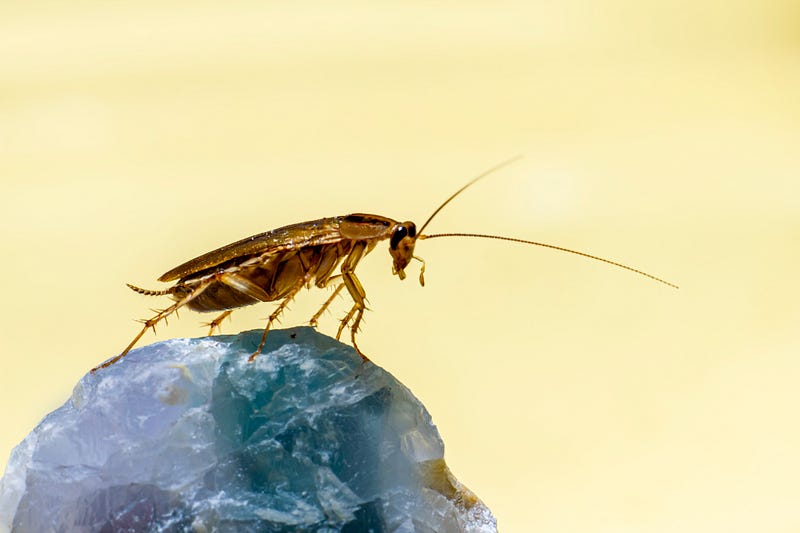
What do a redeye and a roach have in common? Both are fish!
Today’s New York Times Spelling Bee letters:
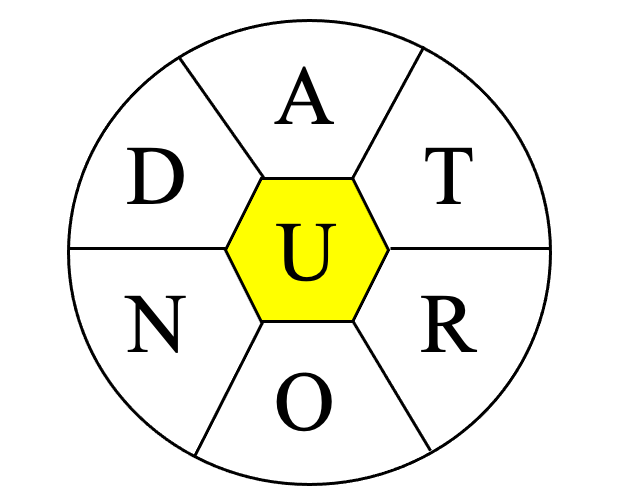
A, D, N, O, R, T, and center U (all words must include U)
Merriam-Webster says…
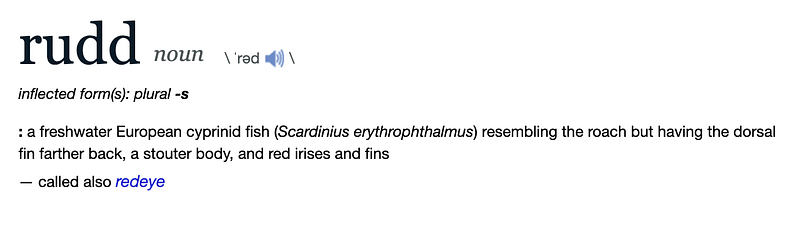
Silly little dictionary! Don’t you know that rudd can’t possibly be a word if The New York Times says it ain’t?
For a complete list of rejected words, check out the Spelling Bee Master.
What’s your favorite dord* from today’s puzzle?
My Two Cents
We here at Silly Little Dictionary! often joke about the intensive 15-minute research we perform as preparation for writing our articles. And I say “joke” because in reality we dedicate a lot more time to that aspect of our columns. Something like 17 minutes. Kidding. It’s really 19. Kidding again. You get the point. I think…
One of my main springboards is Wikipedia, notorious for being both a Godsend and a curse. The English version’s reliability has had its up and downs since it was founded just over two decades ago. Taking that into account, I tread carefully and double-check the information I decide to use. The easiest way is to use other well-known reference works, such as the Encyclopedia Britannica, which is also available online.
But Wikipedia itself usually provides a plethora of references at the end of its articles. I always check as many as I can to make sure that the information summarized by the Wikipedia editors reflects the original sources.
The whole reason I’m giving this convoluted explanation today is not to point out my attempts to be accurate with the information I provide, but rather to show you this disclaimer I got from the website of the U.S. Geological Survey:
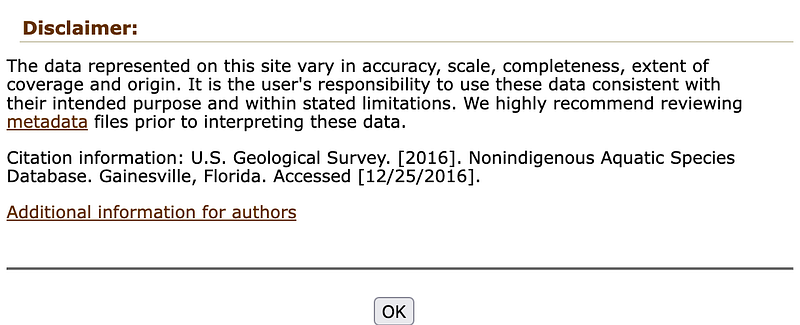
Having no idea what the “intended purpose” of their data is, I felt that I could not, in good faith, click on that OK button. I began to have visions of a USGS commando crashing through the windows of my home to arrest me for misusing the information they provide on their web page. So, if you feel any important information is missing in today’s article, blame it on the government.
Redeye
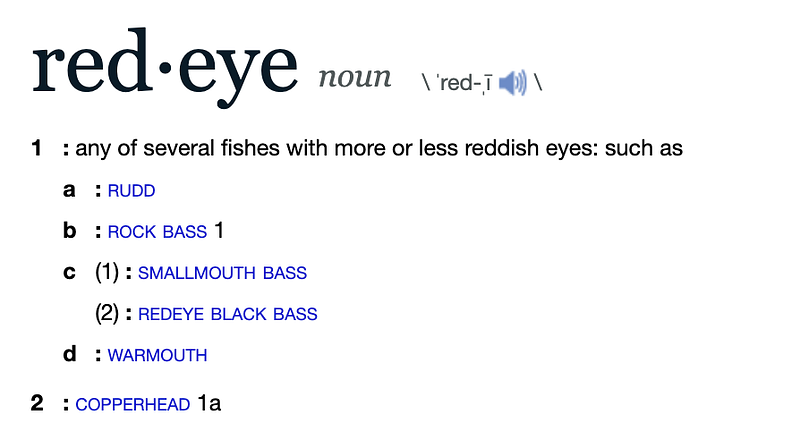
As Merriam-Webster points out, there are several fish with that nickname, given that a few species have, um, well, eyes that look reddish.
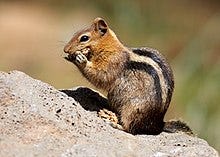
In definition 2, copperhead (1a) refers to the eastern copperhead (Agkistrodon contortrix). But did you know that copperhead is also the name of a species of ground squirrel (Callospermophilus lateralis) in western north America that has yellowish head and shoulders?
Red-eye with a hyphen can refer to cheap whisky or a very late-night flight, whose consumers are prone end up with a pinkish tint in the whites of their eyes.
As you can see, I’m doing everything to avoid actually discussing today’s daily dord*. Why? Perhaps because I find this particular fish not very interesting. So, I’ll let the Britannica speak for me:
rudd, (Scardinius erythrophthalmus), stout-bodied freshwater sport fish of the carp family, Cyprinidae, similar to the related roach, but more golden, with yellow-orange eyes, deep red fins, and a sharp-edged belly. The rudd is widely distributed in Europe and Asia Minor and has been introduced into the United States, where it is called American, or pearl, roach. It is a schooling fish that frequents thickly planted, reedy lakes and slow rivers and eats plants, small animals, and insects. Maximum length and weight are about 35–40 centimetres (14–16 inches) and 1–2 kilograms (2–4 1/2 pounds).
Although rudd refers to the genus itself (Scardinius), the word can also refer to individual species. In the case of the common rudd, above, the species name is intimately connected with its redeye nickname. The Greek terms erythr- and ophthalmus mean “red” and “eye”, respectively. (Ophthalmus is also the root of ophthalmologist, or eye doctor.)
At this point, I should probably include a picture of a rudd, since I didn’t bother to do so at the top of today’s column.
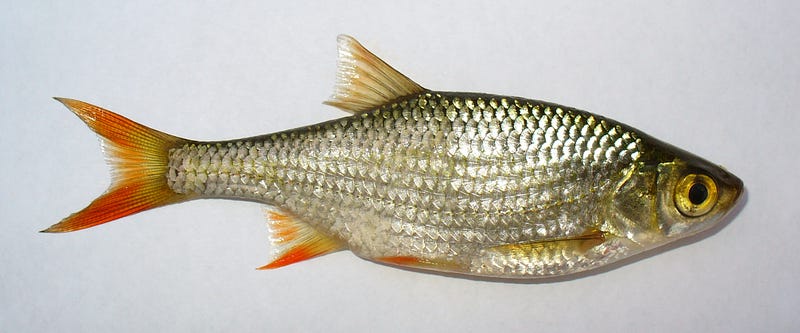
Hmmm… that eye doesn’t look very reddish to me. Maybe if we flip the fish around…
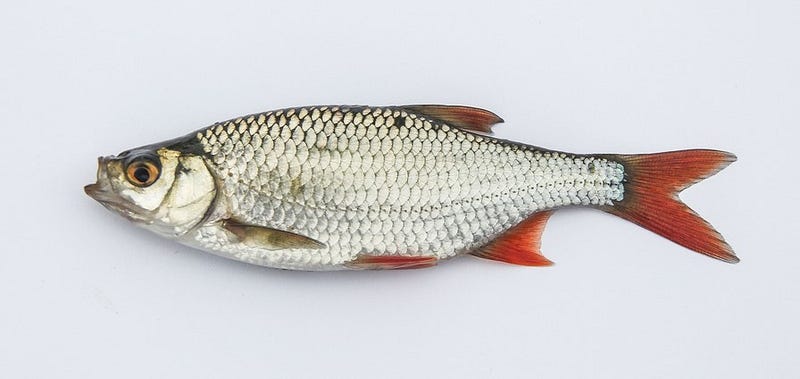
That’s a little better, I guess.
The common rudd is considered an invasive species in the United States, and in certain states like Tennessee and Alabama it is illegal to possess, transport, import, or sell this fish.
Now, if you want more information about the rudd, you’re going to have to go to that USGS website and take your chances by clicking on that OK button of the disclaimer I mentioned earlier. (Yes, I know the link goes to the archived web page, and that the current one does not have the same disclaimer… but where’s the fun in that?!?)
Roach, hold the cock
Turns out that a roach is not just a pest insect or a joint…

…but also a fish. A fish I don’t really feel like discussing, either. So once again I’ll let the Britannica do it:
roach, (Rutilus rutilus), common European sport fish of the carp family, Cyprinidae, widely distributed in lakes and slow rivers. A high-backed, yellowish green fish with red eyes and reddish fins, the roach is about 15–40 cm (6–16 inches) long and weighs up to 2 kg (4 1/2 pounds). It lives in small schools and eats aquatic plants, insects, and other small animals. It is sometimes eaten or used as bait. In North America the name roach is also applied to certain other fishes. These include the rudd (q.v.) and golden shiner (see minnow), both cyprinids, and several members of the sunfish (q.v.) family, Centrarchidae.
Although roach was not listed in Merriam-Webster’s entry for redeye, this species does have reddish eyes.
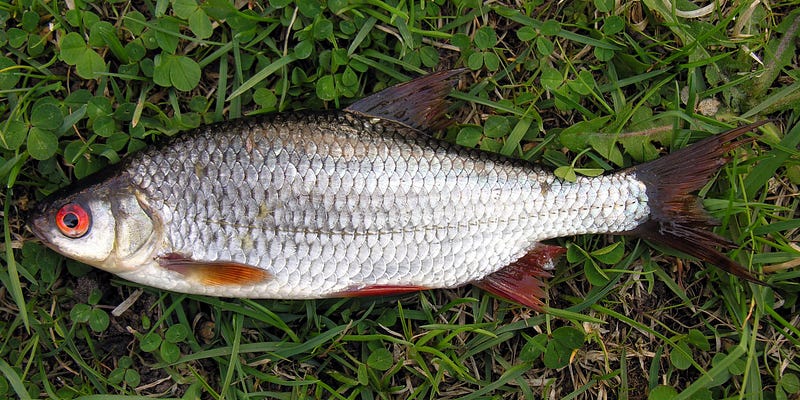
And those are truly red eyes!
Now you know. Next time you’re in Tennessee and you see someone out and about with a redeye in their hands, you can call the USGS and tell them someone is illegally transporting a rudd. Don’t be surprised if they hang up on you, though… because the editors of the Spelling Bee decided that rudd is a dord*.
You can check out my previous entry on another dord* here:
*What the heck is a dord, you ask? Here’s the answer: