avatarAnthony Li

Free AI web copilot to create summaries, insights and extended knowledge, download it at here

4178

Abstract

ng with it looking back these quotes:</p><ol><li>Hong Kong also uses “iron rice bowl” (鐵飯碗, Jyutping: <i>tit3 faan6 wun2</i>) to refer to a very stable job like working for the government.</li><li>I, a Hong Kong local, have never heard anybody uses “royal rice” to refer to civil servants.</li><li>Shifting the meaning of a phrase for prisoners to a government worker is illogical in almost every sense.</li></ol><p id="1997">Just think about the shifting process, no one would like to be associated with prisoners, especially when it was like half a century ago (considering this shift of meaning had finished at the time set in the book, i.e. 1990s) and Hong Kong was/is a Chinese based culture that working for the government is prestigious (except some that I shouldn’t mention) and you’d be treated like trash if you became known to have been imprisoned.</p><p id="029b">This caused some discontent among Hongkongese netizens and some commented that “royal rice” has got misinterpreted.</p><p id="37c8">But the publisher backed the critic by saying this:</p><figure id="5bef"><img src="https://cdn-images-1.readmedium.com/v2/resize:fit:800/1*x40m8S3MjnR1E7StGIxT3g.png"><figcaption></figcaption></figure><p id="033f"><b>My bad translation:</b></p><blockquote id="ac57"><p>The meaning of “being in prison” is also mentioned in the full article. However, since the focal point here is “of the government”, we can also say that being a police or civil servant is “to have royal rice”. Director Danny Lee also made a crime movie which has a Chinese name meaning “royal rice”, too!</p></blockquote><p id="433b">Yes, it’s mentioned. Once. And how this meaning shifted or it’s development was not told in the article. Moreover, that is the fourth paragraph in the article. How would people understand the connection between the paragraphs with your sudden brought up of “royal rice”?</p><p id="5e2c">Also, as I mentioned, working for the government and being imprisoned are like two extremes culturally in Hong Kong. We just can’t connect them using one same phrase.</p><p id="4d8b">And yes, Director Danny Lee did make this film, but do you know that <b>the Chinese and English names aren’t necessarily the same here</b>? They can be totally irrelevant, for instance, <i>In the Mood of Love</i>’s Chinese name, 花樣年華, can roughly be translated into “good times/sweet seventeen”.</p><p id="b407">And Lee’s movie the publisher said was <i>The Law Enforcer</i> (1986). I read the plot summary and understand briefly why the names are like this. The main character is a police officer, and thus the English name. But the police officer was at risk of going into prison because of assault. He was asked by colleagues to help solve crime while being suspended. Anyway, someone has got to “have royal rice” theoretically and so the Chinese name came.</p><div id="117a"><pre><span class="hljs-keyword">If</span> anyone have watched the movie, please <span class="hljs-keyword">do</span> correct <span class="hljs-keyword">me</span> <span class="hljs-keyword">if</span> I<span class="hljs-comment">'m wrong.</span></pre></div><p id="be44">And a top fan of the publisher’s page backed the publisher:</p><figure id="89f7"><img src="https://cdn-images-1.readmedium.com/v2/resize:fit:800/1*1VSrnQztCVZOPLIc3ptOhQ.png"><figcaption></figcaption></figure><p id="a4d0">Wait, the book author is from Hong Kong? Let me look at the introduction from the internet book store.</p><figure id="91e4"><img src="https://cdn-images-1.readmedium.com/v2/resize:fit:800/1*hCbFgJPz-8TdReJIY-elXQ.png"><figcaption></figcaption></figure><p id="086f"><b>My bad translation (for a little bit):</b></p><blockquote id="73d3"><p>An author or famous detective side-tracked by showbiz. Rumour has it that he is an experienced scenarist/stage director in Hong Kong, and the productions he participated are too big to mention…Apart from his own creations, he is also a “script doctor” that he saved and amended lots of scripts…and has a reputation similar to Dr. Black Jack…He keeps a low profile…</p></blockquote><p id="5278">This introduction looks like <a href="https://www.reddit.com/r/funny/comments/79mkxa/you_submit

Options

ted_a_hostage_situation/">a hostage situation</a>. The words look grand, but does anyone really understand what these mean when put together? Nonsense.</p><p id="f29c">Also, Dr. Black Jack is an anime character created by Osamu Tezuka. So is it suggesting the author of the book isn’t a real person?</p><p id="6ebc">Translating these words, even with my bad translation, isn’t worth the time, and I wasted some.</p><p id="23f8">Let me google the author’s name:</p><figure id="87fe"><img src="https://cdn-images-1.readmedium.com/v2/resize:fit:800/1*g2HR-WHZje2_f4Ya8FA78Q.png"><figcaption></figcaption></figure><p id="dc52"><b>NONE OF THE FIRST PAGE IS A WEBSITE FROM HONG KONG.</b> And one of the search results is in fact the Wikipedia page for Philip IV of France.</p><p id="09f1">Is he <a href="https://readmedium.com/william-chan-5bc248916c02">William Chan</a>? And a Hongkongese author publishes his first book in Taiwan, not Hong Kong?</p><p id="e6a8">I have more questions than answers.</p><div id="4379" class="link-block"> <a href="https://merryanthony.medium.com/hong-kong-english-cantonese-collection-f41ce1e0565"> <div> <div> <h2>Hong Kong English/Cantonese: Collection</h2> <div><h3>This is a contents page for all my articles regarding Cantonese slangs, which were written in English.</h3></div> <div><p>merryanthony.medium.com</p></div> </div> <div> <div style="background-image: url(https://miro.readmedium.com/v2/resize:fit:320/0*-D1rViM8iJcTcsr4.JPG)"></div> </div> </div> </a> </div><p id="bd82">References:</p><p id="f3a4"><a href="https://okapi.books.com.tw/article/16266">https://okapi.books.com.tw/article/16266</a></p><div id="0453" class="link-block"> <a href="https://www.books.com.tw/products/0010936438"> <div> <div> <h2>吃過皇家飯不能不破案</h2> <div><h3>西九龍重案組第三隊督察黃家達破案無數,十年來階級卻只升過一次。理由在於,破案率高等同犯罪率也高,這讓他的新上司頗有微詞,不過他才不管什麼人事變動,身為皇家香港警察,他唯一關心的還是如何破案。…</h3></div> <div><p>www.books.com.tw</p></div> </div> <div> <div style="background-image: url(https://miro.readmedium.com/v2/resize:fit:320/0*H_dnJBwpT0BG_EPE)"></div> </div> </div> </a> </div><div id="fb76" class="link-block"> <a href="https://commons.ln.edu.hk/ljcs_1999/vol3/iss1/16/"> <div> <div> <h2>殖民地色彩用語的廢存 : 從「食皇家飯」說起</h2> <div><h3>摘要 Abstract ...</h3></div> <div><p>commons.ln.edu.hk</p></div> </div> <div> <div style="background-image: url(https://miro.readmedium.com/v2/resize:fit:320/0*uW1Ro2nQlf1HbN9B)"></div> </div> </div> </a> </div><div id="56c5" class="link-block"> <a href="https://www.imdb.com/title/tt0091228/"> <div> <div> <h2>Wong ga fan (1986) - IMDb</h2> <div><h3>Wong ga fan: Directed by Danny Lee. With Bing-Chuen Cheung, Ricky Wong Chun-Tong, Danny Lee, Chi-Hung Ling. A police…</h3></div> <div><p>www.imdb.com</p></div> </div> <div> <div style="background-image: url(https://miro.readmedium.com/v2/resize:fit:320/0*ay8S1AR5UpkvHrLX)"></div> </div> </div> </a> </div><div id="a3a8" class="link-block"> <a href="https://zh.wikipedia.org/zh-hk/%E6%9D%8E%E4%BF%AE%E8%B4%A4"> <div> <div> <h2>李修贤 - 维基百科,自由的百科全书</h2> <div><h3>李修賢於1952年出生于 上海,祖籍 廣東 汕頭,1955年隨家人移居 英屬香港 觀塘雞寮徙置區。少時李修賢家庭環境欠佳,畢業於 華德學校下午校(現為 九龍塘天主教華德學校)(1966年第二屆小六)。後只讀到…</h3></div> <div><p>zh.wikipedia.org</p></div> </div> <div> <div style="background-image: url(https://miro.readmedium.com/v2/resize:fit:320/)"></div> </div> </div> </a> </div></article></body>

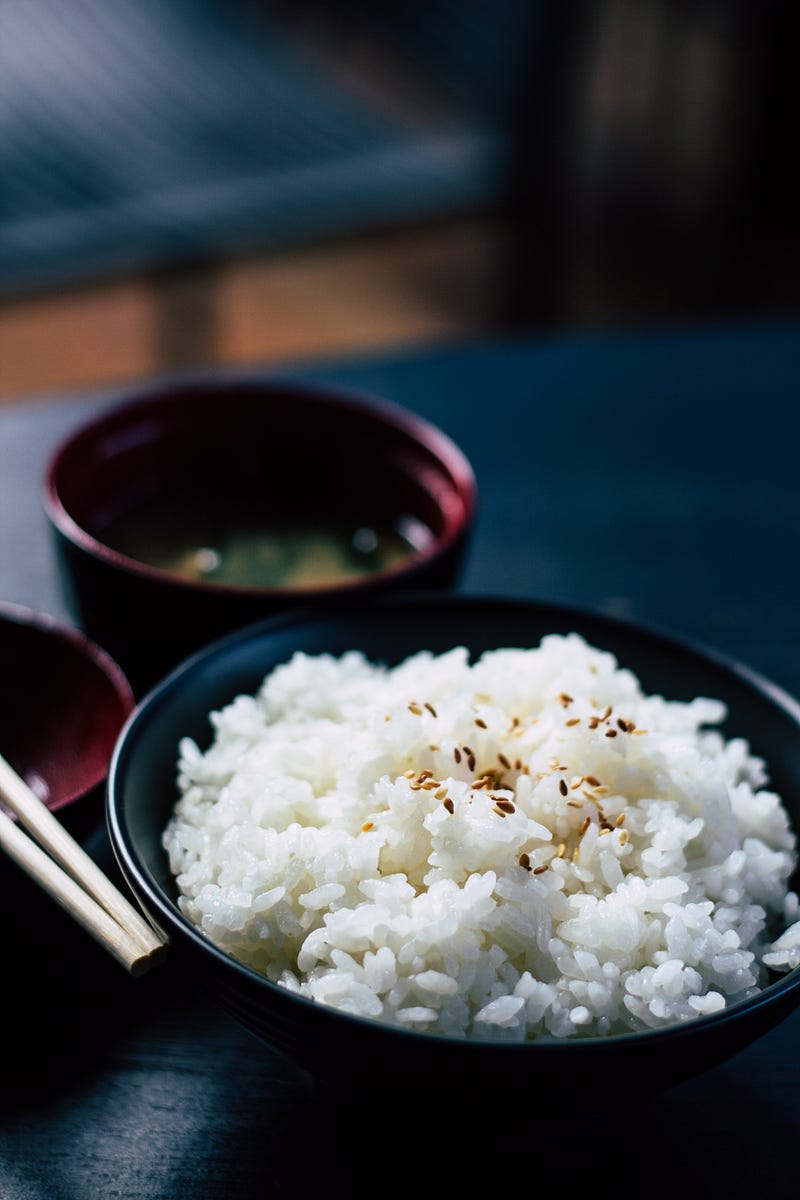
Photo by Mgg Vitchakorn on Unsplash

Hong Kong English/Cantonese (XLI)

When Rice Becomes Royal

Please check with the locals before trying to use a slang word non-native to you

A while ago, Hong Kong’s Twittersphere was pissed off because of a Taiwanese book and its book review.

Why?

A misinterpretation of our slang word.

皇家飯 (Jyutping: wong4 gaa1 faan6), literally “royal rice/meal”, is undoubtedly a phrase which came from Hong Kong, because, you know, colony and history things.

Think about it, “royal (皇家)” was a figure of speech to represent the then Hong Kong government by the locals. Some government bodies did have “royal” in their names back then. But “rice/meal”? Even there are many residences for government workers, these residences didn’t/don’t seem to have meals directly given by the government.

However, one place obviously have meals offered directly by the government: prisons. It’s impossible and inhumane not to offer meals for those behind the bars, isn’t it?

Yes, we take the “rice” pretty literally. Those “royal rice” are prison meals.

Therefore, having “royal rice” is what you do after you washed your “8.15”, i.e. “to have royal rice (食皇家飯)” means “to go in jail”.

Well, that Twitter post was a screenshot from a Facebook post. The post is a quote from a commentary article of a book 吃過皇家飯不能不破案 (Literally: “The case has to be brought to book [as I] have royal rice had”) which is published in Taiwan. You can take a look at it here:
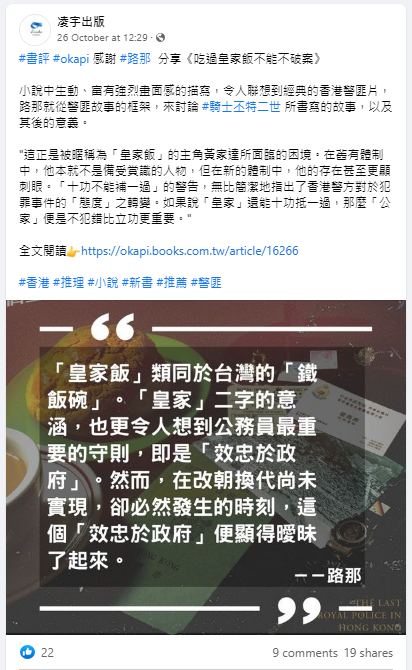
Click for the Facebook post.

As the Facebook post provided chopped a few words out from the quote before making this post. Although it might look unaffected meaning-wise, it isn’t.

Here is what the critic wrote originally (retrieved on 5/11/2022):

在經歷了一段時間的演變後,「皇家飯」從犯人餐轉變為公務員的代稱,類同於台灣的「鐵飯碗」。這類工作不太可能賺大錢,但勝在穩定。「皇家」二字的意涵,也更令人想到公務員最重要的守則,即是「效忠於政府」。然而,在改朝換代尚未實現,卻必然發生的時刻,這個「效忠於政府」便顯得曖昧了起來。

Bad translation by me:

As time goes by, “royal rice” changed its meaning from a prison meal to a way to call the civil servants. In this sense it is quite similar to what Taiwan talks of the “iron rice bowl”: These jobs are stable, though not being those big money earning kind. The sense of “royal” makes an association to a golden rule to being a civil servant: loyalty. However, as the change of era/sovereignty is destined but not yet taken place, this “loyalty” becomes obscure.

The quote in the picture took the change of meaning in “royal rice” and the meaning of the “iron rice bowl” out from the article. This made an impression that the critic thought that “royal rice” has always been referring to the civil servants.

But there is still something wrong with it looking back these quotes:

  1. Hong Kong also uses “iron rice bowl” (鐵飯碗, Jyutping: tit3 faan6 wun2) to refer to a very stable job like working for the government.
  2. I, a Hong Kong local, have never heard anybody uses “royal rice” to refer to civil servants.
  3. Shifting the meaning of a phrase for prisoners to a government worker is illogical in almost every sense.

Just think about the shifting process, no one would like to be associated with prisoners, especially when it was like half a century ago (considering this shift of meaning had finished at the time set in the book, i.e. 1990s) and Hong Kong was/is a Chinese based culture that working for the government is prestigious (except some that I shouldn’t mention) and you’d be treated like trash if you became known to have been imprisoned.

This caused some discontent among Hongkongese netizens and some commented that “royal rice” has got misinterpreted.

But the publisher backed the critic by saying this:
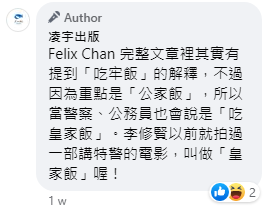
My bad translation:

The meaning of “being in prison” is also mentioned in the full article. However, since the focal point here is “of the government”, we can also say that being a police or civil servant is “to have royal rice”. Director Danny Lee also made a crime movie which has a Chinese name meaning “royal rice”, too!

Yes, it’s mentioned. Once. And how this meaning shifted or it’s development was not told in the article. Moreover, that is the fourth paragraph in the article. How would people understand the connection between the paragraphs with your sudden brought up of “royal rice”?

Also, as I mentioned, working for the government and being imprisoned are like two extremes culturally in Hong Kong. We just can’t connect them using one same phrase.

And yes, Director Danny Lee did make this film, but do you know that the Chinese and English names aren’t necessarily the same here? They can be totally irrelevant, for instance, In the Mood of Love’s Chinese name, 花樣年華, can roughly be translated into “good times/sweet seventeen”.

And Lee’s movie the publisher said was The Law Enforcer (1986). I read the plot summary and understand briefly why the names are like this. The main character is a police officer, and thus the English name. But the police officer was at risk of going into prison because of assault. He was asked by colleagues to help solve crime while being suspended. Anyway, someone has got to “have royal rice” theoretically and so the Chinese name came.

If anyone have watched the movie, please do correct me if I'm wrong.

And a top fan of the publisher’s page backed the publisher:
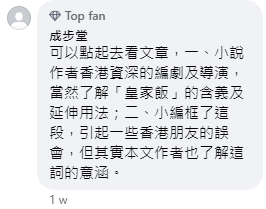
Wait, the book author is from Hong Kong? Let me look at the introduction from the internet book store.
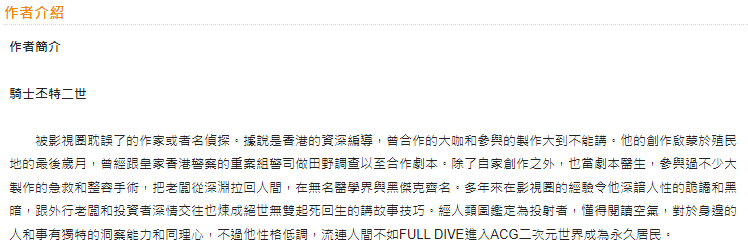
My bad translation (for a little bit):

An author or famous detective side-tracked by showbiz. Rumour has it that he is an experienced scenarist/stage director in Hong Kong, and the productions he participated are too big to mention…Apart from his own creations, he is also a “script doctor” that he saved and amended lots of scripts…and has a reputation similar to Dr. Black Jack…He keeps a low profile…

This introduction looks like a hostage situation. The words look grand, but does anyone really understand what these mean when put together? Nonsense.

Also, Dr. Black Jack is an anime character created by Osamu Tezuka. So is it suggesting the author of the book isn’t a real person?

Translating these words, even with my bad translation, isn’t worth the time, and I wasted some.

Let me google the author’s name:
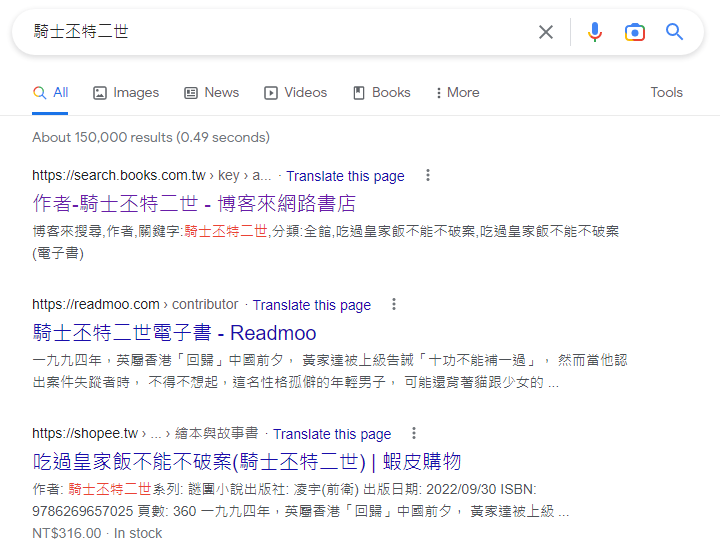
NONE OF THE FIRST PAGE IS A WEBSITE FROM HONG KONG. And one of the search results is in fact the Wikipedia page for Philip IV of France.

Is he William Chan? And a Hongkongese author publishes his first book in Taiwan, not Hong Kong?

I have more questions than answers.

References:

https://okapi.books.com.tw/article/16266

Hong Kong Cantonese
Hong Kong
Translation
Prisoners
Recommended from ReadMedium