
Rosenwald schools: An example of African American commitment to education
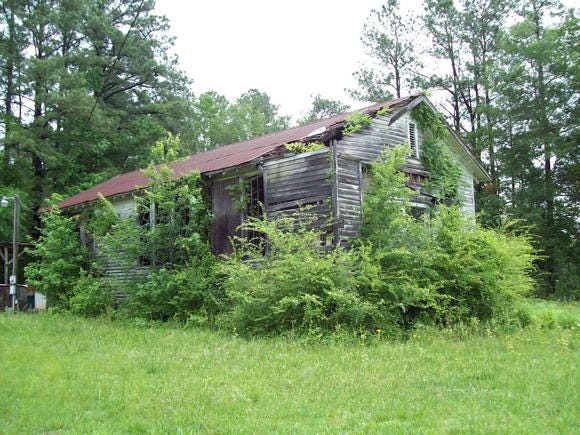
Rosenwald schools were schools that were built between 1912 and 1932 by African American communities that received technical and financial assistance from Julius Rosenwald (mostly via the Rosenwald Fund). The Rosenwald Fund contribution, in turn, leveraged support from southern school boards that had been reluctant to build schools for African Americans. Rosenwald schools constitute the most numerous and easily recognizable type of school built by African American communities during the segregation era, but they were by no means the only kind of school built by African Americans during segregation. As the National Park Service notes:
The Rosenwald school building effort, structured as a matching grant program, began with a $25,000 gift Julius Rosenwald made in 1912 to Tuskegee in support of teacher training. At the behest of Booker T. Washington and Clinton J. Calloway, Rosenwald allowed $2800 of that money to be used in a pilot program to help communities build small rural schools. From 1912, when the first six Rosenwald schools were built in Alabama, to 1932, when the Rosenwald Fund ceased funding schools, the program helped to construct over 5,000 buildings for education across the South: 4,977 schools, 163 shops, and 217 boarding houses for teachers (Hoffschwelle, The Rosenwald Schools of the American South)
While many articles have been written highlighting Rosenwald’s contribution, which was generous and influential by any measure, my documentary work reveals the extent of African American communities sacrifice for school building. Without a local drive to build a school, the project did not move forward. This self-help aspect of the school building projects, which bound communities tightly to their new schools, was part of the extraordinary vision shared by Rosenwald, Washington and Calloway. In 1919, Rosenwald moved the administration of the school building program to an office of the Rosenwald Fund in Nashville, TN. However, it was Washington and Calloway who first began to put Rosenwald’s largesse to such good use across the southern states.
It is also important to note that African American communities were creating various other kinds of schools before, during and after the Rosenwald School movement. Beyond the logistical question of where school would be taught, the intensity of African Americans’ striving for education “played a central role in etching the idea of universal public education into southern state constitutional law.” ( Anderson, p.19, The Education of Blacks in the South 1860–1935).
One thing that all of these school building efforts had in common was that they constituted double taxation for African Americans (Anderson p.183). African American landowners paid their taxes, then effectively taxed themselves again to raise money for schools. The Canetuck Rosenwald School in Pender County, NC is a good example of this. African American residents in the Canetuck community raised $1,223 to build their two-room Rosenwald school in 1922.
In addition, African American community members who raised money for Rosenwald schools had to make a huge leap of faith in turning the property over to the state school system, the same system that had neglected to build adequate facilities for their children (Hoffschwelle p.53). All told, the story of Rosenwald schools is a story of dedication to education. It’s part of the story of how African Americans made “a way out of no way,” and a story that teachers and students today should know.
Originally published at https://www.newsbreak.com on May 13, 2021.


