History
Roger Casement — An Irish Hero Who Fought For Equality.
The trial and execution of a Knight of the British Empire.
When I was growing up in Ireland in the 1950s, Roger Casement was and still is a household name.
I can remember so many parks, crescents, and roads that were named after him. There are many statues representing him and the latest (3 meters tall) will soon be unveiled where he will overlook the Irish coast at Dun Laoghaire (previously known as Kingstown) in Co. Dublin. This is near Sandycove where he was born in 1864.
What was his place in Irish history? Why is his name now revered as a man who fought against slavery which is one of the most insidious and disgraceful sins of imperialism? His statues will never be toppled by Black Lives Matter protesters because he was one of the earliest protesters. This, coupled with his efforts to gain Irish freedom from the British was to cost him his life.
“Ireland that has wronged no man, that has injured no land, that has sought no dominion over others. Ireland is treated today among other nations of the world as if she was a convicted criminal. If it be treason to fight against such an unnatural fate as this, then I am proud to be a rebel and shall cling to my rebellion with the last drop of my blood.” ~ Roger Casement at his trial in 1916.
Early life in Ireland
His father was a Captain in the British Army and had served in the first Anglo-Afghan war (1839–1842). As both his parents had died by the time he reached the age of thirteen, Casement was brought up by relatives at the ancestral family home in County Antrim.
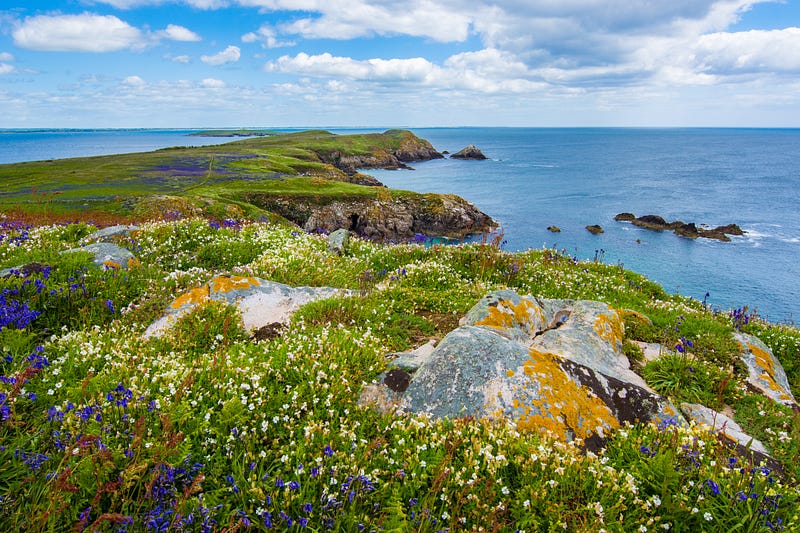
It was near Murlough Bay. This was where Casement wanted to be buried after his execution. That was not to happen as an Irish martyr buried in British Northern Ireland was far too controversial.
Consular career
Roger Casement became a British consul and worked in the Congo Free State, Angola, Portuguese East Africa, and Brazil in the Amazon basin.
He was shocked to discover how the natives were treated worse than slaves there to develop the rubber industry. Flogging, mutilation and rape were common. He once wrote:-
‘It is the commonest thing to hear on the Upper Amazon a trader speak of “my Indians” or of “my river”…An Indian tribe once “conquered” becomes the exclusive property of the successful assailant, and this lawless claim is recognized as a right over a widely extended region…Needless to say, it has no sanction in law, whether in Peru or any other of the Republics sharing the sovereignty of the remote forests in which it prevails.’- Roger Casement.
He had a distinguished consular career and was highly regarded. He was a well-known figure and highly respected internationally. His work and writing of various reports helped to end wild rubber farming. He was knighted by King George V in 1911.
Retirement in 1913
Because of ill-health, Sir Roger Casement had to retire in 1913. He became very interested in the Irish Freedom movement and helped to found the Irish National Volunteers.
Being such an international figure, he was able to summon up support by traveling to America. His idea was to engage German aid in helping the Irish cause.
As soon as the First World War broke out, he went to Germany and tried to recruit Irish prisoners of war for the forthcoming rebellion. Without German help, he was convinced that the rebellion would never succeed.
He was also involved in gun-running in 1916, even before the actual Easter Rising. He had drawn up plans with Oliver Plunkett in Germany for the Rising. But Germany had back-tracked on their promise of providing troops. Casement returned to Ireland hoping to persuade the rebels that they had no chance of winning.
He never got to Dublin as he was arrested on a German U-boat at Banna Strand on 21st April in 1916 with some guns and ammunition, but never enough to lead the rebellion. This was also because another gun-running escapade had been scuttled by the Royal Navy in Cork Harbour when 20,000 guns on board the German cargo boat, The Aud, were lost in April 1916.
The trial of Roger Casement
He was already on his way to London when the Easter Rising broke out so he was never actually present although he had had a lot to do with its planning.
Sir Roger Casement was such a distinguished and respected figure that his London trial generated enormous interest. He was charged with treason and sentenced to be hanged on June 29 at Pentonville Prison.
Famous figures at the time such as Arthur Conan Doyle, George Bernard Shaw, and W.B.Yeats sent a petition to the Prime Minister to plead for clemency. This was rejected. There was no appeal either in the House of Lords and the execution went ahead.
The British were extremely worried that their execution of such a distinguished figure would harm their reputation abroad. This is probably why the infamous “Black Diaries” emerge as they were used to discredit Casement as they contained graphic descriptions of the homosexual encounters he had had over the years while on his travels.
As homosexuality was a crime at the time, this scurrilous campaign was misused in a trial which was about treason and not about sexual immorality. The authenticity of the diaries is still a hotly debated issue to this day. Were they forgeries?
Roger Casement was one of the first and most famous examples of a man who exposed slavery in all its brutal and cruel forms. He was also a man committed to ending unjust British imperialism in Ireland and gave his life for that cause.
These are the reasons why I have always regarded him as a hero.
Further reading:-
The Dream of the Celt by Mario Vargas Llosa
Roger Casement: The Black Diaries by Jeffrey Dudgeon
Roger Casement by Angus Mitchell
Other stories I have written:-