
Robo sapiens
Can a silicone doll or a properly programmed robot replace a real relationship with another human being? It turns out that yes. However, the effects of such relationships can be deplorable.

“As soon as I saw her in the exhibition, I felt love at first sight,” recalls Masayuki Ozaki, a 46-year-old therapist from Tokyo.
He is delighted to have an attractive bride and talks openly about his relationship with his silicone doll. Mayu — as his chosen one is called — is a life-size mannequin, which at first glance looks very realistic. The artificial skin is pleasant to the touch and the limbs are easy to model. Ozaki doesn’t just keep Mayu at home. He takes her to romantic dinners at restaurants, drives her around town in her wheelchair, and dresses her up in colorful dresses and lavish jewelry. He announces that when he dies, he would like to be buried with his doll, although he never uses that word for her.
62-year-old Senji Nakajima also has his own silicone partner named Saori. He takes her to the movies, treats her to photo shoots and even teaches her to surf.
Even 10 years ago, the case of Ozaki and Nakajima would have been treated as a clinical sign of mental illness, if not for a disturbing trend. There are more people like this. Japanese media estimate that in Japan alone the number of men who have hooked up with dolls may be around 20,000. Worldwide, the number is even higher. Collective paranoia? Or maybe a sign of the times we live in.
Emotions on cue
To understand the Japanese mentality, it is necessary to refer to the country’s culture. Based on animistic traditions, it has been believed there for generations that objects as such can also have a soul. Treating dolls with more respect than just a toy is therefore less eccentric there than in other parts of the world. But parading a silicone doll around town, sitting it at a table in a restaurant or hugging it during a movie screening is not considered normal even in the Land of the Cherry Blossom. The bizarre behavior will only worsen the situation for the Japanese, who face the threat of depopulation. According to UN estimates, there will be only 83 million in 2100, more than 40 million fewer than today, with 35% of the population at least 65 years old. If the fertility rate remains at its current level (1.44), the society there will eventually disappear from the face of the earth. This is no joke. The Japanese people are in danger of extinction.
Psychologists are under no illusion that the interest in dolls is the result of difficulty in establishing relationships with other people. Japan is special in this respect, because another generation is growing up there, for whom physical love is not so attractive, as is the prospect of starting a family. A recent analysis by the Japan Population Research Institute in 2015. (they are conducted every five years) showed that 42% of men and 44% of women aged 18–34 have never had a partner. In 2010, the corresponding figures were 36% and 38%. This demonstrates the worsening isolation and problems in making connections between the sexes. A side effect of an aggressive work culture is lonely and socially maladjusted individuals.

The motif of man’s love for a doll has already appeared in mythology. According to ancient accounts, Cyprus was ruled by a king named Pygmalion, who sculpted his ideal of a woman. The statue was so perfect that the man fell in love with it. He dressed it in exquisite gowns, gave it flowers, until finally Aphrodite had mercy on the unfortunate man and brought the sculpture to life for him. In this way Pygmalion married Galatea, sculpted by himself. Looking at today’s offerings from companies with realistic dolls, it is impossible not to see the similarities. Today, anyone can be Pygmalion. The assortment of the American company Abyss Creations, which sells 4 thousand dolls a year, allows you to choose a silicone partner in any variant: for now you can mix 15 faces and 10 bodies, and also specify height, weight, bust size, foot size or skin tone. You also choose a specific makeup, hair color and hairstyle. The goal of this process is to create a product that best matches the customer’s preferences. The Chinese factory WMDoll has gone even further, offering as many as 260 face types. The prices of the dolls start at $6,000.
No one doubts that most of the realistic-looking mannequins are products aimed mainly at men, who buy them to satisfy their carnal needs. However, manufacturers have been quick to point out that the more realistic a doll looks, the more emotions customers engage in with it. Over time, they begin to speak to their silicone partners and treat them as loved ones. A considerable number of men who decide to make such a purchase believe that there is no chance of a relationship with a real person, and an artificial woman is for them a substitute for a real relationship. Psychologists warn, however, that such behavior only deepens the feeling of alienation, because it excludes the necessity to make an effort in relations with another person.
Robo sapiens?
Can a doll, even if the most realistic, be more attractive to someone than a real person? It can. So what does the future hold if we additionally equip them with artificial intelligence? An algorithm that learns our behavior, ready to fulfill our most sophisticated intellectual whims?
Theodore is the main character of the American film “Her” directed by Spike Jonze. A lonely sensitive man stuck in a rut after a difficult breakup, he meets a woman and gives her his whole heart. Samantha is witty, intelligent and understands him like no one else. There is only one small detail — his chosen one is the latest version of the operating system, an artificial intelligence that learns the character of its owner every day. She has the same sense of humor, the same level of sensitivity to the world around her, and likes the same books and movies. The perfect partner. We can see a certain truth here: man is a social being and does not want to be alone. In crisis situations, he can locate feelings even in extremely abstract creations. And if artificial intelligence is dressed in a realistic silicone body, the effects can be surprising.
.jpg)
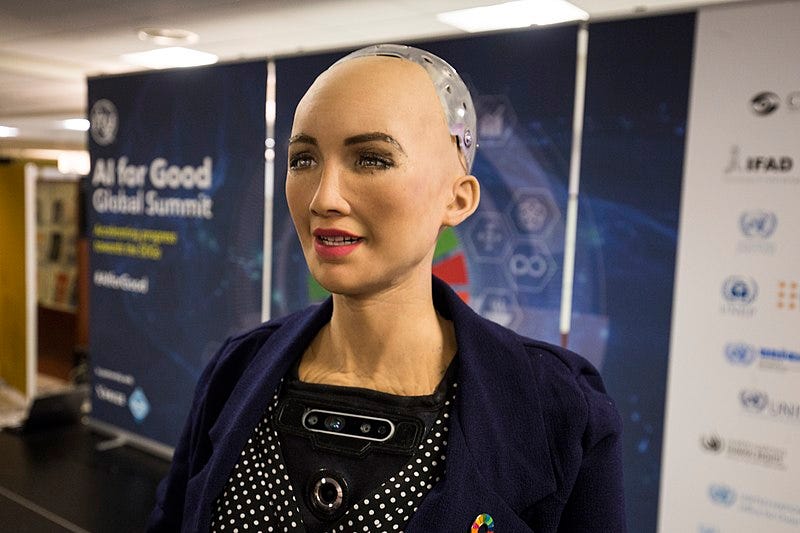
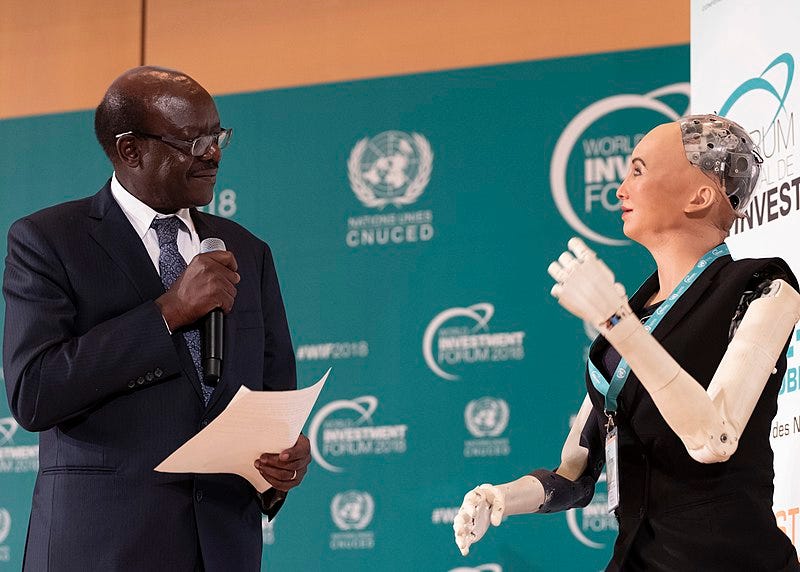
According to the research of Prof. Kerstin Dautenhahn from the University of Hertfordshire, who for several years in a specially designed house-laboratory has been studying the mutual relations of humans and robots, 20% of Britons would see in these machines their friend and as many their partner. What bigger fantasists like Scottish chess champion Dr. David Levy, who has been working on artificial intelligence for years, argue is that a relationship with a robot is just a matter of time. In his book, Levy predicts that the first mixed human-robot marriage will occur as early as 2050. We’re talking about a legal marriage, of course, because private marriage ceremonies are already behind us (in 2017, Chinese engineer Zheng Jiajia married a robot he had constructed). Abstraction? Only seemingly. Already today, two robots have official citizenship of two countries: Fran Pepper of Belgium and Sofia of Saudi Arabia. If you told someone about this 10 years ago, they wouldn’t believe it. Who knows what we will get used to in the next 30 years.
.jpg)
“Robots are becoming more and more human in how they look and interact with us. At first we treated them only as electronic machines that helped build cars. Later they began to support us in offices and then moved into homes. Now we have robots with whom we form an emotional bond,” explains Levy.
Robots have been with us every day for a long time. In fact, there are several million of them working in various industries around the world. In Japan, they are hotel receptionists, cleaning rooms and offices, feeding the elderly and disabled, serving tea and greeting guests. They prepare sushi and grow rice. It doesn’t stop there, because every year their technical capabilities amaze more and more. Researchers at the Bristol Robotics Lab have built a machine equipped with an artificial intestine. It can digest biomass on its own, thus drawing energy from it, allowing it to function for seven days without a break. To “live” it needs water, which it takes regularly, and once a day gets rid of the unused leftovers. Modern androids can already be covered with material with properties similar to human skin, as well as equipped with a mechanical nose, tongue and eyes. Thanks to transmitted impulses, processed in the form of algorithms, robots learn to recognize the smells, tastes and images with which they have to deal every day.
Anyway, there are more and more areas in which robots surpass human beings. An artificial intelligence created by Japanese scientists at Future University in Hakodate wrote a book for a literary competition. Admittedly, it didn’t win the top prize in order to pass the selection process, which half of the 1,450 authors failed to do. The jury had no idea they were dealing with the product of a robot. That’s not all. A company called Deep Mind has created a speech synthesizer called WaveNet that sounds like a real person and is hard to tell the difference. In turn, the program developed by scientists from the universities of London, Sheffield and Pennsylvania was able to predict correctly 79% of the verdicts of the European Court of Human Rights on the basis of analysis of available documents. So it is possible that soon the time will come for a mechanical spouse, and the basis for such a decision will be simply an escape from loneliness.
Alone in the crowd
The list of scientific and technological achievements that we can boast of in the 21st century is impressive. However, this unprecedented development of civilization also has a dark side. It is loneliness, which has become so rampant that it attacks us everywhere, regardless of the number of people around us. In his book “The Lonely Crowd”, David Riesman pointed out almost 70 years ago that modern societies are characterized by the disappearance of bonds. They are degraded or instrumentalized, and often the object of simple manipulation. — “For three decades we have been living in conditions of sanctioned greed and justified selfishness” — echoes Pankaj Mishra, an Indian writer, who sees the current weakening of social ties as a result of an excessive emphasis on individualism.
Relationship researchers point to a growing crisis of closeness. People have problems with building relationships based on trust and affection, which is particularly noticeable in large urban areas. The best example of this is the emergence of relatively new services on the market, such as hugging for money. It is offered, among others, by a Canadian company The Cuddlery, which employs a dozen or so professional cuddlers. One hour of such service costs 85 dollars. It should be emphasized that the activity of The Cuddlery and several similar companies existing all over the world has nothing to do with fornication, and the customers cannot expect anything more than hugging. It is about pure platonic contact with another human being. Before the hugging takes place, the clients sign a contract in which they agree not to go too far (everything is precisely defined therein).

“The increasing number of companies offering paid hugs is a result of a lack of touch in social life”, believes Professor Tiffany Field of the University of Miami School of Medicine.
According to the psychologist, despite the availability of many means of communication, a sense of alienation and loneliness is the bane of modern civilization, and the lack of deeper interaction with another person is characteristic of busy societies, where the rush for career is a higher priority than family. Ulrich Beck and Elisabeth Beck-Gernsheim in their book “All the usual chaos of love” justify such changes by the fact that contemporary transformations of intimacy are marked by a number of problems and tensions. Forming an emotional bond with a realistic-looking doll or robot is a side effect of this state of affairs.
“Both in the case of dolls and robots, it is very easy to depreciate their power and the importance of the whole phenomenon, suggesting that the charm of inanimate objects can be succumbed to by a relatively narrow group of people, that normal and coping people in interpersonal relations will certainly not be inclined, or maybe even simply are not capable of engaging in an intimate relationship with a doll or a robot,” writes Dr. Maciej Musial in his work “Intimacy Today and Tomorrow. From emancipation and objectification to dolls and robots”.
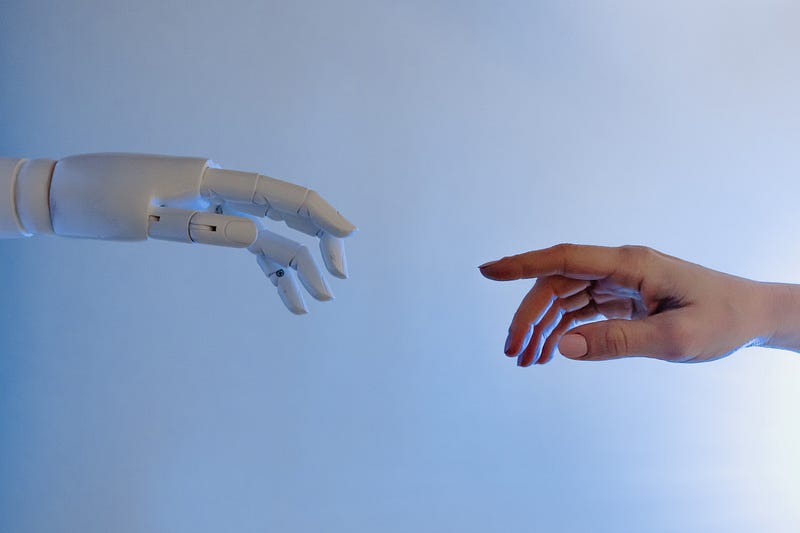
The author points out that while this argument probably applies quite significantly to intimate relationships with dolls, in the case of robots the situation is even more serious. The dangers of a human relationship with a technologically advanced robot are not imaginary. The smarter and more realistic looking the machine, the greater the substitute for intimacy it represents. This problem is addressed by researcher Sherry Turkle. In her book “Alone Together. Why We Expect More from Technology and Less from Each Other,” she expresses her deep cultural pessimism:
“If human services are replaced by an electronic structure that is completely automated, then any social structure involving humans will be useless.
And it’s hard not to share her concerns. Relationships with other people are emotionally costly, requiring commitment, effort, and shedding selfishness. But isn’t that exactly the point?
Cool that you made it to the end of this article. I will be very pleased if you appreciate the effort of creating it and leave some claps here, or maybe even start following me. Thank you!