
Roadtrip To South-West Queensland
What once was a regular drive
Driving long distances seems to be ingrained in most Aussies. Someone could tell you that the next town is ‘not far’ or ‘just down the road’, and you would not know if that was 30km or 300km.
Distance is relative, but for most people, it is a fact of life. Australia is a massive island in the middle of nowhere, and if you want to see places, it takes a long time.
I got a job at a small country hospital when I first graduated with my nursing degree. I’m not exaggerating when I say it was in the middle of nowhere.
8hrs drive inland from the closest city and 2+ hrs from any other town.
One of the Doctors I used to work with joked that this town of about 1200 people was four pubs from the border of the Northern Territory.
Driving on country/outback roads is a different experience from city highways. There is peace to them but also hazards that most people wouldn’t consider (livestock, kangaroos and emus).
When preparing to leave on what was usually around an 8hr drive, I had a checklist. Usually, I packed the car with not just my suitcase but a cooler (known as an esky here in Australia) full of frozen food and ice bricks. Along with any other staples that I might need.
The first part of the trip was usually straightforward, leaving a little before sunrise. Most of the first three hours were typical highway crossing through farmland and weaving across roads lined with trees. The further west you drove, the flatter and sparser the land.
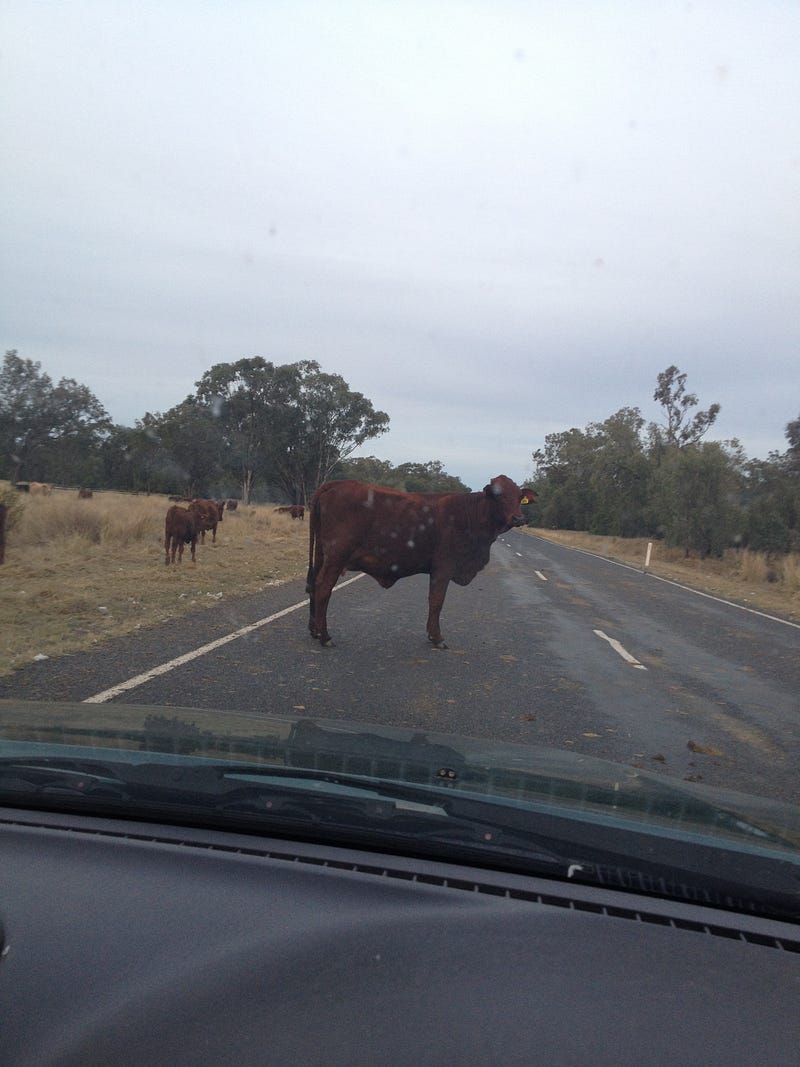
Usually, the most significant hazards were cattle. Sometimes they would be grazing, but on other trips, you could see the stockmen on horses or motorbikes/quadbikes rounding up the cattle and moving them onto greener pastures.
I have travelled the world and been to places others have only dreamed of, yet there is something about rural Australia still in my blood. I love it, and even now, as I write and reminisce, part of me wants to explore lands that used to be familiar.
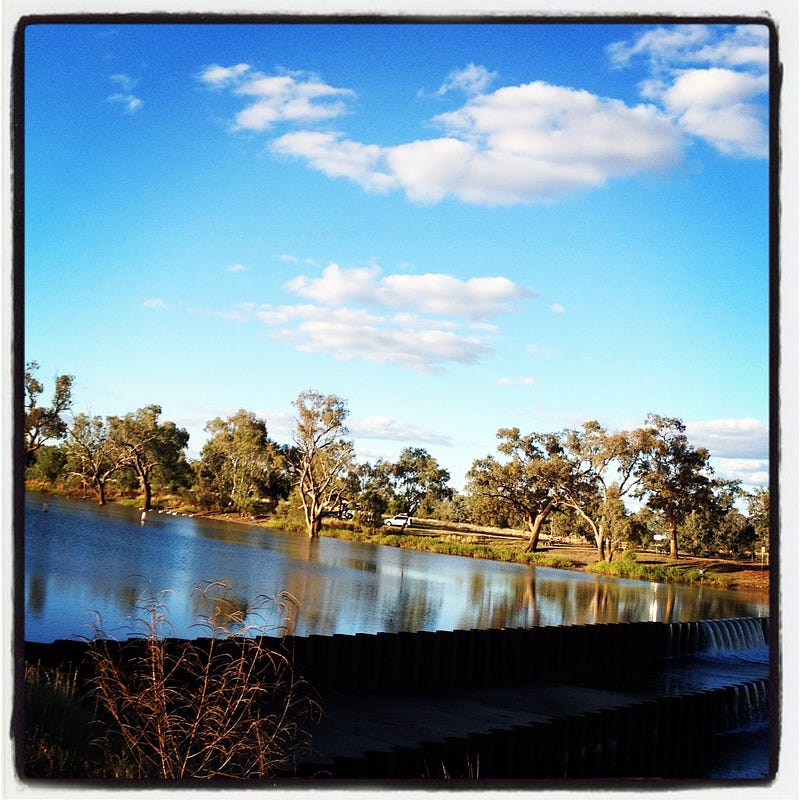
With the sun rising in the sky and cars getting fewer, it wasn’t just potential cattle that I needed to be wary of. The significant milestone of the trip was arriving at a place called St. George. Around 4hrs from my hometown. It signified the halfway point. Usually, I would stop for lunch and fuel sitting at a park by the river.
Long car trips have disadvantages: cramped legs and bums that go numb. I used to wish cruise control existed in my car on these trips.
Once my legs were stretched and everything else refuelled, to some extent, it felt like the home stretch, only another 3hrs to go.
Sometimes these were the most prolonged 3 hrs. Soon after leaving St George, the road changes to a more narrow, less maintained asphalt. The sides of the road are sharp, and if not careful, you can bust a tyre.
The cars are fewer, but drivers are usually more friendly. The customary one finger/hand wave is standard.
Driving on these roads requires a bit of guts, particularly when stuck behind a semi-trailer. Often, when you want to overtake them on a road with no line markings, you really need to commit.
It wouldn’t have been uncommon to reach 120km+ to get past the truck. These road trains were long, usually, two if not three trailers long. I don’t have any specific memories of hairy situations when overtaking, but I know there were likely to be some.
On my first trip to this small town, I remember getting excited to see that we had entered the shire/county. Of course, I thought it meant that we were coming into town. Nope, turns out there was another 150km!
Australia is a country that many foreigners see as a place of danger. But, in a lot of ways, for me, it’s a way of life.
Country roads mean potential livestock. Sunsets in country areas mean you don’t drive because of the kangaroos unless you have a large car with a bullbar.
The last town before reaching my final destination was a tiny place made up of the main street. It wasn’t unusual to see at least a couple of emus walking down the main road. Emus may be seen as cute or a novelty (it always surprises me what non-Australians’ opinions are of our native wildlife), but they are pretty stupid birds who will very quickly run across your path.
Thinking about potential hazards on the road, kangaroos are dangerous because they will bound across the road, but emus are worse because they will go in one direction and suddenly switch, meaning that it is a little more unexpected.
Thankfully, in all of my years of driving, I have never hit either (there was at least one close call.)
The trip would finish with me rolling into town, often with the sun directly in my eyes as I pulled up to my accommodation at the hospital. My windscreen usually was covered in bugs, and my car was filthy. But there is a sense of achievement driving 700km solo in a day.
It was a beautiful place for such a remote location, and I saw many incredible sunsets.
If you are interested in exploring Australia, my number one recommendation is to not just stay in the city or on the east coast.
Road trips are one of my favourite things, especially in the country with good audiobooks and music.
What are some of your favourite road trip stories?
You can contact Melissa at [email protected] or find her on Twitter and Instagram.


