avatarDarren Weir

Free AI web copilot to create summaries, insights and extended knowledge, download it at here

5934

Abstract

been a week or at least 4 or 5 days). We managed to find good parking just outside the wall surrounding the old part of the city (and just outside the ZTL) we wandered through the narrow cobblestone streets and ended up outside the magnificent medieval Duomo di Siena.</p><figure id="829a"><img src="https://cdn-images-1.readmedium.com/v2/resize:fit:800/1*m6mVRdjoX6YZg5J-_nUD3g.jpeg"><figcaption></figcaption></figure><figure id="4d32"><img src="https://cdn-images-1.readmedium.com/v2/resize:fit:800/1*n5_-_b4Q6nv0-OZX0xzPQw.jpeg"><figcaption>Siena Duomo — author’s photos</figcaption></figure><p id="19e5">It is one of the most beautiful churches in the world (and I have seen a lot of them.) It was constructed in the 12th, 13th, and 14th centuries. The Gothic exterior gives you a glimpse of the beauty inside but it’s still jaw-dropping as you enter the nave.</p><figure id="bebb"><img src="https://cdn-images-1.readmedium.com/v2/resize:fit:800/1*yxnE84xVJmq51iBwBBKRdA.jpeg"><figcaption></figcaption></figure><figure id="e4d9"><img src="https://cdn-images-1.readmedium.com/v2/resize:fit:800/1*xK1Or5pd5BHPsc4QF5okZA.jpeg"><figcaption>Inside the Duomo — author’s photos</figcaption></figure><p id="000d">The dark green and white striped marble pillars, the magnificent ceiling, the intricate mosaics on the floors, the chapels each featuring individual artwork, with sculptures by Michelangelo and Donatello, and even the organ and the pulpit.</p><figure id="f2b9"><img src="https://cdn-images-1.readmedium.com/v2/resize:fit:800/1*wB94uyKPh0S8b58k7MA4zw.jpeg"><figcaption></figcaption></figure><figure id="7535"><img src="https://cdn-images-1.readmedium.com/v2/resize:fit:800/1*S9f6Szptrb5YQN8dVagaFA.jpeg"><figcaption>Duomo’s organ; Duomo pulpit — author’s photos</figcaption></figure><p id="fc4b">There’s also a library that contains massive medieval books and spectacular paintings and it even has a sign telling people to “Please Do Not Stay” to keep the crowd moving.</p><figure id="a9bf"><img src="https://cdn-images-1.readmedium.com/v2/resize:fit:800/1*luw02p_1O_d0DqBarEls7A.jpeg"><figcaption></figcaption></figure><figure id="16b6"><img src="https://cdn-images-1.readmedium.com/v2/resize:fit:800/1*JCybyGXpwY3aLSmwpvBeCQ.jpeg"><figcaption>Duomo Library — author’s photos</figcaption></figure><figure id="edb3"><img src="https://cdn-images-1.readmedium.com/v2/resize:fit:800/1*RJHZyTorn4ZNeHXO4jk6Yg.jpeg"><figcaption>Duomo Library sign— author’s photo</figcaption></figure><p id="9f07">We made our way to the nearby Piazza Del Campo where the annual Palio horse race is held every August. The piazza is massive and rivals any square you will find anywhere and is world renowned as Europe’s best example of a medieval square.</p><figure id="0721"><img src="https://cdn-images-1.readmedium.com/v2/resize:fit:800/1*OwVtD9l3LOveM_xmQW8D5A.jpeg"><figcaption>Piazza del Campo, Siena, Tuscany, Italy — author’s photo</figcaption></figure><p id="d44e">The piazza is scallop-shaped with its brick surface laid out in a chevron pattern. It is surrounded by apartments and hotels that feature restaurants and bars which have the best viewing spots for the Palio.</p><p id="e1fe">At one end is the Palazzo Pubblico and the Torre del Mangia, which you can climb for spectacular views of Siena. All along the walls of the building are metal rings where the horses are tethered before the race. At the other end of the Campo is a magnificent marble fountain, the Fonte Gaia, that was first constructed in 1342 and is a favorite bathing spot for the town’s pigeon population.</p><figure id="9ab2"><img src="https://cdn-images-1.readmedium.com/v2/resize:fit:800/1*PfB-0kNlrHNongQUVRY0sg.jpeg"><figcaption>Fonte Gaia — Siena, Italy — author’s photo</figcaption></figure><figure id="0ba2"><img src="https://cdn-images-1.readmedium.com/v2/resize:fit:800/1*3RlUeSP8GjHMR6Ae9rRHdA.jpeg"><figcaption></figcaption></figure><figure id="83b7"><img src="https://cdn-images-1.readmedium.com/v2/resize:fit:800/1*CRz4qBgS4J2pCY-Mb2x7SA.jpeg"><figcaption>Chevron patterned bricks; horse tether pole — author’s photos</figcaption></figure><h2 id="a062">Pitigliano</h2><p id="1ee0">Our next stop was Pitigliano, which turned out to be the highlight of my trip to Italy. I just wish I had more time there. I guess another time.</p><figure id="019b"><img src="https://cdn-images-1.readmedium.com/v2/resize:fit:800/1*Txo9mgsLTgQKDaSwLXotZQ.jpeg"><figcaption>The village of Pitigliano, Italy — author’s photo</figcaption></figure><p id="7b17">Pitigliano is an ancient town built on top of volcanic tufa, also known as Travertine. I’m glad I had Google maps to get us there because it isn’t really a tourist hotspot. Be warned, when you enter the town there is a sharp hairpin turn.</p><figure id="be85"><img src="https://cdn-images-1.readmedium.com/v2/resize:fit:800/1*V34dKzWm3bA9CtW7bxnCIA.jpeg"><figcaption>Pitigliano’s sharp hairpin turn — author’s photo</figcaption></figure><p id="3ff6">Take the left road instead of trying to drive into the town. There is public parking on the road. It’s cheap (cost us 3 euros all night) but if you drive another block or two up the road (we discovered later) there is a free public parking area.</p><figure id="f01f"><img src="https://cdn-images-1.readmedium.com/v2/resize:fit:800/1*wmF7fUbPl5EdCCIzM8glBw.jpeg"><figcaption>street parking in Pitigliano — author’s photo</figcaption></figure><p id="12a9">There is a narrow park area alongside the road that gives a spectacular view of the town (a great spot for taking some photos, especially early in the morning when it’s perfectly lit.)</p><figure id="2411"><img src="https://cdn-images-1.readmedium.com/v2/resize:fit:800/1*kZ5Xm3NOkLjFBlTdZ8pbsQ.jpeg"><figcaption></figcaption></figure><figure id="6c05"><img src="https://cdn-images-1.readmedium.com/v2/resize:fit:800/1*d0mQ_84k2kGxCKLCUa4IFg.jpeg"><figcaption>Pitigliano, Tuscany, Italy — author’s photos</figc

Options

aption></figure><p id="ccd9">Only 300 people live in the old town, including the area that was once a Jewish ghetto. Each of the homes and buildings features cellars that are cut into the rock and many also have subterranean tunnels. You can tour through this when you visit the synagogue.</p><figure id="e523"><img src="https://cdn-images-1.readmedium.com/v2/resize:fit:800/1*YBnElBuclGAtoJwz8j-1bg.jpeg"><figcaption></figcaption></figure><figure id="5e87"><img src="https://cdn-images-1.readmedium.com/v2/resize:fit:800/1*GDk1NXLXlhXPQfNurxRaHA.jpeg"><figcaption>Pitigliano underground synagogue — author’s photos</figcaption></figure><p id="56b1">The underground museum highlights the history of the Jewish population in Pitigliano. The numbers dwindled over the decades and when the Second World War broke out the town residents hid the remaining Jews from persecution and death. The subterranean warren of rooms is well equipped with an underground slaughterhouse and kitchen where the food was prepared.</p><figure id="bd31"><img src="https://cdn-images-1.readmedium.com/v2/resize:fit:800/1*iVNZIivVyNRJgKY7XC4-eA.jpeg"><figcaption>Underground kitchen — author’s photo</figcaption></figure><p id="4a3f">As you return to the surface and wander the few streets in the village, you find picture postcard scenes wherever you turn.</p><figure id="8392"><img src="https://cdn-images-1.readmedium.com/v2/resize:fit:800/1*BY9VQni9vVySMYS-7IP6yg.jpeg"><figcaption></figcaption></figure><figure id="c814"><img src="https://cdn-images-1.readmedium.com/v2/resize:fit:800/1*u17fwGKh2ftt8JDbzdhxyQ.jpeg"><figcaption></figcaption></figure><figure id="d3e5"><img src="https://cdn-images-1.readmedium.com/v2/resize:fit:800/1*ZhfJKT6g_X4G0SGTMPVgEg.jpeg"><figcaption></figcaption></figure><figure id="fab4"><img src="https://cdn-images-1.readmedium.com/v2/resize:fit:800/1*Ydu3yWZVAS3whQ0z6jywAQ.jpeg"><figcaption></figcaption></figure><figure id="9ade"><img src="https://cdn-images-1.readmedium.com/v2/resize:fit:800/1*JW2ZcW79kT15OzuTC6wd2Q.jpeg"><figcaption>Pitigliano, Tuscany, Italy — author’s photos</figcaption></figure><p id="eeb8">There are a couple of places to stay in Pitigliano. We had booked a room at <a href="https://ceccottino.com/">Le Camere del Ceccottino</a>, a family-owned boutique hotel with just 5 rooms. It was tastefully decorated, very comfortable, and welcoming.</p><p id="5227">Chiara and Alessandro Francardi own the 17th-century hotel as well as two restaurants in the tiny village. Their attention to detail at both the hotel and restaurants is outstanding. We had one of the <a href="https://readmedium.com/eating-my-way-around-the-world-710f158508d5">best meals</a> during our Italian vacation at La Corte del<a href="https://ceccottino.com/"> Ceccottino</a>.</p><figure id="992a"><img src="https://cdn-images-1.readmedium.com/v2/resize:fit:800/1*TwkYvK3YQ7q0lNxPU6H00Q.jpeg"><figcaption></figcaption></figure><figure id="f640"><img src="https://cdn-images-1.readmedium.com/v2/resize:fit:800/1*MykLrLYxkforB2w5LNiV0Q.jpeg"><figcaption>La Camere del Ceccotino; La Corte del Ceccotino — author’s photos</figcaption></figure><p id="d411">There isn’t a lot to do in the town except explore the streets and alleyways and browse the shops. But nearby is the<a href="https://www.tripadvisor.ca/Attraction_Review-g1184643-d208230-Reviews-Terme_di_Saturnia_Le_Terme-Saturnia_Manciano_Province_of_Grosseto_Tuscany.html"> Terme de Saturnia</a> hot springs. Unfortunately, we didn’t have time to visit on this trip but I’ll be back. This is definitely a place I want to return to.</p><h2 id="c0fd">Pisa</h2><figure id="a3f4"><img src="https://cdn-images-1.readmedium.com/v2/resize:fit:800/1*A0Ezkdhl6acJVvEUMwDl4A.jpeg"><figcaption>Leaning Tower of Pisa — author’s photo</figcaption></figure><p id="cb48">What is there to say about Pisa that hasn’t been said before? We came, we drove around in circles trying to find parking, we wandered through the Piazza del Duomo, the site of the Pisa Cathedral and the Leaning Tower, and we posed. I had been there once before so for me, it was just a “been there, done that” kind of visit. It’s a nice city and made for a great place to stretch our legs before driving back to Florence and ending this mini-road trip.</p><figure id="1893"><img src="https://cdn-images-1.readmedium.com/v2/resize:fit:800/1*aK2jH2FhuuE9MgcYeVF9Dg.jpeg"><figcaption></figcaption></figure><figure id="0bdb"><img src="https://cdn-images-1.readmedium.com/v2/resize:fit:800/1*QFOp7O30jcyZAjoTXHFYlA.jpeg"><figcaption>Pisa Cathedral; Cathedral facade- author’s photos</figcaption></figure><p id="c966">I’m going to try the European road trip again in a couple of weeks when I travel to France. I’m hoping it goes just as smoothly, although I’m already hearing horror stories about changing speed limits and a LACK of road signs! Maybe the French should consult with the Italians and compromise on a few more road signs for France and fewer for Italia.</p><p id="bb97">_______________________________________</p><p id="d29c"><i>You could read so much amazing content on Medium and it could be your next step in becoming a writer, for just a few bucks a month. And if you sign up with this link you will also be supporting my writing.</i></p><div id="8135" class="link-block"> <a href="https://darrenweir.medium.com/membership"> <div> <div> <h2>Join Medium with my referral link — Darren Weir</h2> <div><h3>As a Medium member, a portion of your membership fee goes to writers you read, and you get full access to every story…</h3></div> <div><p>darrenweir.medium.com</p></div> </div> <div> <div style="background-image: url(https://miro.readmedium.com/v2/resize:fit:320/0*McKjp06-A_l4GrV2)"></div> </div> </div> </a> </div></article></body>

Road Trip Through Tuscany

Italian Drivers, ZTL Restricted Zones and So Many Signs— But Worth It
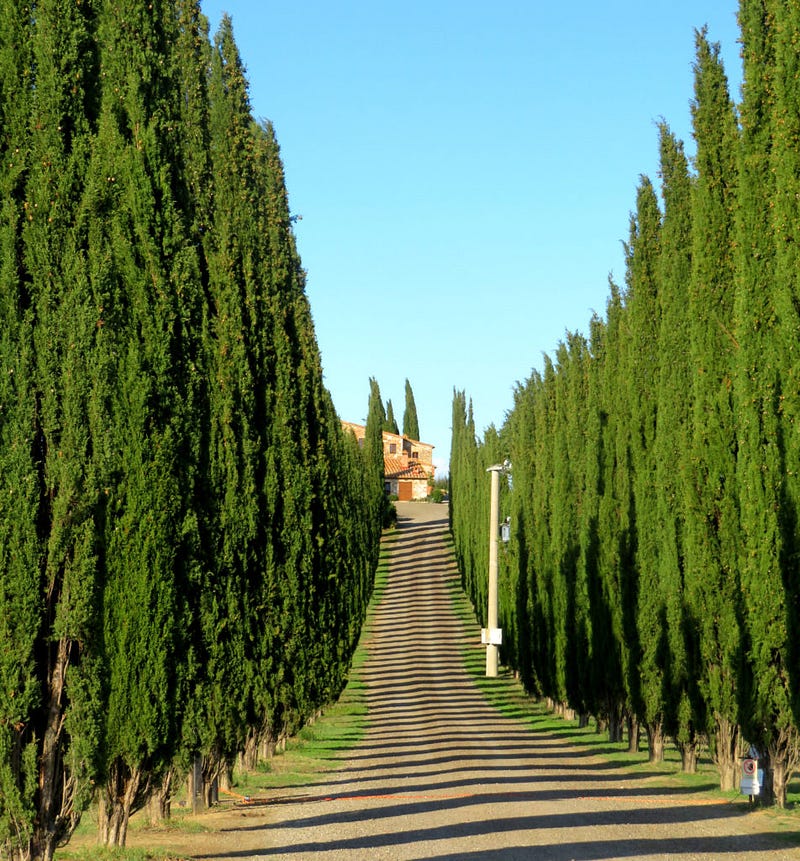
Tuscan Agriturismo — author’s photo

Sometimes you just have to face your fears to see what’s on the other side.

I have always wanted to drive in a foreign country. It always seemed like the best way to explore a region rather than just hitting the major tourist highlights.

So with that in mind, I decided to give it a shot... in Italy!
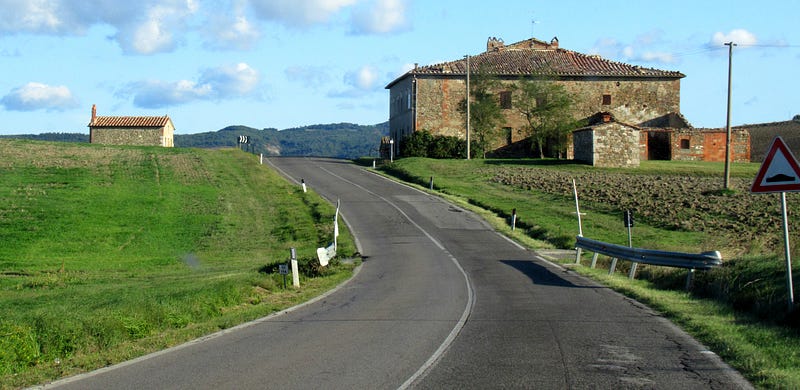
Tuscany Road — author’s photo

It probably wasn’t the best place for my first international driving attempt since I don’t drive much at home in Toronto and try to avoid it most of the time.

Italian drivers have a reputation for being aggressive and speed demons. But I figured Tuscany would be easier because of the rural roads and laid-back attitude. I was partly right.
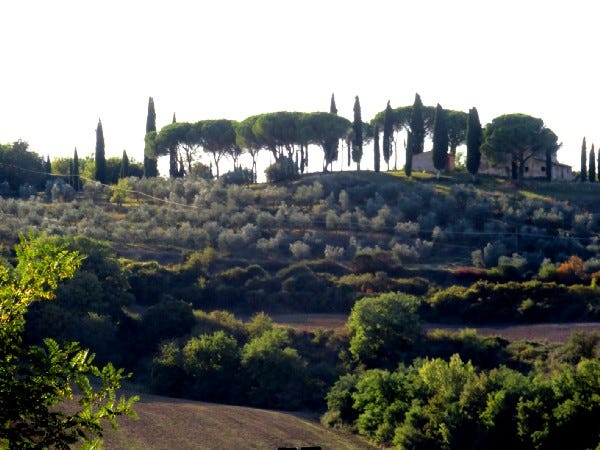
Tuscany — author’s photo

Before the journey, I read as much as I could online. Some of what I read terrified me but some of it provided good information for the road ahead.

The best information was a warning I received about Italy’s road signs and I’m glad I investigated. I have never seen anything like it before. When I visited Italy previously I guess I didn’t pay much attention to road signs but now that they were going to be guiding my journey, they became overwhelming.

The sheer volume is enough to confuse anyone. Imagine driving at 110 kph (the highway speed limit) and you come upon a grouping of road signs — like 9 or 10 — all bunched together. You try to read as fast as you can but miss most of them. Sorry, I don’t have any pictures to show you…. but I was too busy trying to read the signs and navigate past them, to be taking any photos.

There are some very important signs that you probably won’t see at home, particularly those warning about the ZTL — Zona Traffico Limitato. They are areas of cities that are off limits to all but emergency/city vehicles and sometimes local residents. Cross into one and your license plate will be photographed and you will get a hefty fine. There are no excuses for tourists, so you want to avoid entering a ZTL at all costs. (Waze has come out with an app and APK has a ZTL Radar app to help you avoid a hefty fine.)

Google maps are very helpful to get around but beware that they can’t be 100% trusted. The map will get you from point A to point B the quickest and easiest route even if that means directing you through a ZTL. Google doesn’t seem to recognize the restricted areas.

We had planned a 2 day trip through Tuscany from Florence (airport pickup so I didn’t have to drive through the city) with stops in Siena, Pitigliano (overnight), Pisa, and back to Florence. Seemed doable.
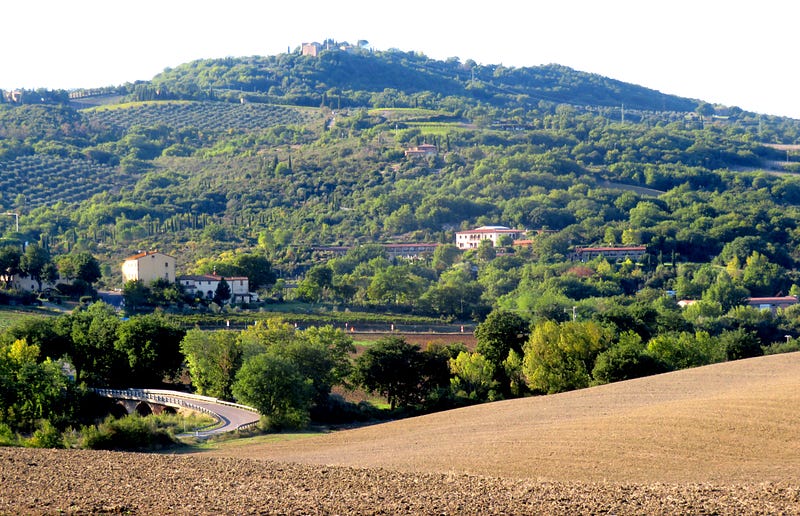
Tuscany road trip — author’s photo

The drive wasn’t as bad as I expected. Keep right and you don’t have to feel like you have to speed through your trip. The worst part was the condition of some of the roads, particularly the regional highway we took on the second day. We were racing along at 110 kph — 120 kph and suddenly we’d hit a pothole or a bad patch of road. I was terrified we were going to blow a tire.

We took the SR222 described as the most scenic route in Tuscany. And it lived up to its reputation.
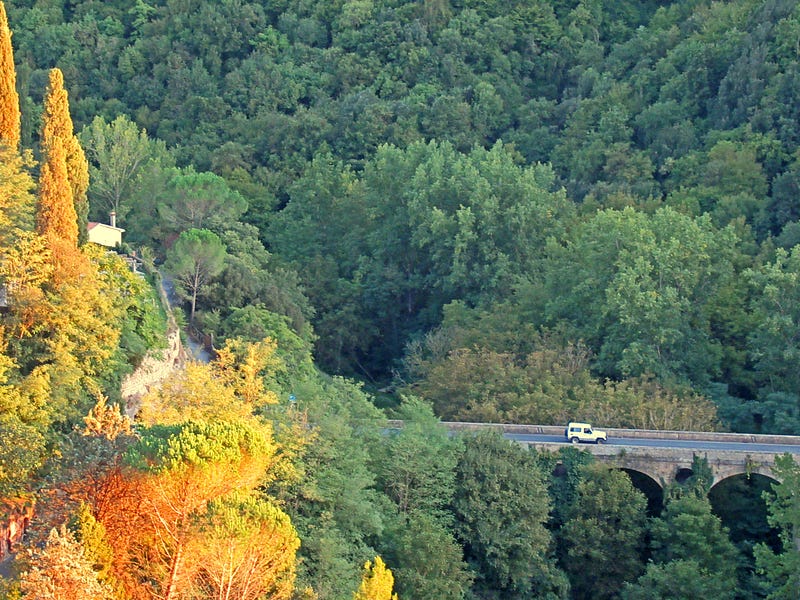
Tuscany road trip — author’s photo
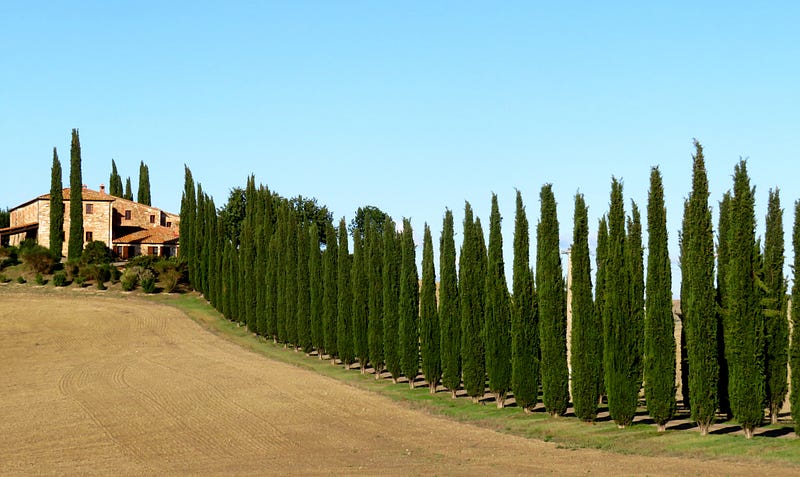
Cypress trees line road in Tuscany — author’s photo

The highlight of a road trip through this area is the spectacular vistas of iconic images of Tuscany like the vineyards, olive groves, and perfectly shaped Cypress trees. The road winds its way through the countryside and takes you through towns where people are going about their daily business. We also passed numerous Agriturismos (B&Bs at farms or vineyards) that we will have to come back and visit sometime.
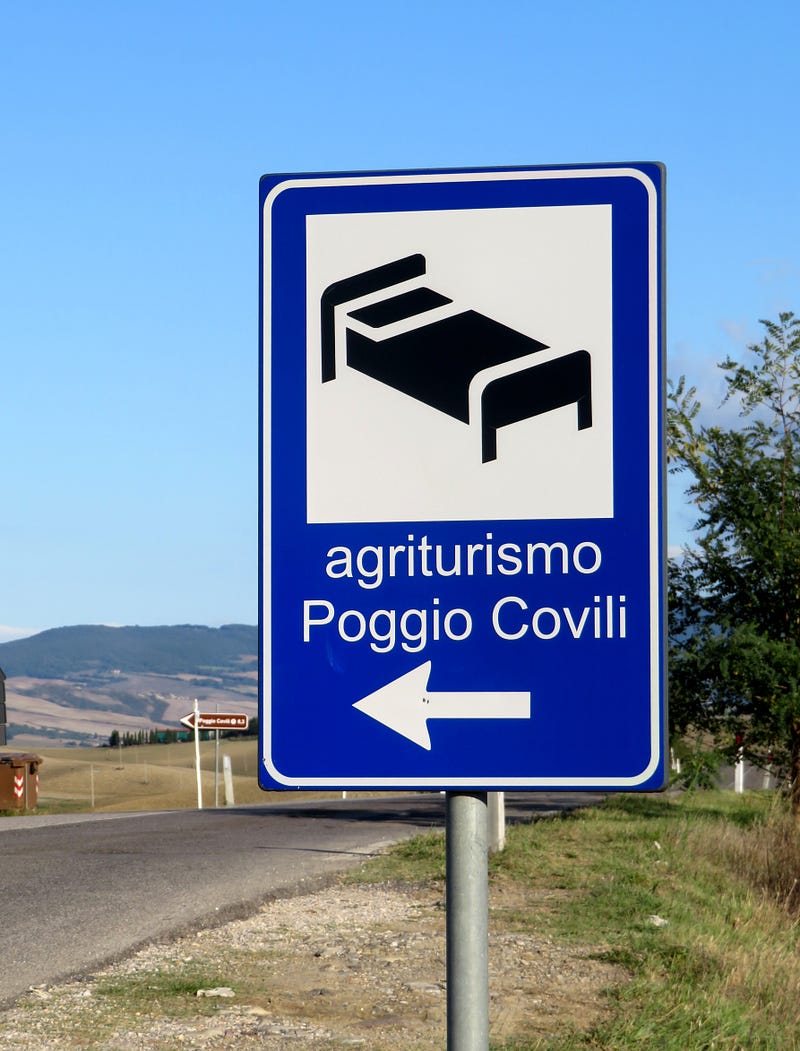
Agriturismo sign — author’s photo

The views are breathtaking but don’t forget to keep your eyes on the road. Along with the views are the hairpin turns, the long mountain climbs uphill and then back down. But it all adds to the adventure.

Siena
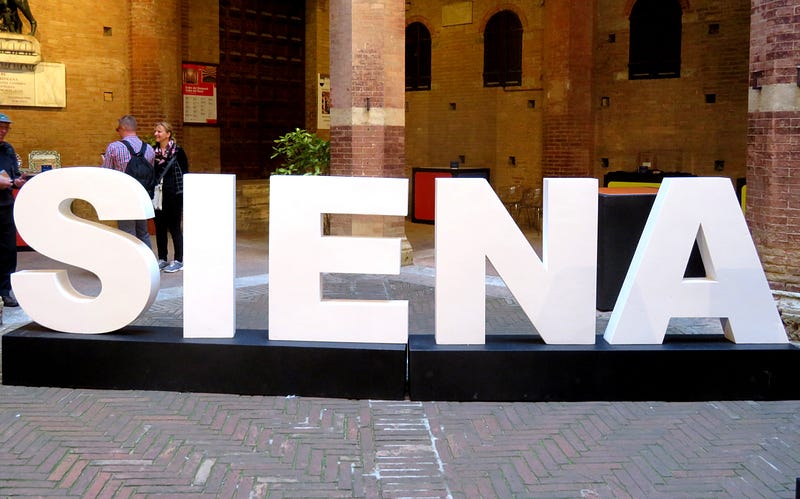
Siena sign — authors photo

This was my second visit to Siena so I knew what we needed to see and do before moving on. There wasn’t a lot of time to dawdle since we were on a tight travel schedule (this should have been a week or at least 4 or 5 days). We managed to find good parking just outside the wall surrounding the old part of the city (and just outside the ZTL) we wandered through the narrow cobblestone streets and ended up outside the magnificent medieval Duomo di Siena.
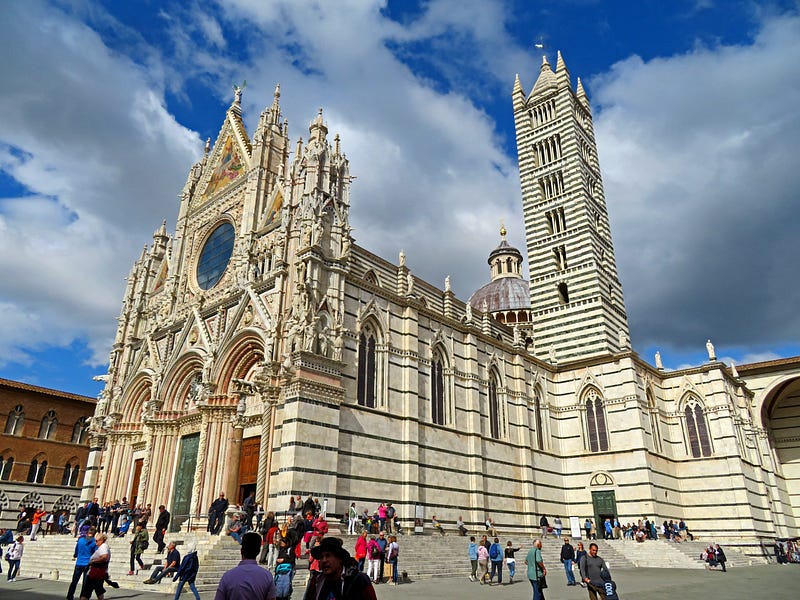
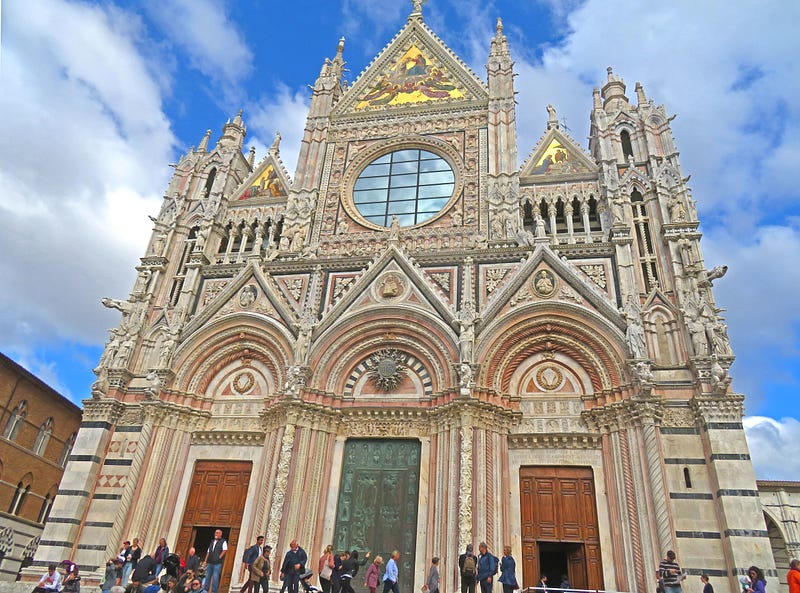
Siena Duomo — author’s photos

It is one of the most beautiful churches in the world (and I have seen a lot of them.) It was constructed in the 12th, 13th, and 14th centuries. The Gothic exterior gives you a glimpse of the beauty inside but it’s still jaw-dropping as you enter the nave.
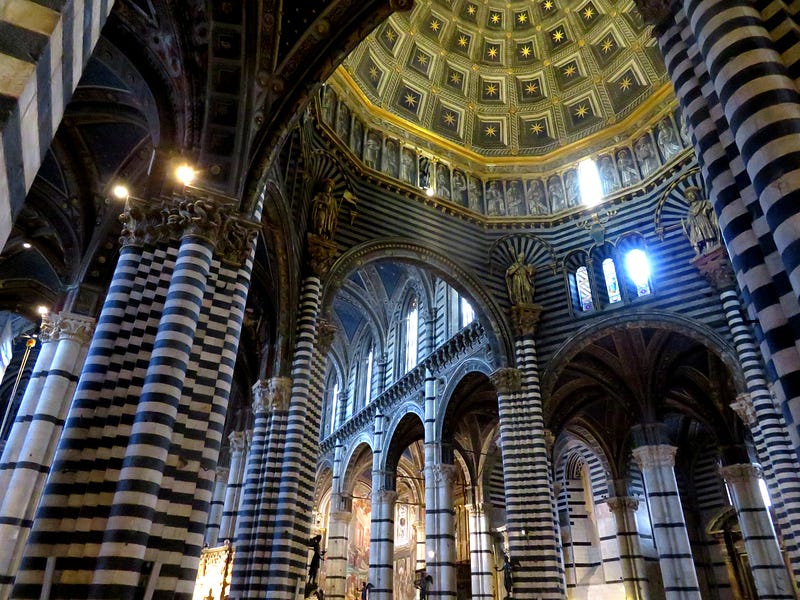
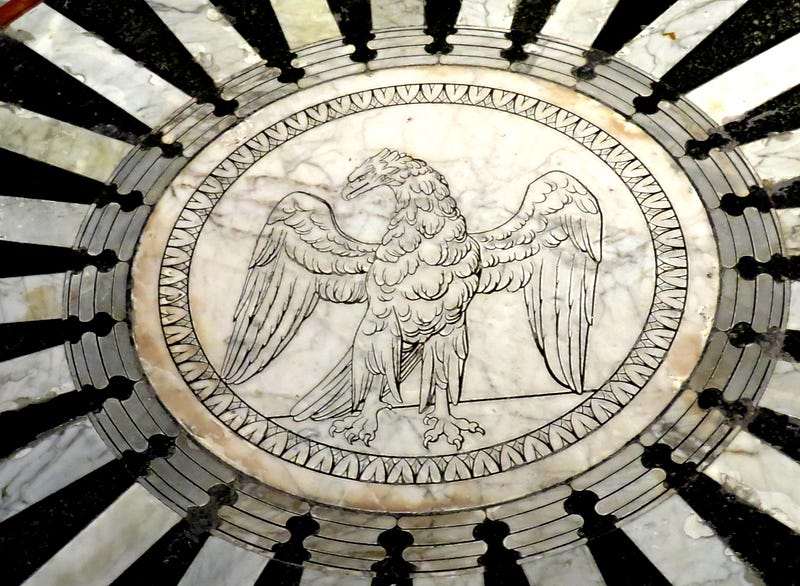
Inside the Duomo — author’s photos

The dark green and white striped marble pillars, the magnificent ceiling, the intricate mosaics on the floors, the chapels each featuring individual artwork, with sculptures by Michelangelo and Donatello, and even the organ and the pulpit.
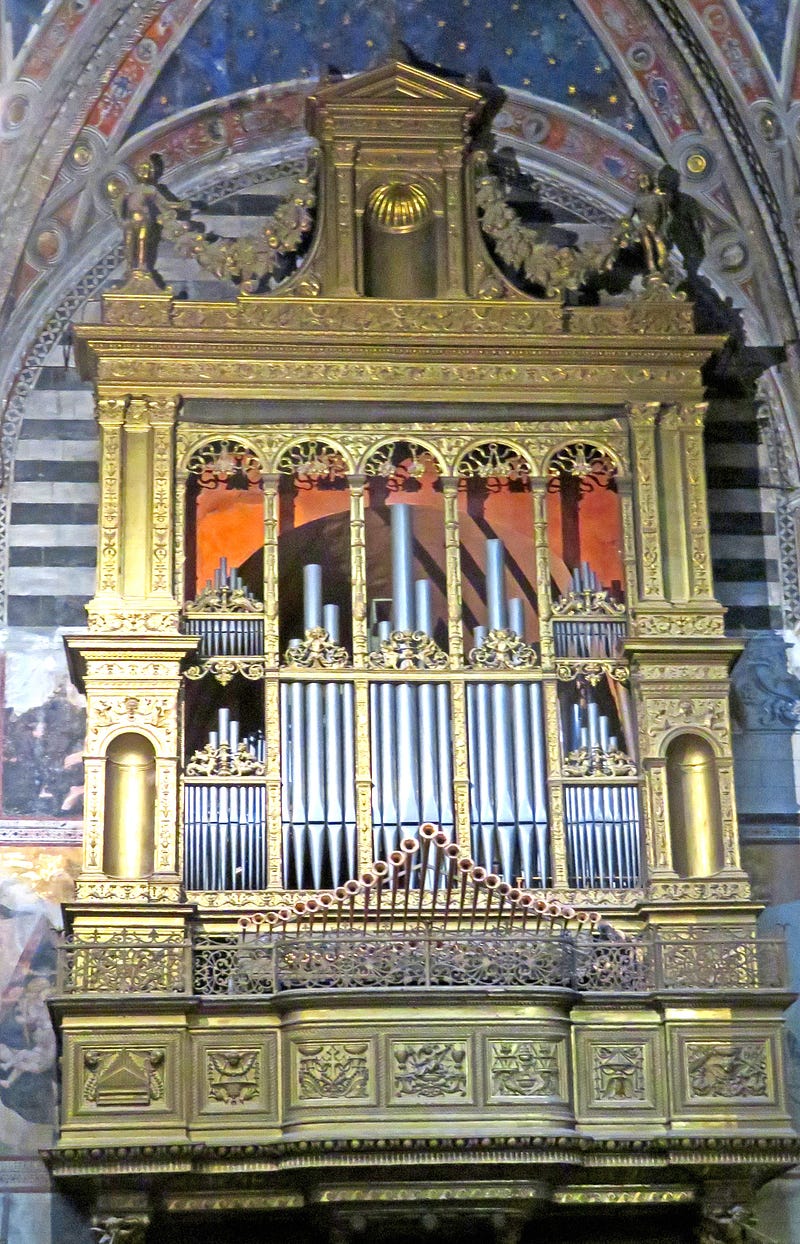
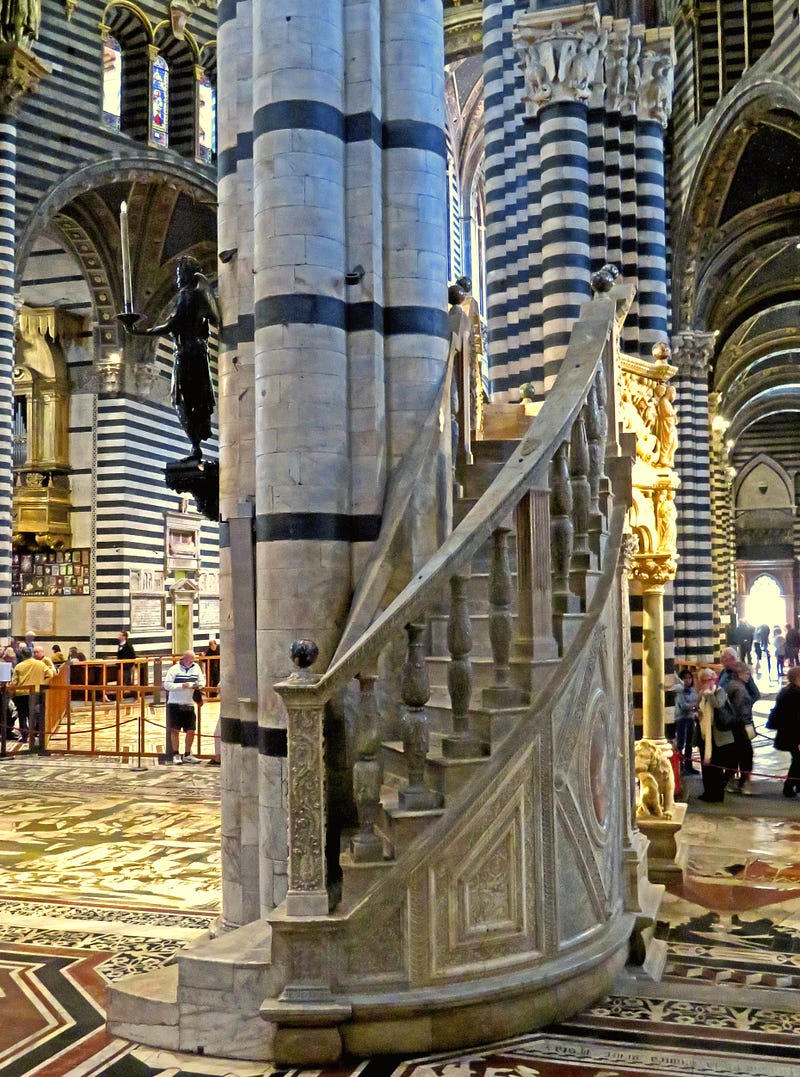
Duomo’s organ; Duomo pulpit — author’s photos

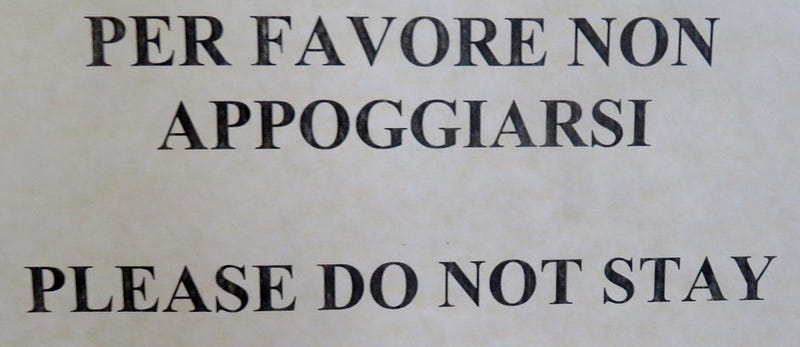
There’s also a library that contains massive medieval books and spectacular paintings and it even has a sign telling people to “Please Do Not Stay” to keep the crowd moving.
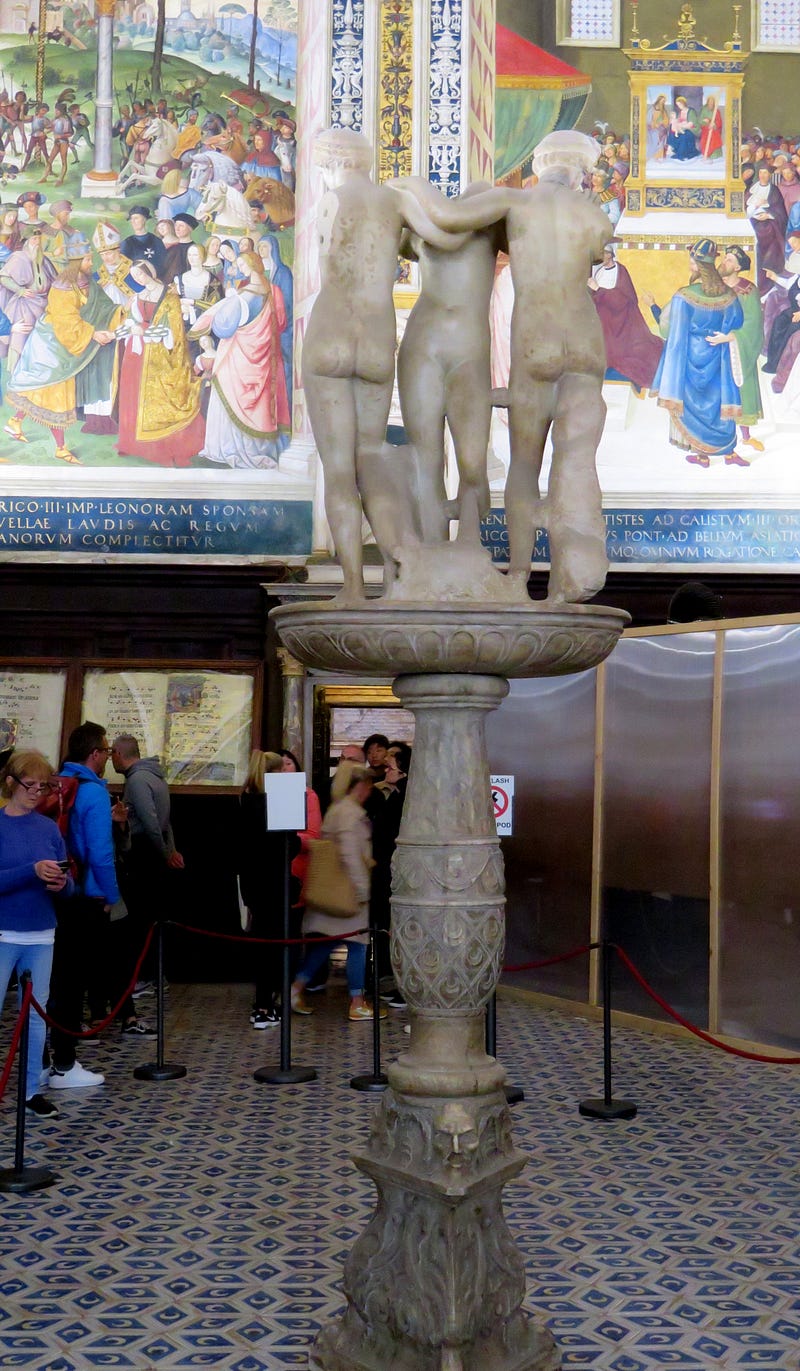
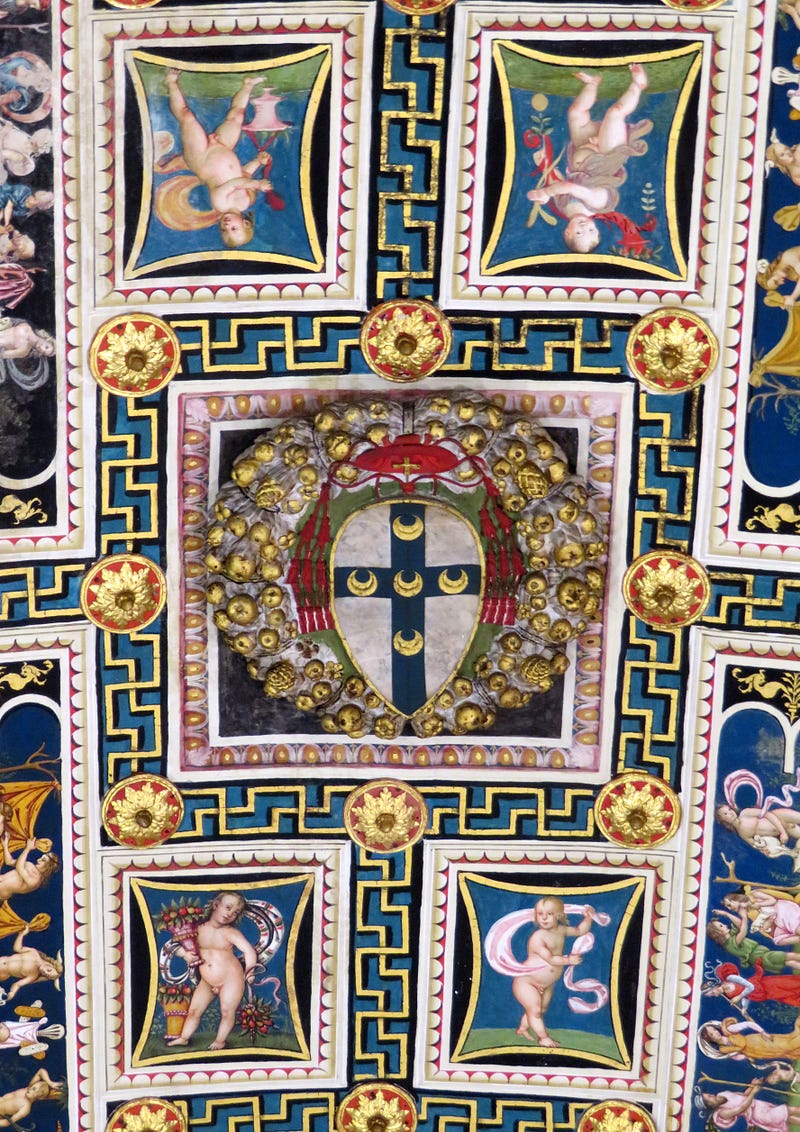
Duomo Library — author’s photos
Duomo Library sign— author’s photo

We made our way to the nearby Piazza Del Campo where the annual Palio horse race is held every August. The piazza is massive and rivals any square you will find anywhere and is world renowned as Europe’s best example of a medieval square.
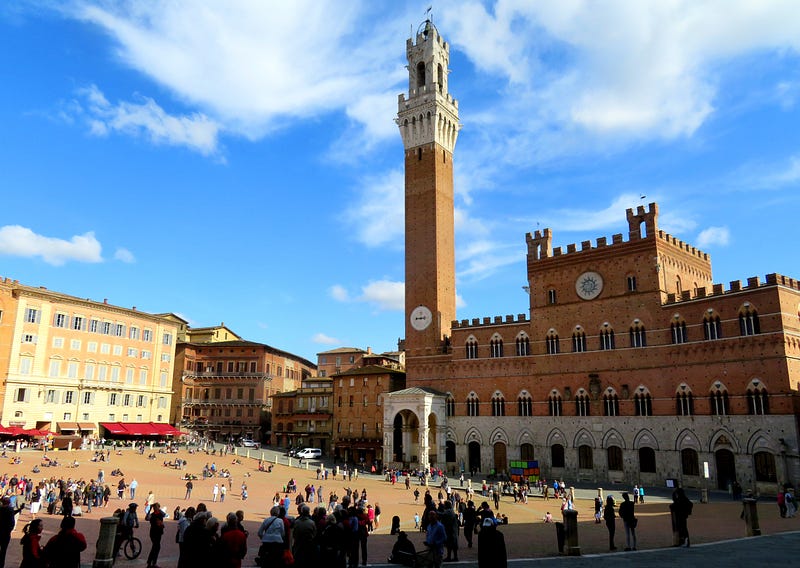
Piazza del Campo, Siena, Tuscany, Italy — author’s photo

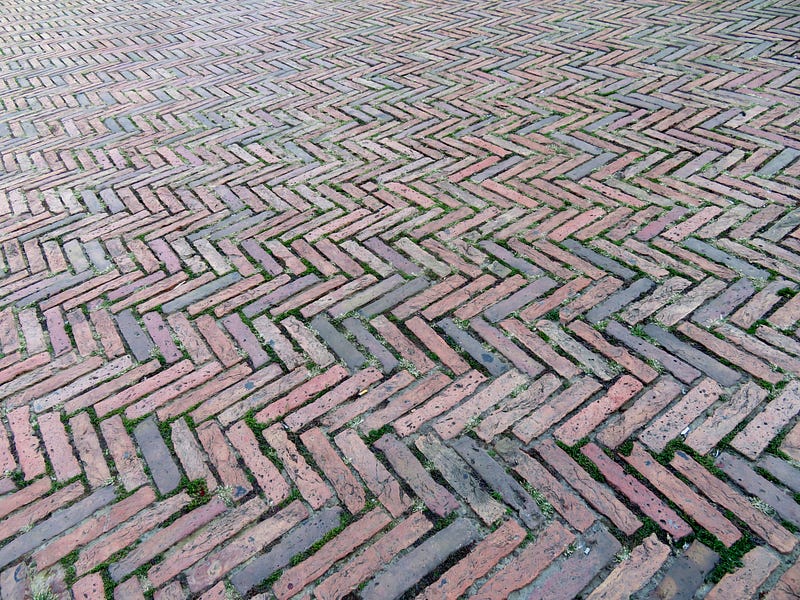
The piazza is scallop-shaped with its brick surface laid out in a chevron pattern. It is surrounded by apartments and hotels that feature restaurants and bars which have the best viewing spots for the Palio.

At one end is the Palazzo Pubblico and the Torre del Mangia, which you can climb for spectacular views of Siena. All along the walls of the building are metal rings where the horses are tethered before the race. At the other end of the Campo is a magnificent marble fountain, the Fonte Gaia, that was first constructed in 1342 and is a favorite bathing spot for the town’s pigeon population.
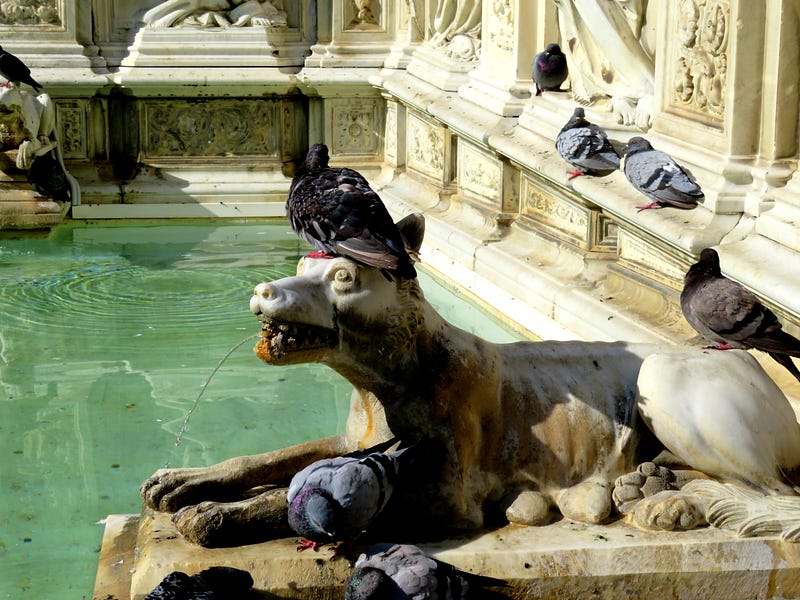
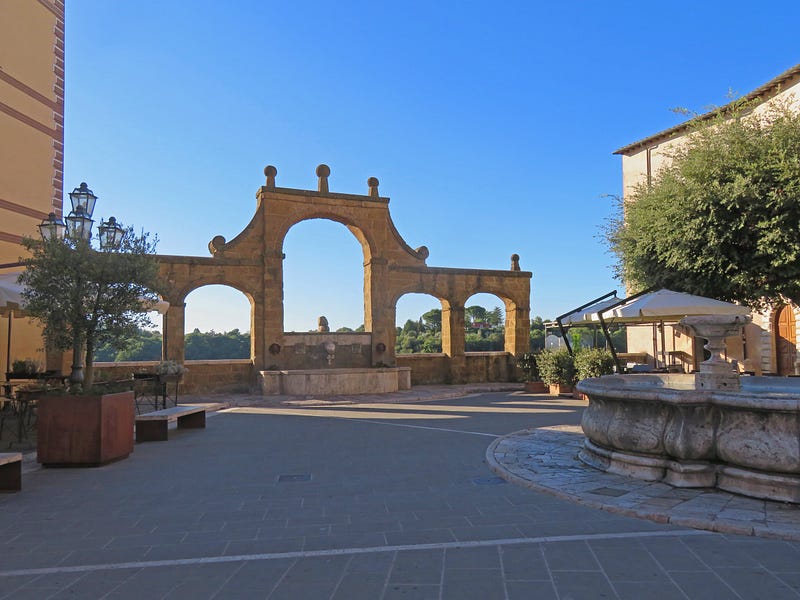
Fonte Gaia — Siena, Italy — author’s photo
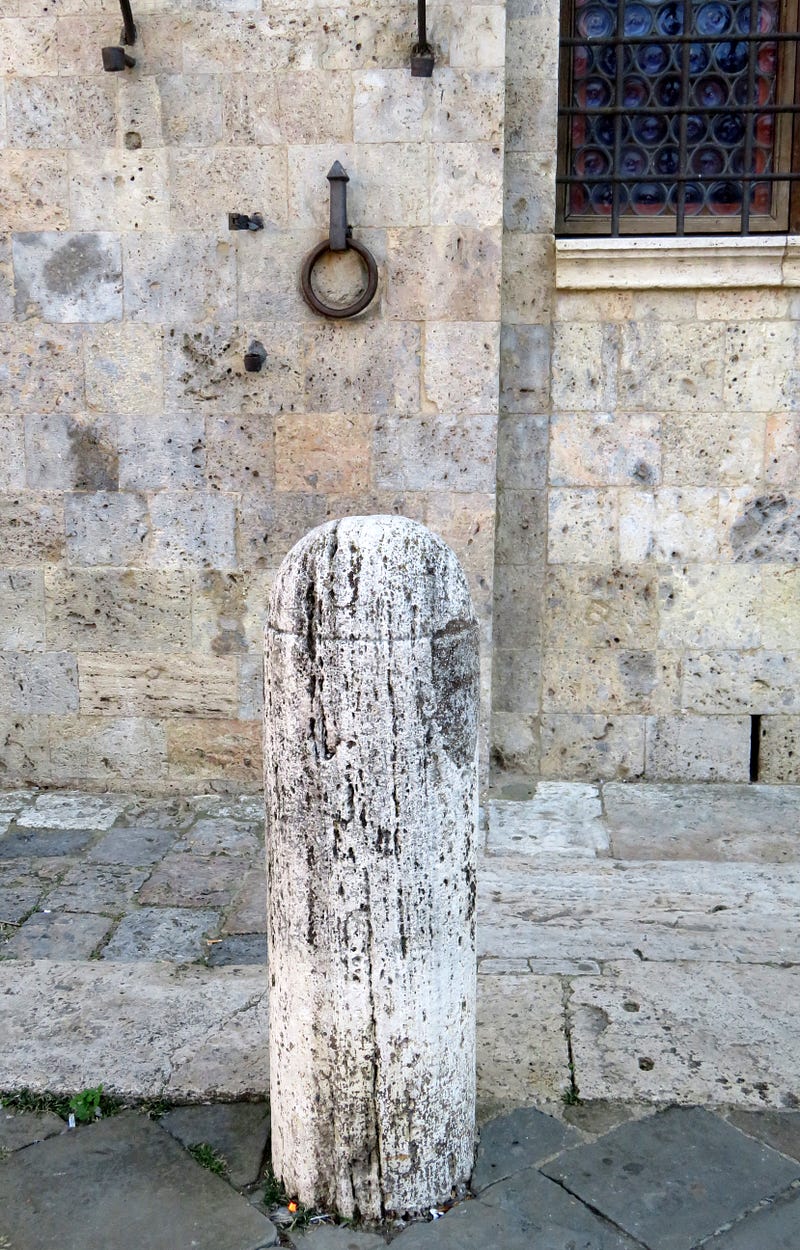
Chevron patterned bricks; horse tether pole — author’s photos

Pitigliano

Our next stop was Pitigliano, which turned out to be the highlight of my trip to Italy. I just wish I had more time there. I guess another time.
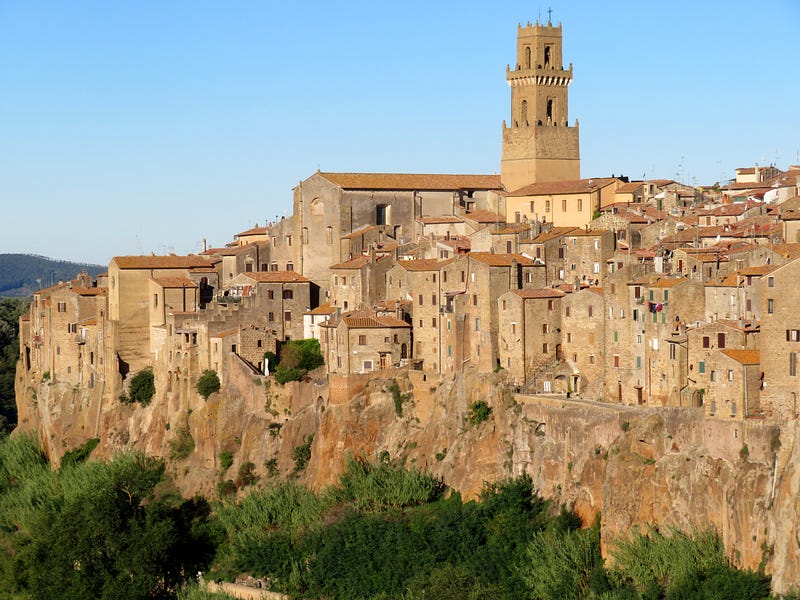
The village of Pitigliano, Italy — author’s photo

Pitigliano is an ancient town built on top of volcanic tufa, also known as Travertine. I’m glad I had Google maps to get us there because it isn’t really a tourist hotspot. Be warned, when you enter the town there is a sharp hairpin turn.
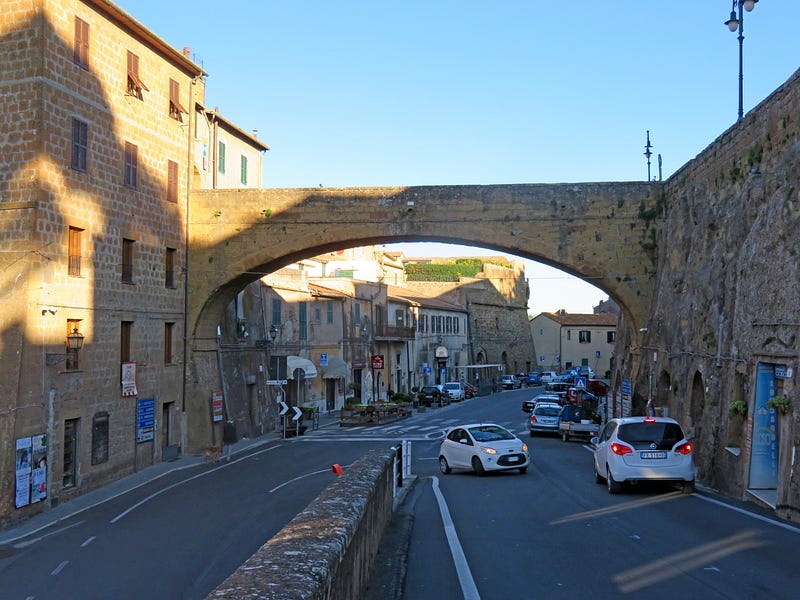
Pitigliano’s sharp hairpin turn — author’s photo

Take the left road instead of trying to drive into the town. There is public parking on the road. It’s cheap (cost us 3 euros all night) but if you drive another block or two up the road (we discovered later) there is a free public parking area.
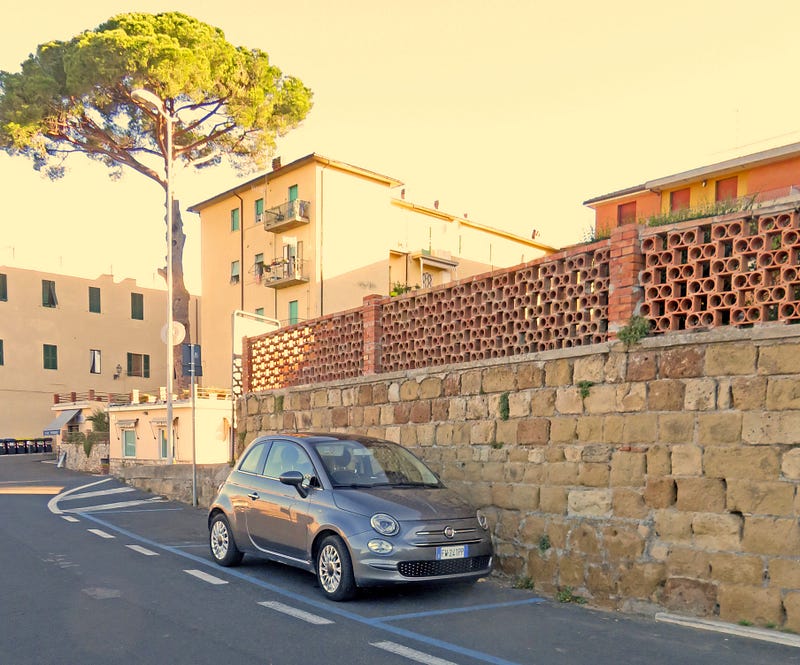
street parking in Pitigliano — author’s photo

There is a narrow park area alongside the road that gives a spectacular view of the town (a great spot for taking some photos, especially early in the morning when it’s perfectly lit.)
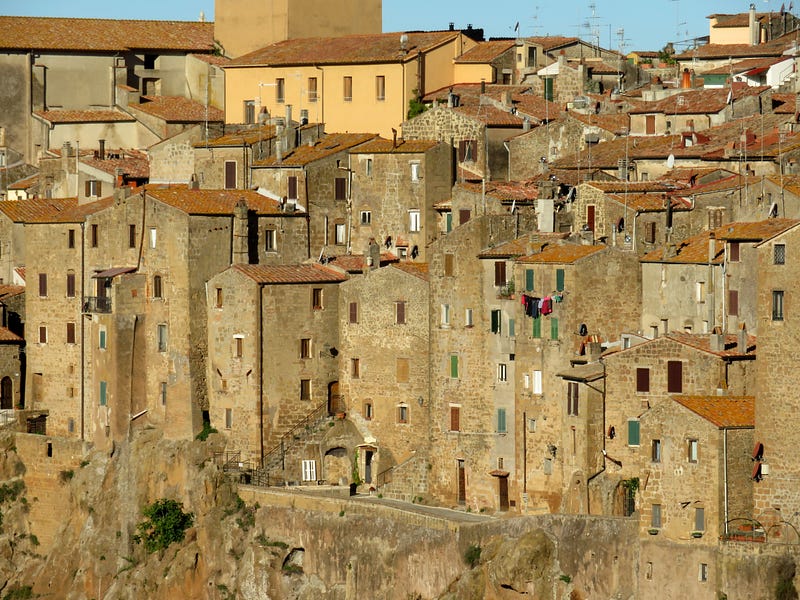
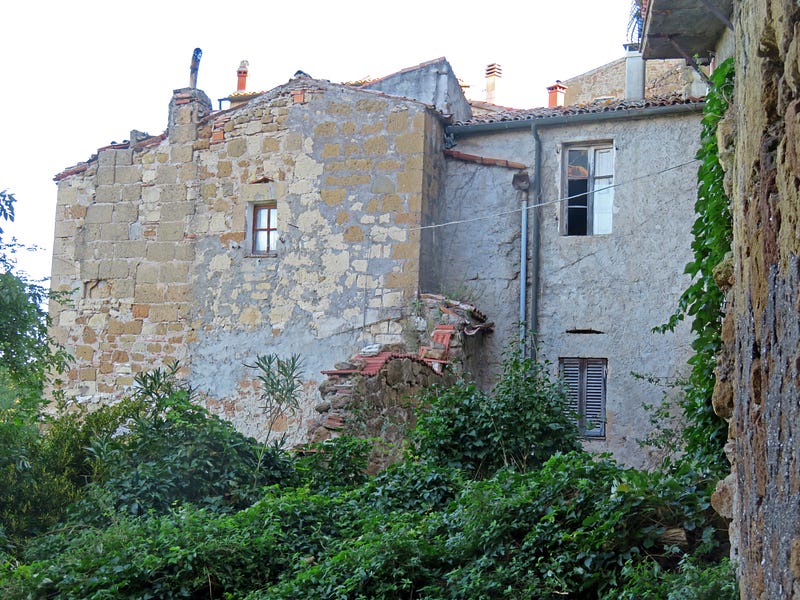
Pitigliano, Tuscany, Italy — author’s photos

Only 300 people live in the old town, including the area that was once a Jewish ghetto. Each of the homes and buildings features cellars that are cut into the rock and many also have subterranean tunnels. You can tour through this when you visit the synagogue.
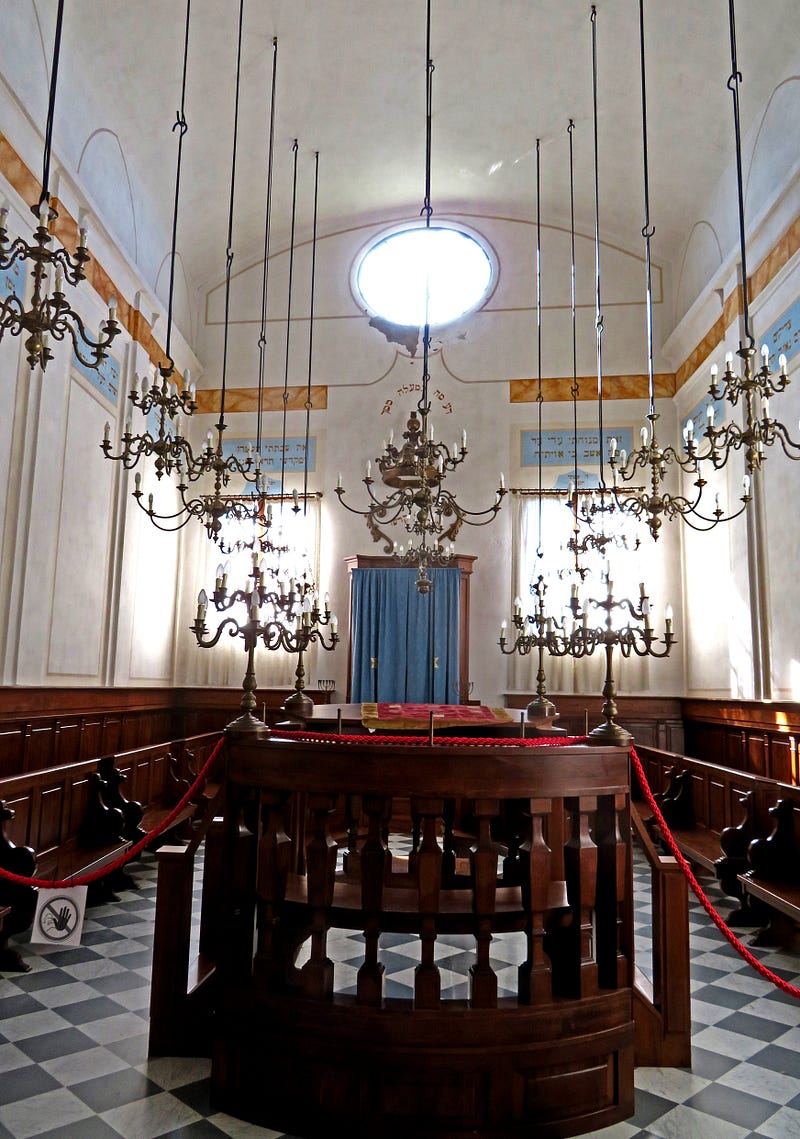
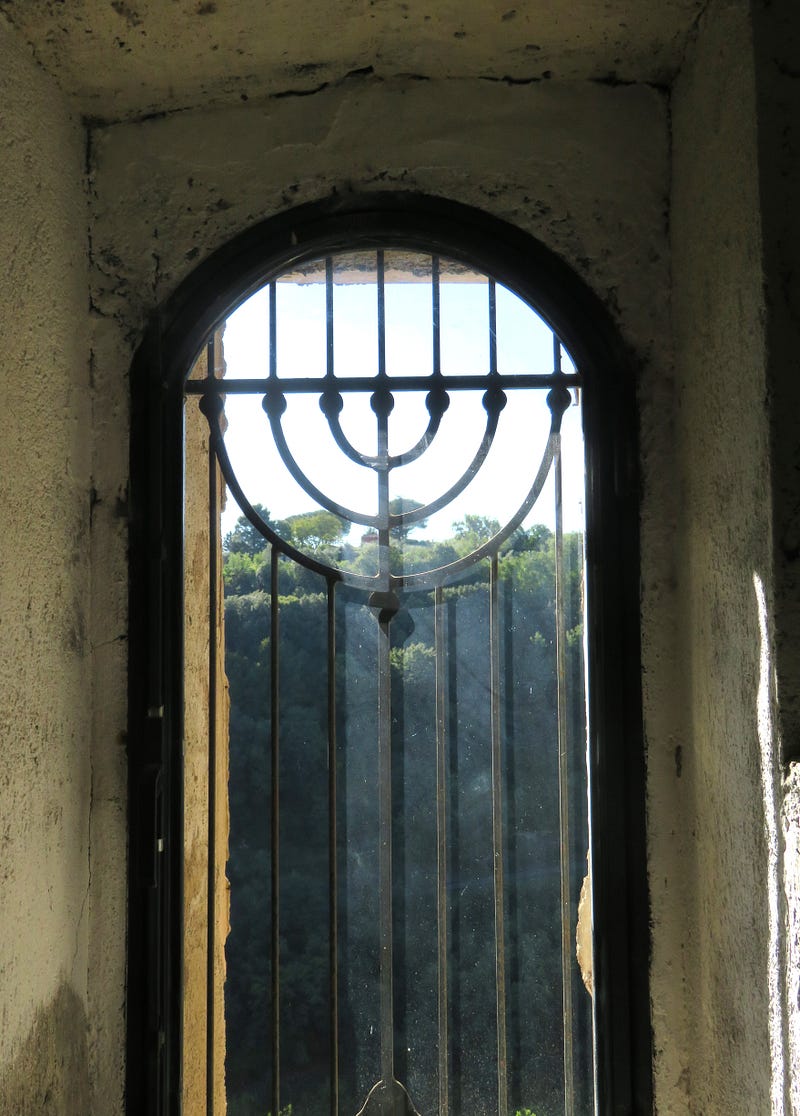
Pitigliano underground synagogue — author’s photos

The underground museum highlights the history of the Jewish population in Pitigliano. The numbers dwindled over the decades and when the Second World War broke out the town residents hid the remaining Jews from persecution and death. The subterranean warren of rooms is well equipped with an underground slaughterhouse and kitchen where the food was prepared.
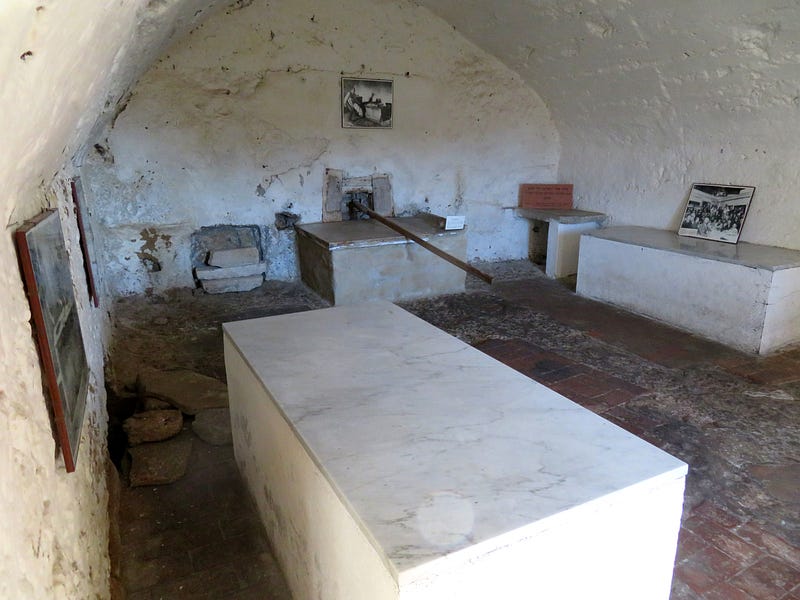
Underground kitchen — author’s photo

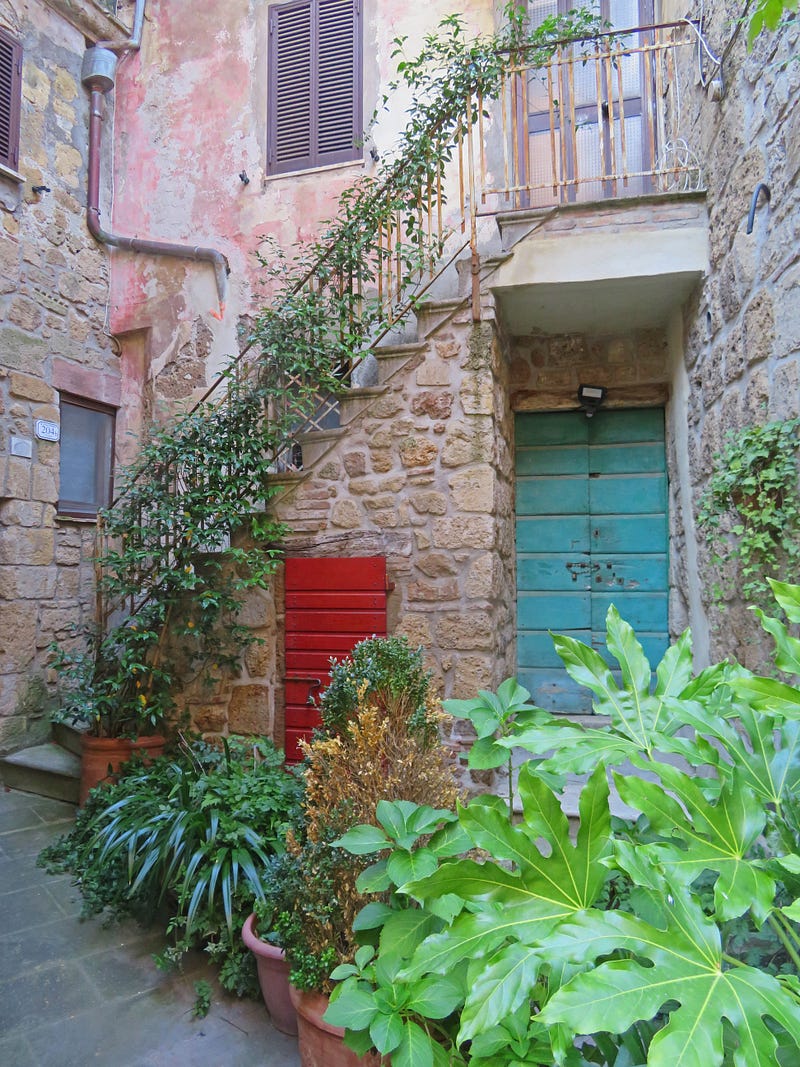
As you return to the surface and wander the few streets in the village, you find picture postcard scenes wherever you turn.
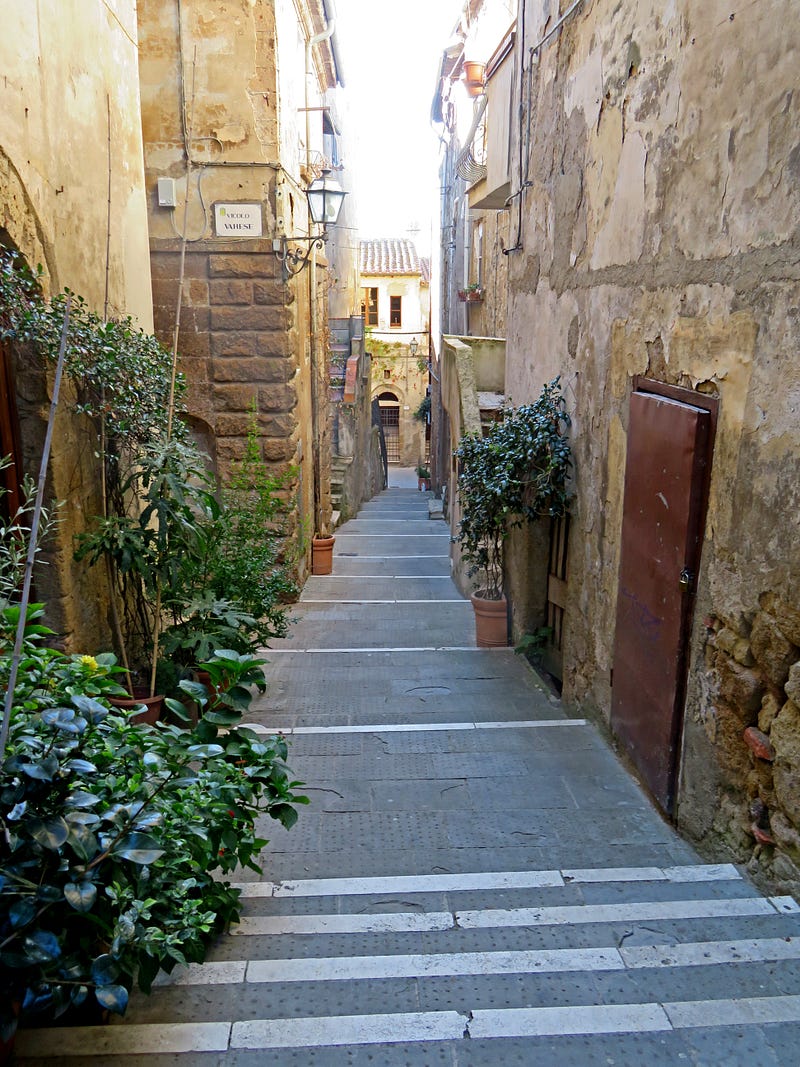
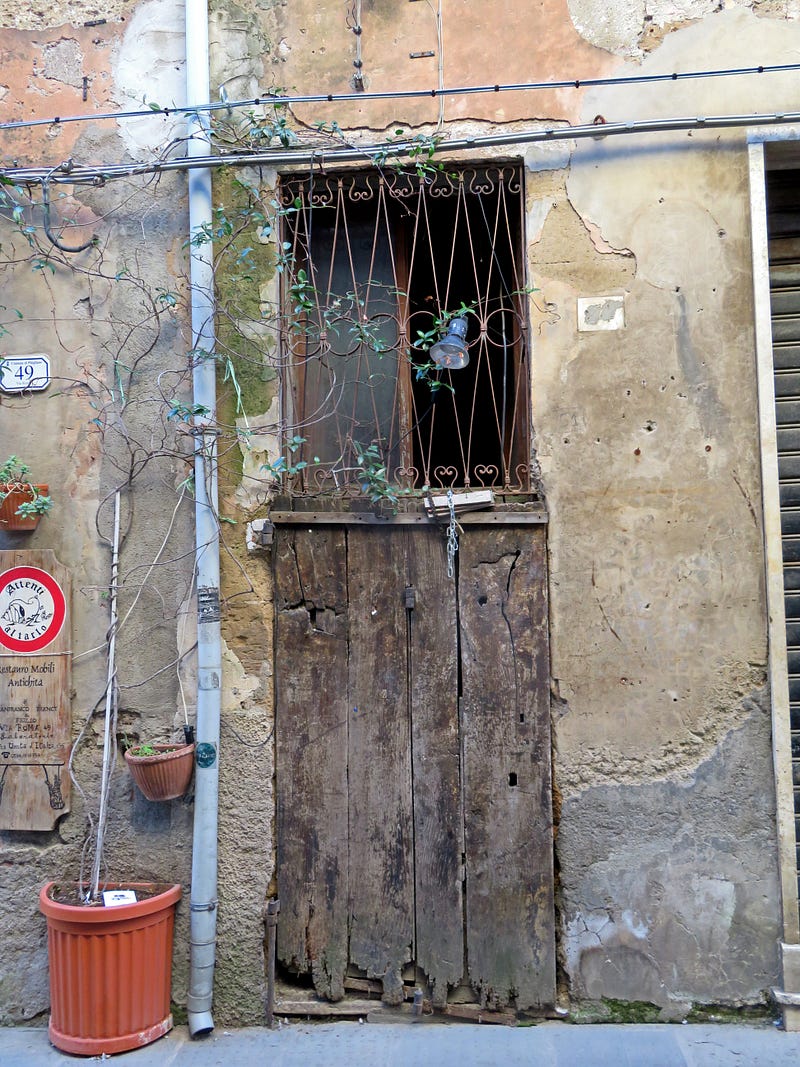
Pitigliano, Tuscany, Italy — author’s photos

There are a couple of places to stay in Pitigliano. We had booked a room at Le Camere del Ceccottino, a family-owned boutique hotel with just 5 rooms. It was tastefully decorated, very comfortable, and welcoming.

Chiara and Alessandro Francardi own the 17th-century hotel as well as two restaurants in the tiny village. Their attention to detail at both the hotel and restaurants is outstanding. We had one of the best meals during our Italian vacation at La Corte del Ceccottino.
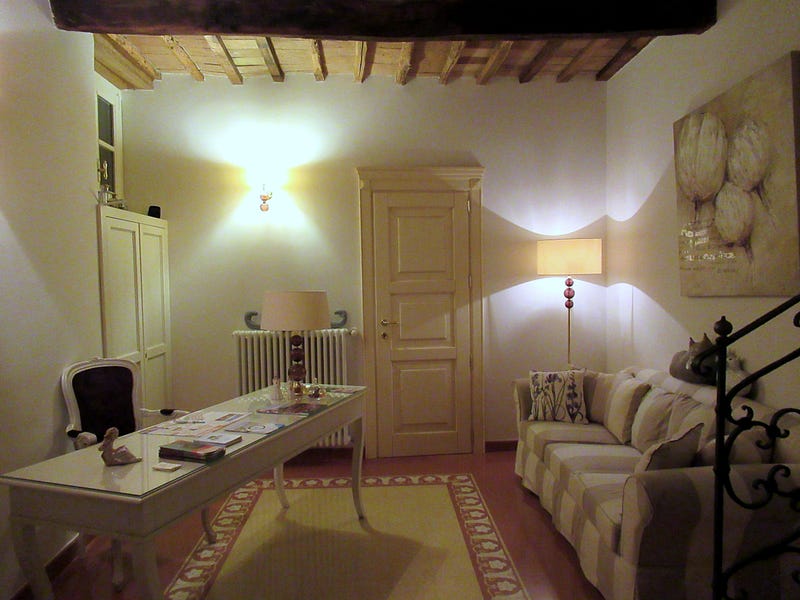
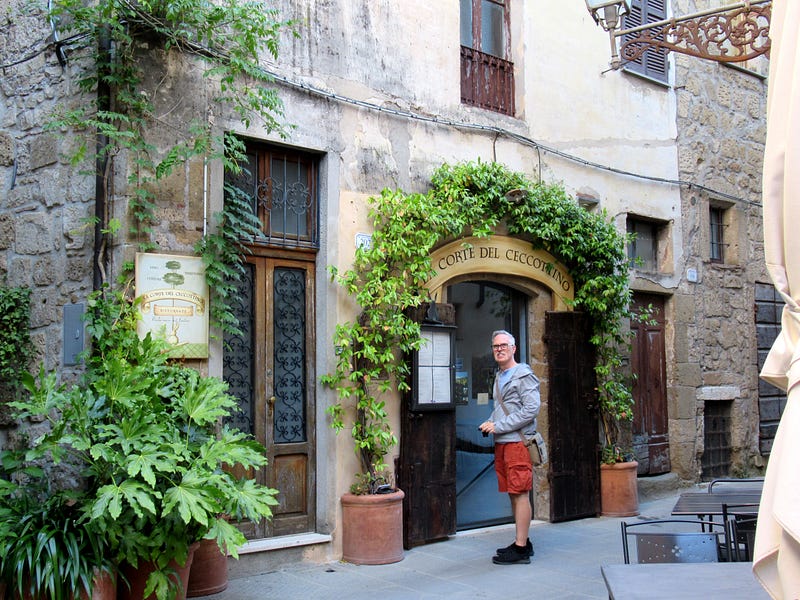
La Camere del Ceccotino; La Corte del Ceccotino — author’s photos

There isn’t a lot to do in the town except explore the streets and alleyways and browse the shops. But nearby is the Terme de Saturnia hot springs. Unfortunately, we didn’t have time to visit on this trip but I’ll be back. This is definitely a place I want to return to.

Pisa
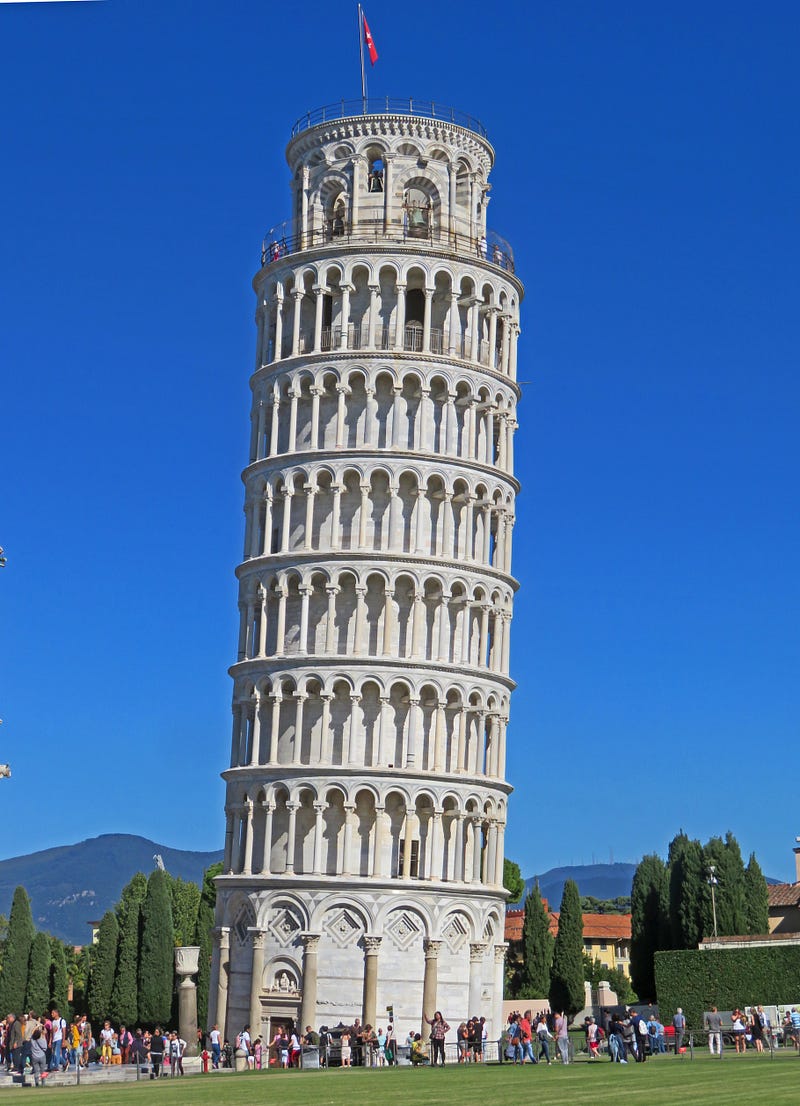
Leaning Tower of Pisa — author’s photo

What is there to say about Pisa that hasn’t been said before? We came, we drove around in circles trying to find parking, we wandered through the Piazza del Duomo, the site of the Pisa Cathedral and the Leaning Tower, and we posed. I had been there once before so for me, it was just a “been there, done that” kind of visit. It’s a nice city and made for a great place to stretch our legs before driving back to Florence and ending this mini-road trip.
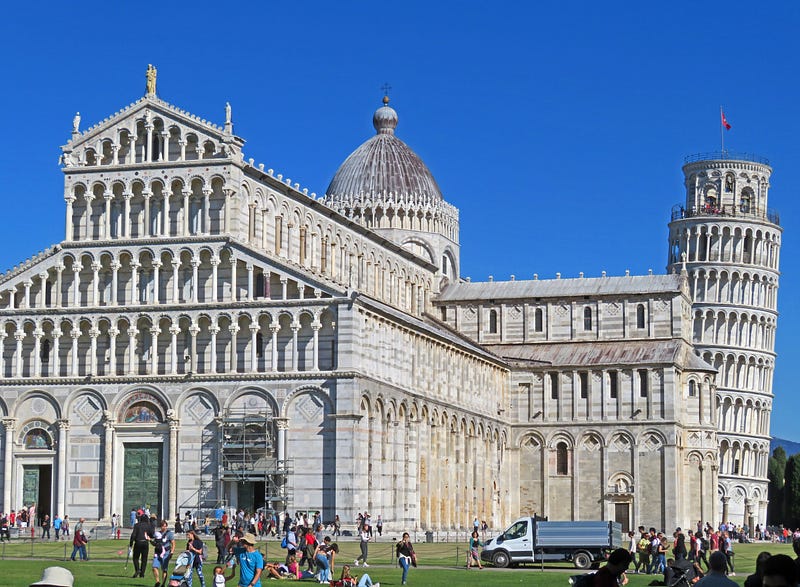
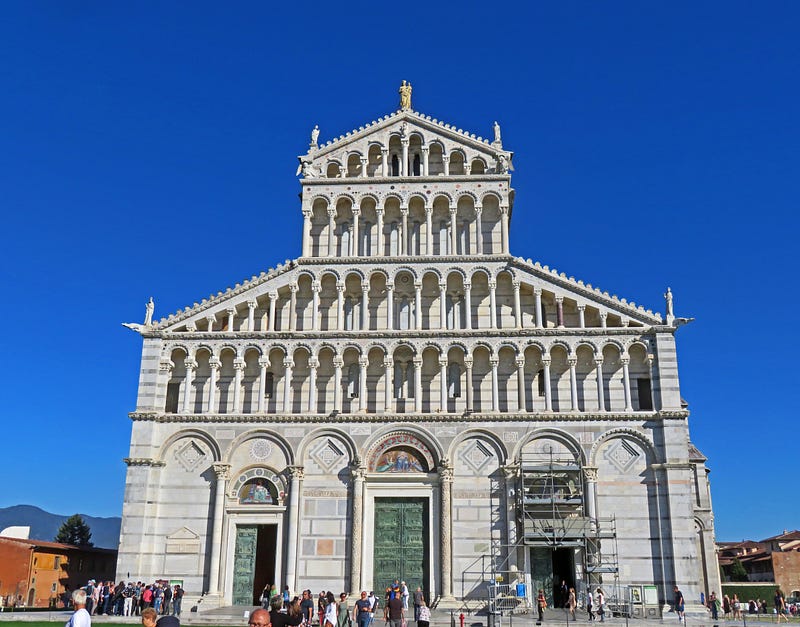
Pisa Cathedral; Cathedral facade- author’s photos

I’m going to try the European road trip again in a couple of weeks when I travel to France. I’m hoping it goes just as smoothly, although I’m already hearing horror stories about changing speed limits and a LACK of road signs! Maybe the French should consult with the Italians and compromise on a few more road signs for France and fewer for Italia.

_______________________________________

You could read so much amazing content on Medium and it could be your next step in becoming a writer, for just a few bucks a month. And if you sign up with this link you will also be supporting my writing.

Travel
Roadtrip
Tuscany
Italy
Monthly Challenge
Recommended from ReadMedium