Right To Repair (R2R) — John Deere Is Searchin’ For A Better Way To Let Farmers Have Access To Equipment Repairs, Services and Tech
Staying true to the ’70s theme, The Weekend Brief (TWB) is inspired by characters and musicians Cheech & Chong. I recently watched the movie Up In Smoke, a 1978 classic about two care-free individuals travelling from Los Angeles to Mexico during the times of hippie and free-love culture in United States. I suggest listening to their song Searchin’ as you read TWB.
Press play: https://www.youtube.com/watch?v=vocJgxcUQYQ

On 8 January 2023 a memorandum of understanding (MoU) was signed by the American Farm Bureau Federation (AFBF) and John Deere over the right to repair (R2R) law. The outcome of this agreement was a big win for American farmers, but also calls into question future regulatory barriers that could prevent John Deere from following through on the deal.
The MoU was originally signed at the 2023 AFBF Convention in San Juan, Puerto Rico. You can watch the official announcement on RFD TV.
According to the MoU, John Deere will now allow farmers to access the company’s diagnostic and repair codes, manuals for parts and services, as well as product guides. It also ensures farmers that they will be able to purchase diagnostic tools from John Deere and also receive assistance from the manufacturer about ordering parts and products.
This aspect has been a disaster for both manufacturers and suppliers since parts shortages became a critical problem for farm equipment during the Covid-19 pandemic.
That’s why AFBF President Zippy Duvall made it a point to tell the audience at 2023 AFBF Convention how this MoU would resolve some of the issues with parts shortages by allowing farmers to repair their own equipment:
Our members asked the American Farm Bureau to work with farm equipment manufacturers. They asked us to find a path forward so we can repair our own equipment. Margins on the farm are tight, that’s why we fix things ourselves and go to local mechanics for help. I know many of you are forced to travel for hours to the nearest equipment dealer. That’s a challenge when something breaks in the middle of planting, harvest or any time-sensitive job.

After the announcement was made public, John Deere’s statement was anything but straightforward about the progress on R2R and farmers’ access to equipment, services and tech. The outline on the company’s website reads: SUPPORTING OUR CUSTOMERS’ RIGHT TO SAFELY REPAIR THEIR EQUIPMENT.
Pay attention to the adverb — “safely” — for which they added on their own accord.
The company continues like this:
John Deere equipment is manufactured to the highest engineering standards to maximize performance while protecting the health and safety of our customers and the environment. We do not support customers modifying embedded software due to risks related to the safe operation of equipment, emissions compliance, engine performance, data security, warranty validation, and resale value.
Again, the safety theme comes up as a way to stop short on R2R committments by John Deere. This is one important caveat to know as the law could come back into play in the future.
But according to most American farmers, as CNN points out, time is what matters most to year-round planting and harvesting seasons. In order for most farmers to consistently plant and harvest their crops every season, they need to ensure that equipment repairs can be resolved readily.
That’s why many of the farmers and consumer advocates have been arguing in favor of for R2R laws. In March 2022, the Public Interest Research Group (PIRG) joined with farmers unions and a variety of advocacy groups supporting R2R laws by filing a complaint at the Federal Trade Commission (FTC).
On behalf of the public’s interest, the PIRG wrote a two-part series explaining how environmental protection and advancements in software and technology have unlawfully caused harm to the environment and farmers, including violations of the Clean Air Act and antirust concerns.
In Deere in the Headlights I, PIRG discusses the role of technology in modern farming equipment, and how John Deere restricts access to the software tools in order to maintain an edge over intellectual property (IP).
In their view, farmers support R2R legislation, against John Deere, on the basis that: “Access to embedded code will not enable theft of source code.”
In Deere in the Headlights II, PIRG emphasizes the role of how dealership consolidation has restricted farmers’ choices on how and when to repair their equipment. It’s those John Deere dealerships that have always reserved the right to legally repair John Deere equipment for farmers.
In their view, farmers support R2R legislation, against John Deere, on the basis that: “When a tractor malfunctions during planting, harvest or threatening weather, a farmer’s crop and livelihood can hang in the balance.”
In fact, the intellectual property rights (IPR) that John Deere owns and values is still in place despite the recent MoU in favor of farmer’s R2R. This led to a massive Tractor-Hacking Campaign whereby farmers took matters into their own hands by hacking into John Deere software in order to maintain and service their own equipment.
Caleb Jacobs, writing for The Drive, noted that one of the key concerns is that John Deere doesen’t want to face R2R legislation at either the state or federal levels. This recent MoU on R2R seeks to squash legislation from happening in the near-term, which doesn’t mean that the legal battles over John Deere’s IPR and farmers’ R2R will be going away in the long-term.
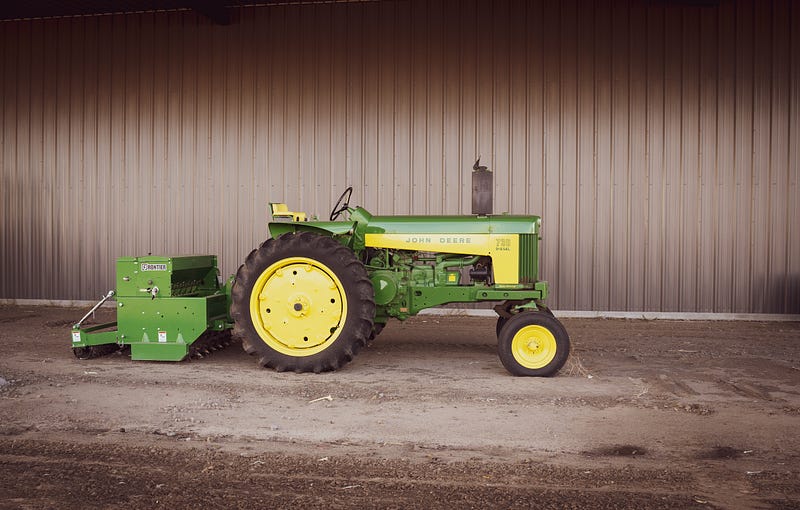
John Deere has always had a massive impact on farming communities throughout the United States.
For instance, the state of Arkansas holds the position of the largest rice industry in North America, as well as other significant agricultural sectors that are critical for the Natural State’s economy. Owning a John Deere tractor in Arkansas is like a dream come true for most independent farmers in Arkansas, in my opinion. And that’s why now you are hearing about the John Deere brand in other parts of the world, such as African countries Zimbabwe and Kenya.
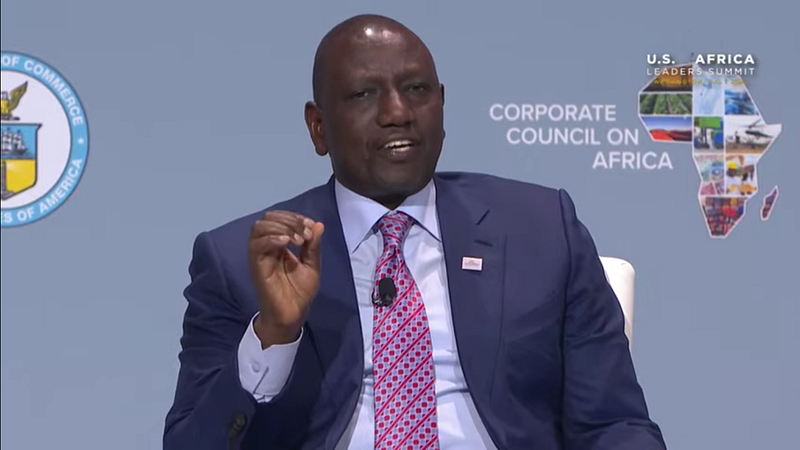
At the U.S.-Africa Leaders Summit held in Washington DC from December 13–15, 2022, President of Kenya, William Ruto, blatantly told the audience at the Corporate Council On Africa: John Deere is a good tractor in Africa.
There’s also a strong link between equipment manufacturing and global commodity prices. In the case of John Deere, grain and fertilizer price volatility are crucial to their bottom lines.
After Russia’s invastion of Ukraine on February 24, 2022, senior VP of the Association of Equipment Manufacturers (AEM), Curt Blades, told reporters at DTN/Progessive Farmer:
Strength in the commodities markets is continuing to drive a lot of the sales growth, which we see in that continued growth in bigger row-crop units. And with fuel prices seeming to be on their way up for the foreseeable future, it’s possible even more farmers will want to get in on the efficiencies that new equipment has to offer.
However, I’d point out that one aspect that shouldn’t be overlooked is about how much the company has evolved since the arrival of CEO John May on 4 November 2019.
For instance, on 26 Feburary 2020, John May pointed out that the company was most interested in exanding on three key points: innovation and ag-precision technologies, raising earnings forecasts to unprecendented levels and making acquistions to increase scale (i.e. John Deere acquired Wirtgen Group to grow on its construction and forestry business).
The company has not taken its techonological ambitions lightly. John Deere published a strategic plan to shareholders in Feburary 2022 which included announcements to increase product autonomy, connectivity and sustainability to build on the company’s reputation as a global leader in the farming and construction sectors. To this point, CEO John May was selected to be a keynote speaker for the 2023 Consumer Electronics Show (CES).
In response, the CEO said:
The opportunity for technology and sustainability to positively impact the world is most present in agriculture, where farmers continue to be challenged to feed our growing population. John Deere is focused on developing technology with a purpose, to make our customers more efficient and sustainable. The work they do affects every single person and we’re honored to have the opportunity to help tell their story on the mainstage.

At the CES 2023, John Deere announced a new toy for farmers, ranchers and planters — a sensor-driving robotics ag-tech platform called ExactShot.
John Deere CEO and Chairman, John May, was one of the keynote speakers of CES 2023. On the question of “How does it feel to become one of CES 2023’s Keynote Speakers?” he told listeners: “It gives us a chance to show how are purpose-driven technology has a huge impact on our customers.”
Read more about the CES 2023 here.
The purpose of the new ag-tech platform is to assist farmers to more accurately plant fertilizer seeds; this is also referred to as precision agriculture (PA) farming techniques. In addition, John Deere also unveiled its first automated tractor technology for farmers, but with one critical purpose in mind — SAFETY.
By employing this new automated technology, this will allow farmers to avoid injury and health concerns that come with operating heavy machinery in distant field scenarios.
This convenient and essential safety feature, however, also brings into question how John Deere is placing advancements in Artifical Intelligence (AI) as a way to continue its legacy over agriculture machinery and systems of the future. AI has been a hot topic of IP legal disputes recently, such as Stephen Thaler’s case about copyright issues in the AI applications of artworks.
Moreover, National Public Radio (NPR) points out that even under the MoU guidelines John Deere ensured that its trade secrets would be protected, which gave the company exclusive rights to maintain and control safety features of their equipment. AI, as Eric Schmit would say, is major national security issue for the future of the United States economy and security.
I argue that this gives John Deere a bigger advantage over farming equipment, as technological advancements and AI applications begin to take a large portion of the market-share for modern farming equipment.
John Deere is a high-tech company, and they should be treated as so. Not only because of their investments in technology and AI, but also because of how important the agriculture and fertilizer industries are becoming to combat rising concerns over global food security. As companies like John Deere continue to expand into global markets, they will act stronger on their IP protections, especially those with AI applications, as bad actors and competitiors will strive to steal valuable farming equipment technology.
Food security and AI applications are mutual concerns for the future of a company’s sustainability goals, but also for a country’s national security.

I’ll be publishing The Weekend Brief (TWB) regularly touching on aspects of the global markets (including stock markets) which are at the nexus of tech, industrials and global commodities. Please follow the publication Areas & Producers to read more content about the future of core areas and critical producers of the global economy.
Sign up for TWB newsletter here to read about how publicly-traded companies, like Tesla & Stellantis, are competing in the long game for global markets.


