TV, DRAMEDY
Ricky Gervais Continues to Mourn and Mock People in The New Season of ‘After Life’
Tony is still trying to move on.
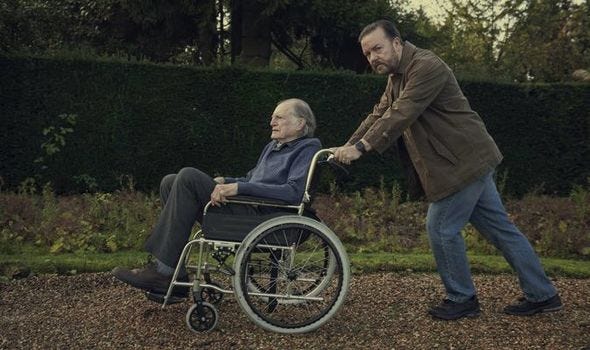
Ricky Gervais comes from a poor family; his Mom and Dad were decent working folks back in the day, and he was the youngest of four children, growing up in a small English town called Reading. He is a sincere bloke who never forgot where he came from, even though, he jokes about it how much he wants to.
Thankfully, all those tough years of his upbringing impacted his work greatly, and that’s why he was able to create such an honest portrayal of ordinary people in his TV series (The Office, Extras, and Derek).
After Life is a similar attempt, but its plot is a lot simpler than anything he’s ever done before.
Tony (Ricky Gervais) is a local news reporter who lost his wife to cancer recently. He’s massively depressed, suicidal thoughts are circling in his mind. So he figures, why to be bothered being nice to people when we will all die, anyway. According to him, everybody’s a git so why shouldn’t he let them know about that?
“It was looking up for bereaved Tony (Ricky Gervais) at the end of series one, as he went around performing small acts of restorative justice, but dramatically as well as realistically his new serenity couldn’t last.” — Suzi Feay, Financial Times
The second season follows the same formula as its predecessor and, even with the “new life lessons” it offers, it doesn’t really deliver anything new.
It portrays a quintessentially simple English life that laments about loss, depression, and finding hope in order to cope. While in his previous shows the tone was rather funny than tragic After Life does quite the opposite. It attempts to find some uplifting moments in a miserable and somber life.
The series’ formula inevitably repetitive, it tries to reflect on our tedious daily routines. It’s a pertinent metaphor, although, we as an audience, usually watch shows to break away from those patterns (same scenes, same characters, and same situations.)
The emotional and touching moments often sound overly melodramatic and artificial. Ricky dwells on loss, sadness, and depression much longer than it’s necessary.
I just couldn’t get invested in the characters this time. I finished the season a day ago, and I can barely recall the people Tony interviewed for the newspaper he works for. The freshness is gone, and neither the drama nor the characters are really memorable. It’s a good laugh, but not the one you’ll remember a week later.
I’m a big fan of Ricky’s comedy and his attitude towards life. The way he always laughs in the face of adversity is a much-appreciated mindset, but After Life only offers a few moments like that. His dramatic scenes often fall short as opposed to his comedy gags.
After Life is still better than some dramedies, it touches on relevant subjects with dry humor and a sarcastic approach, but it won’t be as memorable as Ricky’s previous classics.
After Life is streaming on Netflix.
If you’d like to read more from me, sign up for my monthly newsletter here.