
Revisiting “Jerry Maguire”: A Rousing Classic Turns 25
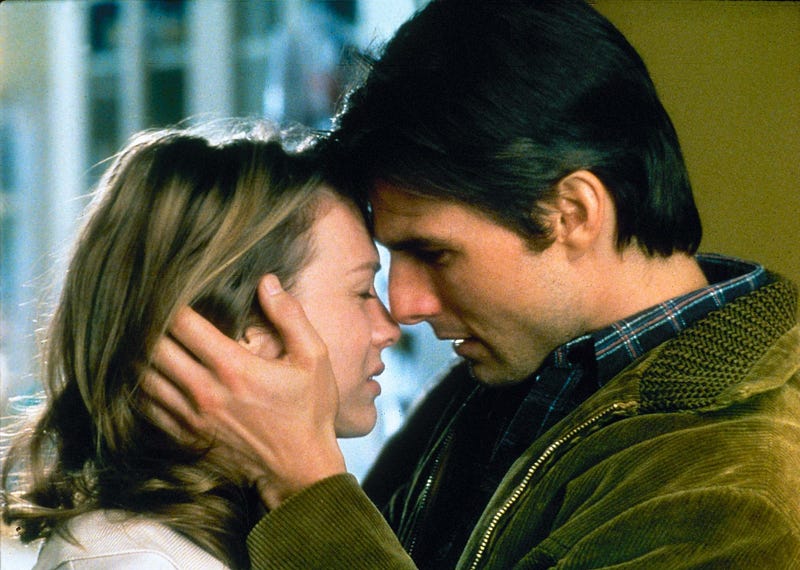
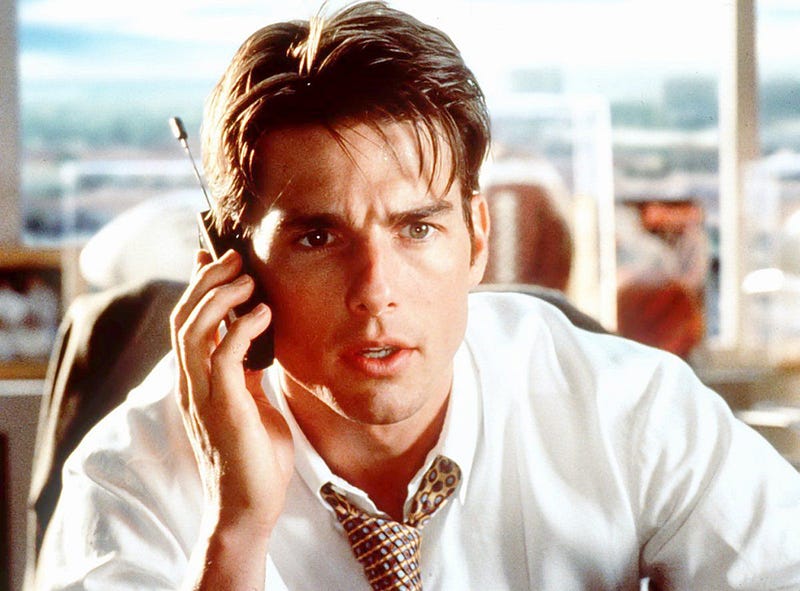
25 years ago this week, Jerry Maguire was released in theaters. Written and directed by Cameron Crowe, the film starred Tom Cruise at the height of his fame but was equally notable for Cuba Gooding Jr’s Oscar-winning turn and launching Renee Zellweger to superstardom. In honor of its silver anniversary, I revisited the film to see how well it held up.
The First Time I Saw Jerry Maguire
I vividly remember the first time I saw Jerry Maguire.
I was on my first ever trip to Walt Disney World Resort in Orlando, Florida as a 12-year-old. My older brothers (aged 17 and 21) really wanted to go see “the new Tom Cruise sports movie.” I am still not sure why they were so eager, but I chalk it up to them being die-hard Top Gun fans and high school football players. My parents reluctantly agreed to go, even though the R rating worried my parents a bit given the fact that I was a pre-teen. But we hauled ourselves to Downtown Disney and saw it as a family — and loved it.
Well, we all loved it, but my oldest brother really loved it.
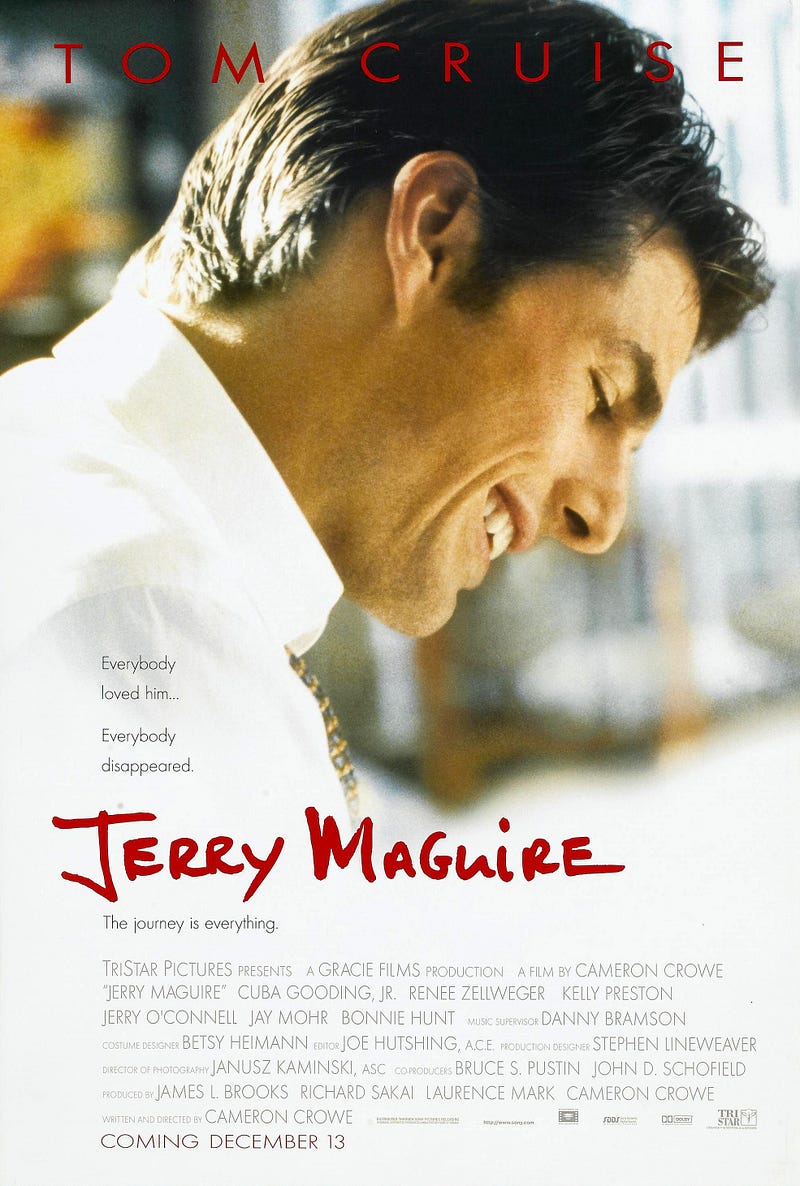
The following year when it came out on home video, he purchased a copy of the VHS on the day of its release. For two weeks straight, we watched it every single night when he came home from the summer job he was working during his break from college. On the one day he had off, we watched it twice. Watching the film 15 times in 14 days resulted in me memorizing every word, every facial expression, every musical cue, and every cutaway. Since 1996, I have known every beat of Jerry Maguire like a favorite song I had listened to every day for years.
Watching it that many times also burned me out on it a bit and I only revisited it once or twice over the following two decades. But, last year I re-watched it during a “comfort movie” binge at the height of the pandemic and — upon realizing that its 25th anniversary was imminent — I watched it again this past weekend.
And it holds up spectacularly.
The Backstory of Jerry Maguire
Jerry Maguire is one of those films that became such a cultural touchstone upon its release that it’s easy to forget what a bold, acclaimed, and high-quality film it actually is. It is remembered for memorable quotes like “You had me at hello” and “Show me the money!”, Cuba Gooding Jr. becoming only the 3rd black actor to win an Oscar (and his memorably enthusiastic acceptance speech), launching the career of Renee Zellweger, and giving Tom Cruise one of the most iconic roles of his storied career. But it was also a critically adored blockbuster that broke into the Best Picture race of the Oscars at a time when big studio films with comic elements rarely did.
For the unfamiliar, Jerry Maguire is the story of the titular sports agent (Tom Cruise) who has an epiphany that prompts him to write a mission statement about everything that is wrong with their profession and what they can do to fix it. He naively and arrogantly expects it to inspire his colleagues and bring about real change, but it just results in him getting fired. The only people he manages to inspire are Arizona Cardinals wide receiver Rod Tidwell (Cuba Gooding, Jr.), who keeps him on as his agent, and accountant Dorothy Boyd (Renee Zellweger), who agrees to leave the agency with him in solidarity and help him start a new firm.
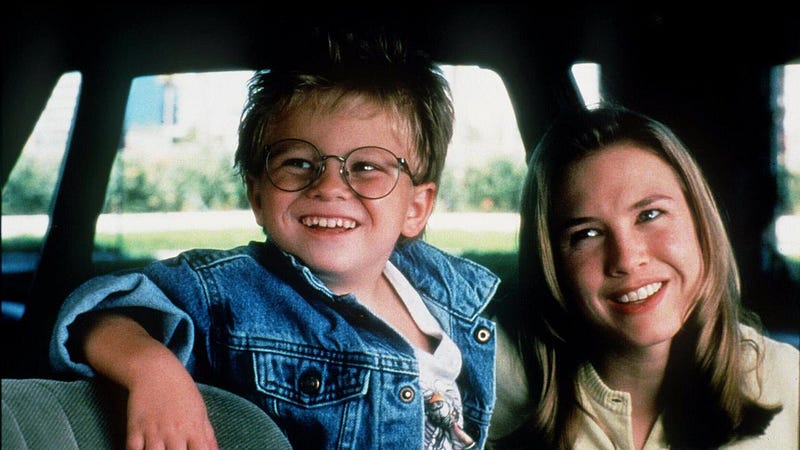
What follows is two largely distinct parallel plot lines that only occasionally intersect. In the first, Jerry forms a relationship with Rod and his wife Marcee (future Oscar winner Regina King) as he tries to get them the contract of their dreams. In the second, Jerry becomes enamored with Dorothy and her young son Ray (Jonathan Lipnicki), but struggles immensely with intimacy. The genre-defying film is a hybrid of sports drama, romantic comedy, and character study. And somehow it succeeds at all three simultaneously.
The film was written and directed by Cameron Crowe, the former Rolling Stone journalist who had made a name for himself by writing Fast Times at Ridgemont High and writing and directing Say Anything. The film was co-produced by James L. Brooks, who scored three Academy Awards for his work on Terms of Endearment and a near-record 22 Emmy Awards for his work on television shows like The Mary Tyler Moore Show, Taxi, and The Simpsons. The film was released at the height of Tom Cruise’s star power, as he had starred in four consecutive blockbusters prior to its release (A Few Good Men, The Firm, Interview with the Vampire, and Mission: Impossible). He was the film’s only marquee star, with Gooding Jr. being only moderately well-known known for his roles in Boyz n the Hood and Outbreak and Zellweger having only small roles in films like Dazed and Confused and Empire Records to her credit.
Despite having a budget of only $50 million, Jerry Maguire grossed $274 million worldwide ($154 million in the US and $120 million abroad) during its initial theatrical run. Adjusted for inflation, the film’s gross is comparable to an eye-popping $485 million today, a sum reached by exceedingly few R-rated movies, romantic comedies, or sports films. And it won over critics and industry insiders in a huge way.
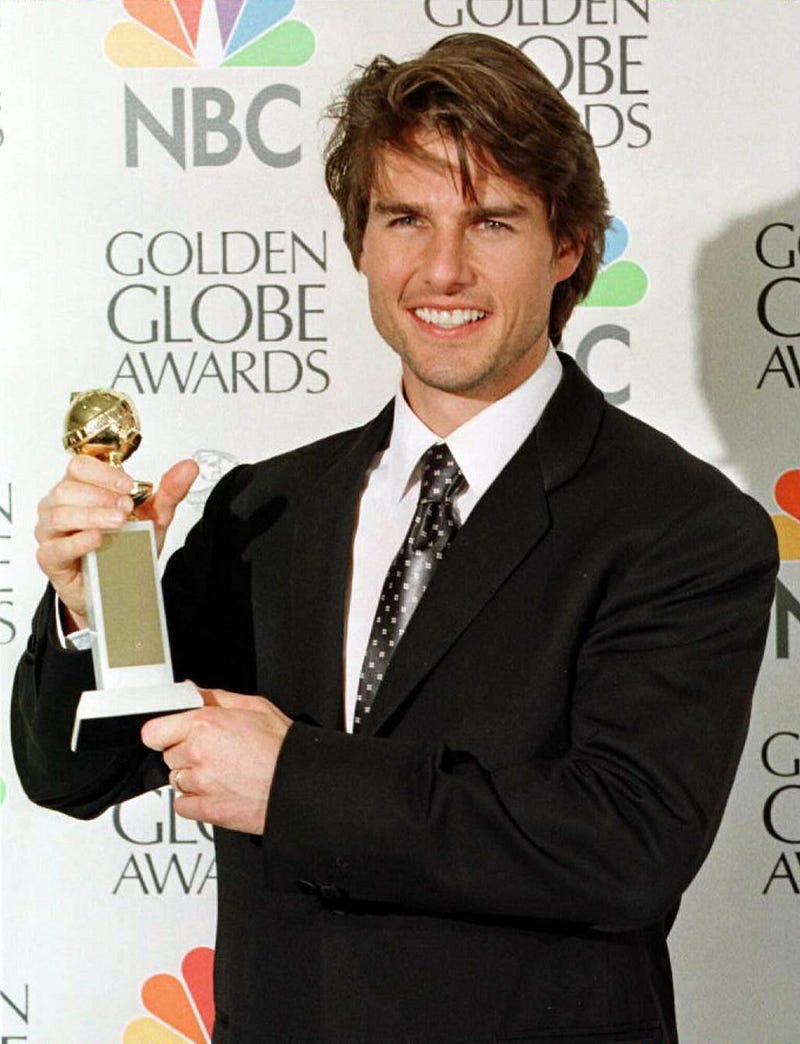
Jerry Maguire ended up receiving five Academy Award nominations, including Best Picture (where it was the only major studio film nominated among a field dominated by independent cinema), Best Actor for Tom Cruise (his second nomination after Born on the Fourth of July), Best Supporting Actor for Cuba Gooding Jr. (his first nomination), Best Original Screenplay for Cameron Crowe (also his first nomination), and Best Film Editing for Joe Hutshing (his third nomination, following two nominations and wins for his Oliver Stone collaborations Born on the Fourth of July and JFK). The film’s sole Oscar win was for Gooding Jr., who became only the third black actor to win in the category following Louis Gossett, Jr.’s win for 1982’s An Officer and a Gentleman and Denzel Washington’s win for 1989’s Glory.
The film also received a bevy of attention at other awards shows, with honors including three Screen Actors Guild Award nominations for Cruise, Zellweger, and Gooding Jr. (who won); Directors Guild and Writers Guild Award nomination for Crowe; three Golden Globe nominations (with a win for Tom Cruise, who notably returned it along with his other two Golden Globes when the Hollywood Foreign Press Association scandal broke earlier this year); the National Board of Review Award for Best Actor for Tom Cruise; and several MTV Movie Awards. (Any movie that can win big at the Oscars and the MTV Movie Awards is a true across-the-board crowdpleaser.)
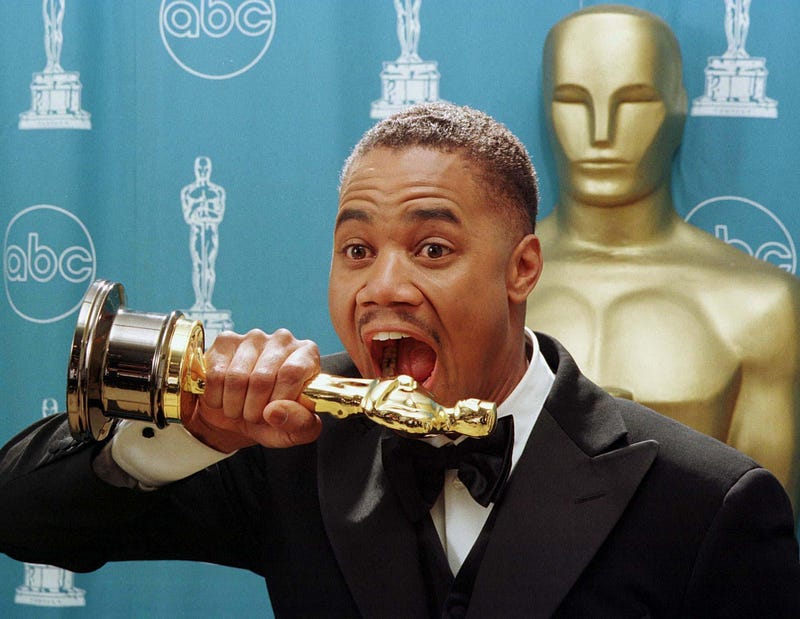
The film also continued to receive accolades in the years following its release, underscoring its endurance in popular culture. For example, the American Film Institute ranked it as one of the 100 most romantic films ever made and as the 10th best sports film ever made. They also named two quotes from the film among the 100 most memorable in film history (“Show me the money!” came in at #25 and “You had me at hello” came in at #52).
Jerry Maguire: A Contemporary Review and Analysis
Jerry Maguire begins with a dizzyingly energetic 10-minute sequence that provides a compelling introduction to the film’s title character and central conflict. We watch as an egotistical and wildly charismatic sports agent at the top of his game goes from passionately embracing his job with every fiber of his being to becoming deeply jaded.
And then he has an epiphany — he will write a mission statement that will clarify his core values as an agent and a man and be so inspiring that it will bring about a sea change in his profession. Such a narrative and emotional trajectory normally unfolds over the span of an entire film. Here, it happens in the opening sequence. The moment that in many ways feel like a soaring climax abruptly becomes the opening conflict when it ends in complete failure. With this setup, Crowe cleverly defies expectations right off the bat.
Crowe’s screenplay continues to defy expectations and go in some truly unexpected directions. As a child, I did not fully understand the psychological themes at the film’s core, but recent viewings as an adult made me appreciate them immensely. Ultimately, Jerry Maguire is a film about an arrogant and privileged man who has spent his entire life avoiding inward exploration and emotional intimacy finally embarking on a journey of self-improvement in his mid-thirties. (Now, it should be said that celebrating the redemption of a rich white man with questionable morals does not play as well in 2021 as it did in 1996, but if you can get past that it really works.)
At the beginning of the film, Jerry is engaged to a gorgeous, ambitious, and utterly ferocious PR executive named Avery Bishop (the late, great Kelly Preston). At this bachelor party, his friends present a video they made for him that interviews many of his ex-girlfriends. They all converge on the same conclusions — Jerry is great at friendship, but bad at intimacy and he is incapable of being alone. As the whole crowd obliviously laughs and pats him on the back, you can see Jerry realizing that they are right; that he is broken.
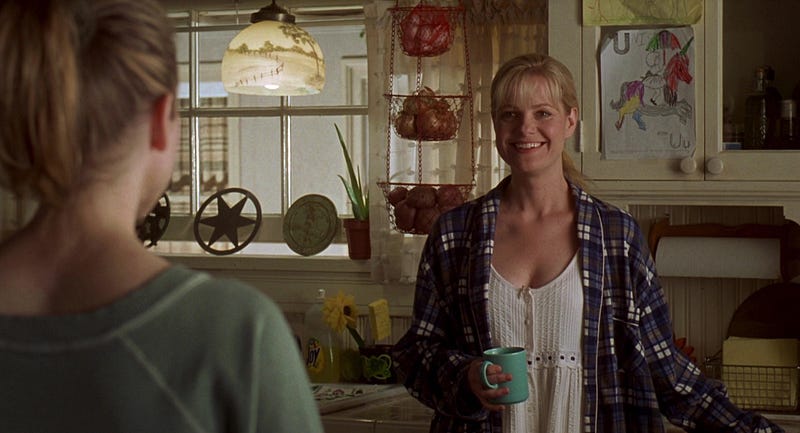
When Dorothy leaves with him to start his new firm, he is deeply touched by her loyalty but expresses little interest in her as a friend, colleague, or romantic interest. As he descends further toward rock bottom, however, he takes solace in her loyalty and warmth. He is utterly charmed by her precocious son Ray (an impossibly charming and scene-stealing Jonathan Lipnicki) and I suspect is fascinated by the uncanny ability her older sister Laurel (the incomparable Bonnie Hunt) has to read his flaws and the lack of restraint with which she delivers her scathing observations.
After several awkward scenes (including a #MeToo moment that did not age well), Jerry and Dorothy go on their first date. They have a night of passion, but do not experience real emotional intimacy. At dinner, she decides that they should not tell their sob stories when he decides to get personal and the morning after they sleep together she is able to disclose her true feelings to her sister but not to him. Jerry ends up proposing to her — but only as an impulsive bid to prevent her from taking a job in San Diego when he struggles to pay her. Dorothy, who has had an unrequited crush on Jerry for years and is seeking stability for her son following the death of her husband, enthusiastically accepts. Shortly after their wedding, however, she realizes that Jerry is not in love with her. He is in love with her loyalty, her support, and her son. But not her. She bravely calls it off in one of the film’s most heart-wrenching and exquisitely acted scenes.
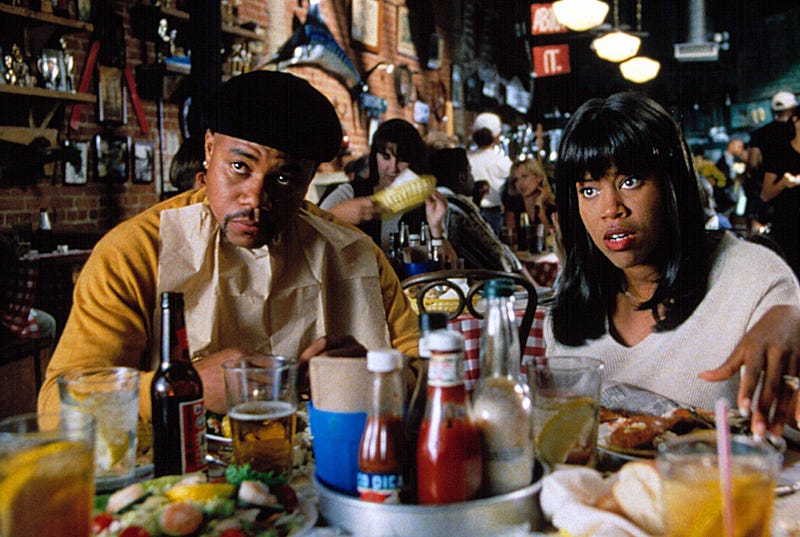
Meanwhile, Jerry gets a crash course in emotional intimacy and maturity from the most unlikely of sources — his lone client, arrogant NFL player Rod Tidwell. Although Rod has a large chip on his shoulder and is undeniably hot-headed, he has a spectacularly equitable and passionate marriage and profound insight into Jerry’s romantic predicament given the fact that he was raised by a single mother. He encourages Jerry to be honest with her and himself. Throughout these conversations, Rod and Jerry become deeply connected with one other and make each other better, stronger, happier people.
The film ends with Rod having a spectacular moment at a critical game, culminating in a memorable touchdown dance. (Fun fact: The touchdown dance was choreographed by pop music star, reality TV host, and former Lakers girl Paula Abdul.) Rod gets the contract of his dreams and Jerry’s stock in the sports world goes through the roof. But Jerry is not satisfied. He rushes to Dorothy’s house and finally seems ready to break down his walls, bear his soul to her, and be the partner that she needs. It is a rousing romantic climax for the ages with pitch-perfect acting and exceedingly memorable dialogue. But it raises the question — has Jerry really changed or is he still just a lonely, immature man making another desperate bid to not be alone during a profoundly important moment in his life? Well, that’s up for debate, but the romantic in me likes to think that he’s truly grown.
At the risk of being hyperbolic, each of the film’s performances is extraordinary. Tom Cruise never has and likely never will get a role that fits his natural charm and talents as well as this and he knocks every punchline, emotional outburst, and heartbreaking facial expression out of the park. Gooding Jr. may not have had a particularly noteworthy acting career after his Oscar-winning turn, but he is electrifying in every single moment on screen and he remains a very deserving winner.

Even though Cruise and Gooding Jr. got the vast majority of the critical and awards season attention for their roles, I argue that the female supporting cast is equally good. Zellweger is utterly luminous throughout and delivers a remarkably restrained performance. It is impossible to take your eyes off of her. In my opinion, it is one of the best supporting actress performances of the 1990s and it baffles me that she wasn’t even nominated for an Oscar (although she would go on to win two for other films, so I don’t feel too bad for her). Then there are a trio of actresses who brilliantly deliver in smaller roles. Bonnie Hunt infuses so much wisdom, internal conflict, and savage wit into her character that I often dreamed of a spinoff just about her. Recent Oscar and Emmy winner Regina King is so commanding and electric in her brief scenes that it is hard to believe it took her another two decades to get the acclaim she richly deserved. And despite the fact that her character only has two substantive scenes, Preston manages to create a memorable character with a fully-fledged comic persona.
The film is also a technical marvel, at least by romantic comedy standards. The Oscar-nominated editing is masterful, with showy montages and cutaways that actually advance the plot and a seamless blend of the film’s parallel plot lines. It spectacularly showcases music, with songs like Tom Petty & The Heartbreakers’ “Free Falling,” Bob Dylan’s “Shelter From the Storm,” and — most notably — Bruce Springsteen’s “Secret Garden” integrated stunningly. The warm cinematography by Janusz Kaminski (an Oscar winner for Schindler’s List and Saving Private Ryan) is simply gorgeous. And it is all held together by the remarkably assured direction of Cameron Crowe, whose work on this film is so good it is baffling that he did not have a bigger career afterward (although he did win an Oscar for writing Almost Famous a few years later).
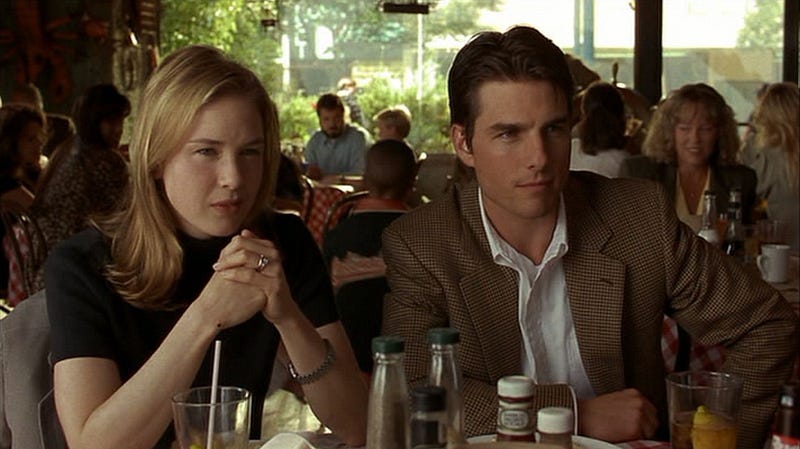
Jerry Maguire is not without its flaws. In fact, it has a notable one in its length. The film runs 138 minutes and has some notable padding. The early film detour into promising NFL player Frank Cushman (Jerry O’Connell) and his father (Beau Bridges) could have been cut, as could have several of the cameos by professional athletes (even though they are much less distracting than they are in other films). It could have been edited a bit more tightly and in my opinion would have benefitted from more heavily emphasizing the romantic aspects and de-emphasizing the professional sports elements. But, these are minor quibbles and may just be chalked up to my personal preferences.
Ultimately, Jerry Maguire is not only an iconic 1990s romantic comedy and sports film, but an enduring paragon of both genres. Even after seeing it two dozen times, I still found myself tearing up and cheering at the climactic moments and it remains one of my favorite film ensembles in modern history.
Follow the author of this article on Medium and Twitter.
Read recent articles about classic 1990s films by this author:


