
Revising What Makes Covid-19 Special: It’s Not Blood Clots
Infections come with blood clots — be it SARS, MERS, or other pathogens. So, what really makes Covid-19 special?
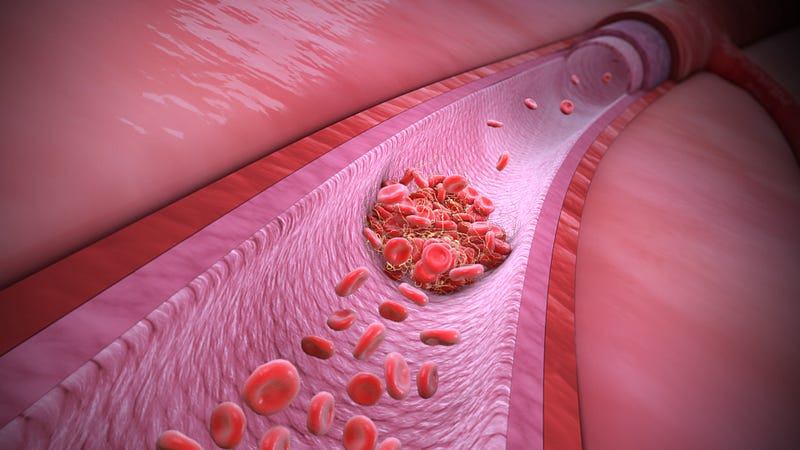
We know that Covid-19 kills by pneumonia and coagulopathy. Pneumonia means lung infection, particularly in the air sacs, that obstruct gas exchange and breathing. Coagulopathy means a blood clotting disorder that comes by different names depending on where the clot happens.
In Covid-19, scientists have seen cases of pulmonary embolism (artery blockage in the lungs), alveolar capillary microthrombi (small blood clots in air sacs), deep venous thrombosis (blood clots in veins deep in the body, usually in legs), multi-organ endotheliitis (inflamed blood vessels), multi-organ microthrombi (small blood clots), ischemic infarcts (artery blockage near the brain), and perhaps more.
These medical terms are nothing but coagulopathies. Among these, deep venous thrombosis (DVT) is arguably the most relevant as it usually precedes pulmonary embolism (PE). Scientists often lump them together as DVT/PE. And DVT/PE is the most common type of Covid-19 coagulopathy. It happens in about 25% of Covid-19 cases in the ICU. In contrast, the usual prevalence of DVT/PE in non-Covid-19 ICU cases is at <2%.
Therefore, there has been widespread recognition in the scientific literature [refs 1, 2, 3, 4, etc.] and news outlets that Covid-19 is a disease of the blood vessels. Coagulopathies are the driver of the multi-organ complications in severe Covid-19, we all think. It makes Covid-19 one particular kind of disease that can attack the blood vessels. At least I have previously written about it here:
While it is true that Covid-19 causes coagulopathies that hit distant organs, it is not what makes Covid-19 unique from other diseases. Here are a few reasons why:
- DVT/PE only occurs in about 25% of Covid-19 ICU cases. It is certainly much rarer in mild-to-moderate Covid-19 cases. In contrast, according to the CDC, hypoxia (low blood oxygen) and pneumonia (air sacs damage) happen all the time across the spectrum of Covid-19 severity.
- If Covid-19 is truly a blood clotting disease, then the first symptom should be blood clots. But that is not the case at all. About half of infected people have no symptoms, and the remaining half commonly have coughs, fever, and shortness of breath.
- Hypoxia is a risk factor for DVT/PE. So, hypoxia is still the key feature of Covid-19, not coagulopathies or DVT/PE.
- Pneumonia, in general, occasionally comes with blood clots. For example, pneumococcal pneumonia (caused by bacteria) increases the risk of DVT and PE by 1.78- and 1.97-fold, respectively. The previous coronaviruses epidemics, SARS and MERS, also can cause blood clots in other organs.
- Infections, in general, also sometimes cause blood clots. These include Helicobacter pylori, Chlamydia pneumoniae, Mycoplasma pneumoniae, Haemophilus influenzae, Streptococcus pneumoniae, Staphylococcus aureus, Escherichia coli, Epstein-Bar virus, herpesvirus, and cytomegalovirus.
These points clarify that Covid-19 is a respiratory disease that occasionally comes with coagulopathies that affect other organs. In other words, Covid-19 is not a blood clotting disease, but pneumonia that may come with blood clots.
So, what makes Covid-19 special?
- It is not blood clots as it is a general characteristic of pneumonia or infections.
- It is not the incubation period (i.e., the duration between the first viral exposure and symptom appearance) as it is similar for all SARS, MERS, and Covid-19.
- It is not the propensity to affect almost every organ in the body as most systemic diseases are like that.
- It is not the ability to cause lingering symptoms for weeks to months, even in discharged patients, as other infections can do that.
These may be anticlimatic, but evolution does not magically build an entirely new distinct biological entity after all. Evolution works by modifying existing biological constructs. Hence, Covid-19 must also be viewed in light of other viruses (or pathogens).
In reality, Covid-19 is not very deadly with a case fatality rate of about 1%, compared to 9.7% and 34% of SARS and MERS, respectively. But Covid-19 is much more lethal to the older age groups, black people, and individuals with multiple medical comorbidities. Nearly half of infected people do not show symptoms, yet they can transmit the virus to others. Also, Covid-19 is highly contagious owing to its efficient binding capacity to the host ACE2 receptor.
Thus, the silent and efficient human spread — coupled with overpopulation, growing aging population, increasing prevalence of medical comorbidities, international travel, poor infection control policies, and social inequalities in some countries — make Covid-19 successful.


