
Book Reviews | Pride and Prejudice, by Jane Austen
The 200 Years Old Phenomenon That Still Delights Readers
Pride and Prejudice is proof that books can stand the test of time.
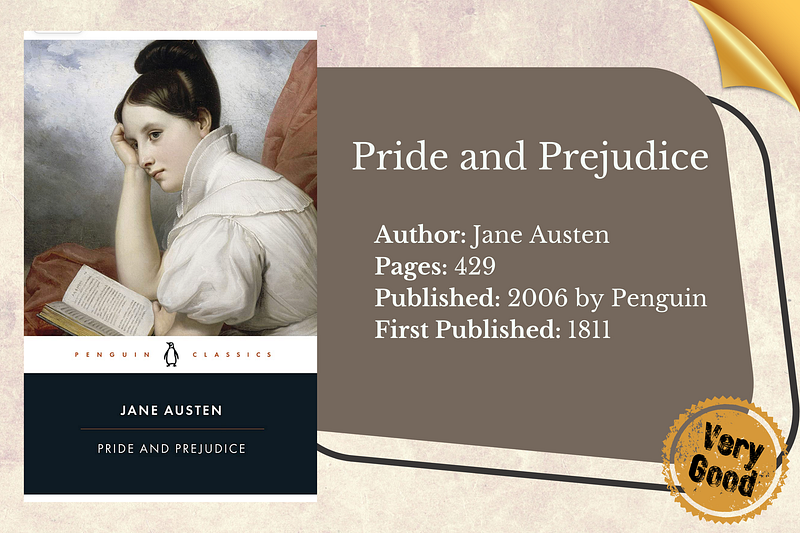
Published over two hundred years ago, Pride and Prejudice is a romantic story that remains a current sensation, captivating modern readers.
The tale of Elizabeth Bennet has been adapted into over seventeen movies, not counting sequels. It has also been made into tv shows, YouTube web series, and an uncountable number of books, from adaptations, retellings, and unofficial sequels. There's even one with zombies in it!
Even if you have never read Pride and Prejudice, you have likely met its characters or general plotline in some way or another.
A Bit of History
Pride and Prejudice deserves to have its History told. P&P, as it was lovingly called by Austen herself in some of her personal letters, was her second book. The first manuscript was written in 1795/96, and was called "First Impressions". Her first story, Sense and Sensibility, was written around the same time too.
Jane Austen's first attempts to publish the book were unsuccessful, though. And unfortunately, nothing remains of the original manuscript.
Austen made several revisions to the story between 1811/12. It's believed that both her first two books were epistolary novels (based on letters between characters) in their original versions, as the final manuscripts still contain many letters. We'll never know for sure, unfortunately.
The book was finally published in 1813 as Pride and Prejudice. It's assumed that the name was changed to avoid confusion, since other works with the same title were published between writing and publishing the book. But this is, again, something that we don't know for sure.
Pride and Prejudice was sold in three separate hardcover volumes. The first edition sold out, and a second was published within ten months of the first.
Jane Austen didn't make much from the book sales (and she might even have regretted selling the publishing rights for P&P for only £110), but it was a success for T. Egerton, who printed and published the story. He made more than £450 from the book sales (without having to pay royalties to Austen).
The book was published anonymously, just like her first. But although Sense and Sensibility was signed as "A Lady", Pride and Prejudice (and all her following books) was published under "the Author of Sense and Sensibility" — Austen began to be seen as an author in her own right and create a following.
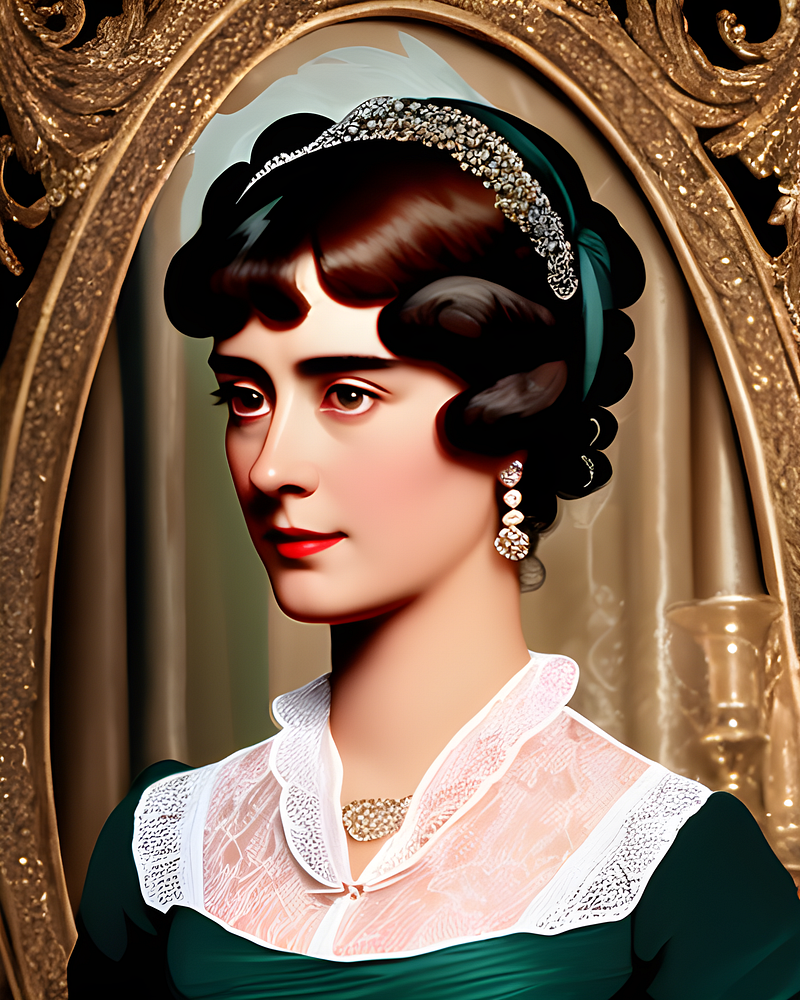
Unfortunately, we don't know much about Jane Austen. She was very successful during her lifetime, but she never gave interviews, and as far as we know, she didn't keep diaries. So all we have left are less than two hundred letters written to family and friends.
Pride and Prejudice is her most successful book. It has sold over 20 million copies worldwide (double all her other books together) and has never been out of print! As a result, the novel's first line is one of the most famous of all English literature.
“It is a truth universally acknowledged, that a single man in possession of a good fortune must be in want of a wife.”

The Story
Pride and Prejudice follows Elizabeth Bennet's life and love story. Her sisters, especially the eldest one, Jane, are also a big part of the novel.
It all begins when a very eligible bachelor moves into a house close to where the Bennets live. Mrs Bennet gets very excited about possibly marrying one of her five daughters.
There might not exist a person on this planet who knows nothing about this story. But indulge me, and let me pretend there's a point in not giving away any spoilers. Mrs Bennet is, after all, very keen on marrying any (and all) of her daughters. And that's where the story begins.
If you're unfamiliar with Regency Era England, you should get acquainted with some of the peculiarities of the times to experience the novel fully. For example, there were countless rules of social manners and etiquette, and to appreciate Austen's social commentary, you need to have some understanding of them. But don't worry. This article will tell you all you need to know:
Don't worry if learning a bit of History seems like the most boring thing you can think of. Sure, you might not be able to grasp and fully appreciate Austen's witty criticisms, but you'll be able to enjoy the love story anyway.
Pride and Prejudice heavily criticises the manners of its time and society's expectations. Jane Austen wrote in very accessible language for the time, but that didn't hinder her ironic exposure of high society's follies.
Modern readers may find the language stuffy, but it’s relatively easy to read even after so many years. However, it may take the reader a couple of chapters to get used to it. I particularly like how she makes everything a little bit over the top. If you think every character in the book is too much, that's because they are.
Austen's characters are very vivid and intriguing. And she fully immerses them in a plotline that keeps the reader interested, but clueless about what will come. The book doesn't disappoint — even those who have already experienced the story through one of its many adaptations are bound to enjoy it. P&P keeps you turning the pages and looking for more.
I have read this work a few times now. The first time, I was just a teenager. Every new read brought new perspectives, and I still love it.
The love story is very nice to follow, especially because of all its twists and turns. As a mature reader, though, I appreciate the parody aspect much more. I love to read between the lines and try and imagine how Austen felt about the things she was writing about. I also like to guess how much of the story is autobiographical.
Get your copy (affiliate links)
Amazon US | Amazon UK.
While researching for the article I linked above, I came across a discussion in a forum about Jane Austen's characters and who they choose to marry. Contrary to the customs of the time, her characters don't marry only for status or convenience, they all search for love.
However, not one of her characters marries someone outside the high society. There is no true love between the rich and the poor.
It makes me wonder if she couldn't write that because it would be too outrageous and impossible to publish. Or was that too much for Austen to contemplate? We'll never know for sure.
Austen was ahead of her time and not keen on following conventions. But she was still part of the gentry herself. That's an important fact to keep in mind.
One of this story's most refreshing aspects is that it doesn't rely on a love triangle to make it work. It doesn't even rely on love at first sight. Elizabeth Bennet is one of those women that think much of herself, she's smart and cheerful.
“No one can be really esteemed accomplished who does not greatly surpass what is usually met with. A woman must have a thorough knowledge of music, singing, drawing, dancing, and the modern languages, to deserve the word; and, besides all this, she must possess a certain something in her air and manner of walking, the tone of her voice, her address and expressions, or the word will be but half deserved.”
This is what one of the book's main characters has to say about women. He mentions he only knows about six accomplished women. For him, an accomplished woman has to have all the qualities listed above, and he still adds a few more. Elizabeth does not take it lightly and has a witty reply:
“I am no longer surprised at your knowing only six accomplished women. I rather wonder now at your knowing any.”
I love this exchange. It shows how Lizzy isn’t keen on accepting what others have to say, not even quietly listening without adding her opinion.
She’s outspoken and defiant. And she's not perfect. This is the ideal combo for a strong female character. She gets things wrong, but she has no fear of asserting herself. It is delightful to follow her story. And I must admit, I also really enjoy seeing her having to admit her faults.
I do feel slightly bad about how some characters are described. Almost as empty-heads that have nothing to offer to the world. For these characters, it's crucial to remember that they are a caricature of their time, and not exact representations of a person. Sometimes, it can feel like Austen went too far.
Pride and Prejudice is in the public domain. That means you can find several different editions by several different publishing houses. You're free to use the characters and the story. You can even write your own adaptation if you wish to.
Make sure to find an edition that isn't full of problems, so you can properly enjoy the story. And get reading. It'll cost you nothing (or very little), and it'll be a delightful experience.
I'm sure you'll fall in love with the story of Lizzy Bennet like so many others before you. Jane Austen is a must-read author. Pride and Prejudice is a timeless story, an excellent place to get acquainted with one of the most famous authors of English literature.
Check out all previously published book reviews here:


