
Pride and Prejudice: 10 Things You Need to Know Before Reading the Book
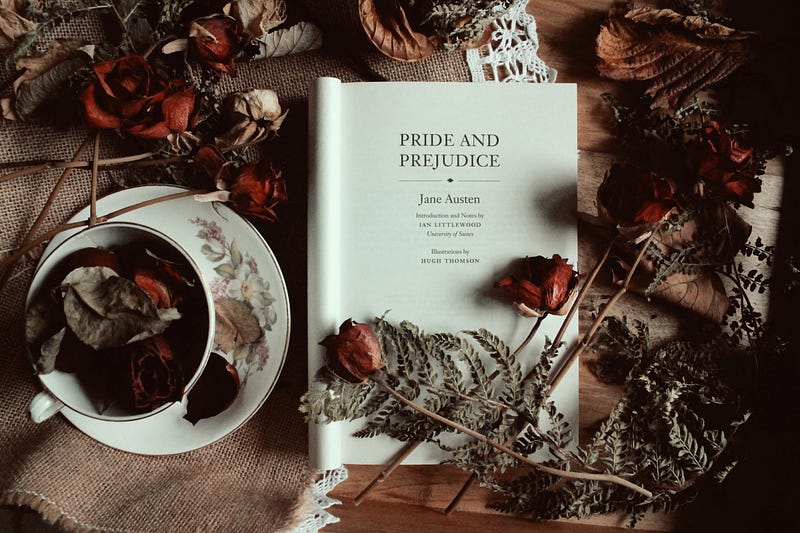
Jane Austen’s Pride and Prejudice is undoubtedly one of the most successful romantic novels of all time. It was first published in 1813 during the Regency Era in England. According to the Encyclopedia Britannica, the first edition sold out within the first year and the book has never been out of print.
Two hundred whooping years later (and counting), the novel is still delightful to read and very much enjoyable. Pride and Prejudice is a book that stood the test of time. Even if you have never read it yourself, you probably heard about Elizabeth Bennet’s story or perhaps had a taste of it from one of the many adaptations this romantic tale has inspired (there are at least 17 movies!).
Pride and Prejudice is a multi-layered story that can be enjoyed in many ways. It is a love story, but it’s also a social satire, including remarkable commentaries on gender roles.
As extraordinary as Pride and Prejudice is, the book is old. And it’s very much a tale of its time, talking about the society of the era and all the conventions people had to obey. Thus, a modern reader may not immediately understand some aspects of the story.
So here are ten things you need to know before reading Pride and Prejudice to appreciate all the book has to offer.
Table of Contents
1. What is an entailed estate?
2. Are the Bennets wealthy?
3. How precarious is the financial situation of the Bennet girls?
4. How important was social status in the Regency Era?
5. What were the naming conventions in Regency England?
6. Was dancing really a big deal?
7. Why does Mrs Bennet ask her husband to call in on the new people who move to Netherfield?
8. Can the Bennet girls send letters to whomever they want?
9. How delicate is a woman’s reputation?
10. Pride and Prejudice is a satire!
1. What is an entailed estate?
An entailed estate means the recipient has untransferable life interest in the property. Therefore, he’s not allowed to sell or include it in his will, and the grantee has no rights to divide the estate. And the use of the masculine article here is on purpose, since most entails were only passed down through the male line. That means if a current holder of an entailed land didn’t have any direct male heirs, the property would go to the closest male in line upon his death.
The Bennets’ estate, Loungborn, is entailed, and Mr Bennet has no male heirs. So when he dies, the property will be inherited by the next male in line, Mr Collins, his nephew. There is no way for the Loungborn entail to be broken. Mr Bennet isn’t allowed to sell Longbourn, and his wife and daughters have no inheritance rights over it — they wouldn’t be allowed to live in the land or use the profits from it after his death.
2. Are the Bennets wealthy?
The primary source of income for the Bennet family is the family estate — Loungborn.
It’s a modest property (for gentry standards) with a small staff. It provides enough money for the family to keep their status as part of the gentry and live comfortably, but it doesn’t allow for extravagances.
So, yes, the Bennets are wealthy. But they aren’t as rich as other characters in the book, such as Mr Bingley and Mr Darcy.
3. How precarious is the financial situation of the Bennet girls?
This is sometimes an overlooked aspect of the book. Especially if you’re a modern reader who doesn’t fully grasp their situation.
The Bennets aren’t destitute.
However, their primary source of income — Loungborn — is entailed. And Mr Bennet hasn’t put aside any money for his family, trusting that a male heir would come at some stage. At the time of the events of Pride and Prejudice, though, it’s pretty clear that no male heir will come.
Having no dowry to offer, either as property or money, and no aristocratic family connections is a tragedy for a Regency Era gentry girl. It doesn’t matter how beautiful and well-mannered the Bennet girls are. They don’t make for great marriage prospects. And marriage for them is the only way to guarantee their status and livelihood after their father’s death.
When Mr Bennet dies, Mrs Bennet and her daughters will have no home. They won’t be able to maintain their social status or the same level of living. There’s a small amount set aside for Mrs Bennet from when she got married, but shared between the six women, it would be very little money. They wouldn’t starve, but they would definitely lose their social status and need to live frugally.
Mrs Bennet wants to marry her daughters off to safeguard them — and herself too — from poverty. Having this knowledge does help to understand Mrs Bennet’s actions in the book. Of course, it’s still quite funny to follow how eager she is to marry her daughters off, but having the financial situation in perspective helps to comprehend her inner motivations.
It’s pretty astonishing, in fact, that their father seems not to care. Their current arrangement is acceptable, but when he dies, the Bennet girls will be in a very precarious situation.
4. How important was social status in the Regency Era?
Social status and hierarchy were of the utmost importance in Regency Era England. It shaped people’s lives, behaviour, and decisions. The social status of a person was a combination of personal and family reputation, connections, class, and wealth.
For the higher classes, such as the aristocracy and the landed gentry, family connections often meant more than wealth. That’s why Elizabeth’s uncle isn’t considered part of the upper class, for he made his money as a businessman, he doesn’t own land, and Mr Bennet seems to be his only gentry connection.
Mr Darcy is one of the most powerful characters in the novel. He’s part of the aristocracy, with very prominent family connections and a large property — Pemberley. Mr Bingley isn’t an aristocrat like Mr Darcy — his father made his fortune in the “trade of the North”. However, Mr Bingley is very well connected, and is looking to buy an estate, so he’s considered part of the gentry.
Mr Bennet is not as wealthy, but he’s part of the gentry and has an estate. Because Loungbourn is entailed, though, his daughters don’t make for desirable marriage prospects, for they have no dowry, either in land or money. Moreover, their mother, Mrs Bennet, is also from a lower social class than her husband, and thus the Bennets don’t have many significant connections.

5. What were the naming conventions in Regency England?
One of the nice things to know is how people were named. It can be very confusing if you’re not familiar with the conventions of the time.
The naming conventions of the era are plenty and can be very confusing. To make matters easy, though, I’m just going to explain the main things pertaining to the book.
Mrs LastName is the wife of Mr LastName. Their older unmarried daughter is called Miss LastName. All the other unmarried daughters are called Miss FirstName. If the elder daughter isn’t present, the eldest one present may be called Miss LastName.
Therefore, in the book, Mrs Bennet is always the girls' mother. Miss Bennet is almost always Jane, and Lizzy is Miss Elizabeth.
6. Was dancing really a big deal?
Nowadays, when we think about dancing, we’re just thinking about having fun. But dancing in the Recency Era England meant much more than just moving your body.
Particularly in a social gathering, such as a ball, dancing was a way for the upper classes to socialise and display their status. Therefore, refusing a dance was not only a breach of etiquette, but if there was no good reason to do so, it was seen as impolite and even insulting.
If a lady refuses an invitation to a dance, she cannot accept an invitation for that same dance from a different partner, and she has to sit it out (and that could mean over half an hour of waiting).
On the other hand, being asked twice by the same gentleman on the same night was a big deal — it was a clear sign of significant interest on his part.

7. Why does Mrs Bennet ask her husband to call in on the new people that move to Netherfield?
Women weren’t allowed to introduce themselves to new people.
That is one of the hardest things to grasp for modern audiences. Women were very much protected and couldn’t do many things without having a man around.
At social events, women needed to be introduced by a mutual acquaintance, and unmarried women couldn’t attend without a chaperone.
When a new family moved into the neighbourhood, one of the men of the house must call on the new neighbours before the women can pay a visit. Mrs Bennet hearing about a new single (and wealthy) man moving into the area, was eager to make his acquaintance, but she needed her husband to initiate the conversation.
8. Can the Bennet girls just send letters to whomever they want?
If it sounds like there were rules for everything, it’s because there were. And that’s part of the criticism in the book.
In the case of letters, the rules were complex and varied, depending on factors such as social status, gender and the nature of the relationship between the correspondents.
Men and women would only write to one another if they were from the same family. Sending a letter to the opposite sex without a clear motive would not only be inappropriate, but it could send signals that the correspondents were improperly attached. It could even ruin a woman’s reputation.
9. How delicate is a woman’s reputation?
A woman’s reputation was crucial, even more so among the upper classes.
If a woman’s reputation were questioned, finding a husband would be hard. And in Regency Era England, marriage was the primary means by which a woman could secure her future, including her social and economic position.
Thus, women of the time were expected to act carefully and avoid anything that could be deemed improper or suggestive. They were escorted and closely monitored by their families to prevent problems. Any indiscretion could lead to social ostracism and ruin.
10. Pride and Prejudice is a satire!
This is an important thing to know. The language is a bit outdated and can come across as stuffy to our modern tastes.
Pride and Prejudice, however, is written in an accessible style, using straightforward language for its time. Once you get used to Jane Austen’s style, reading the book becomes easier. One reason the author chose simple language is that the book is satire.
A satire is a literary work, in this case, fiction, that uses humour, irony, exaggeration, and ridicule to criticise society's follies, vices and shortcomings. So, in Pride and Prejudice, you may find yourself thinking that everyone is a bit too much, in one way or another. And that’s because it’s a satire (and they are!).
If you keep this in mind, you’ll find Austen’s story witty, and relentlessly funny. It’s one of the things that kept this story so fresh, even after two hundred years.
These ten facts will help you fully appreciate Pride and Prejudice.
I didn’t want to connect them all to specific moments in the book — after all, you may have lived your whole life under a rock, and you don’t know much about this story. I cannot ruin that for you.
Certain key moments in the story will make more sense once you understand these realities of Regency Era England. And you will be able not only to understand the story better but you’ll also enjoy it more.
If you’re looking for a review of Pride and Prejudice, you can read it here:


